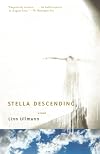
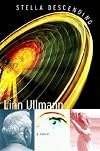
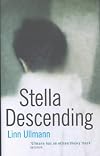
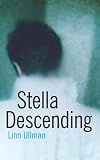
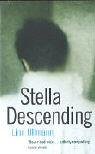
Stella Descending
by Linn Ullmann
On This Page
Description
On a warm summer night in Oslo, Martin draws Stella into one of the risky games that have defined their ten years together: a balancing act on the edge of their rooftop, seven stories up. Amid the shouts of horrified onlookers, Stella stumbles, falling for a moment into Martin's arms before plummeting to her death. (Did he try to save her?) So begins Linn Ullmann's transfixing tale of a jealous wife, compliant mistress, treasured friend, angelic nurse, unloved daughter, devoted mother - and show more finally, a woman possessed of a secret now forever lost to the living. As Stella's life unfolds in the recollections of those she has left beind, we observe the fabric of many unravelling lives. And as Stella herself bears witness from a place beyond death, we come to understand how precarious her life was behind its facade of loveliness and order. With a quiet power, STELLA DESCENDING gives us the backlit dailiness - and the dark metaphysical underworld - of life in a fabled metropolis. And in brilliantly evoking the loneliness that haunts all our intimacies, it becomes a fable of life everywhere. show lessTags
Recommendations





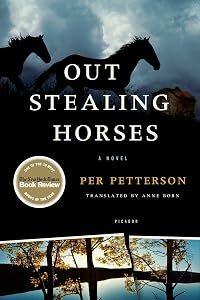





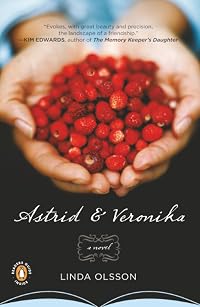


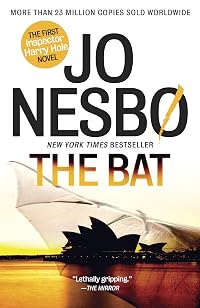
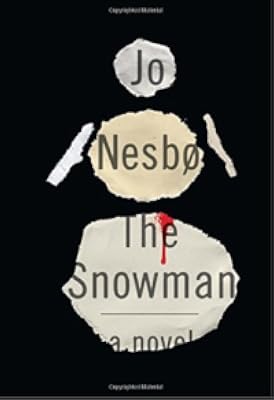







Member Recommendations
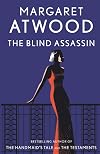
KayCliff Laura Chase in The Blind Assassin falls to her death from a bridge over a ravine, just as Stella falls to hers from a roof. The Blind Assassin is concerned with finding out why Laura fell, with newspaper reports given, excerpts from a novel quoted, and passages of
narration from Laura's sister -- all out of chronological sequence; just as the cause of Stella's fall is sought through Ullmann's novel by a variety of narrators, with excerpts from a video, all simililarly out of chronological order. Both Stella and Laura act as nurses, and fall prey to unprincipled men. Both novels include a pair of sisters whose mother dies when they are young, leaving the elder girl to take care of the younger; children with absent or unknown fathers; and someone very old, near to their own death, who loved
Laura/Stella. Laura's sister fancies, `there was no floor to my room: I was suspended in the air, about to plummet. My fall would be endless -- endlessly down'. Stella's daughter tells her sister, `Mama fell off a roof, Mama's falling still. She falls and falls and never hits the ground'.
Member Reviews
Stella è morta, incidente o omicidio? Tutte e due le ipotesi sono plausibili, ed entrambe sono il pretesto per un racconto a più voci: Martin il marito, Axel il vecchio vigliacco che non muore mai, Amanda la figlia, e Stella stessa ... tutti raccontano chi è Stella, ma soprattutto, chi sono loro.
Bel racconto, ben scritto, intrigante anche se a volte un po' assurdo.
Bel racconto, ben scritto, intrigante anche se a volte un po' assurdo.
Another Ullmann book about death, but this death has already happened and the book is about different recostructions of the circumstances of death, but not in the style of a detective (though there is an investigating detective involved). It becaomes the story of a woman subject to everyday but none the less aggressive acts of men, the key point being that they will not leave, and that she is therefore trapped by them. There is an odd surrealism hovering around the edges of the perceptions introduced by the novel, but that never really breaks into the frame, with the effect that the entire novel has a dreamlike quality. The dispassionately presented emotion characteristic of Ullmann's other novels is here developed to the full, without show more a trace of sentimentality. show less
Minutieus en vanuit verschillende perspectieven wordt nagegaan waarom een jonge vrouw op een zonnige zomeravond van het dak van een gebouw in Oslo is gevallen.
Loved Linn Ullman's novels. Look for others (Before I sleep.)
En berättelse om ett fall. Stella faller från ett hustak. Brott eller inte? Vi följer människorna kring Stella och deras versioner kring vad som hände och deras relationer till Stella. Helt ok.
Jul 11, 2014Swedish
Verhaal van Stella's twee seconden durende val
Mar 6, 2011Dutch
Members
- Recently Added By
Published Reviews
Translated from Norwegian, this book consists of five parts, each called `Fall'. Stella's mother, Edith, insists on standing up to give birth, so Stella `falls down through Edith's birth canal, falls into the world, falls into the splendid old midwife's splendid hands -- but with an unearthly scream that bursts the young nurse's eardrum'. Thirty-five years later (and 130 pages earlier), show more pregnant with her third child, Stella falls from a high roof to her death -- perhaps pushed off by her husband in the course of one of their curious games. Various narrators consider how it happened or tell stories, some of quite obscure relevance; chiefly, Stella's adolescent daughter, the detective investigating the case, who `can tell by the smell of a man whether he has committed a crime', and a senile friend Stella formerly nursed, whose character may be gauged from his words: `I suppose I do have one joy; there is pleasure for me in music. ... Music tells me there are beings beyond this miserable existence who are willing to speak to us. Unborn children, perhaps, who were meant to have a body, a voice, a life, but who came to nothing, aborted or snuffed out at the moment of conception ...'
In no way could this book dispel the general supposition of Scandinavian gloom. show less
In no way could this book dispel the general supposition of Scandinavian gloom. show less
added by KayCliff
Author Information

Common Knowledge
- Canonical title*
- Kun olen luonasi
- Original title
- Når jeg er hos deg
- Original publication date
- 2001
- First words*
- MARTIN: Aloittaakseni alusta: on kesä, pian syksy, yö ja tähdet tuikkivat isossa pienessä kaupungissa.
- Quotations
- Yes, the joy is gone. ... Amanda reminds me that once, a long time ago, I took pleasure in teaching. ... In the end I gave up, grew sardonic and baleful. ... I read a newspaper article in which some old people answered the qu... (show all)estion: Given the chance, would you live your life over again? Most of them said yes. How could they? How could anyone live his life again? Go through all that toil and trouble again? ... I've never understood how one is supposed to *enjoy* one's family. I was certainly never able to enjoy mine. ... I suppose I do have one joy; there is pleasure for me in music. ... Music tells me there are beings beyond this miserable existence who are willing to speak to us. Unborn children, perhaps, who were meant to have a body, a voice, a life, but who came to nothing, aborted or snuffed out at the moment of conception ...
The midwife hunkers down in front of Edith, preparing to catch the child. And she can see inside Edith now, up into her, way up inside her, and what she sees is big and red and wet, that's you, Stella, and you're screaming ev... (show all)en before you come into the world. You fall down through Edith's birth canal, fall into the world, fall into the splendid old midwife's splendid old hands, you fall wide-eyed, long and slender, like a diver from a cliff - but with an unearthly scream that bursts the young nurse's eardrum, with the result that today, 35 years later, she is still deaf in the left ear. Stella: She's gone deaf in the right ear, too. ... I met her through my work... She confirmed that I burst her eardrum the moment I fell into the world. Martin: And what did you say to that? Stella: I said I was sorry.
`I suppose I do have one joy; there is pleasure for me in music. ... Music tells me there are beings beyond this miserable existence who are willing to speak to us. Unborn children, perhaps, who were meant to have a body, a v... (show all)oice, a life, but who came to nothing, aborted or snuffed out at the moment of conception ...' - Last words*
- (Click to show. Warning: May contain spoilers.)Ja kerran, jonkin ajan kuluttus, minä annan sinulle nimen.
*Some information comes from Common Knowledge in other languages. Click "Edit" for more information.
Classifications
- Genres
- Fiction and Literature, General Fiction
- DDC/MDS
- 839.823 — Literature & rhetoric German & related literatures Other Germanic literatures Danish and Norwegian literatures Norwegian literature Norwegian Bokmål fiction
- LCC
- PT8951.31 .L56 .N37 — Language and Literature German, Dutch and Scandinavian literatures Norwegian literature Individual authors or works 1961-2000
- BISAC
Statistics
- Members
- 185
- Popularity
- 177,374
- Reviews
- 7
- Rating
- (3.27)
- Languages
- 13 — Catalan, Danish, Dutch, English, Finnish, German, Italian, Lithuanian, Norwegian (Bokmål), Norwegian, Spanish, Swedish, Turkish
- Media
- Paper, Audiobook, Ebook
- ISBNs
- 37
- ASINs
- 2