On This Page
Description
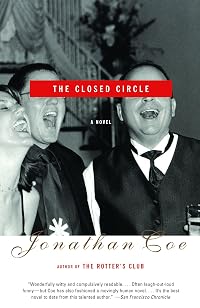
Set against the backdrop of the Millenium celebrations and Britain's increasingly compromised role in America's war against terrorism', The Closed Circle lifts the lid on an era in which politics and presentation, ideology and the media have become virtually indistinguishable. Darkly comic, hugely engaging, and compulsively readable, it is the much-anticipated follow-up to Jonathan Coe's bestselling novel The Rotters' Club, and reintroduces us to the characters first encountered in that show more book. But whereas The Rotters' Club was a novel of innocence, The Closed Circle is its opposite: a novel of experience. show lessTags
Recommendations













Member Reviews
Part two if you will to The Rotters Club which was definitely 5 stars. The Closed Circles is beyond 5 stars.
I have often wondered when did the world turn into such a shitty greedy place, and from this book it started at the end of the 20th Century. Coincidently this book starts at the same time 1999 and let’s the reader know what happened to the characters in The Rotters Club.
Benjamin, Claire, Philip, and Doug, and Lois, and Steve and Harding and Culpepper, and of course Paul.
It’s a new world, buckle up, kids!
Like with the first book the writing is so far beyond what many authors are capable of. It is pure joy to read this authors work.
I have often wondered when did the world turn into such a shitty greedy place, and from this book it started at the end of the 20th Century. Coincidently this book starts at the same time 1999 and let’s the reader know what happened to the characters in The Rotters Club.
Benjamin, Claire, Philip, and Doug, and Lois, and Steve and Harding and Culpepper, and of course Paul.
It’s a new world, buckle up, kids!
Like with the first book the writing is so far beyond what many authors are capable of. It is pure joy to read this authors work.
Now, first of all I think we should separate the first 3/4 of the story from the last quarter, because they were very different since it’s in the last quarter that the circle closes, and it makes you see everything that has happened before in a new light.
There was this heavy, even kind of gloomy atmosphere all throughout the first 3/4 of the story, and actually the only ray of sunshine in the pale lives entwined in the plot was Sophie, who represented everything that Benjamin, Lois and the others once were. Young, curious, bright and with everything still ahead of them... but that was because the circle was still open, and I think that’s why from the beginning I kept thinking “there’s much more to this story than what I’m show more reading”.
I found Paul and Sean Harding intriguing in The Rotters’ Club: I hated them in The Closed Circle. Or, more precisely, I hated Paul in the first 3/4 of the story, and there was a moment in the second half where I really despised him and I couldn’t believe he was the same boy described in The Rotter’s Club, even if to be honest there were hints that he would become a person of the sort, but I always found him interesting nonetheless, and let’s say he got better in the last quarter of the story, at least more decent in some ways, not so much in others.
Benjamin made me smile in The Rotters’ Club: he completely broke my heart in The Closed Circle. Even if once again the last quarter was a different story. But the fact that at the end we only hear of how his story continues/ends from other sources kind of disappointed me, because I wanted to read more of him directly.
For some reason I feel like the climax was in the few lines that showed Benjamin decorating the Christmas tree with Susan and the girls, I think this is the one scene that sums up all the intense, sometimes desperate feelings involved up to that point.
The atmosphere of the story was very different from the one in “The Rotters’ club”, so I feel it’s not right to compare the two of them. The only thing I know is that I adored them both. The way the story was told was always perfect, and really captivating, and maybe it got even more refined in The Closed Circle.
I think the bottom line of this story is “the past always repeat itself. The past never lets go of you, but at the same time you’ve got to move on”, and that’s why at times this book was heart-wrenching.
Also, I know I probably said this before when talking about one of Coe’s books (or all of them actually) and it’s not very witty but.. wow. show less
There was this heavy, even kind of gloomy atmosphere all throughout the first 3/4 of the story, and actually the only ray of sunshine in the pale lives entwined in the plot was Sophie, who represented everything that Benjamin, Lois and the others once were. Young, curious, bright and with everything still ahead of them... but that was because the circle was still open, and I think that’s why from the beginning I kept thinking “there’s much more to this story than what I’m show more reading”.
I found Paul and Sean Harding intriguing in The Rotters’ Club: I hated them in The Closed Circle. Or, more precisely, I hated Paul in the first 3/4 of the story, and there was a moment in the second half where I really despised him and I couldn’t believe he was the same boy described in The Rotter’s Club, even if to be honest there were hints that he would become a person of the sort, but I always found him interesting nonetheless, and let’s say he got better in the last quarter of the story, at least more decent in some ways, not so much in others.
Benjamin made me smile in The Rotters’ Club: he completely broke my heart in The Closed Circle. Even if once again the last quarter was a different story. But the fact that at the end we only hear of how his story continues/ends from other sources kind of disappointed me, because I wanted to read more of him directly.
For some reason I feel like the climax was in the few lines that showed Benjamin decorating the Christmas tree with Susan and the girls, I think this is the one scene that sums up all the intense, sometimes desperate feelings involved up to that point.
The atmosphere of the story was very different from the one in “The Rotters’ club”, so I feel it’s not right to compare the two of them. The only thing I know is that I adored them both. The way the story was told was always perfect, and really captivating, and maybe it got even more refined in The Closed Circle.
I think the bottom line of this story is “the past always repeat itself. The past never lets go of you, but at the same time you’ve got to move on”, and that’s why at times this book was heart-wrenching.
Also, I know I probably said this before when talking about one of Coe’s books (or all of them actually) and it’s not very witty but.. wow. show less
Part two of Coe’s Birmingham trilogy begins in 1999, and takes up the story of the students of King William’s School some twenty years on from the 'Rotter's Club'. Over the intervening two decades Margaret Thatcher and the Conservative Party have finally left office and been replaced by Tony Blair's 'New Labour'. Now middle-aged these erstwhile bright young things have had their fair share of shocks, but it is the gradual realisation of their now diminished expectations and stagnancy that has really taken its toll on them.
Benjamin Trotter, who had dreams of becoming a famous writer and composer has become an accountant who occasionally writes and composes. Doug Anderton, the son of a union man, is now a columnist for a broadsheet show more and married into an aristocracy that breeds children with names like Coriander and Emerald. Doug hasn't lost his Socialist roots and bemoans the demise of Old Labour by New: “The left’s moved way over to the right, the right’s moved a tiny bit to the left, the circle’s been closed and everyone else can go fuck themselves.” Benjamin’s little brother, Paul—whom Doug thought of in their school days as “a creepy little right-wing shit" has grown up to become a dim yet ambitious MP for New Labour. Claire Newman has spent the last few years living in Italy. but after the breakdown of a relationship there, she returns to a country where, suddenly, everyone seems to be on the phone and have become angry, aggressive drivers.
The book starts two years into Tony Blair's first term in office and covers such world events as the 9/11 attacks and America's war in Iraq. But it is domestic events that take centre stage and as with the 'Rotter's Club' Coe covers many of the social issues of the day. He portrays a selfish and divided country but it is the intricacies of their enduring friendships that are central to this book. . Steve Richards, the only black kid at King William’s Rotters’ Club, misfortunes continue in this book when Claire’s robber-baron boyfriend lays him off and white-supremacist thugs deluge his family with hate mail. But Steve is the exception most of the other characters are sharp elbowed and relatively well to do.
It has been over eight years since I read the 'Rotter's Club' but thankfully my copy had a brief synopsis of that particular book to remind me of what had gone before. However, this dislocation almost certainly affected my opinion of this novel. Overall I enjoyed Coe's writing style. This is a relatively quick read and I felt that he captured the nation's angst at the time really well, I wish that I hadn't left it quite so long to tackle this book. show less
Benjamin Trotter, who had dreams of becoming a famous writer and composer has become an accountant who occasionally writes and composes. Doug Anderton, the son of a union man, is now a columnist for a broadsheet show more and married into an aristocracy that breeds children with names like Coriander and Emerald. Doug hasn't lost his Socialist roots and bemoans the demise of Old Labour by New: “The left’s moved way over to the right, the right’s moved a tiny bit to the left, the circle’s been closed and everyone else can go fuck themselves.” Benjamin’s little brother, Paul—whom Doug thought of in their school days as “a creepy little right-wing shit" has grown up to become a dim yet ambitious MP for New Labour. Claire Newman has spent the last few years living in Italy. but after the breakdown of a relationship there, she returns to a country where, suddenly, everyone seems to be on the phone and have become angry, aggressive drivers.
The book starts two years into Tony Blair's first term in office and covers such world events as the 9/11 attacks and America's war in Iraq. But it is domestic events that take centre stage and as with the 'Rotter's Club' Coe covers many of the social issues of the day. He portrays a selfish and divided country but it is the intricacies of their enduring friendships that are central to this book. . Steve Richards, the only black kid at King William’s Rotters’ Club, misfortunes continue in this book when Claire’s robber-baron boyfriend lays him off and white-supremacist thugs deluge his family with hate mail. But Steve is the exception most of the other characters are sharp elbowed and relatively well to do.
It has been over eight years since I read the 'Rotter's Club' but thankfully my copy had a brief synopsis of that particular book to remind me of what had gone before. However, this dislocation almost certainly affected my opinion of this novel. Overall I enjoyed Coe's writing style. This is a relatively quick read and I felt that he captured the nation's angst at the time really well, I wish that I hadn't left it quite so long to tackle this book. show less
Coe catches up with the characters from The Rotters' Club and fills in the blanks we need to get us back to the puzzling Prologue of the earlier book, with the previously unexplained Sophie and Patrick sitting in the revolving restaurant in Berlin and telling each other the story.
It's twenty-five years after Benjamin and his friends left school, and we're rolling over into that damp squib that Victoria Wood unforgettably reinvented as the "Minnellium". It's the age of public-private partnerships, Blair's Bush-fetish and his crazy colonial war, celebrity culture, expensive restaurants, BMW's abandonment of Longbridge, and all the rest. Benjamin's brother Paul is now an up-and-coming MP, morally vacuous even by the standards of New show more Labour, Clare is a translator, just back from a long stay in Italy, and Phil and Doug are both journalists, but Benjamin himself is getting nowhere with his writing or his music, stuck in a second-choice marriage and a second-choice career. The key plot events of The Rotters' Club are still working out their destructive influence, and nothing has been resolved.
Coe's a great storyteller, and he is very good at evoking periods and places, but I found that this book didn't grab me quite as much as The Rotters' Club did. Obviously that's in part due to simple nostalgia - this book didn't overlap with my own experience in the same way that the first one did - but I also felt that this book was a bit too structure-driven. Circles needed to be closed, and several potentially interesting characters and plot lines that didn't happen to contribute to that closure were left out in the cold to fend for themselves. show less
It's twenty-five years after Benjamin and his friends left school, and we're rolling over into that damp squib that Victoria Wood unforgettably reinvented as the "Minnellium". It's the age of public-private partnerships, Blair's Bush-fetish and his crazy colonial war, celebrity culture, expensive restaurants, BMW's abandonment of Longbridge, and all the rest. Benjamin's brother Paul is now an up-and-coming MP, morally vacuous even by the standards of New show more Labour, Clare is a translator, just back from a long stay in Italy, and Phil and Doug are both journalists, but Benjamin himself is getting nowhere with his writing or his music, stuck in a second-choice marriage and a second-choice career. The key plot events of The Rotters' Club are still working out their destructive influence, and nothing has been resolved.
Coe's a great storyteller, and he is very good at evoking periods and places, but I found that this book didn't grab me quite as much as The Rotters' Club did. Obviously that's in part due to simple nostalgia - this book didn't overlap with my own experience in the same way that the first one did - but I also felt that this book was a bit too structure-driven. Circles needed to be closed, and several potentially interesting characters and plot lines that didn't happen to contribute to that closure were left out in the cold to fend for themselves. show less
The Closed Circle brings the characters from The Rotters' Club forward twenty years to the turn of the millennium. The books are well written and the characters entirely believable, but I don't like them. In fact I disliked them in the first book, and loathed them in the second. There is something about that generation of New Labour fellow travellers that makes me want to sneer, and this gets in the way of the book for me.
Worth reading though, for the mystery of the missing girl uncovered, and the epiphany of the Benjamin Trotter - himself possibly the most tedious and annoying character in Literary Fiction.
Worth reading though, for the mystery of the missing girl uncovered, and the epiphany of the Benjamin Trotter - himself possibly the most tedious and annoying character in Literary Fiction.
Doug scratched his head, genuinely baffld by the direction the conversation was taking. 'Paul, the years haven't made you any less weird, you know. What do you mean "friends"? How could we ever be friends? What would this friendship consist of?'
'Well . . ' Paul had already worked out the answer to this. 'Malvina thought, for instance, that since you and I had children of about the same age, we could maybe introduce them and see if they wanted to play together.'
'Let me get this straight,' said Doug: Your media advisor is suggesting that your children and my children should play together? I've never heard anything so ridiculous!'
Starting when the teenagers of "The Rotters Club" are in their mid-thirties, this book follows them through the show more next few years. The story unfolds as New Labour ditches its socialist principles in favour of the 'third way' and BMW threatens to close Rover's Longbridge plant at Birmingham, where some of the characters' fathers used to work. show less
'Well . . ' Paul had already worked out the answer to this. 'Malvina thought, for instance, that since you and I had children of about the same age, we could maybe introduce them and see if they wanted to play together.'
'Let me get this straight,' said Doug: Your media advisor is suggesting that your children and my children should play together? I've never heard anything so ridiculous!'
Starting when the teenagers of "The Rotters Club" are in their mid-thirties, this book follows them through the show more next few years. The story unfolds as New Labour ditches its socialist principles in favour of the 'third way' and BMW threatens to close Rover's Longbridge plant at Birmingham, where some of the characters' fathers used to work. show less
Mi ha preso meno di La banda dei brocchi e penso che in alcune scelte sia un po' improbabile. Sono indeciso se definire il finale(il colpo di scena) un po' furbetto.
Forse questo seguito non era necessario. Sembra che volesse dare un seguito alle storie di tutti ma la sensazione(personale) è che sia forzato.
Mi ha ricordato un po' John Irving ma con meno ironia e meno trasporto.
O forse sono io che voglio tenermi il ricordo ingenuo e fanciullesco dei ragazzi invece dei problematici e tristi adulti.
Forse questo seguito non era necessario. Sembra che volesse dare un seguito alle storie di tutti ma la sensazione(personale) è che sia forzato.
Mi ha ricordato un po' John Irving ma con meno ironia e meno trasporto.
O forse sono io che voglio tenermi il ricordo ingenuo e fanciullesco dei ragazzi invece dei problematici e tristi adulti.
Members
- Recently Added By
Published Reviews
Coe bemoans the collapse of any vestige of civic solidarity in the new gilded age as forcefully as the Australian Elliot Perlman or the American Thomas Frank, and deploys Doug Anderton as a lone voice of protest at the euthanasia of Old Labour by New: “The left’s moved way over to the right, the right’s moved a tiny bit to the left, the circle’s been closed and everyone else can go show more fuck themselves.” show less
added by paradoxosalpha
Lists

International IMPAC Dublin Literary Award
179 works; 6 members

Books Read in 2023
5,547 works; 145 members

living room bookshelf
150 works; 1 member
Author Information

Some Editions
Awards and Honors
Series

Belongs to Publisher Series
Work Relationships
Common Knowledge
- Canonical title
- The Closed Circle
- Original title
- The closed circle
- Original publication date
- 2004
- People/Characters
- Benjamin Trotter
- Important places
- Birmingham, England, UK
- Dedication*
- For Philippe Auclair
- First words*
- The view from up here is amazing, but it's too cold to write very much.
- Quotations*
- That would be satisfying, on some level; would have about it something of the symmetry he tended to spend much of his life vainly hunting for: the sense of a circle being closed ... (New York: Alfred A. Knopf 2005, p. 215)
- Last words*
- (Click to show. Warning: May contain spoilers.)Later that day, Mrs Thatcher sweeps to her first election victory.
- Original language
- English
*Some information comes from Common Knowledge in other languages. Click "Edit" for more information.
Classifications
Statistics
- Members
- 1,228
- Popularity
- 20,127
- Reviews
- 25
- Rating
- (3.65)
- Languages
- 9 — Dutch, English, Finnish, French, German, Greek, Italian, Spanish, Portuguese (Portugal)
- Media
- Paper, Audiobook, Ebook
- ISBNs
- 38
- ASINs
- 11