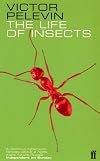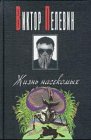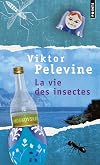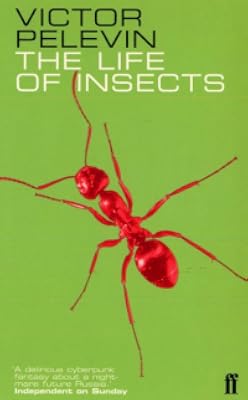
The Life of Insects
by Viktor Pelevin
On This Page
Description
Set in a crumbling Black Sea resort, the novel follows the misadventures of two Russians, Arnold and Arthur, and the khakiclad Sam, a visiting American. These characters, it turns out, are depicted alternately as humans and as insects -- now they are humans with buggy qualities, now insects that walk and talk. As they forage, quarrel and joke in the squalid rooms of the resort -- and on the bodies of their hosts -- they encounter other members of Pelevin's satirical bestiary, and the resort show more itself comes to represent the decaying former Soviet Union.Few writers could pull off such a conceit; in Pelevin's hands, it is a sustained piece of artistry. The Life of Insects is a bitter parable of contemporary Russia, full of the probing, disenchanted comedy that makes Pelevin a vital and altogether surprising new writer. show lessTags
Recommendations












Member Reviews
I remember how excited I was when I heard that the "bug lady" would be visiting my daughter's preschool. Bug, lady, ladybug — a metamorphic marvel! Of course, she turned out to be an ordinary lady with a modest bug menagerie. But this novel is the real thing, with its cast of simultaneously insect-human characters straining against the chemical constraints of their curious life-cycles in the irrational landscape of the former USSR. Their stories interlink but are equally effective on their own: the tragic hemp bugs/stoners who crawl inadvertently into a "papyrosa" joint; the cockroach who digs for victory and is rewarded with a new life as a cicada; the mosquitoes, post-Soviet hucksters on the make, sampling the sanguinary diversity show more on offer at a Black Sea resort. The saddest story arc though is surely that of Marina the ant and her daughter Natasha, who rejects her mom's identity, wills herself a new one as a fly, and meets a sticky end.
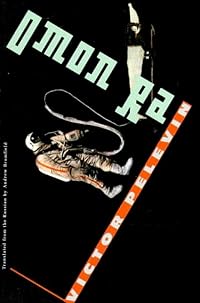
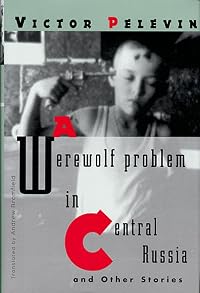
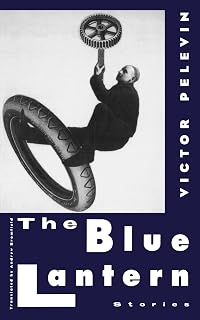
There are so many ways of reading this (existentialism, post-Communist koan, modern nursery rhyme); perhaps too many. I think I prefer the more tangible satire of the stories in "The Blue Lantern" and "A Werewolf Problem in Central Russia", and most of all in Pelevin's classic novel of disillusion "Omon Ra". But as bug novels go, this is one of the best. show less
There are so many ways of reading this (existentialism, post-Communist koan, modern nursery rhyme); perhaps too many. I think I prefer the more tangible satire of the stories in "The Blue Lantern" and "A Werewolf Problem in Central Russia", and most of all in Pelevin's classic novel of disillusion "Omon Ra". But as bug novels go, this is one of the best. show less
I love weird books but they’re surprisingly hard to find. I don’t mean books with weird characters, or edgy themes. I mean books that turn your brain upside down and make you wonder what in the hell you’ve just read. (I’m always on the lookout, so drop me a line if you have any recommendations!)
I discovered this book by doing a Google search somewhere to the effect of: Google, show me weird books that will cause me to question my grasp of reality. The Life of Insects by Victor Pelevin appeared in a blog list of surreal novels, and I was happy to find an affordable copy on Thriftbooks.com.
Pelevin is a Russian author, and the book is set in post-USSR Russia where we encounter a cast of characters finding their way in a largely show more inhospitable world. They plot business ventures, give birth and raise children, work, emigrate, and go to movies. Oh, and they’re also all insects. Mosquitoes, flies, roaches, cicadas, ants. Pelevin doesn’t bother trying to be scientifically correct (a fly and a mosquito have a fling), nor does he alter the world to accommodate the viewpoint of bugs. They are simply insects living life as humans, questioning the meaning of their existence, suffering loss, hungry for some…thing that none of them really quite seem to be able to articulate.
It is, in fact, one of the most disorienting, surreal books I’ve read. At the same time, its viscerally relatable and deeply human. There’s a sadness in each of these characters’ lives, an undeniable resignation of how hard life can be, and a powerful melancholy that is typical of Russian literature. I don’t want to give away any of the plot, so I’ll tempt you with the quote that opens the book:
“In the garden where I sit a torch is burning.
I’m alone – no lady, servant, or acquaintance.
Not the humble of this world, nor yet its mighty –
Nothing but the buzzing of an insect chorus.”
– Joseph Brodsky
I do think that I’d have enjoyed reading this even more if I had a better understanding of modern Russian culture. Also, the book has been translated, which means some of the ideas may not have come through as clearly as they would be in the original Russian. Regardless, it’s fantastic. I’m so glad I stumbled on this and I’ll likely re-read it at some point in the future because it’s exactly the kind of book that reveals itself further each time it's read. show less
I discovered this book by doing a Google search somewhere to the effect of: Google, show me weird books that will cause me to question my grasp of reality. The Life of Insects by Victor Pelevin appeared in a blog list of surreal novels, and I was happy to find an affordable copy on Thriftbooks.com.
Pelevin is a Russian author, and the book is set in post-USSR Russia where we encounter a cast of characters finding their way in a largely show more inhospitable world. They plot business ventures, give birth and raise children, work, emigrate, and go to movies. Oh, and they’re also all insects. Mosquitoes, flies, roaches, cicadas, ants. Pelevin doesn’t bother trying to be scientifically correct (a fly and a mosquito have a fling), nor does he alter the world to accommodate the viewpoint of bugs. They are simply insects living life as humans, questioning the meaning of their existence, suffering loss, hungry for some…thing that none of them really quite seem to be able to articulate.
It is, in fact, one of the most disorienting, surreal books I’ve read. At the same time, its viscerally relatable and deeply human. There’s a sadness in each of these characters’ lives, an undeniable resignation of how hard life can be, and a powerful melancholy that is typical of Russian literature. I don’t want to give away any of the plot, so I’ll tempt you with the quote that opens the book:
“In the garden where I sit a torch is burning.
I’m alone – no lady, servant, or acquaintance.
Not the humble of this world, nor yet its mighty –
Nothing but the buzzing of an insect chorus.”
– Joseph Brodsky
I do think that I’d have enjoyed reading this even more if I had a better understanding of modern Russian culture. Also, the book has been translated, which means some of the ideas may not have come through as clearly as they would be in the original Russian. Regardless, it’s fantastic. I’m so glad I stumbled on this and I’ll likely re-read it at some point in the future because it’s exactly the kind of book that reveals itself further each time it's read. show less
There’s an allegory that could be teased out of this book but suffice it to say Brezhnev would have had the author sitting in a gulag for the rest of his short life while Stalin would have had Pelevin shot. There are two resorts by the sea; Magadan on the Sea of Okhotsk and an unnamed one (Sochi) on the Black Sea across from Turkey. Isn’t it just too coincidental that we are reading this book that takes place in Sochi while the Winter Olympics are taking place there at the same time? In the Soviet Union, Sochi was a holiday spot for the workers who were guaranteed a yearly vacation. Could the comments on insects being poisoned by calcium cyanide since the wives need foreign currency, refer to the artificial famine (Holodomor) that show more took place in Ukraine? Stalin needed foreign currency to buy machinery for industrialization and got it by forcibly removing grain from Ukrainian farmers and selling it on world markets. Marina is impregnated by Major Nikolai from Magadan. Magadan was an infamous gulag on the shores of the Sea of Okhotsk in Siberia. Marina and Nikolai are ants which represent the military and the KGB. The Soviet Union collapsed in 1991 which allowed Russian soil to become Ukrainian soil again. Seryozcha the cicada represents prisoners in the gulags who laboured in mines or digging canals. Could the cannibalism by Marina and Natasha the ants represent the cannibalism that took place all over the Soviet Union during WWII or Holodomor? Do the dung beetles personify a slaving population? I enjoyed the book for I took a degree in Russian literature, language, and history at university and was constantly reading between the lines. On the other hand, if you don’t follow Soviet/Russian history, then you’ll probably be in the dark. show less
A blistering read from a mind that wanders far over the edge of expected limitations. It's just bugs, but it's people, it's countries, stereotypes, it's who we are, why we are, what we are. It's ants in stilettos, cutting commentary on postmodern cultural dissatisfaction, tiny details and far above insights. What a great writer, what a great book!!
In a sophisticated display of allegory, fantasy, and philosophical inquiry, Victor Pelevin creates an Ovidian, shape-shifting world that never fails to resonate on various strata with our own.
The Life of Insects opens with a trio of investors--two Russians and one American--discussing business prospects in the Crimea, when, suddenly, they reveal themselves to be mosquitoes in search of hemoglobin and glucose. Other figures morph from human to insect (and back again) in this thoroughly disorienting yet strangely familiar Kafkaesque novel. Both a parody of traditional Russian prose and a savage commentary of post-Soviet culture, The Life of Insects is a triumphant act of storytelling.
The Life of Insects opens with a trio of investors--two Russians and one American--discussing business prospects in the Crimea, when, suddenly, they reveal themselves to be mosquitoes in search of hemoglobin and glucose. Other figures morph from human to insect (and back again) in this thoroughly disorienting yet strangely familiar Kafkaesque novel. Both a parody of traditional Russian prose and a savage commentary of post-Soviet culture, The Life of Insects is a triumphant act of storytelling.
I should start off saying I detest Kafka, so there wasn't a ton of hope that Victor Pelevin's novel "The Life of Insects" was going to get a high rating for me. Pelevin takes Kafka's ideas from "The Metamorphosis" and elevates them to another level.
In the book, people are bugs. There are quite a few clever bits woven throughout the stories, which I liked. You would probably get more out of the book if you know more about modern day Russia... I felt like there were a bunch of inside jokes that I never really understood.
An interesting read overall, but not one that I particularly enjoyed.
In the book, people are bugs. There are quite a few clever bits woven throughout the stories, which I liked. You would probably get more out of the book if you know more about modern day Russia... I felt like there were a bunch of inside jokes that I never really understood.
An interesting read overall, but not one that I particularly enjoyed.
I had mixed reactions to this book:
What I Liked: I loved the premise of satirizing life in late 20th Russia by showing people as sometimes-insects, or insects as sometimes-people. The whole book was terribly clever.
I also liked the chapter structure that sort of cycled between different insects (some interact with the others, some don't). Some of their stories were very interesting and amusing.
The language was quite simple and straightforward, which helped, because the imagery was sometimes difficult to sort out in my brain . . .
What I Disliked: because characters morphed from human to insect and back again, sometimes on a sentence-by-sentence level, and characters also morphed from one type of insect to another, it was often difficult show more to form a mental picture in my head of what I was reading.
Here's one example: “Seyozha especially loved finding windows: he would thrust his fingers into the earth and carefully feel the cold hard surface, then clean it off, trying to guess what he would see behind the glass.” As I read on in this story ("Paradise"), the metaphor here became clear and was rather clever. But reading this, my brain couldn't figure out what it looked like--windows in the dirt? Insects with fingers? Human digging for windows in the earth? Huh?! There were a lot of these moments.
I also found that I never really wanted to pick this up and read it. I had to force myself. Once I got into it, I liked it, but I was never that sad to put it down either. Often the characters were quite boring. show less
What I Liked: I loved the premise of satirizing life in late 20th Russia by showing people as sometimes-insects, or insects as sometimes-people. The whole book was terribly clever.
I also liked the chapter structure that sort of cycled between different insects (some interact with the others, some don't). Some of their stories were very interesting and amusing.
The language was quite simple and straightforward, which helped, because the imagery was sometimes difficult to sort out in my brain . . .
What I Disliked: because characters morphed from human to insect and back again, sometimes on a sentence-by-sentence level, and characters also morphed from one type of insect to another, it was often difficult show more to form a mental picture in my head of what I was reading.
Here's one example: “Seyozha especially loved finding windows: he would thrust his fingers into the earth and carefully feel the cold hard surface, then clean it off, trying to guess what he would see behind the glass.” As I read on in this story ("Paradise"), the metaphor here became clear and was rather clever. But reading this, my brain couldn't figure out what it looked like--windows in the dirt? Insects with fingers? Human digging for windows in the earth? Huh?! There were a lot of these moments.
I also found that I never really wanted to pick this up and read it. I had to force myself. Once I got into it, I liked it, but I was never that sad to put it down either. Often the characters were quite boring. show less
Members
- Recently Added By
Lists

Short and Sweet
246 works; 24 members

the dog was the hero
31 works; 5 members

Read These Too
458 works; 9 members
Talk Discussions
Past Discussions
February Group Read: The Life of Insects in 1001 Books to read before you die (March 2024)
Author Information

Some Editions
Awards and Honors
Series
Belongs to Publisher Series
群像社ライブラリー (5)
Work Relationships
Common Knowledge
- Canonical title*
- Жизнь насекомых
- Original publication date
- 1993
- Important places
- Russia
- Original language
- Russian
*Some information comes from Common Knowledge in other languages. Click "Edit" for more information.
Classifications
- Genres
- Fiction and Literature, General Fiction, Fantasy
- DDC/MDS
- 891.7344 — Literature & rhetoric Literatures of other languages East Indo-European and Celtic literatures Russian and East Slavic languages Russian fiction USSR 1917–1991 Late 20th century 1917–1991
- LCC
- PG3485 .E38 .Z3613 — Language and Literature Slavic languages and literatures. Baltic languages. Albanian language Slavic. Baltic. Albanian Russian literature Individual authors and works 1961-2000
- BISAC
Statistics
- Members
- 537
- Popularity
- 55,754
- Reviews
- 13
- Rating
- (3.60)
- Languages
- 13 — Dutch, English, Finnish, French, German, Hungarian, Italian, Japanese, Polish, Portuguese (Portugal), Russian, Spanish, Swedish
- Media
- Paper
- ISBNs
- 29
- ASINs
- 2