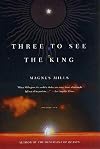
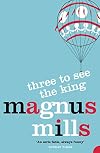
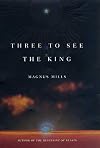
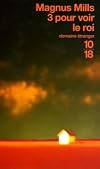
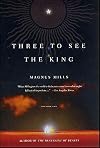
Three to See the King
by Magnus Mills
On This Page
Description
This wry and uncanny tale is one of civilization and discontent, of community and solitude, of domesticity and adventure, of leaders and followers.Tags
Recommendations













Member Recommendations
Member Reviews
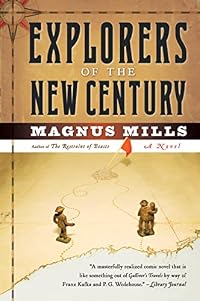
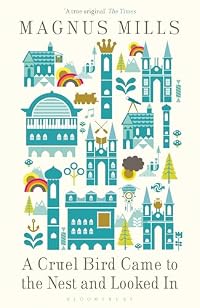
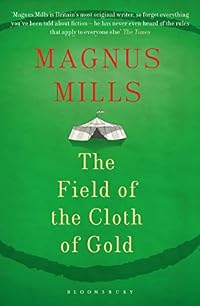
I’ve been in a rare and unsettling reading slump this week, during which I failed to properly get into [b:The Beach Beneath the Street: The Everyday Life and Glorious Times of the Situationist International|10325403|The Beach Beneath the Street The Everyday Life and Glorious Times of the Situationist International|Kenneth McKenzie Wark|https://images.gr-assets.com/books/1414351916s/10325403.jpg|15227846] and [b:The Sellout|22237161|The Sellout|Paul Beatty|https://images.gr-assets.com/books/1403430899s/22237161.jpg|41610676] so instead read a large chunk of the internet. It was therefore a relief to pick up [b:Three to See the King|325603|Three to See the King|Magnus show more Mills|https://images.gr-assets.com/books/1312003080s/325603.jpg|1787312] this evening and read it straight through. It’s very similar in tone, structure, and ambiguity to Mills’ more recent fables, [b:A Cruel Bird Came to the Nest and Looked In|11076156|A Cruel Bird Came to the Nest and Looked In|Magnus Mills|https://images.gr-assets.com/books/1327334315s/11076156.jpg|15997637] and [b:The Field of the Cloth of Gold|23471579|The Field of the Cloth of Gold|Magnus Mills|https://images.gr-assets.com/books/1425373568s/23471579.jpg|43063374]. Personally I prefer it when he puts more of a sting in the tail, as in [b:Explorers of the New Century|1502616|Explorers of the New Century|Magnus Mills|https://images.gr-assets.com/books/1184365917s/1502616.jpg|316249] and [b:The Restraint of Beasts|323208|The Restraint of Beasts|Magnus Mills|https://images.gr-assets.com/books/1348299275s/323208.jpg|1310862]. Nonetheless, there is something uniquely soothing about his tales of nothing in particular. In these abstract worlds he conjures, capitalism doesn’t seem to exist, which makes me think that they are metaphors for it. In this case, I began the book hoping the narrator was a woman (disappointingly this turned out not to be the case), subsequently became convinced in the middle that it was an allegory for industrialisation, and at the end had shrugged off attempts at deriving a definitive meaning from it. Perhaps there is only as much meaning to the story as the reader brings with them. There could be some message about human social relations, consumerism, or political organisation, perhaps. Just as likely, it’s a little parable about how contrary people can be. I found it pleasantly diverting, in any case.
[EDIT: Just noticed that the reading slump followed my 666th goodreads review. So I guess Satan was to blame for it.] show less
[EDIT: Just noticed that the reading slump followed my 666th goodreads review. So I guess Satan was to blame for it.] show less
A man lives alone on a windswept plain, in a house of tin. Daily he sweeps the red dust from the walls of the house. The shutters are closed to stop the dust getting in, and are never opened; in summer the door is propped open with a stick. In winter the man loves to listen to the creaking of the tin walls and the wind whistling under the eaves. His three closest neighbours, a few hours' walk away, live solitary lives in their own tin houses.
Into this solitary contentment comes a woman, a distant acquaintance, who moves in with her bags and boxes. The neighbours start dropping in regularly. Instead of peace there is chatter; feelings are hurt; the peace of the tin house is no more. The man and his neighbours remain friends because they show more are pioneers: the men who live in tin houses on a windswept plain.
Far off there is another tin house dweller, a man so charismatic that he draws hundreds of people to him, trudging across the plain carrying tin.
This is a bizarre story, told in Magnus Mills' inimitable deadpan style. Very funny, with a lingering eerie aftertaste. show less
Into this solitary contentment comes a woman, a distant acquaintance, who moves in with her bags and boxes. The neighbours start dropping in regularly. Instead of peace there is chatter; feelings are hurt; the peace of the tin house is no more. The man and his neighbours remain friends because they show more are pioneers: the men who live in tin houses on a windswept plain.
Far off there is another tin house dweller, a man so charismatic that he draws hundreds of people to him, trudging across the plain carrying tin.
This is a bizarre story, told in Magnus Mills' inimitable deadpan style. Very funny, with a lingering eerie aftertaste. show less
Late in the afternoon Mary Petrie came outside with me to admire the new weathercock, which, she agreed, looked quite nice. I made no remarks about how unnecessary it was, nor did I point out that the wind showed no sign of abating. Instead I played the part to which I had become accustomed, in which a man remains master of his own home, so long as he observes all the rules
The protagonist of this tale is very happy living by himself in a tin house on a sandy plain. He only sees his neighbours, three other men who live by themselves in houses made of tin, occasionally, and that is fine by him. One day a woman he hardly knows turns up on his doorstep and he lets her stay. To start with he doesn't know why she has come and resents her show more presence, but after a while they start living together and things calm down. But then his neighbours tell him about a man named Michael Hawkins who lives 'even further out' and things begin to change, much to the protagonist's consternation.
It is a story about living alone and with others, friendship and neighbourliness, self-reliance and belonging to a group. A very short book, written in Magnus Mill's usual sparse style, but leaving you with plenty of things to think about. show less
The protagonist of this tale is very happy living by himself in a tin house on a sandy plain. He only sees his neighbours, three other men who live by themselves in houses made of tin, occasionally, and that is fine by him. One day a woman he hardly knows turns up on his doorstep and he lets her stay. To start with he doesn't know why she has come and resents her show more presence, but after a while they start living together and things calm down. But then his neighbours tell him about a man named Michael Hawkins who lives 'even further out' and things begin to change, much to the protagonist's consternation.
It is a story about living alone and with others, friendship and neighbourliness, self-reliance and belonging to a group. A very short book, written in Magnus Mill's usual sparse style, but leaving you with plenty of things to think about. show less
This is a delightful little book. The narrator is living in a house made of tin, in a bleak and sparsely populated landscape. One day a woman turns up and moves in. He's not unhappy about this, although slightly discomfited by the changes she makes to his comfortable lifestyle. Meanwhile, his neighbours keep on about a man, Michael, who lives further up the valley, whom they first praise for his intelligence and grace, and who gradually achieves the status of a guru or messiah. Of course, eventually the narrator is forced to go and investigate this Michael for himself. The story is (fairly obviously) a parable of sorts, the meaning of which will probably be different for each person who reads it. But the telling of it makes for a show more wonderful piece of writing which I heartily recommend. show less
Low key, quirky, ominous perfection
"Existing in a house of tin was an end unto itself, a particular state of being, and time didn't come into it"
A happy curmudgeon lives in a tin house in a featureless, undisclosed desert until an old acquaintance turns up on with a suitcase and rumours of a messianic tin house builder far away to draw him out of his
As sparse as its setting, this is a pared down story, almost a parable, with dead pan humour and a deftly wry look at humanity. Solitude and mob mentality, neighboured politics, urbanisation and false prophets. Funny, thoughtful and nightmarish. Mills is pretty much one of a kind, the everyday made ominous, societies unwritten rules looming large as cruel crisis and his books are an show more experience in themselves. I really would urge everyone to try him at least once, maybe not to start here (try Restraint of Beasts ).
Recommended, unless you need a fast paced adventure tale. It may not be my favourite of his work but fans will enjoy this hugely. show less
"Existing in a house of tin was an end unto itself, a particular state of being, and time didn't come into it"
A happy curmudgeon lives in a tin house in a featureless, undisclosed desert until an old acquaintance turns up on with a suitcase and rumours of a messianic tin house builder far away to draw him out of his
As sparse as its setting, this is a pared down story, almost a parable, with dead pan humour and a deftly wry look at humanity. Solitude and mob mentality, neighboured politics, urbanisation and false prophets. Funny, thoughtful and nightmarish. Mills is pretty much one of a kind, the everyday made ominous, societies unwritten rules looming large as cruel crisis and his books are an show more experience in themselves. I really would urge everyone to try him at least once, maybe not to start here (try Restraint of Beasts ).
Recommended, unless you need a fast paced adventure tale. It may not be my favourite of his work but fans will enjoy this hugely. show less
In which a man who lives alone in a harsh wasteland finds himself pressed into a social existence when he is joined by a quarrelsome woman at the same time that his scattered neighbors befriend him and try to share their enthusiasm for a distant, messianic figure who lives "even further out". This novella's themes of individualism vs. companionship, the appeal (or lack of same) to humanity of belief in a god, and the nature of charismatic political or religious leadership is evocative of themes addressed by great novelists through the centuries, as well as having an extremely strong linkage to Nietzschean philosophy. Old school rock fans will be reminded of The Who's Tommy. The author tells his story with bleak, sparse prose which suits show more the mood of his story and keeps pages turning. Few are the works of fiction which surpass this. show less
I first came across the author Magnus Mills when a lot of people were evangalising his novel - The Restraint of Beasts. Although I’ve still to add that title to my collection, I had the opportunity to pick up Three to See the King, so I could at least get a taste of Mills as a writer. I’m glad I did because Three to See the King is a nice little story and one that will stay wholly memorable with me for years to come.
Three to See the King is a fable told in first-person perspective. It’s about a man (the narrator) who lives alone in a little tin house, on a barren, sand-covered desolate landscape. He has neighbours who also live in tin houses but each lives some miles apart, and they rarely see one another. The man’s life begins show more to change when a partially known woman Mary Petrie comes to live with him. His strict routine changes and he begins to settle into a life of cohabiting and companionship. At this time he also begins customising his tin house a little more, and interacting to a greater effort with his neighbours. Soon his neighbours begin evangelising about another neighbour, one that lives further out to the east - the enigmatic Michael Hawkins, a man who seems both charismatic and ambitious. As time passes the neighbours show a desire to move closer to Michael, and try to urge the unnamed narrator, and his lady-friend to do the same.
I really liked this story. It’s simple in its prose but deep in its meaning. I read this as one of my titles for this year’s 24 Read-a-Thon and found it really readable. As it’s a fable it’s a little strange in parts and from the start you question the story because in many ways it defies logic - Why on earth is the man living on his own in such a desolate place? How did he get there? How does he sustain himself? The fact is none of these questions matter. What does matter are the moralistic lessons that the story teaches you; lessons that aren’t fully learned until the end, but it’s well worth sticking with the story, although you shouldn’t find that too difficult a job.
I Like how Mills writes. He writes simply; to the point, with no sense of pretentious narrative. His description of setting and character is well handled, and reading Three to See the King is akin to listening to a traditional story-teller narrating a traditional story. I’m sure Mills’ award-winning Restraint of Beasts will usually be perceived as the better novel but this novel, on its own merit, is an accomplished title and should not be missed.
Favourite Quote: “In the morning I overslept. When finally I awoke the first thing I heard was Simon clumping around on the roof. Mary Petrie had risen before me and stood tending the stove.
‘How come you’re up so early?” I asked.
‘I thought I’d make the pair of you some coffee.’
‘Thanks,’ I said. ‘What’s he doing up there?’
‘He’s seeing if there’s anywhere to put a flagpole.’
‘I don’t want a flagpole!’
‘He seems to think you do.’
‘Well, I don’t!’
I got up and went outside just as Simon came clambering down.
Favourite Scene: The narrator’s closest neighbour Simon Painter decides to move his house and the narrator, mad at his neighbours increasing infatuation with Michael Hawkins, decides not to help Simon move but rather to take over a basket of provisions every day for Simon and the two neighbours that are helping him move. It’s a scene I realy like; not least because it’s compassionate and neighbourly.
What this novel has taught me about writing: Don’t just write to entertain. Be moralistic, put in a few ‘life lessons’ and give the reader something more to take away with them. show less
Three to See the King is a fable told in first-person perspective. It’s about a man (the narrator) who lives alone in a little tin house, on a barren, sand-covered desolate landscape. He has neighbours who also live in tin houses but each lives some miles apart, and they rarely see one another. The man’s life begins show more to change when a partially known woman Mary Petrie comes to live with him. His strict routine changes and he begins to settle into a life of cohabiting and companionship. At this time he also begins customising his tin house a little more, and interacting to a greater effort with his neighbours. Soon his neighbours begin evangelising about another neighbour, one that lives further out to the east - the enigmatic Michael Hawkins, a man who seems both charismatic and ambitious. As time passes the neighbours show a desire to move closer to Michael, and try to urge the unnamed narrator, and his lady-friend to do the same.
I really liked this story. It’s simple in its prose but deep in its meaning. I read this as one of my titles for this year’s 24 Read-a-Thon and found it really readable. As it’s a fable it’s a little strange in parts and from the start you question the story because in many ways it defies logic - Why on earth is the man living on his own in such a desolate place? How did he get there? How does he sustain himself? The fact is none of these questions matter. What does matter are the moralistic lessons that the story teaches you; lessons that aren’t fully learned until the end, but it’s well worth sticking with the story, although you shouldn’t find that too difficult a job.
I Like how Mills writes. He writes simply; to the point, with no sense of pretentious narrative. His description of setting and character is well handled, and reading Three to See the King is akin to listening to a traditional story-teller narrating a traditional story. I’m sure Mills’ award-winning Restraint of Beasts will usually be perceived as the better novel but this novel, on its own merit, is an accomplished title and should not be missed.
Favourite Quote: “In the morning I overslept. When finally I awoke the first thing I heard was Simon clumping around on the roof. Mary Petrie had risen before me and stood tending the stove.
‘How come you’re up so early?” I asked.
‘I thought I’d make the pair of you some coffee.’
‘Thanks,’ I said. ‘What’s he doing up there?’
‘He’s seeing if there’s anywhere to put a flagpole.’
‘I don’t want a flagpole!’
‘He seems to think you do.’
‘Well, I don’t!’
I got up and went outside just as Simon came clambering down.
Favourite Scene: The narrator’s closest neighbour Simon Painter decides to move his house and the narrator, mad at his neighbours increasing infatuation with Michael Hawkins, decides not to help Simon move but rather to take over a basket of provisions every day for Simon and the two neighbours that are helping him move. It’s a scene I realy like; not least because it’s compassionate and neighbourly.
What this novel has taught me about writing: Don’t just write to entertain. Be moralistic, put in a few ‘life lessons’ and give the reader something more to take away with them. show less
Members
- Recently Added By
Author Information

22+ Works 3,303 Members
Magnus Mills lives in London. (Publisher Provided) Magnus Mills is the author of A Cruel Bird Came to the Nest and Looked In and six other novels, including The Restraint of Beasts, which won the McKitterick Prize and was shortlisted for both the Booker Prize and the Whitbread (now the Costa) First Novel Award in 1999. His most recent novel, A show more Cruel Bird Came to the Nest and Looked In, was published to great critical acclaim. His books have been translated into twenty languages. His title, The Field of the Cloth of Gold, made the Goldsmiths Prize shortlist 2015. (Bowker Author Biography) show less
Common Knowledge
- Canonical title*
- Taivaanrannan kulkijat
- Original title
- Three to See the King
- Original publication date
- 2001
*Some information comes from Common Knowledge in other languages. Click "Edit" for more information.
Classifications
Statistics
- Members
- 398
- Popularity
- 77,899
- Reviews
- 15
- Rating
- (3.68)
- Languages
- 11 — Czech, Danish, Dutch, English, Finnish, French, German, Icelandic, Italian, Spanish, Swedish
- Media
- Paper, Ebook
- ISBNs
- 20
- ASINs
- 4