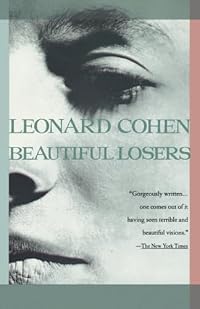
Beautiful Losers
by Leonard Cohen
On This Page
Description
This well-known experimental novel from the 1960s imagines hell as an apartment in Montreal, where a bereaved and lust-tormented narrator reconstructs his relationships with the dead.Tags
Recommendations



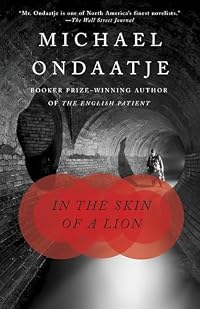





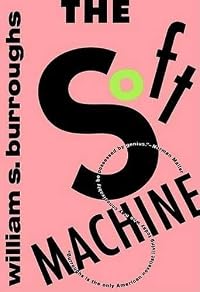
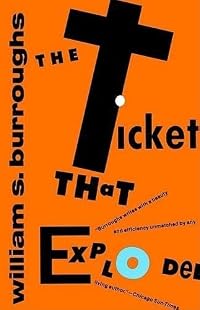














Member Recommendations
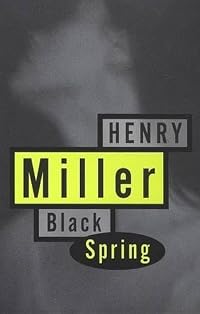
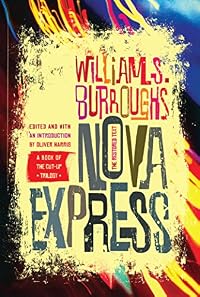
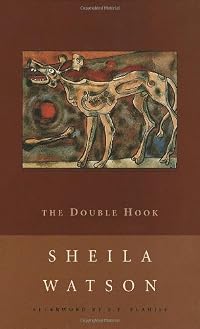
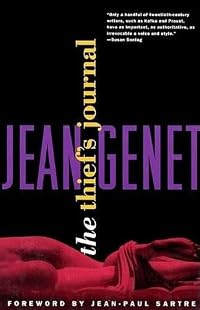
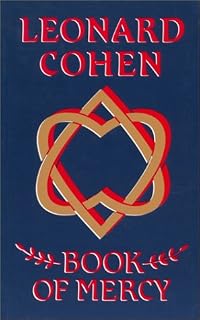
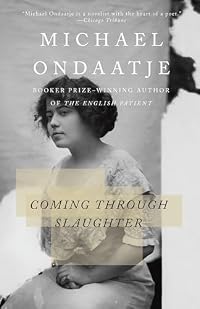
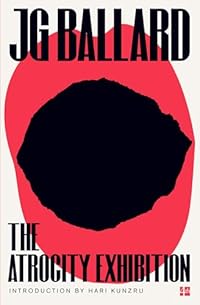
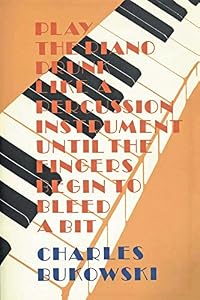
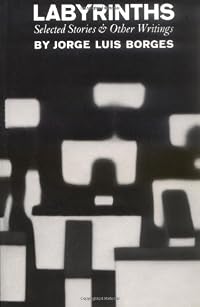
Bridgey My Favourite Game & Beautiful Losers are the only 2 novels by Cohen. Both confusing, but Beautiful losers doesn't seem to have too much in the way of a plot.
Member Reviews
One of the best-known experimental novels of the 1960s, Beautiful Losers is Leonard Cohen’ s most defiant and uninhibited work. As imagined by Cohen, hell is an apartment in Montreal, where a bereaved and lust-tormented narrator reconstructs his relations with the dead. In that hell two men and a woman twine impossibly and betray one another again and again. Memory blurs into blasphemous sexual fantasy--and redemption takes the form of an Iroquois saint and virgin who has been dead for 300 years but still has the power to save even the most degraded of her suitors. First published in 1966, Beautiful Losers demonstrates that its author is not only a superb songwriter but also a novelist of visionary power. Funny, harrowing, and show more fiercely moving, it is a classic erotic tragedy, incandescent in its prose and exhilarating for its risky union of sexuality and faith. show less
This book makes me so wistful. Pre-internet, pre-irony, just sucking a dude off in a rowboat. I couldn't stop reading! Wanders from the material to the mystical without ever losing its sense of humor, and despite all its excesses never loses its humanity. I felt the same way when I read "Les Enfants Terribles" when I was younger, like, here was this sexy book about kissing cousins, so decadent, so apolitical and unnecessary, so why did I like it so much? (Besides the obvious.) Because books like these play out like vivid fever dreams, written in ecstatic prose that recreates a kind of religious experience. There's so few things that can evoke that raw feeling, again with the DFW quotes, something something about sex, religion, fiction show more and music being the few places where loneliness can be transfigured & treated. So much psychedelic and experimental lit I just wanna throw in the junkbin but this book is like a sad-eyed thrift store Jesus, totally mesmerizing. Leonard Cohen can embody any moment and make it radiate outwards/inwards. This is the kind of book I wish I could write. show less
In the early sixties, the authors' life, which until then had been an intoxicating carosel of music,booze, and sex escapades, was turned inside out. His beautiful wife, his muse, his fellow traveler through that life, took her own life. His best friend and longtime philosofical mentor,dying of some hideous disease, decides to pick this time to confess to his long time affair with said wife, dying shortly after. Momentary recap: wife, best friend,dead. Not before destroying every last cell of human sentiment left in the man. There is no word in the English dictionary for that feeling. The author, when asked where he was coming from in this novel, replied: "sunstroke"
The rest of us would choose the obvious, a bullet, a truckload of booze show more or simply put on a dress, pickup a machine gun and head on down to the post office to make things right. But not our dear Mr. Cohen, instead he wrote.
At first, I was a little confused,maybe even a little frightened, I wished I was stoned so could make some sense of it. It was a metaphorical rodeo of words and I was riding a panicked blind horse at full speed through it. Then he took a breath and I breathed with him and I glimsped his aim. He was vomiting his pain and it was spewing out in seemingly nonsensical order but was forming the most heartbreaking blues tune ever written. In rare moments, he would come to himself and start a fantasy about some character from 200 years in the past, then just as suddenly the next verse would start and you just had to hang on.Memories of better times would surface and for a short time, you could catch your literary breath and then it would be time for the bridge and the final verse.
Songs like this never really end, you simply grow tired of singing them. I love his music,but not this song,this one, I already knew the words. show less
The rest of us would choose the obvious, a bullet, a truckload of booze show more or simply put on a dress, pickup a machine gun and head on down to the post office to make things right. But not our dear Mr. Cohen, instead he wrote.
At first, I was a little confused,maybe even a little frightened, I wished I was stoned so could make some sense of it. It was a metaphorical rodeo of words and I was riding a panicked blind horse at full speed through it. Then he took a breath and I breathed with him and I glimsped his aim. He was vomiting his pain and it was spewing out in seemingly nonsensical order but was forming the most heartbreaking blues tune ever written. In rare moments, he would come to himself and start a fantasy about some character from 200 years in the past, then just as suddenly the next verse would start and you just had to hang on.Memories of better times would surface and for a short time, you could catch your literary breath and then it would be time for the bridge and the final verse.
Songs like this never really end, you simply grow tired of singing them. I love his music,but not this song,this one, I already knew the words. show less
the great Canadian Dirty Book! It was also a quite well crafted exploration of the heady delights of the first fully explored love affair. While i am told, it is very male oriented, it is still a good example of what "he" was thinking....perhaps there hasn't been a female novel of the same stature.....please advise....
A strange and difficult book, I confess that oftentimes I didn't really know what I was reading about in Beautiful Losers. Perhaps this is my fault, but it is certainly not a book that is easy to truly engage with. It veers wildly in style and substance; it varies from steady prose to experimental ramblings, from intensely eloquent poetry to crude imagery and vulgar language. Obtuse and borderline impenetrable, it occasionally introduces passages in untranslated French and Greek. Consequently, it is hard to really get a grasp on it. Cohen himself, in a 'Note to the Reader' at the end of my 2009 Blue Door edition, describes it, in his endearingly modest, self-deprecating way, as 'the frenzied thoughts of my youth' and 'more of a show more sunstroke than a book'. These are apt descriptions, and there is no sure way of determining whether prospective readers will enjoy it (though surely devoted Cohenites like myself will have patience with it). For my part, I enjoyed having Cohen's prose swimming around in my head, even though the larger picture failed to manifest itself. show less
My rating of this book is probably proof that I'll forgive a novel just about anything if it sounds enough like a poem. This book was absolutely weird (it's also absolutely filthy and would be a great choice for anyone who wants to punk their book club). Was it good literature? Someone better than me will have to figure that out, because I couldn't tell. Who cares, it has passages like this:
"Fashion this prayer to Thee. I don't know to get it with 1000-voice choir effect like 'consider the lily.' Fashion this heap with gleaming snow-shovel facets, for I meant to build an altar. I meant to light a curious little highway shrine, but I drown in the ancient snake cistern. I meant to harness plastic butterflies with rubber-band motors and show more whisper: 'Consider the plastic butterfly': but I shiver under the shadow of the diving archaeopteryx."
And that was just a page I opened to at random. show less
"Fashion this prayer to Thee. I don't know to get it with 1000-voice choir effect like 'consider the lily.' Fashion this heap with gleaming snow-shovel facets, for I meant to build an altar. I meant to light a curious little highway shrine, but I drown in the ancient snake cistern. I meant to harness plastic butterflies with rubber-band motors and show more whisper: 'Consider the plastic butterfly': but I shiver under the shadow of the diving archaeopteryx."
And that was just a page I opened to at random. show less
A novel of beautiful passages and long, quasi-interesting metaphysical mumbo-jumbo befitting an experimental novel from the late-60s. A lot of Cohen's most famous scenes of love, betrayal, cuckoldry, desperation and sexuality appear here in various degrees of perfection.
All the passages about emotion, love and sex---about ownership in the age of free love---are beautiful and arresting. The narrator's love-triangle relationship with F., his swashbuckling companion, and Edith (his deceased wife) is truly powerful stuff.
It is Cohen's insistence of making the novel Metafictional, and historical, that really chunks the narrative down to a dulled pace. A lot of his points about history, story, and memory are made more powerfully thru the show more interactions of the novel's main characters than thru the narrator's often longwinded ramblings about Katherine and Canada.
Stylistically, Cohen is a genius, and his composition is virtually flawless on a sentence-by-sentence basis. However, sometimes beautiful prose and beautiful ideas are not enough to propel a novel's narrative and emotional weight.
A flawed, but beautiful novel, that always managed to make me bored after 20 pages, mostly because the scenes of emotional weight are pancaked between long portions of what seems to me like the sort of Academic pandering that has plagued Canadian writing for a while (OH, History is subjective! woop woop! Canadian Identity, woop!)
I struggled for years to enjoy this novel and eventually gave up around the half-way mark. This is upsetting since I am a HUGE Leonard Cohen mark and have always wanted to like his experimental writing. Unfortunately the novel is less enjoyable than the sum of its parts. show less
All the passages about emotion, love and sex---about ownership in the age of free love---are beautiful and arresting. The narrator's love-triangle relationship with F., his swashbuckling companion, and Edith (his deceased wife) is truly powerful stuff.
It is Cohen's insistence of making the novel Metafictional, and historical, that really chunks the narrative down to a dulled pace. A lot of his points about history, story, and memory are made more powerfully thru the show more interactions of the novel's main characters than thru the narrator's often longwinded ramblings about Katherine and Canada.
Stylistically, Cohen is a genius, and his composition is virtually flawless on a sentence-by-sentence basis. However, sometimes beautiful prose and beautiful ideas are not enough to propel a novel's narrative and emotional weight.
A flawed, but beautiful novel, that always managed to make me bored after 20 pages, mostly because the scenes of emotional weight are pancaked between long portions of what seems to me like the sort of Academic pandering that has plagued Canadian writing for a while (OH, History is subjective! woop woop! Canadian Identity, woop!)
I struggled for years to enjoy this novel and eventually gave up around the half-way mark. This is upsetting since I am a HUGE Leonard Cohen mark and have always wanted to like his experimental writing. Unfortunately the novel is less enjoyable than the sum of its parts. show less
Members
- Recently Added By
Published Reviews
"...a lyrical dream of Montreal, combined with Canadian religious history and the nature of sainthood."
added by SaintSunniva
Lists

CBC Books - Canada's 100 (+ bonus 10): Which have you read?
110 works; 23 members
The Best of Canadian Literature
235 works; 32 members

Canada Reads Winners and Nominees
129 works; 9 members

New Canadian Library
191 works; 7 members

You Couldn't Pay Me to Read That (Take 2)
203 works; 82 members
Author Information

191+ Works 10,718 Members
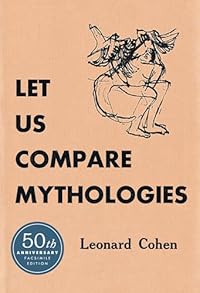
Leonard Norman Cohen was born in Montreal, Canada on September 21, 1934. He received a degree in English from McGill University and studied literature at Columbia University for a year. His first collection of poetry, Let Us Compare Mythologies, was published in 1956. His other collections of poetry include The Spice-Box of Earth, Flowers for show more Hitler, Death of a Lady's Man, Poems and Songs, and Book of Longing. He also wrote two novels entitled The Favorite Game and Beautiful Losers. He was a musician and songwriter for almost five decades. He recorded 14 studio albums including Songs of Leonard Cohen, Songs from a Room, Songs of Love and Hate, Ten New Songs, Dear Heather, Popular Problems, and You Want It Darker. He wrote numerous songs including Hallelujah, Suzanne, Dress Rehearsal Rag, Bird on a Wire, The Story of Isaac, Famous Blue Raincoat, Dance Me to the End of Love, First We Take Manhattan, Everybody Knows, and Tower of Song. In 2008, he was inducted into the Rock and Roll Hall of Fame. In 2010, he received a lifetime achievement award from the National Academy of Recording Arts and Sciences. He died on November 7, 2016 at the age of 82. (Bowker Author Biography) show less
Some Editions
Awards and Honors
Awards
Notable Lists
Series
Belongs to Publisher Series
New Canadian Library (153)
Literaire reuzenpocket (367)
Work Relationships
Common Knowledge
- Canonical title*
- Glorieuze verliezers
- Original publication date
- 1966
- Important places
- Montréal, Québec, Canada
- Epigraph
- Somebody said lift that bale.
-- Ray Charles singing Ol' Man River - Dedication
- for Steve Smith (1943-1964)
- First words
- Catherine Tekakwitha, who are you?
- Quotations*
- Bønn er oversettelse. Et menneske oversetter seg selv til et barn som ber om alt mulig på et språk det knapt behersker.
Er det kjøttet som straffer meg? Er det noen ville bølinger som har et skjevt øye til meg? Mord i kjøkkenet! Dachau-gårdstun! Vi oppdretter levende vesener bare for å spise dem! Elsker Gud en slik verden? For et nifst m... (show all)atsystem! Alle vi dyrestammer i evig krig! Hva har vi vunnet på det? Menneskene, matnazistene! Døden som matsystemets fundament! Hvem skal be kyrne om unnskyldning? Det er ikke vår feil, det var ikke vi som fant det på. Disse nyrene er nyrer. Dette er ikke en kylling, det er en kylling. Tenk på dødsleirene i hotellkjellerne. Blod på putene! Materie spiddet på tannbørstene! Alle dyr spiser, ikke for nytelse, ikke for gull, ikke for makt, men bare for å leve. For hvis evige Nytelse? I morgen begynner jeg å faste.
Jeg husker et av K'ungs ordtak som han var glad i: Når Mesteren spiste sammen med en mann i sorg, spiste han seg aldri mett. Onkler! onkler! hvordan våger en eneste av oss å spise? - Last words
- (Click to show. Warning: May contain spoilers.)Welcome to you, darling and friend, who miss me forever in your trip to the end.
*Some information comes from Common Knowledge in other languages. Click "Edit" for more information.
Classifications
Statistics
- Members
- 1,923
- Popularity
- 11,024
- Reviews
- 22
- Rating
- (3.42)
- Languages
- 18 — Catalan, Czech, Danish, Dutch, English, Finnish, French, German, Italian, Lithuanian, Norwegian (Bokmål), Norwegian, Polish, Portuguese, Romanian, Spanish, Swedish, Turkish
- Media
- Paper, Audiobook, Ebook
- ISBNs
- 60
- ASINs
- 26