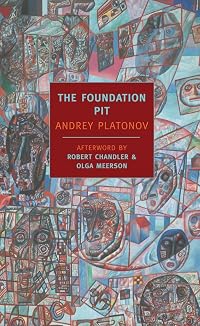
The Foundation Pit
by Andrey Platonov
On This Page
Description
Platonov's dystopian novel describes the lives of a group of Soviet workers who believe they are laying the foundations for a radiant future. As they work harder and dig deeper, their optimism turns to violence and it becomes clear that what is being dug is not a foundation pit but an immense grave.Tags
Recommendations










Member Reviews
As if I needed anything more depressing during such severe days of repetition and bleakness, I settle with Platonov's The Foundation Pit on my lap. While this month brings a lot of rain and dark clouds, I've gotten accustomed to waking up in very early mornings; the pitter-pattering bouncing against the windows, against rows of steel, against hard stone. Today I stared at the ceiling without much rest, with a tired heart, an empty mind, feeling sick, this philosophical fable brushing along my skull. The lengths people will go through for the idealistic promise of a better society have always been horrifying. In this dry yet evocative novel, the workers tirelessly dig a foundation for a majestic building. As they dig deeper, it becomes show more clear this is a grave for their overworked, exploited bodies. The religious allusions referred throughout The Foundation Pit greatly juxtaposes the godless utopia the Soviet Union promotes. The text from time to time is evasive, challenging. But the allegory on the early days of the Soviet Union, the disillusionment under the sickle and hammer symbol comes through; the liquidation of certain classes, Total Collectivization, dekulakilization. Several sacrifices along with the implied suffering/violence of its people for nought reveal the brutality at the expense of the progress never fully actualised.
"If we want to destroy religion and are conscious that this has to be done, since communism and religion are incompatible, then, in place of religion we must give the people not less than religion but more than religion. Many of us think that it is possible to take faith away without giving people anything better. The would of contemporary man is organized in such a way that if faith is removed, it will be completely overturned." show less
"If we want to destroy religion and are conscious that this has to be done, since communism and religion are incompatible, then, in place of religion we must give the people not less than religion but more than religion. Many of us think that it is possible to take faith away without giving people anything better. The would of contemporary man is organized in such a way that if faith is removed, it will be completely overturned." show less
Kettő darab kisregény.
1.) Munkagödör
Voscsev megbocsáthatatlan munkahelyi baklövést követ el – gondolkodni kezd. Aminek következtében a létező szocializmus fájó szívvel, de kénytelen kivetni magából, Voscsev pedig a pikareszk regények szabványai szerint elindul bele a világba, és el is jut a munkagödörig, amit egy mesébe illő szocialista kollektíva ásott ki magának. Ők aztán be is fogadják maguk közé, úgyhogy innentől kezdve Voscsev két dolgot csinál: gödröt ás, illetve a jövőbe tekint. Jó, aztán egy picit kuláktalanít is. (Megj.: érdekes, hogy akik a szebb jövőt építik, gyakran egy jó nagy gödör ásásával kezdik…)
2.) Az ifjúság tengere
Az alapmotívum itt is ugyanaz: van a show more kollektíva valahol az orosz vidék feneketlen távolságainak egyik végpontján, és van a „messziről érkezett ember”. Utóbbi Vermo mérnök, aki a világvégi hústermelő szovhozban kívánja megváltani a világot, előbbi meg a világvégi hústermelő szovhoz, ami ugye világvégi és megváltatlan. Lesznek ellenfelei és persze szövetségesei, közöttük is a legfontosabb Bosztalojeva, a kommunista élmunkásnők gyöngye, akinek egész alakos posztere bizonnyal ott virít minden szovjet olvasztár öltözőszekrényének ajtaján. Belülről. Munkaruhában. Természetesen. És akkor nekilódulnak felépíteni a jövőt ők is, bolsevik módra. Amiben a legnagyobb akadályt valószínűleg azok jelentik, akik szintén bolsevik módra akarják a jövőt felépíteni, csak sajnos nem egyeztették le a másik féllel, mit is kell érteni „bolsevik” alatt. Ja, meg persze a kulákok. Mert kuláktalanítás az itt is van. (Megj.: ez a szöveg talán kevésbé keserű, mint párdarabja. Bár itt is kellően szarkasztikus a platonovi kritika, de jóval megengedőbbnek tűnik úgy általában a szocialista állam alapeszméjével szemben.)
Nemrégiben olvastam a (talán kamu) Dosztojevszkij-mondást, miszerint „Mindannyian Gogol köpönyegéből bújtunk ki.” Nos, meglehet, de Platonov volt az (szerény véleményem szerint, nyilván), aki, mint Marx Hegelt, a fejéről a talpára állította Gogolt. Ő volt az, aki kiteljesítette annak groteszk vonulatát*, a klasszikus orosz epikus történetmesélés mellett (ami organikusan kapcsolódott a szovjet szocreálhoz – megint csak szerény véleményem szerint, de lehet vitatkozni) létrehozva azt az ívet, ami napjainkban Pelevinbe, Szorokinba vagy épp Akszjonovba (stb.) csatlakozik. Mindezt úgy, hogy meggyőződésem, maga Platonov eredendően egy tőrőlmetszett lírikus, csak épp a szovjet valóság olyan gombócnak bizonyult, amit egyszerűen képtelen volt lenyelni** – ebből a konfliktusból születik a platonovi próza, ami szerkesztésében ugyan eseti szinten zavarosnak és logikátlannak tűnik, de pont ezért képes igazán intenzíven ábrázolni a polgárháború utáni szovjet viszonyokat és a sztálini rendszer kifejlését. Úgy vélem, senki nem képes ilyen finom gúnnyal leképezni a bolsevik „jövőhajszolók” beszéd- és gondolkodásmódját, mint ő, a káoszt, a képlékeny ideák szürreális bakugrásait. Megkapó pontossággal mutat rá itt is a kommunizmus belső programhibáira: az egyén és közösség ambivalens viszonyára, a gondolkodás ártalmas voltára, és arra, hogy a hatalmat megízlelő csőcselék micsoda halálos fegyver mindenféle Nagy Vezérek kezében. Komikus könyv, persze, megannyi beleágyazott abszurd viccel – de az egész mögött ott van a félelem. És a félelmek között a legfélelmetesebb az, hogy Platonov hősei ritkán tépelődnek. Hisznek a jövőben – csillogó szemmel tekintenek a távolba, ahol képzeletükben a határtalan szovjet tudományosság hegymagas kupolái aranylanak. Nincsenek kétségeik. Biztosak benne, hogy jó emberek. Hisz hogy is lehetne rossz ember, aki nem önmaga hasznáért, hanem a jövőért dolgozik? És ezek a jó emberek kuláktalanítanak, feljelentést írnak, kivégzőosztag elé állítanak. Gyilkolnak. Ezek a jó emberek.
* Akad, aki ezt a pálmát talán Bulgakovnak adná. Nehéz ebben a kérdésben igazságot tenni, hisz betiltott íróként az irodalmi iskolákra való hatásuk évtizedes késéssel bontakozhatott csak ki. show less
1.) Munkagödör
Voscsev megbocsáthatatlan munkahelyi baklövést követ el – gondolkodni kezd. Aminek következtében a létező szocializmus fájó szívvel, de kénytelen kivetni magából, Voscsev pedig a pikareszk regények szabványai szerint elindul bele a világba, és el is jut a munkagödörig, amit egy mesébe illő szocialista kollektíva ásott ki magának. Ők aztán be is fogadják maguk közé, úgyhogy innentől kezdve Voscsev két dolgot csinál: gödröt ás, illetve a jövőbe tekint. Jó, aztán egy picit kuláktalanít is. (Megj.: érdekes, hogy akik a szebb jövőt építik, gyakran egy jó nagy gödör ásásával kezdik…)
2.) Az ifjúság tengere
Az alapmotívum itt is ugyanaz: van a show more kollektíva valahol az orosz vidék feneketlen távolságainak egyik végpontján, és van a „messziről érkezett ember”. Utóbbi Vermo mérnök, aki a világvégi hústermelő szovhozban kívánja megváltani a világot, előbbi meg a világvégi hústermelő szovhoz, ami ugye világvégi és megváltatlan. Lesznek ellenfelei és persze szövetségesei, közöttük is a legfontosabb Bosztalojeva, a kommunista élmunkásnők gyöngye, akinek egész alakos posztere bizonnyal ott virít minden szovjet olvasztár öltözőszekrényének ajtaján. Belülről. Munkaruhában. Természetesen. És akkor nekilódulnak felépíteni a jövőt ők is, bolsevik módra. Amiben a legnagyobb akadályt valószínűleg azok jelentik, akik szintén bolsevik módra akarják a jövőt felépíteni, csak sajnos nem egyeztették le a másik féllel, mit is kell érteni „bolsevik” alatt. Ja, meg persze a kulákok. Mert kuláktalanítás az itt is van. (Megj.: ez a szöveg talán kevésbé keserű, mint párdarabja. Bár itt is kellően szarkasztikus a platonovi kritika, de jóval megengedőbbnek tűnik úgy általában a szocialista állam alapeszméjével szemben.)
Nemrégiben olvastam a (talán kamu) Dosztojevszkij-mondást, miszerint „Mindannyian Gogol köpönyegéből bújtunk ki.” Nos, meglehet, de Platonov volt az (szerény véleményem szerint, nyilván), aki, mint Marx Hegelt, a fejéről a talpára állította Gogolt. Ő volt az, aki kiteljesítette annak groteszk vonulatát*, a klasszikus orosz epikus történetmesélés mellett (ami organikusan kapcsolódott a szovjet szocreálhoz – megint csak szerény véleményem szerint, de lehet vitatkozni) létrehozva azt az ívet, ami napjainkban Pelevinbe, Szorokinba vagy épp Akszjonovba (stb.) csatlakozik. Mindezt úgy, hogy meggyőződésem, maga Platonov eredendően egy tőrőlmetszett lírikus, csak épp a szovjet valóság olyan gombócnak bizonyult, amit egyszerűen képtelen volt lenyelni** – ebből a konfliktusból születik a platonovi próza, ami szerkesztésében ugyan eseti szinten zavarosnak és logikátlannak tűnik, de pont ezért képes igazán intenzíven ábrázolni a polgárháború utáni szovjet viszonyokat és a sztálini rendszer kifejlését. Úgy vélem, senki nem képes ilyen finom gúnnyal leképezni a bolsevik „jövőhajszolók” beszéd- és gondolkodásmódját, mint ő, a káoszt, a képlékeny ideák szürreális bakugrásait. Megkapó pontossággal mutat rá itt is a kommunizmus belső programhibáira: az egyén és közösség ambivalens viszonyára, a gondolkodás ártalmas voltára, és arra, hogy a hatalmat megízlelő csőcselék micsoda halálos fegyver mindenféle Nagy Vezérek kezében. Komikus könyv, persze, megannyi beleágyazott abszurd viccel – de az egész mögött ott van a félelem. És a félelmek között a legfélelmetesebb az, hogy Platonov hősei ritkán tépelődnek. Hisznek a jövőben – csillogó szemmel tekintenek a távolba, ahol képzeletükben a határtalan szovjet tudományosság hegymagas kupolái aranylanak. Nincsenek kétségeik. Biztosak benne, hogy jó emberek. Hisz hogy is lehetne rossz ember, aki nem önmaga hasznáért, hanem a jövőért dolgozik? És ezek a jó emberek kuláktalanítanak, feljelentést írnak, kivégzőosztag elé állítanak. Gyilkolnak. Ezek a jó emberek.
* Akad, aki ezt a pálmát talán Bulgakovnak adná. Nehéz ebben a kérdésben igazságot tenni, hisz betiltott íróként az irodalmi iskolákra való hatásuk évtizedes késéssel bontakozhatott csak ki. show less
This is not the first time that I’ve given a book three stars due to reader inadequacy. It took me a long time to get through ‘The Foundation Pit’ because it’s a dense, elusive, and confusing novel. I was somewhat relieved to discover in the translator’s afterword that it wasn’t just me, as even in the original Russian, with detailed knowledge of Stalinist collectivisation and the bible, it is apparently tricky to understand. Not much happens, yet every sentence is filled with layers of significance. In order to try and convey Platonov’s distinctive style, the translation reads quite strangely. The somewhat surreal sentence construction took some getting used to, although it’s definitely memorable. There are some show more powerful images and moments, although overall I found it more difficult and less cohesive than [b:Happy Moscow|341711|Happy Moscow|Andrei Platonov|https://images.gr-assets.com/books/1173894797s/341711.jpg|332077]. Whereas that followed a woman who personified a city, or womanhood, or communism, or all three, ‘The Foundation Pit’ has a much larger larger cast of characters centred around a huge pit (although a girl seems at various times to personify the future of the USSR).
The subject is the arbitrary brutality of collectivisation, which receives closer focus in the second half. This latter half reminded me somewhat of [b:The Four Books|22571886|The Four Books|Yan Lianke|https://images.gr-assets.com/books/1421890260s/22571886.jpg|42038317], a novel about Mao’s Great Leap Forward. However that was written decades after the fact, whereas Platonov composed ‘The Foundation Pit’ in the early 1930s. As the afterword concedes, it may never be possible to fully understand it. The reference points of 1930s Soviet Russia are lost or deliberately concealed; criticism had to be so carefully veiled as to be inaccessible without them. Moreover, Platanov supposedly makes a lot of references to the bible. Nonetheless, a reader who can’t speak Russian, has no biblical knowledge, and with only a broad understanding of collectivisation can still appreciate the suffering being obliquely described here. As the notes at the end point out, the oddness in the novel actually underplays how surreal life under Stalinism could be, citing the real example of a campaign to collect pond slime for paper making.
My favourite image was of the bear who worked in the forge and was brought along to root out kulaks. The afterword and notes point out both that bears did actually sometimes work in forges at the time, while also suggesting a variety of allegorical purposes it may serve. Its presence is certainly a striking image in a text that otherwise makes it difficult for the reader to know how to visualise events. This is not to say I didn’t enjoy the poetry of Platonov’s writing:
Nastya the little girl is perhaps the most accessible character to the reader, as she seeks to condense what she sees around her into comprehensible terms. Whether her articulations are right or wrong, they read less like riddles than much of the rest of the dialogue, which has a certain appeal:
I remember reading an essay by George Orwell (in [b:Books v. Cigarettes|4064936|Books v. Cigarettes|George Orwell|https://images.gr-assets.com/books/1327716910s/4064936.jpg|4112008]) in which he claimed that totalitarian regimes are incompatible with good literature because, ‘The fact is that certain themes cannot be celebrated in words, and tyranny is one of them. No-one ever wrote a good book in praise of the Inquisition.’ Perhaps 'The Foundation Pit' demonstrates that any great literature written under a totalitarian regime can only be truly understood and appreciated by those who have experienced said regimes - despite the unlikelihood of their having access to it. To me, ‘The Foundation Pit’ is highly intriguing but very hard to grasp. Even with a very good explanatory afterword and thorough notes, it remains mysterious. show less
The subject is the arbitrary brutality of collectivisation, which receives closer focus in the second half. This latter half reminded me somewhat of [b:The Four Books|22571886|The Four Books|Yan Lianke|https://images.gr-assets.com/books/1421890260s/22571886.jpg|42038317], a novel about Mao’s Great Leap Forward. However that was written decades after the fact, whereas Platonov composed ‘The Foundation Pit’ in the early 1930s. As the afterword concedes, it may never be possible to fully understand it. The reference points of 1930s Soviet Russia are lost or deliberately concealed; criticism had to be so carefully veiled as to be inaccessible without them. Moreover, Platanov supposedly makes a lot of references to the bible. Nonetheless, a reader who can’t speak Russian, has no biblical knowledge, and with only a broad understanding of collectivisation can still appreciate the suffering being obliquely described here. As the notes at the end point out, the oddness in the novel actually underplays how surreal life under Stalinism could be, citing the real example of a campaign to collect pond slime for paper making.
My favourite image was of the bear who worked in the forge and was brought along to root out kulaks. The afterword and notes point out both that bears did actually sometimes work in forges at the time, while also suggesting a variety of allegorical purposes it may serve. Its presence is certainly a striking image in a text that otherwise makes it difficult for the reader to know how to visualise events. This is not to say I didn’t enjoy the poetry of Platonov’s writing:
But sleep required forgiveness of past grief and the peace of a mind that trusts in life, whereas Voshchev was lying there in a dry tension of awareness, and he did not know whether he was of use to the world or whether everything would get along fine without him. A gust of wind blew from an unknown place, so that people would not suffocate, and a dog on the outskirts let it be known, in a weak voice of doubt, that it was on duty.
“The dog’s bored. It’s like me - living only thanks to its birth.”
Nastya the little girl is perhaps the most accessible character to the reader, as she seeks to condense what she sees around her into comprehensible terms. Whether her articulations are right or wrong, they read less like riddles than much of the rest of the dialogue, which has a certain appeal:
Looking at the bear, all blackened and scorched, Nastya rejoiced that he was on our side and not on the bourgeoisie’s.
“He suffers too,” she said, “so that means he’s for Stalin, doesn’t it?”
“You bet it does!” replied Chiklin.
I remember reading an essay by George Orwell (in [b:Books v. Cigarettes|4064936|Books v. Cigarettes|George Orwell|https://images.gr-assets.com/books/1327716910s/4064936.jpg|4112008]) in which he claimed that totalitarian regimes are incompatible with good literature because, ‘The fact is that certain themes cannot be celebrated in words, and tyranny is one of them. No-one ever wrote a good book in praise of the Inquisition.’ Perhaps 'The Foundation Pit' demonstrates that any great literature written under a totalitarian regime can only be truly understood and appreciated by those who have experienced said regimes - despite the unlikelihood of their having access to it. To me, ‘The Foundation Pit’ is highly intriguing but very hard to grasp. Even with a very good explanatory afterword and thorough notes, it remains mysterious. show less
A grim slice of Soviet reality during collectivisation. Not for the general reader, as one must be aware of this political background and the political and socio-cultural background of the time. The little girl Nastya is the best character, her childlike observations and the enthusiasm she shows for the new life despite her suffering being chilling to the modern reader. The suffering and death in the peasantry is poignantly and starkly described, with the constant presence of coffins of varying sizes for children and adults alike.
This is a remarkable book, difficult to read and difficult to write about. In it, Platonov tries to recreate the world of the Soviet Union during the period of forced collectivization and the terror famine, not by describing it but by thrusting the reader into the midst of the chaos, unreality, and horror. A metaphorical fable, full of allusions to and direct quotes from both Stalinist proclamations and Orthodox liturgy (none of which I would have recognized without the translator's notes), it tells the tale of the building of a huge pit designed to support a home for the world's proletariat, a pit which keeps getting bigger and bigger with no building built, as well as a collectivized village from which the "kulaks" ("rich" peasants) show more are being "liquidated" and in which a bear is the hardest worker. Several characters come and go, including the apparent protagonist (although he disappears for part of the book) Voschev, who comes upon the pit after being fired from his job for thinking too much. Death is as normal as life in this novel; images of coffins abound, and many characters contemplate or even plan for their deaths, tired of and bored with living. At the same time, Voschev for one continues to search for truth and to value the meaning of individual lives.
The translator, in his helpful afterword, describes the book as being the one in which Platonov "did the most violence to language," and it is certainly true that his word choice is often startling and even confusing. I find myself thinking about this book now that I've finished it and trying to understand it, but if I hadn't earlier read and enjoyed the author'sSoul and Other Stories, and known that this novel is considered his masterpiece, I probably would not have continued to read it, because the almost randomness of what happens makes it hard to figure out what is going on. show less
The translator, in his helpful afterword, describes the book as being the one in which Platonov "did the most violence to language," and it is certainly true that his word choice is often startling and even confusing. I find myself thinking about this book now that I've finished it and trying to understand it, but if I hadn't earlier read and enjoyed the author'sSoul and Other Stories, and known that this novel is considered his masterpiece, I probably would not have continued to read it, because the almost randomness of what happens makes it hard to figure out what is going on. show less
Andrey Platonov (real name: A.P. Klimentov) is one of the least well-known of the "silver era" of Russian/Soviet writers. This generation, active in roughly the period 1917-1937, is particularly famous for its dystopian, satirical and magical realist criticisms, with such writers as Zamyatin, Bulgakov, Ilf, Paustovsky, etc. etc. However, with this novel, Platonov definitely deserves to take his place beside them, despite never having received the respect due during his life.
"The Foundation Pit" is an extremely cynical novel describing the hollow, opportunistic, brainless and hopeless lives of a group of workers creating the living space of the future, that is, a super-highrise in which all the proletariat will be housed. This project show more is already obviously impossible and never-ending, but things are only worsened by the fact that none of the people involved have any idea what they are doing or living for.
Written in an very simple and effective style (as one reviewer disappointedly mentioned, do not expect any flights of high-level prose here), Platonov demonstrates the futility of the grand projects of the Stalinist period, as well as the complete impossibility for regular people to make any sense out of the government ideology and propaganda. The book is extremely grim and cynical, and the pointless despair is detailed without any softening or moderation. This may at times make it hard to keep reading, especially when Platonov describes a small nearby farming town's collectivization of agriculture, which really consists of a series of completely arbitrary lethal disasters. Nevertheless, if you like and can handle harsh books, this is a certain must read. Knowing a bit about the background of the period it describes will certainly help with the enjoyment though, as then the blunt tone of the author will come into its own. show less
"The Foundation Pit" is an extremely cynical novel describing the hollow, opportunistic, brainless and hopeless lives of a group of workers creating the living space of the future, that is, a super-highrise in which all the proletariat will be housed. This project show more is already obviously impossible and never-ending, but things are only worsened by the fact that none of the people involved have any idea what they are doing or living for.
Written in an very simple and effective style (as one reviewer disappointedly mentioned, do not expect any flights of high-level prose here), Platonov demonstrates the futility of the grand projects of the Stalinist period, as well as the complete impossibility for regular people to make any sense out of the government ideology and propaganda. The book is extremely grim and cynical, and the pointless despair is detailed without any softening or moderation. This may at times make it hard to keep reading, especially when Platonov describes a small nearby farming town's collectivization of agriculture, which really consists of a series of completely arbitrary lethal disasters. Nevertheless, if you like and can handle harsh books, this is a certain must read. Knowing a bit about the background of the period it describes will certainly help with the enjoyment though, as then the blunt tone of the author will come into its own. show less
The Foundation Pit is one of the most difficult books I’ve read in recent years, but it’s worth the effort if you enjoy dystopia or innovative language. The book, written in 1929-1930, is an allegory of the era of collectivization: workers digging a pit for a foundation also find themselves digging, in effect, a collective grave. They take part in the collectivization campaign, too, banishing kulaks by sending them away by raft. It's brutal, funny, and sad.
Platonov layers many, many philosophical and political themes into this slim book, often using imaginative language that is difficult to translate. Although I can't say I always enjoyed The Foundation Pit , I'm glad I read it. Some bits are laugh-out-loud absurd, others were, I show more thought, rather dull. Some of the episodes with politics and their attendant language, for example, felt a little too familiar because I've read a fair bit of socialist realism.
If you're interested in more detail, here's my blog entry about the book:
Lizok's Bookshelf show less
Platonov layers many, many philosophical and political themes into this slim book, often using imaginative language that is difficult to translate. Although I can't say I always enjoyed The Foundation Pit , I'm glad I read it. Some bits are laugh-out-loud absurd, others were, I show more thought, rather dull. Some of the episodes with politics and their attendant language, for example, felt a little too familiar because I've read a fair bit of socialist realism.
If you're interested in more detail, here's my blog entry about the book:
Lizok's Bookshelf show less
Members
- Recently Added By
Lists

Russian Literature
184 works; 35 members

Survey of Classic Dystopias
29 works; 4 members

Harold Bloom - The Western Canon: D. The Chaotic Age
833 works; 24 members

Books Read in 2023
5,547 works; 145 members

O, those Russians (as Boney M sang)
16 works; 1 member
Author Information

150+ Works 2,855 Members
Andrei Platonov was born in Yanskaya, Sloboda, Russia. An engineer and land-reclamation specialist, Platonov was also a writer. He His first poems were published in the 1920s. Stories and folk tales followed. He became a member of the Pereval group of the 1920s and early 1930s. This group of writers was influenced by the humanistic, cultivated show more ideas of the critic Voronsky. After World War II, the more extreme proletarian writers and critics of the time vehemently attacked Platonov for what was considered his ideological mistakes. Platonov was forced to stop publishing. Russians knew only a portion of his real output until the 1960s when he became popular again. During the 1970s, publication of Platonov's writings in the West revealed him to be an important figure in modern Russian prose. His key novels, The Fountain Pit (1975), and Chevengur (1978), explored the bitter ironies of a land of triumphant socialism-a new Utopia-which systematically deforms language. Profoundly pessimistic, the novels reveal a man deeply skeptical of attempts to remold human nature and highly sensitive to the dark underside of Stalin's grandiose economic projects. (Bowker Author Biography) Andrei Platonov was born in Yanskaya, Sloboda, Russia. An engineer and land-reclamation specialist, Platonov was also a writer. He His first poems were published in the 1920s. Stories and folk tales followed. He became a member of the Pereval group of the 1920s and early 1930s. This group of writers was influenced by the humanistic, cultivated ideas of the critic Voronsky. After World War II, the more extreme proletarian writers and critics of the time vehemently attacked Platonov for what was considered his ideological mistakes. Platonov was forced to stop publishing. Russians knew only a portion of his real output until the 1960s when he became popular again. During the 1970s, publication of Platonov's writings in the West revealed him to be an important figure in modern Russian prose. His key novels, The Fountain Pit (1975), and Chevengur (1978), explored the bitter ironies of a land of triumphant socialism-a new Utopia-which systematically deforms language. Profoundly pessimistic, the novels reveal a man deeply skeptical of attempts to remold human nature and highly sensitive to the dark underside of Stalin's grandiose economic projects. (Bowker Author Biography) Alvar Aalto is considered the father of modernism in Scandinavia. He was born in Kuortane, Finland. His reputation as an architect has spread far beyond the bounds of his native country, where he built the major part of his work. He is perhaps Finland's greatest architect and certainly one of the major figures of twentieth-century architecture. As early as 1923, Aalto built in a typical Scandinavian style, relying heavily on native materials-timber in Finland's case-and produced such masterworks as the Library at Viipuri (1927-35), the Paimio Sanitarium, and the Villa Mairea. In 1932 he invented the process for making bent wood furniture. After World War II, his work began to be noticed internationally as he developed his own singular style, and he built some of his finest works-the Finlandia Concert Hall, in Helsinki, and the Baker Dorms at the Massachusetts Institute of Technology, his only building in the United States, (1947-49). His style is based on irregular and asymmetric forms with many curved walls and single-pitched roofs and with a highly imaginative use of natural materials. Aalto is also known for the design of several classic styles of chairs, tables, and glassware. (Bowker Author Biography) show less
Some Editions
Awards and Honors
Awards
Distinctions
Series
Belongs to Publisher Series
Work Relationships
Common Knowledge
- Canonical title
- The Foundation Pit
- Original title
- Котлован
- Original publication date
- 1930 (original Russian) (original Russian); 1975 (English: Ginsburg) (English: Ginsburg)
- First words*
- Op de dag dat Wosjtsjew dertig werd kreeg hij zijn ontslag op de kleine machinefabriek waar hij de middelen verdiende om in zijn onderhoud te voorzien.
- Last words*
- (Click to show. Warning: May contain spoilers.)Tsjiklin liep naar hem toe en liet hem Nastja nog even ten afscheid aanraken.
- Original language
- Russian
*Some information comes from Common Knowledge in other languages. Click "Edit" for more information.
Classifications
- Genres
- Fiction and Literature, General Fiction, Science Fiction
- DDC/MDS
- 891.7342 — Literature & rhetoric Literatures of other languages East Indo-European and Celtic literatures Russian and East Slavic languages Russian fiction USSR 1917–1991 Early 20th century 1917–1945
- LCC
- PG3476 .P543 .K613 — Language and Literature Slavic languages and literatures. Baltic languages. Albanian language Slavic. Baltic. Albanian Russian literature Individual authors and works 1917-1960
- BISAC
Statistics
- Members
- 932
- Popularity
- 28,621
- Reviews
- 17
- Rating
- (3.71)
- Languages
- 19 — Catalan, Danish, Dutch, English, Estonian, French, German, Hungarian, Italian, Japanese, Korean, Norwegian (Bokmål), Polish, Portuguese, Russian, Croatian, Spanish, Swedish, Turkish
- Media
- Paper, Ebook
- ISBNs
- 36
- ASINs
- 6