
Sibylle Lewitscharoff (1954–2023)
Author of Apostoloff
About the Author
Works by Sibylle Lewitscharoff
Associated Works
Tagged
Common Knowledge
- Canonical name
- Lewitscharoff, Sibylle
- Birthdate
- 1954-04-16
- Date of death
- 2023-05-13
- Gender
- female
- Occupations
- Schriftstellerin
- Organizations
- Deutsche Akademie für Sprache und Dichtung
Bayrische Akademie der schönen Künste, Abteilung Literatur - Awards and honors
- Wilhelm-Raabe-Literaturpreis (2011)
Marie Luise Kaschnitz Prize (2008) - Nationality
- Germany
- Birthplace
- Stuttgart, Germany
- Places of residence
- Berlin, Germany
- Place of death
- Berlin, Germany
- Map Location
- Germany
Members
Reviews

Philosophy is not for cissies, as anyone knows who has ever spent time among philosophers. When you are surrounded by people who carry loaded aphorisms with them at all times and are not afraid to use them, you need to tread very warily.
Lewitscharoff gives us an endearingly eccentric look into this strange world, taking the celebrated German philosopher Hans Blumenberg, who died in 1996, as her central character. Blumenberg wrote a lot about the ways meaning is affected by metaphors, and he show more apparently had a thing about lions (one of his many posthumously-published works is a collection of notes on cultural references to lions), so Lewitscharoff provides him with a magic-realist lion who appears on the carpet in Blumenberg's study whenever he is philosophizing. Meanwhile, students rash enough to get too close to where the philosophical action is seem to be dropping like flies...
It's probably mostly nonsense, but it's great fun, and Lewitscharoff carries it off with plenty of style and wit. More George Bernard Shaw than Thomas Mann, perhaps, but none the worse for that. show less
Lewitscharoff gives us an endearingly eccentric look into this strange world, taking the celebrated German philosopher Hans Blumenberg, who died in 1996, as her central character. Blumenberg wrote a lot about the ways meaning is affected by metaphors, and he show more apparently had a thing about lions (one of his many posthumously-published works is a collection of notes on cultural references to lions), so Lewitscharoff provides him with a magic-realist lion who appears on the carpet in Blumenberg's study whenever he is philosophizing. Meanwhile, students rash enough to get too close to where the philosophical action is seem to be dropping like flies...
It's probably mostly nonsense, but it's great fun, and Lewitscharoff carries it off with plenty of style and wit. More George Bernard Shaw than Thomas Mann, perhaps, but none the worse for that. show less

The basic premise of Apostoloff is that Tabakoff, a wealthy member of the Bulgarian diaspora in Stuttgart, has paid for the remains of several of his compatriots who left Bulgaria shortly after the war — including the narrator's father — to be re-interred in Sofia. The narrator and her sister go along, more out of curiosity and for the sake of the free trip to Bulgaria than out of family piety, and arrange to take a tour around the country afterwards, with Rumen Apostoloff, a godson and show more former neighbour of their Bulgarian grandfather, acting as their driver and guide.
The novel, mostly in the form of the narrator's reflections from the back seat of Rumen's modest Daihatsu as they drive around the country, starts out with the narrator very bitter and sarcastic towards everything, in particular her father (whom she hasn't forgiven for killing himself when she was a little girl) and Bulgaria (which gets hammered three ways, as an ally of Hitler under Boris III, as a Stalinist dictatorship, and as a crumbling, mafia-infested and ugly post-communist state). We leap backwards and forwards alarmingly between Bulgaria now and Degerloch in the sixties as she constantly finds new things to make fun of, but it's not the universal and sustained anger of a Bernhard or a Jelinek: as the book progresses, the narrator gradually starts to thaw out. She is struck by the atmosphere of an icon-filled chapel, she has fond memories of her Swabian grandmother, she recalls her affection for Tabakoff's late wife, and she reflects with some respect and pride on her eccentric Bulgarian grandfather, a Tolstoyan idealist who wanted to make common cause between philatelists, rabbit-breeders and Esperantists. (Apostoloff has invested considerable time in the rather futile project of translating the grandfather's papers into German.) In the end, she even manages to establish a sort of rapport with her father's troublesome ghost.
This is a very funny book in parts, especially when it's talking about Bulgarian architecture or the great Bulgarian-Swabian funeral cortège, but perhaps not one that you would want to recommend to anyone with a deep patriotic love of Bulgaria. show less
The novel, mostly in the form of the narrator's reflections from the back seat of Rumen's modest Daihatsu as they drive around the country, starts out with the narrator very bitter and sarcastic towards everything, in particular her father (whom she hasn't forgiven for killing himself when she was a little girl) and Bulgaria (which gets hammered three ways, as an ally of Hitler under Boris III, as a Stalinist dictatorship, and as a crumbling, mafia-infested and ugly post-communist state). We leap backwards and forwards alarmingly between Bulgaria now and Degerloch in the sixties as she constantly finds new things to make fun of, but it's not the universal and sustained anger of a Bernhard or a Jelinek: as the book progresses, the narrator gradually starts to thaw out. She is struck by the atmosphere of an icon-filled chapel, she has fond memories of her Swabian grandmother, she recalls her affection for Tabakoff's late wife, and she reflects with some respect and pride on her eccentric Bulgarian grandfather, a Tolstoyan idealist who wanted to make common cause between philatelists, rabbit-breeders and Esperantists. (Apostoloff has invested considerable time in the rather futile project of translating the grandfather's papers into German.) In the end, she even manages to establish a sort of rapport with her father's troublesome ghost.
This is a very funny book in parts, especially when it's talking about Bulgarian architecture or the great Bulgarian-Swabian funeral cortège, but perhaps not one that you would want to recommend to anyone with a deep patriotic love of Bulgaria. show less
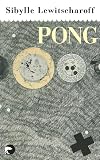
Pong was first released in 1998, is Sibylle Lewischaroff's first novel and won the Ingeborg Bachmann award (one of the most popular, if not necessarily most prestigious, awards for German-language literature). And it is a very strange novel indeed.
It is a book about a madman (a schizophrenic, to be somewhat more precise), and it is written exclusively from a close third person perspective, i.e. we see and experience the world only the way Pong sees and experiences it, with no outside show more perspective that might serve as a corrective at all. There are some very few instances where it is possible to infer some information about the “real” world from the protagonist’s experiences, but those are only very small intersections of Pong’s world and the world most of the readers will be familiar with - for the most part there is only Pong’s perspective and it demands to be absolute.
In that respect, the book Pong resembles most closely is likely Daniel Paul Schreber’s Denkwürdigkeiten eines Nervenkranken, which first appeared in 1902 and in which the author expounds in great detail the method of his madness, erects an edifice from it that is as complex and as coherent as any system of philosophical idealism and just as removed from any kind of experienced reality. The book was extremely influential - Freud wrote an important essay on it and among those fascinated by the work were Walter Benjamin and Elias Canetti.
Sibylle Lewitscharoff’s Pong does not have quite the intellectual rigor of the Geheimrat Schreber, but then, Pong is literature, not a treatise or an apologia. And the author never lets her readers forget that for a single moment – freed from the obligation of having to refer to a recognisable world, liberated from the constraints of having to make sense, language is at play in this novel, it is doing somersaults and pirouettes, it prances and frolics and preens in all its beautiful colours. Pong has something of Oskar Pastior or H.C. Artmann in the way it luxuriates in the playfulness of languages, the sheer joy of forming words from letters, of stringing together syllables and tasting their sound on your tongue.
Pong is not pure l’art pour l’art, though; and while its language has a strong tendency to become weightless, to lift off and become weightless, leave the world behind, it is pulled back towards earth by its main character – there is a certain gravitas to Pong that grounds the novel, not in any kind of reality (although I cannot help but wonder if it might be possible to suspend disbelief so thoroughly as to read Pong as a second world fantasy where everything Pong imagines is literally true) but in a solid emotional core: Pong might be deluded, but his delusion is not simply one of self-aggrandizement, but places quite literally the weight of the world on his shoulders. While that is obviously an unconscious strategem to make himself important and to give his life meaning, it also shows that Pong cares, and that in turn makes the reader care for him. show less
It is a book about a madman (a schizophrenic, to be somewhat more precise), and it is written exclusively from a close third person perspective, i.e. we see and experience the world only the way Pong sees and experiences it, with no outside show more perspective that might serve as a corrective at all. There are some very few instances where it is possible to infer some information about the “real” world from the protagonist’s experiences, but those are only very small intersections of Pong’s world and the world most of the readers will be familiar with - for the most part there is only Pong’s perspective and it demands to be absolute.
In that respect, the book Pong resembles most closely is likely Daniel Paul Schreber’s Denkwürdigkeiten eines Nervenkranken, which first appeared in 1902 and in which the author expounds in great detail the method of his madness, erects an edifice from it that is as complex and as coherent as any system of philosophical idealism and just as removed from any kind of experienced reality. The book was extremely influential - Freud wrote an important essay on it and among those fascinated by the work were Walter Benjamin and Elias Canetti.
Sibylle Lewitscharoff’s Pong does not have quite the intellectual rigor of the Geheimrat Schreber, but then, Pong is literature, not a treatise or an apologia. And the author never lets her readers forget that for a single moment – freed from the obligation of having to refer to a recognisable world, liberated from the constraints of having to make sense, language is at play in this novel, it is doing somersaults and pirouettes, it prances and frolics and preens in all its beautiful colours. Pong has something of Oskar Pastior or H.C. Artmann in the way it luxuriates in the playfulness of languages, the sheer joy of forming words from letters, of stringing together syllables and tasting their sound on your tongue.
Pong is not pure l’art pour l’art, though; and while its language has a strong tendency to become weightless, to lift off and become weightless, leave the world behind, it is pulled back towards earth by its main character – there is a certain gravitas to Pong that grounds the novel, not in any kind of reality (although I cannot help but wonder if it might be possible to suspend disbelief so thoroughly as to read Pong as a second world fantasy where everything Pong imagines is literally true) but in a solid emotional core: Pong might be deluded, but his delusion is not simply one of self-aggrandizement, but places quite literally the weight of the world on his shoulders. While that is obviously an unconscious strategem to make himself important and to give his life meaning, it also shows that Pong cares, and that in turn makes the reader care for him. show less
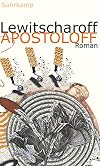
A remarkable book, one which reminded me once again of what a wonderful tool the German language can be. It is an interesting mixture of travel log and a highly unusual funeral procession through Bulgaria.
Lists
Awards


You May Also Like


Associated Authors
Statistics
- Works
- 23
- Also by
- 4
- Members
- 321
- Popularity
- #73,714
- Rating
- 3.7
- Reviews
- 16
- ISBNs
- 63
- Languages
- 5
- Favorited
- 1

