
Melinda Nadj Abonji
Author of Fly Away, Pigeon
About the Author
Image credit: Schriftstellerin Melinda Nadj Abonji auf der Leipziger Buchmesse 2011. By Julian Nitzsche - Own work, CC BY-SA 3.0, https://commons.wikimedia.org/w/index.php?curid=14657737
Works by Melinda Nadj Abonji
Associated Works
翻訳文学紀行 II — Contributor — 1 copy
Tagged
Common Knowledge
- Canonical name
- Abonji, Melinda Nadj
- Legal name
- Nagy Abonyi, Melinda
- Birthdate
- 1968-06-22
- Gender
- female
- Awards and honors
- Deutscher Buchpreis 2010 [2010]
Schweizer Buchpreis 2010 [2010]
Literatur-Werkjahr der Stadt Zürich 2010 - Nationality
- Switzerland
- Birthplace
- Bečej, SFR Jugoslawien
- Places of residence
- Küsnacht, Switzerland
Zürich, Switzerland - Associated Place (for map)
- Switzerland
Members
Reviews

The author, Melinda Nadj Abonji, was born in Vojvodina when it was still a part of Yugoslavia. Today it is a part of Serbia. The family belonged to the Hungarian minority of the region and moved to Switzerland in the 1970s. Ildíko, the narrator of the novel, has a similar life story - although it is not an autobiography, there are definitely some parallels. And this small list of places might already show the reader that the question of belonging, of identity, is central to this novel and show more that it might not be easy to find an answer.
Ildíko tells her story in a stream of consciousness: Her old home in Vojvodina, and her wish that nothing will ever change there, and that her grandmother will always be there in her old house, a safe haven and anchor. There are those long-awaited visits home, full of bliss, but also of new disappointments when Ildíko and her sister learn that indeed they have changed, their perspective has changed, and they are seen in a different light now.
The parents' hopes when they come to Switzerland, disappointment and sorrow, feelings of guilt, fears because of the war. Above everything, there is the pressure to conform, to fit in, not to stand out - because it is the only way Ildíko's parents can see in order not to lose the only chance they have, the chance to build a life in this new country. But Ildíko and her sister slowly realize that it is not their way and that, like pigeons, they have to fly, to find their new identity in the in-between.
Chapter after chapter the reader gets more glimpses into Ildíko's everyday life, from one time of her life or the other: Parties and political discussions back in Vojvodina, the casual racism of the customers in the family's restaurant, conservations with her parents trying to make them understand her point of view, new freedoms, but also new conflicts. The stream of consciousness and many flash backs and time warps made it a bit hard to get into the narration at first, but after some time, I settled into it and appreciated the way the author tells this story: Directly, raw and emotional.
I feel like I cannot do this novel justice in my review, but I want to end with the statement that it will stay with me for a very long time. show less
Ildíko tells her story in a stream of consciousness: Her old home in Vojvodina, and her wish that nothing will ever change there, and that her grandmother will always be there in her old house, a safe haven and anchor. There are those long-awaited visits home, full of bliss, but also of new disappointments when Ildíko and her sister learn that indeed they have changed, their perspective has changed, and they are seen in a different light now.
The parents' hopes when they come to Switzerland, disappointment and sorrow, feelings of guilt, fears because of the war. Above everything, there is the pressure to conform, to fit in, not to stand out - because it is the only way Ildíko's parents can see in order not to lose the only chance they have, the chance to build a life in this new country. But Ildíko and her sister slowly realize that it is not their way and that, like pigeons, they have to fly, to find their new identity in the in-between.
Chapter after chapter the reader gets more glimpses into Ildíko's everyday life, from one time of her life or the other: Parties and political discussions back in Vojvodina, the casual racism of the customers in the family's restaurant, conservations with her parents trying to make them understand her point of view, new freedoms, but also new conflicts. The stream of consciousness and many flash backs and time warps made it a bit hard to get into the narration at first, but after some time, I settled into it and appreciated the way the author tells this story: Directly, raw and emotional.
I feel like I cannot do this novel justice in my review, but I want to end with the statement that it will stay with me for a very long time. show less
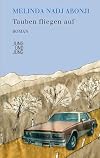
I had to read this book for school, and unlike almost everybody else in class, I really really really enjoyed it (ok, I am 100% I am the only person in class who actually read it). It has a certain style of writing that just captivates what this book is about. Style and content really connect with this novel.
I had to read this book for school, and unlike almost everybody else in class, I really really really enjoyed it (ok, I am 100% I am the only person in class who actually read it). It has a certain style of writing that just captivates what this book is about. Style and content really connect with this novel.
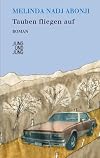
Das zeichnet ein ehrliches Bild einer Migranten Biographie. Die Konflikte im neuen Land, die Konflikte zwischen den Generationen, aber auch die Träumen von Menschen die nicht nur an einem Ort zuhause sind.
Lists
Awards


You May Also Like


Associated Authors
Statistics
- Works
- 3
- Also by
- 1
- Members
- 183
- Popularity
- #118,258
- Rating
- 3.9
- Reviews
- 10
- ISBNs
- 24
- Languages
- 9
