
Clemens J. Setz
Author of Indigo
About the Author
Image credit: Clemens J. Setz auf der Leipziger Buchmesse 2014 By Kritzolina - Own work, CC BY-SA 3.0, https://commons.wikimedia.org/w/index.php?curid=31657290
Works by Clemens J. Setz
Das All im eignen Fell: Eine kurze Geschichte der Twitterpoesie | Legendäre Twittergedichte des Georg-Büchner-Preisträgers (Bibliothek Suhrkamp) (2024) 6 copies
Rainer Maria Rilke. 100 Seiten : Ein einzigartiger Schlüssel zu Rilkes Leben und Werk (2016) 1 copy
Die Übungen 1 copy
Pociecha rzeczy okrągłych 1 copy
Frequenzen, Die 1 copy
Stefan Glettler — Author — 1 copy
Associated Works
Tagged
Common Knowledge
- Canonical name
- Setz, Clemens J.
- Legal name
- Setz, Clemens Johann
- Birthdate
- 1982-11-15
- Gender
- male
- Occupations
- writer
translator - Organizations
- Grazer Autorinnen Autorenversammlung
- Awards and honors
- Georg Büchner Preis (2021)
Kleist-Preis (2020)
Berliner Literaturpreis (2019)
Wilhelm-Raabe-Preis (2015) - Nationality
- Austria
- Birthplace
- Graz, Austria
- Places of residence
- Graz, Steiermark, Österreich
- Map Location
- Austria
Members
Reviews

Yet another untranslated German book (not into English at least – there appears to be an Italian Translation, Figli e pianeti), this time by an author who is still very young (he was 25 when this, his first book, was published in 2007) but who has already garnered a considerable amount of critical success with his work, including several literary prizes and comparisons to Thomas Pynchon and David Foster Wallace. I guess I’m like most people in that I grit my teeth at such facile and show more utterly meaningless comparisons but still do never quite manage to ignore them. As it turns out, Setz fortunately writes neither like Pynchon nor Wallace (both authors which I love, mind you) but is quite thoroughly his own man.
Söhne und Planeten consists of four interlinked novellas, and interlinked very closely to form something that is greater than the sum of its parts. On reading the first story, I considered it to be merely nice but not particularly exciting, but then the second one started referring back to the first, not just by way of shared characters and events but by images and motifs, spinning them into a dense web of relations and adding layer upon layer of meaning. That process continued with each succeeding novella, and in the end the reader is left with a novel of astonishing complexity, especially considering it is quite short. But the shifting, scintillating spiderweb of connections Clemens J. Setz weaves between the stories that make up Söhne und Planeten is both so tight and intricate that I doubt many – if any – readers will manage to unravel it on their first reading – I know I didn’t, I barely caught a glimpse of the wonders a repeated, close reading will discover (and I do hope that I will get around to doing that eventually).
One of the themes the novel gravitates around is obviously the relation between fathers and sons – not the most original subject, particularly not in contemporary German literature where sons and daughters attempting to get to terms with their parents has been the central plot element of countless novels, and most readers are probably quite sick of it by now. Tackling this is quite a risky maneuvre on the author’s part, then, but Clemens J. Setz does manage to pull it off – partly in due to a shift in perspective from what is common in such novels and telling his stories mostly from the fathers’ point of view. In fact, most sons in Söhne und Planeten appear to be either very sick or dead, in either case silent for most of the novel, and only in the end it becomes clear (although there are some clues scattered along the way) that Victor, the dead son, has been the novel’s gravitational centre all along.
The ending, by the way, came as a surprise, in that it was very abrupt; it left me blinking several times and I had to check to make sure I had not accidentally skipped a page or two. I am still not certain whether I missed the significance of the book ending on that particular note or whether the Kindle version is missing a chapter or two.
Söhne und Planeten is not just about sons in the physical sense but also about spiritual sons, the relationship between mentors and their disciples. And this is where it ties in with the second large subject of the novel, namely writing – pretty much every single one of its main characters is either an author or works somewhere in publishing. One might expect the novel to go all-out metafictional, but while it seems aware of the possibility (and – maybe – the temptation: Victor, the dead son, is also a writer, and a very young one – it seems almost impossible not to wonder whether he might not be an alter ego of the author), Söhne und Planeten seems to have its literary roots in classical modernism and for the most part stays away from postmodern narrative techniques (although this is someething that seems to have changed with Setz’ subsequent novels). Söhne und Planeten is a very dense novel that demands a lot of attention and intellectual investment from the reader, but it is not (or not only) a cerebral one – I at least found it a very emotionally involving reading, starting with the intensely unlikeable protagonist of the first story to the aging father mourning the loss of his only to the short failed life of a youthful writer. Söhne und Planeten has considerable emotional impact without sacrificing formal complexity, which is quite a feat to pull off, and it seems like all the praise and attention he has been getting were entirely justified. show less
Söhne und Planeten consists of four interlinked novellas, and interlinked very closely to form something that is greater than the sum of its parts. On reading the first story, I considered it to be merely nice but not particularly exciting, but then the second one started referring back to the first, not just by way of shared characters and events but by images and motifs, spinning them into a dense web of relations and adding layer upon layer of meaning. That process continued with each succeeding novella, and in the end the reader is left with a novel of astonishing complexity, especially considering it is quite short. But the shifting, scintillating spiderweb of connections Clemens J. Setz weaves between the stories that make up Söhne und Planeten is both so tight and intricate that I doubt many – if any – readers will manage to unravel it on their first reading – I know I didn’t, I barely caught a glimpse of the wonders a repeated, close reading will discover (and I do hope that I will get around to doing that eventually).
One of the themes the novel gravitates around is obviously the relation between fathers and sons – not the most original subject, particularly not in contemporary German literature where sons and daughters attempting to get to terms with their parents has been the central plot element of countless novels, and most readers are probably quite sick of it by now. Tackling this is quite a risky maneuvre on the author’s part, then, but Clemens J. Setz does manage to pull it off – partly in due to a shift in perspective from what is common in such novels and telling his stories mostly from the fathers’ point of view. In fact, most sons in Söhne und Planeten appear to be either very sick or dead, in either case silent for most of the novel, and only in the end it becomes clear (although there are some clues scattered along the way) that Victor, the dead son, has been the novel’s gravitational centre all along.
The ending, by the way, came as a surprise, in that it was very abrupt; it left me blinking several times and I had to check to make sure I had not accidentally skipped a page or two. I am still not certain whether I missed the significance of the book ending on that particular note or whether the Kindle version is missing a chapter or two.
Söhne und Planeten is not just about sons in the physical sense but also about spiritual sons, the relationship between mentors and their disciples. And this is where it ties in with the second large subject of the novel, namely writing – pretty much every single one of its main characters is either an author or works somewhere in publishing. One might expect the novel to go all-out metafictional, but while it seems aware of the possibility (and – maybe – the temptation: Victor, the dead son, is also a writer, and a very young one – it seems almost impossible not to wonder whether he might not be an alter ego of the author), Söhne und Planeten seems to have its literary roots in classical modernism and for the most part stays away from postmodern narrative techniques (although this is someething that seems to have changed with Setz’ subsequent novels). Söhne und Planeten is a very dense novel that demands a lot of attention and intellectual investment from the reader, but it is not (or not only) a cerebral one – I at least found it a very emotionally involving reading, starting with the intensely unlikeable protagonist of the first story to the aging father mourning the loss of his only to the short failed life of a youthful writer. Söhne und Planeten has considerable emotional impact without sacrificing formal complexity, which is quite a feat to pull off, and it seems like all the praise and attention he has been getting were entirely justified. show less
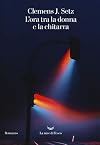
Un romanzo fiume, costruito ed impostato sul sezionare, a freddo, i rapporti ed i legami fra le persone, fra la normalità (ma è normalità?) e la follia (ma è follia?). Una struttura ed un linguaggio che evocano sensazioni angosciose all'interno di un'atmosfera costante di minaccia. La giovane protagonista, Natalie, che nel corso della storia si trova sempre più immersa nel drammatico rapporto tra le due grandi tragedie Dorm e Hollberg, ama leggere Stephen King. Il suo ex fidanzato, show more invece, l'ha sempre irritata con John Updike, il cronista della piccola vita medio borghese. La differenza tra King e Updike è incisa nel sistema binario su cui Setz ha costruito 'La lezione tra donna e chitarra'. Una costruzione che affronta i temi della vendetta, della violenza (includendo anche l'aspetto dell'accettazione della violenza), del desiderio che si trasforma in vuoto. show less

zwei geschichten: ein architektensohn, einer der im altersheim arbeitet, abwechselnd erzählt, über die weiteren personen, verweben sich die geschichten, weiten sich aus. spielt in graz; anfangs ist es nicht leicht zu folgen, wo wir gerade sind, besonders da es personen gibt die beide szenarien betreten. aber es wird leichter; und es ist ein echtes vergnügen, die sparache flüssig, süffig, schön. und er verwndet so schöne adjektive, die gägngigerweise nicht zu unbelebten objekten show more passen, sowas wie eine träge strasse...
Dies ist die Geschichte von Walter, dem Sohn eines Architekten mit Einfluss. Er will Schauspieler werden - oder will es nur sein Vater? Walter bekommt seine Chance, als ihn Valerie, eine Psychotherapeutin, die bessere Tage gesehen hat, engagiert, um in Gruppensitzungen fiktive Patientenrollen zu spielen. Doch er geht zu sehr in seiner Rolle auf.
Dies ist die Gechichte von Alexander. Er ist Altenpfleger, ein junger Mann mit ausufernder Phantasie, die sich im Schatten einer einsamen Kindheit entwickelt hat. Alexander kündigt seinen Job, und er will seine Freundin loswerden, um mit Valerie zusammenzuleben. Doch die wird eines Tages brutal zusammengeschlagen...
Nach "Söhne und Planeten", seinem Debüt, das ihm einhelliges Lob der Kritik einbrachte, legt Clemens J. Setz ein Werk vor, das alle Erwartungen sprengt: atemberaubend kraftvoll, bunt, sprachgewaltig und zart. show less
Dies ist die Geschichte von Walter, dem Sohn eines Architekten mit Einfluss. Er will Schauspieler werden - oder will es nur sein Vater? Walter bekommt seine Chance, als ihn Valerie, eine Psychotherapeutin, die bessere Tage gesehen hat, engagiert, um in Gruppensitzungen fiktive Patientenrollen zu spielen. Doch er geht zu sehr in seiner Rolle auf.
Dies ist die Gechichte von Alexander. Er ist Altenpfleger, ein junger Mann mit ausufernder Phantasie, die sich im Schatten einer einsamen Kindheit entwickelt hat. Alexander kündigt seinen Job, und er will seine Freundin loswerden, um mit Valerie zusammenzuleben. Doch die wird eines Tages brutal zusammengeschlagen...
Nach "Söhne und Planeten", seinem Debüt, das ihm einhelliges Lob der Kritik einbrachte, legt Clemens J. Setz ein Werk vor, das alle Erwartungen sprengt: atemberaubend kraftvoll, bunt, sprachgewaltig und zart. show less
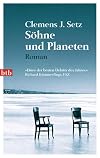
Gewöhnungsbedürftige, streckenweise zu formfreie Verknüpfung von vier Novellen zu einem Roman, dem ersten des österreichischen Autors aus Graz. Zwischendurch allerdings gelingen ihm ein paar sensationelle Gedanken und dichte Szenen, wie man sie in dieser Qualität in der österreichischen Gegenwartsliteratur selten findet.
Lists
Awards


You May Also Like


Associated Authors
Statistics
- Works
- 32
- Also by
- 4
- Members
- 413
- Popularity
- #58,990
- Rating
- 3.7
- Reviews
- 14
- ISBNs
- 57
- Languages
- 5
