
Gerhard Roth (1) (1942–2022)
Author of Der Plan
For other authors named Gerhard Roth, see the disambiguation page.
About the Author
Image credit: Photo by Hans Peter Schaefer / Wikimedia Commons
Series
Works by Gerhard Roth
The Story of Darkness (Studies in Austrian Literature, Culture, and Thought Translation Series) (1991) 11 copies
Herr Mantel und Herr Hemd 1 copy
Lichtenberg 1 copy
Associated Works
Peter Pongratz : Malerei, Zeichnung, Graphik : [Monographie mit einem Werkverzeichnis d. Druckgraphik (1975) — Contributor — 2 copies
Tagged
Common Knowledge
- Canonical name
- Roth, Gerhard
- Other names
- ROTH, Gerhard
- Birthdate
- 1942-06-24
- Date of death
- 2022-02-08
- Gender
- male
- Occupations
- writer
computer programmer - Organizations
- Grazer Autorenversammlung
- Awards and honors
- Alfred-Döblin-Preis (1983)
Jakob-Wassermann-Literaturpreis (2012) - Nationality
- Austria
- Birthplace
- Graz, Austria
- Place of death
- Graz, Austria
- Map Location
- Autriche
- Associated Place (for map)
- Graz, Austria
Members
Reviews

Gerhard Roth is an Austrian author who started publishing in the 1970ies, and it is almost since then that I have wanted to read something by him. It took me over thirty years to finally get around to it – “gut Ding will Weile haben,” as the German saying goes, and while I’m not sure I would not have done just as well to have discovered his work earlier, I’m very glad that I finally did and will be busy catching up on what I have missed.
Roth’s best known work and chef d’oeuvre show more are two series of books, “Archive des Schweigens” and “Orkus” that consist not just of novels but also of collections of photography, of essays and an autobiography. That diversity of fiction and non-fiction as well as the tendency towards ambitious multi-volume works might remind one of William Vollmann (it definitely did me), but the resemblance is quite superficial and the two writers are very different in temperament. Where Vollmann is encyclopedic and sprawling, Roth keeps a narrow focus and is generally considerably more conventional – which does not mean that he’d not be doing interesting things both with content and form, quite to the contrary.
Der See is the first novel in Gerhard Roth’s “Orkus” series, a comparatively short novel (about 240 pages in the German original) that follows its protagonist Paul Eck over several days. At its heart, it is a mystery novel, although you’ll have to look twice to notice, as that heart is beating in a very unusual place. The vast majority of crime fiction is told from the perspective of the person attempting to solve the crime, a somewhat smaller portion from the perspective of the criminal, but Der See is the first mystery novel I have ever read that is told from the perspective of a red herring, i.e. one of those persons that invariably populate every mystery novel towards which the evidence points and who thus come under the suspicion of the detective (and often the reader) but in the end turn out to be innocent of the crime.
There are no less than three crimes Paul Eck seems involved in – a bank robbery gone violent, the discovery of corpse part at the shore of the lake around which the novel is for the most part set and the disappearance of Paul Eck’s father who was involved in some shady dealings and and to whom Paul has always had a strained relationship. The investigation into these crimes proceeds during the course of the novel and all of them are eventually solved, but all of that happens for the most part at the margin of Eck’s horizon of perception, brought to his notice only occasionally when a pesky detective convinced of his guilt keeps pestering him. During most of te novel for Eck as well as for the reader, the criminal investigation and the crime plot, respectively, are like a irritant buzzing just above the treshold of being audible, or a movement half-caught in the corner of one’s eye. What plays out in the foreground is Eck doing his day job – he is a travelling pharmeceutical salesman, and in that capacity visits a large number of doctors that he basically tries to bribe into prescribing his employer’s pharmaceuticals. I don’t know about other countries, but this is actually a common practice in Germany and apparently in Austria as well, and describing Eck’s tour gives the author ample occasion to vent his animosities towards the medical profession which are considerable (probably not a surprise if one is aware that Gerhard Roth at one time was studying medicine himself), resulting in some splendid satirical passages.
The protagonist’s profession is even more imporant for the novel in another regard: As the reader soon finds out, Eck is rather over-fond of sampling his company’s products and using his job to get at even more drugs (he steals prescreption blocks from the doctors he visits and then uses those to write fake prescriptions for himself). Almost every single of the novel’s 100 short chapters mentions at least once that Eck is downing some pills, and often flushes them down with alcohol, and as we experience events from a close third person perspective focused on him, his drug habit unavoidably begins to tinge the narrative. Roth’s writing throughout Der See is mostly sparse and restrained, reading almost like a report, but it is also brimming over with small, precise observations of often seemingly insignficant details. And time and again, the novel startles its readers by breaking unexpectedly into metaphorical flight, its words arranging itself into stunningly beautiful descriptions, like the flocks of birds that suddenly take from the ground to the sky and that form an imporant thematic tread of the novel. Spending his time mostly in a drug-induced haze, Paul Eck is a highly unreliable narrator, and with its oscillating between sober restraint and glimmering beauty the novel is sustains a weird, eerie atmosphere that pervades even the most trivial moments. It also constitues a hypnotic attraction that pulls the reader through the pages and makes what is essentially a very complex novel also an immensely readable one; even though it is a fairly slim I was surprised at just how soon arrived at the end. Thankfully, there are seven more volumes to the series (and even an English translation of this volume). show less
Roth’s best known work and chef d’oeuvre show more are two series of books, “Archive des Schweigens” and “Orkus” that consist not just of novels but also of collections of photography, of essays and an autobiography. That diversity of fiction and non-fiction as well as the tendency towards ambitious multi-volume works might remind one of William Vollmann (it definitely did me), but the resemblance is quite superficial and the two writers are very different in temperament. Where Vollmann is encyclopedic and sprawling, Roth keeps a narrow focus and is generally considerably more conventional – which does not mean that he’d not be doing interesting things both with content and form, quite to the contrary.
Der See is the first novel in Gerhard Roth’s “Orkus” series, a comparatively short novel (about 240 pages in the German original) that follows its protagonist Paul Eck over several days. At its heart, it is a mystery novel, although you’ll have to look twice to notice, as that heart is beating in a very unusual place. The vast majority of crime fiction is told from the perspective of the person attempting to solve the crime, a somewhat smaller portion from the perspective of the criminal, but Der See is the first mystery novel I have ever read that is told from the perspective of a red herring, i.e. one of those persons that invariably populate every mystery novel towards which the evidence points and who thus come under the suspicion of the detective (and often the reader) but in the end turn out to be innocent of the crime.
There are no less than three crimes Paul Eck seems involved in – a bank robbery gone violent, the discovery of corpse part at the shore of the lake around which the novel is for the most part set and the disappearance of Paul Eck’s father who was involved in some shady dealings and and to whom Paul has always had a strained relationship. The investigation into these crimes proceeds during the course of the novel and all of them are eventually solved, but all of that happens for the most part at the margin of Eck’s horizon of perception, brought to his notice only occasionally when a pesky detective convinced of his guilt keeps pestering him. During most of te novel for Eck as well as for the reader, the criminal investigation and the crime plot, respectively, are like a irritant buzzing just above the treshold of being audible, or a movement half-caught in the corner of one’s eye. What plays out in the foreground is Eck doing his day job – he is a travelling pharmeceutical salesman, and in that capacity visits a large number of doctors that he basically tries to bribe into prescribing his employer’s pharmaceuticals. I don’t know about other countries, but this is actually a common practice in Germany and apparently in Austria as well, and describing Eck’s tour gives the author ample occasion to vent his animosities towards the medical profession which are considerable (probably not a surprise if one is aware that Gerhard Roth at one time was studying medicine himself), resulting in some splendid satirical passages.
The protagonist’s profession is even more imporant for the novel in another regard: As the reader soon finds out, Eck is rather over-fond of sampling his company’s products and using his job to get at even more drugs (he steals prescreption blocks from the doctors he visits and then uses those to write fake prescriptions for himself). Almost every single of the novel’s 100 short chapters mentions at least once that Eck is downing some pills, and often flushes them down with alcohol, and as we experience events from a close third person perspective focused on him, his drug habit unavoidably begins to tinge the narrative. Roth’s writing throughout Der See is mostly sparse and restrained, reading almost like a report, but it is also brimming over with small, precise observations of often seemingly insignficant details. And time and again, the novel startles its readers by breaking unexpectedly into metaphorical flight, its words arranging itself into stunningly beautiful descriptions, like the flocks of birds that suddenly take from the ground to the sky and that form an imporant thematic tread of the novel. Spending his time mostly in a drug-induced haze, Paul Eck is a highly unreliable narrator, and with its oscillating between sober restraint and glimmering beauty the novel is sustains a weird, eerie atmosphere that pervades even the most trivial moments. It also constitues a hypnotic attraction that pulls the reader through the pages and makes what is essentially a very complex novel also an immensely readable one; even though it is a fairly slim I was surprised at just how soon arrived at the end. Thankfully, there are seven more volumes to the series (and even an English translation of this volume). show less

Like the preceding volumes in the Orkus series – of which this is the fourth – Der Strom follows the pattern of a crime novel, although this time I found myself unable to identify a specific subgenre it would belong to. On the other hand, I think none of the previous installments made it quite as clear why Gerhard Roth is so attracted to the structures of crime fiction – it is the aspect of attempting to make sense of the world, to decipher the signals it sends us and to read their show more hidden messages. And like his protagonists, Roth appears convinced that there is a meaning to unravel, but unlike them he is well aware that its significance is ultimately undecipherable. This is where Roth and conventional crime fiction part ways, for the latter tends to move towards a solution, a final revelation of mysteries, while Roth’s novels usually end in confusion, the mysteries unsolved, the codes unbroken, any meaning opaque.
No other character in the Orkus series so far has been aware as the protagonist of Der Strom, Thomas Mach (who, as far as I can tell, is always referred to with both first and last name together) – but he also is the one who is most obviously not quite sane, as he lets himself be guided by an “Inner Voice” which only he can hear. Unsurprisingly, that voice is more often than not at odds with that is happening around Mach, leading to some very comical results, and making this the funniest novel in the series since the satire on the medical profession in Der See. Gerhard Roth does not even shy away from slapstick humour here, and it can be considered programmatic when he mentions that his protagonist (who coloured his hair red on the advice of his inner voice) looks like Stan Laurel.
Thomas Mach is another of the Austrians abroad that populate this series, younger son of a family that grew rich with the manufacture of paper and was somewhat involved with the Third Reich – while the family has distanced itself from its unsavoury beginnings, the columns of smoke that appear as recurring motif throughout the novel keep it present in the mind of the reader. (There is a lost of smoke in this novel, as well as dust, smell, and other things that fill the air and tine perception in various ways.) Mach travels to Egypt to take over a job for an uncle of his who owns a travel agency – his predecessor had committed suicide, and our protagonist comes into possession of her notebooks which, among fragments from guides and history books with her comments also contain some mysterious writing, done in red and with foreign characters. It does not take Mach long to find out that she was involved in some very shady business dealings, and from there it is just a small step to wondering whether her death really was a suicide…
… and off we go into another mock-crime-fiction plot where the protagonist, led by the voice in his head, shambles through events he does not comprehend, among people whose language he does not understand, surrounded by writing he can not read. Indeed, it is very noticeable in Der Strom how writing pops up literally everywhere Thomas Mach goes and looks. This might not be any different in his native Austria, but by virtue of its very incomprehensibility it is considerably more eye-catching, promising a meaning which it at the same time holds back, and thus making for a striking image of one of the novel’s central concerns. That is underlined by the strange fact that most of the writing appears in red, thus marking it part of a very tightly organised colour scheme which adds another layer of significance to the novel.
Colour in turn evokes seeing and perception which plays an important role in Der Strom right from its brilliant first sentence, “Geblendet vom Sonnenlicht, das durch das Kabinenfenster fiel, öffnete er die Augen.” (“Blinded by the sunlight falling through the window of the cabin, he opened his eyes.”) Note the rather clever inversion here that has the as-yet unnamed protagonist open his eyes to the blinding light thus already indicating that not everything he sees might actually be there (and that motif will recur several times throughout the novel), but also designates a certain openness for new experiences – he does not close his eyes to what happens around him, and if he cannot see it’s from a surfeit of light and impressions, not from a lack of it. This is taken up again almost literally in the novel’s final sentence, “Geblendet vom Sonnenlicht, das vom Wasser reflektiert wurde, schloß er die Augen.” (“Blinded by the sunlight reflected by the water, he closed his eyes.”) – things return to normal again, the protagonist complacently shuts out what blinds him, a light that now is no longer direct but only reflected. Between those two sentences, the whole of Thomas Mach’s journey (and of the novel’s plot) unfolds.
While Mach disdains viewing himself as a tourist, feeling himself somewhat above them by trying to immerse himself in the country he visits and thus to become a traveller, he not only is working (even if only temporarily) for a tourist agency, but the reader also cannot help but noticed that everyone he meets seems to be giving him guided tours which often lead to either tourist attractions or him visiting various colourful natives, in other words his itinerary seems markedly touristic. (And his repeatedly pushing money into the hand of pretty much every native he encounters is one of the running gags of the novel.) But even as its protagonist misses most of what is happening around him, Der Strom manages to paint a very vivid and intense picture of contemporary Egypt, in Gerhard Roth’s familiar sparse and matter-of-fact prose which here again is more frequently spaced through with bursts of lyrical beauty, much more than Der Berg was in which they were mostly absent, yet retaining that novel’s extremely dense interweaving of motifs and images. And in the end I think it is this ability of charging his laconic and deadpan but always very precise prose with beauty and the promise of significance is what makes Gerhard Roth’s novels so consistently fascinating. show less
No other character in the Orkus series so far has been aware as the protagonist of Der Strom, Thomas Mach (who, as far as I can tell, is always referred to with both first and last name together) – but he also is the one who is most obviously not quite sane, as he lets himself be guided by an “Inner Voice” which only he can hear. Unsurprisingly, that voice is more often than not at odds with that is happening around Mach, leading to some very comical results, and making this the funniest novel in the series since the satire on the medical profession in Der See. Gerhard Roth does not even shy away from slapstick humour here, and it can be considered programmatic when he mentions that his protagonist (who coloured his hair red on the advice of his inner voice) looks like Stan Laurel.
Thomas Mach is another of the Austrians abroad that populate this series, younger son of a family that grew rich with the manufacture of paper and was somewhat involved with the Third Reich – while the family has distanced itself from its unsavoury beginnings, the columns of smoke that appear as recurring motif throughout the novel keep it present in the mind of the reader. (There is a lost of smoke in this novel, as well as dust, smell, and other things that fill the air and tine perception in various ways.) Mach travels to Egypt to take over a job for an uncle of his who owns a travel agency – his predecessor had committed suicide, and our protagonist comes into possession of her notebooks which, among fragments from guides and history books with her comments also contain some mysterious writing, done in red and with foreign characters. It does not take Mach long to find out that she was involved in some very shady business dealings, and from there it is just a small step to wondering whether her death really was a suicide…
… and off we go into another mock-crime-fiction plot where the protagonist, led by the voice in his head, shambles through events he does not comprehend, among people whose language he does not understand, surrounded by writing he can not read. Indeed, it is very noticeable in Der Strom how writing pops up literally everywhere Thomas Mach goes and looks. This might not be any different in his native Austria, but by virtue of its very incomprehensibility it is considerably more eye-catching, promising a meaning which it at the same time holds back, and thus making for a striking image of one of the novel’s central concerns. That is underlined by the strange fact that most of the writing appears in red, thus marking it part of a very tightly organised colour scheme which adds another layer of significance to the novel.
Colour in turn evokes seeing and perception which plays an important role in Der Strom right from its brilliant first sentence, “Geblendet vom Sonnenlicht, das durch das Kabinenfenster fiel, öffnete er die Augen.” (“Blinded by the sunlight falling through the window of the cabin, he opened his eyes.”) Note the rather clever inversion here that has the as-yet unnamed protagonist open his eyes to the blinding light thus already indicating that not everything he sees might actually be there (and that motif will recur several times throughout the novel), but also designates a certain openness for new experiences – he does not close his eyes to what happens around him, and if he cannot see it’s from a surfeit of light and impressions, not from a lack of it. This is taken up again almost literally in the novel’s final sentence, “Geblendet vom Sonnenlicht, das vom Wasser reflektiert wurde, schloß er die Augen.” (“Blinded by the sunlight reflected by the water, he closed his eyes.”) – things return to normal again, the protagonist complacently shuts out what blinds him, a light that now is no longer direct but only reflected. Between those two sentences, the whole of Thomas Mach’s journey (and of the novel’s plot) unfolds.
While Mach disdains viewing himself as a tourist, feeling himself somewhat above them by trying to immerse himself in the country he visits and thus to become a traveller, he not only is working (even if only temporarily) for a tourist agency, but the reader also cannot help but noticed that everyone he meets seems to be giving him guided tours which often lead to either tourist attractions or him visiting various colourful natives, in other words his itinerary seems markedly touristic. (And his repeatedly pushing money into the hand of pretty much every native he encounters is one of the running gags of the novel.) But even as its protagonist misses most of what is happening around him, Der Strom manages to paint a very vivid and intense picture of contemporary Egypt, in Gerhard Roth’s familiar sparse and matter-of-fact prose which here again is more frequently spaced through with bursts of lyrical beauty, much more than Der Berg was in which they were mostly absent, yet retaining that novel’s extremely dense interweaving of motifs and images. And in the end I think it is this ability of charging his laconic and deadpan but always very precise prose with beauty and the promise of significance is what makes Gerhard Roth’s novels so consistently fascinating. show less

Der Berg is the third volume in Austrian author Gerhard Roth’s “Orkus” series, and like the previous ones it is formally a variation on the crime novel – while Der See was a police procedural, Der Plan a noir novel, Der Berg is a spy thriller.
The novel’s protagonist, Gartner (I don’t think we ever get to find out his first name), is a journalist ostensible writing a piece on Athos (the mountain of the title) but only uses this as a cover for his real, secret mission. That mission show more consists of attempting to meet the elusive poet Goran R. (whose last name I am fairly certain we never get to find out) who is in hiding because he supposedly witnessed a massacre in Bosnia and now has several secret services searching for him. Again, Gartner purports to want to track down Goran R. to find out the truth about the massacre, but in the course of the novel seems much more interested the man’s poetry; pictures of, pages from and other references to Goran R.’s only book of poetry keep popping up wherever Gartner goes.
Like the previous novels in the series, Der Berg is pervaded by a sense of the narrative not to be trusted, of reality squirming and shifting beneath us; but unlike the previous novels, this times it is not so much the novel’s narrator that is unreliable but rather reality itself. It might seem differently at first – when right at the start of the novel Gartner looks through a car window and notices that the world outside looks like a movie, then this appears to be a case of subjective perception distorting the objective world (a classic modernist trope). But by the time when, right at the end of the novel, Gartner settles down in a cinema and the film playing opens with exactly the scene he was watching from the car at the novel’s beginning, it has become clear that Gartner’s perception was correct, and that the world is objectively fictional (a classic postmodernist trope).
True to the spy novel genre, Der Berg charts its course through a field of conflicting forces, all of which hunt after an elusive truth (although not necessarily to uncover it) and are quite ruthless in the means they apply to reach their end. The novel’s protagonist is inextricably caught up in this, his own life possibly in danger, and in the end he becomes persona non grata in two countries. Goran R. might be dead at this stage, or he might not, we never really get any certainty about that. What we are certain about, however, is that Gartner has failed in his mission, that he didn’t find out the truth about the massacre in Bosnia and will not write the big scoop on it. In fact, that truth might not have been there in the first place, and this is where Roth gives the espionage genre a distinct literary twist (not unlike what he did with Noir in Der Plan). There is one key scene in the novel where one of the many shady characters populating it tries to uncover the true, original state of an icon, chemically scrubbing away layer after layer of forgeries that have been added to the original; when he finally reaches the lowermost layer it turns out to be nothing but a smear of colour across the canvas and he dismisses the icon as a forgery. But the reader at this stage in the novel might already have become sensitive to a proliferation of images that are scratched, blurred, half-melted or in other ways damaged and robbed of their representational functions, images that, precisely by virtue of their not showing anything seem in oblique ways to hint at a truth that eludes a more direct grasp, a truth that is accessible only by way of a certain fuzziness, in allusion and metaphor, abstract painting and poetry.
Stylistically, Der Berg is the most sparse in Roth’s “Orkus” series so far, it is completely missing the colourful bursts that exploded into extended poetical flights on the page, and is completely given over to a dry, report-like style of writing – there might not be as much as a single metaphor in the entire novel. At the same, however, Roth weaves a very tight net of interrelations and cross-references, connecting themes and motifs, charging the text with implied significance until it is almost humming with its energy, making this the densest novel in the series so far. While I think that overall Der Plan was slightly more successful as a work of art, the series as a whole continues to excite, and I’m very curious where else Roth is going to take it. show less
The novel’s protagonist, Gartner (I don’t think we ever get to find out his first name), is a journalist ostensible writing a piece on Athos (the mountain of the title) but only uses this as a cover for his real, secret mission. That mission show more consists of attempting to meet the elusive poet Goran R. (whose last name I am fairly certain we never get to find out) who is in hiding because he supposedly witnessed a massacre in Bosnia and now has several secret services searching for him. Again, Gartner purports to want to track down Goran R. to find out the truth about the massacre, but in the course of the novel seems much more interested the man’s poetry; pictures of, pages from and other references to Goran R.’s only book of poetry keep popping up wherever Gartner goes.
Like the previous novels in the series, Der Berg is pervaded by a sense of the narrative not to be trusted, of reality squirming and shifting beneath us; but unlike the previous novels, this times it is not so much the novel’s narrator that is unreliable but rather reality itself. It might seem differently at first – when right at the start of the novel Gartner looks through a car window and notices that the world outside looks like a movie, then this appears to be a case of subjective perception distorting the objective world (a classic modernist trope). But by the time when, right at the end of the novel, Gartner settles down in a cinema and the film playing opens with exactly the scene he was watching from the car at the novel’s beginning, it has become clear that Gartner’s perception was correct, and that the world is objectively fictional (a classic postmodernist trope).
True to the spy novel genre, Der Berg charts its course through a field of conflicting forces, all of which hunt after an elusive truth (although not necessarily to uncover it) and are quite ruthless in the means they apply to reach their end. The novel’s protagonist is inextricably caught up in this, his own life possibly in danger, and in the end he becomes persona non grata in two countries. Goran R. might be dead at this stage, or he might not, we never really get any certainty about that. What we are certain about, however, is that Gartner has failed in his mission, that he didn’t find out the truth about the massacre in Bosnia and will not write the big scoop on it. In fact, that truth might not have been there in the first place, and this is where Roth gives the espionage genre a distinct literary twist (not unlike what he did with Noir in Der Plan). There is one key scene in the novel where one of the many shady characters populating it tries to uncover the true, original state of an icon, chemically scrubbing away layer after layer of forgeries that have been added to the original; when he finally reaches the lowermost layer it turns out to be nothing but a smear of colour across the canvas and he dismisses the icon as a forgery. But the reader at this stage in the novel might already have become sensitive to a proliferation of images that are scratched, blurred, half-melted or in other ways damaged and robbed of their representational functions, images that, precisely by virtue of their not showing anything seem in oblique ways to hint at a truth that eludes a more direct grasp, a truth that is accessible only by way of a certain fuzziness, in allusion and metaphor, abstract painting and poetry.
Stylistically, Der Berg is the most sparse in Roth’s “Orkus” series so far, it is completely missing the colourful bursts that exploded into extended poetical flights on the page, and is completely given over to a dry, report-like style of writing – there might not be as much as a single metaphor in the entire novel. At the same, however, Roth weaves a very tight net of interrelations and cross-references, connecting themes and motifs, charging the text with implied significance until it is almost humming with its energy, making this the densest novel in the series so far. While I think that overall Der Plan was slightly more successful as a work of art, the series as a whole continues to excite, and I’m very curious where else Roth is going to take it. show less
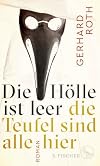
Emil Lanz arbeitet als literarischer Übersetzer. In seinem Leben sieht er aber schon lange keinen Sinn mehr und so beschließt er, diesem ein Ende zu setzen. Lange macht er sich Gedanken, wo und wie er dies am besten bewerkstelligen kann, ohne zu unangenehm für seine Umwelt und ihn selbst zu werden. Mit einer Waffe gewappnet, betrinkt er sich zunächst und schläft dann unerwartet ein. Geweckt von lauten Geräuschen beobachtet er einen Mord und ist sich nicht sicher, ob er tatsächlich show more noch am Leben ist und das, was er meint zu sehen, wirklich geschieht, oder ob sein Plan doch erfolgreich war und er sich irgendwo in einer Paralleldimension aufhält. Schnell merkt er jedoch, dass er sich in größter Gefahr befindet und mit ihm die rätselhafte Julia Ellis, die offenkundig in die mafiösen Strukturen verwickelt zu sein scheint, deren Weg er unfreiwillig gekreuzt hat.
„Noch am Vortag hatte er Selbstmord begehen wollen, und jetzt war er sogar bereit, um sein Leben zu laufen.“
Venedig – schon immer Sehnsuchtsort der literarisch und kulturell Bewanderten und Interessierten. Völlig überladen nicht nur die Erwartungen, sondern auch real die engen Gassen der Lagunenstadt. Mit den unzähligen Kanälen und Inseln natürlich ein hervorragender Schauplatz für allerlei Geschichten. Diese monumentale Umgebung kann schon einmal verführen der Phantasie freien Lauf zu lassen. Dies tut Gerhard Roth in seinem Roman und schickt seinen Protagonisten auf eine abenteuerliche Gaunergeschichte, bei der man bald als Leser auch nicht mehr weiß, was man welcher Dimension zurechnen soll.
„Er begriff jetzt auch das, was ihm widerfahren war, als Rätsel, und sogar im Augenblick, als er das dachte, befand er sich, der selbst ein Rätsel war, in einem geradezu unendlichen Rätsel. Er war in einen Irrgarten hineingeboren worden, dachte er, aus dem er sein gesamtes Leben vergeblich einen Ausgang suchte.“
Man kann einen Heidenspaß mit dem Buch haben – die Beschreibung Venedigs, die Anspielungen, Literatur und Kultur überall, Palazzi hier, vieldeutige Symbole da – und dann kommen Flüchtlinge, die Mafia, Morde und ein humorloser Commissario als brutaler Gegenwartskontrast. In welcher Welt die Handlung sich befindet ist selten so wirklich klar und die aberwitzigen Verfolgungen und Begegnungen sollte man nicht zu stark an der Realität messen, wenn man seine Freude an der Lektüre haben möchte. Auch der Übersetzer hadert ein wenig mit den Welten und Roths Spiel mit den Dimensionen reizt selbiges schon ziemlich aus.
„Der zeitliche Ablauf seines Sterbens war nicht chronologisch vor sich gegangen.“
Sprachlich ist der Roman kaum zu übertreffen, man kann ihn kaum ohne gezückten Bleistift zum Markieren der bemerkenswerten Stellen lesen. Vor allem auch ist es eine Hommage an Shakespeares „The Tempest“ (immer noch und immer wieder mein persönlicher Favorit), der allgegenwärtig ist und dem Roman auch zu seinem Titel verhalf. Die Magie, die in Shakespeares Stück eine wesentliche Rolle zukommt, ist zwar bei Roth nicht ganz so präsent, aber dass es eine unsichtbare lenkende Hand gibt, die die Figuren hin und her schiebt, ist offenkundig. Ohne Frage hat sich der Roman seine Nominierung auf der Longlist für den Österreichischen Buchpreis mehr als verdient. show less
„Noch am Vortag hatte er Selbstmord begehen wollen, und jetzt war er sogar bereit, um sein Leben zu laufen.“
Venedig – schon immer Sehnsuchtsort der literarisch und kulturell Bewanderten und Interessierten. Völlig überladen nicht nur die Erwartungen, sondern auch real die engen Gassen der Lagunenstadt. Mit den unzähligen Kanälen und Inseln natürlich ein hervorragender Schauplatz für allerlei Geschichten. Diese monumentale Umgebung kann schon einmal verführen der Phantasie freien Lauf zu lassen. Dies tut Gerhard Roth in seinem Roman und schickt seinen Protagonisten auf eine abenteuerliche Gaunergeschichte, bei der man bald als Leser auch nicht mehr weiß, was man welcher Dimension zurechnen soll.
„Er begriff jetzt auch das, was ihm widerfahren war, als Rätsel, und sogar im Augenblick, als er das dachte, befand er sich, der selbst ein Rätsel war, in einem geradezu unendlichen Rätsel. Er war in einen Irrgarten hineingeboren worden, dachte er, aus dem er sein gesamtes Leben vergeblich einen Ausgang suchte.“
Man kann einen Heidenspaß mit dem Buch haben – die Beschreibung Venedigs, die Anspielungen, Literatur und Kultur überall, Palazzi hier, vieldeutige Symbole da – und dann kommen Flüchtlinge, die Mafia, Morde und ein humorloser Commissario als brutaler Gegenwartskontrast. In welcher Welt die Handlung sich befindet ist selten so wirklich klar und die aberwitzigen Verfolgungen und Begegnungen sollte man nicht zu stark an der Realität messen, wenn man seine Freude an der Lektüre haben möchte. Auch der Übersetzer hadert ein wenig mit den Welten und Roths Spiel mit den Dimensionen reizt selbiges schon ziemlich aus.
„Der zeitliche Ablauf seines Sterbens war nicht chronologisch vor sich gegangen.“
Sprachlich ist der Roman kaum zu übertreffen, man kann ihn kaum ohne gezückten Bleistift zum Markieren der bemerkenswerten Stellen lesen. Vor allem auch ist es eine Hommage an Shakespeares „The Tempest“ (immer noch und immer wieder mein persönlicher Favorit), der allgegenwärtig ist und dem Roman auch zu seinem Titel verhalf. Die Magie, die in Shakespeares Stück eine wesentliche Rolle zukommt, ist zwar bei Roth nicht ganz so präsent, aber dass es eine unsichtbare lenkende Hand gibt, die die Figuren hin und her schiebt, ist offenkundig. Ohne Frage hat sich der Roman seine Nominierung auf der Longlist für den Österreichischen Buchpreis mehr als verdient. show less
Awards

You May Also Like


Associated Authors
Statistics
- Works
- 54
- Also by
- 4
- Members
- 547
- Popularity
- #45,592
- Rating
- 3.5
- Reviews
- 17
- ISBNs
- 149
- Languages
- 7
- Favorited
- 2