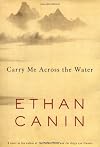
Carry Me Across the Water
by Ethan Canin
On This Page
Description
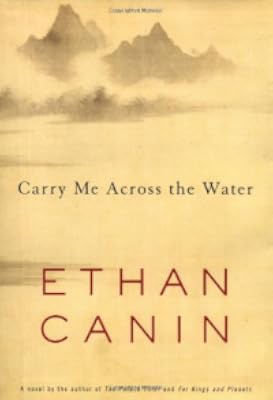
Fiction. Literature. HTML:“Take the advice of no one,” August Kleinman’s mother says to him while August is still a young boy in Germany, and with these words to guide him, he escapes Nazi Germany and goes on to build a fortune, a family, and life on his own terms in America. At the defining moments that reveal character and shape fate — a shocking encounter with a Japanese soldier in a cave during World War II, the audacious decision to start a brewery in Pittsburgh and a violent show more reaction against threats to its independent success, a vacation in Barbados, during which his beloved wife mysteriously wanders off, the birth of his grandson — August’s instincts are determinative in a way that illuminates how lives unfold at the deepest levels. This is a brilliant, suspenseful, surprising novel by one of America’s finest writers. Publisher’s Weekly called Ethan Canin’s For Kings and Planets “Masterful … a classic parable of the human condition,” and the same can be said about Carry Me Across the Water. show lessTags
Recommendations








































Member Reviews
CARRY ME ACROSS THE WATER is yet another book to savor for its beauty and exquisite craftmanship. Canin's writing could be compared to the meticulous workmanship of a fine Swiss watch, all of its parts fitted so finely together, in such a manner that there is no wasted space, nothing extra to impede the movement. He has put it together in much the same way my aged mother works a jigsaw puzzle - first the borders, the outside edges of the story, the background, always working toward the centerpiece of the puzzle.
In this case that central, pivotal piece of the puzzle that is protagonist August Kleinman was a horrific and unforgettable moment in a cave on a Japanese island in the closing days of WWII, an experience that served to define show more who and what he became and haunted him for the rest of his life.
Kleinman was a Jewish immigrant/refugee from Germany who chose in later life to disavow much of his heritage, albeit with mixed emotions. He discovered in himself at a young age a capability for violence which was, in the end, perhaps what kept him alive during his wartime service in the Pacific Theater of war - that and the knowledge that "the other men were relying on him. This was the fundamental trick of the military ... the honor of camaraderie." In this defining time of unbelievable fear, stress and uncertainty, Kleinman thought of home, family and his girlfriend Ginger, vowing "that if he ever made it home, he would marry her, live a quiet life, and bring children into the world."
These portrayals of military camaraderie and physical danger and demonstrations of courage and survival skills served to suck me even deeper into Augie Kleinman's story, probably due to my own army years. But this is a much more complex creation than just those things. Kleinman did get home, marry the girl and have children. And he heeded his mother's counsel to take advice from no one. He built his own business (a small brewery empire) and accumulated considerable wealth. Kleinman was a good man, one who realized the importance of family, "that the real reason he was on earth was to guard her, her and her children, for as long as he lived." But he was often mystified by them, stymied by the differences between his children. And near the end of his life he realized "how ignorant he still was of the human being."
There is a lot going on in this slender novel, things one could ponder and study at length. Like names. Augie. Was Canin tipping his hat to an earlier Augie, the one brought to life by another Jewish writier, Saul Bellow? And what about Augie's real last name: Gertzmann, a fiercer, larger-than-life name than the Kleinman taken from his gentle, more traditionally Jewish adoptive father?
Yes, like that fine Swiss movement, the characters, events and emotions of this carefully crafted little book will continute to tick softly in your subconscious for a long time after you close its covers. In CARRY ME ACROSS THE WATER Ethan Canin has created, I believe, a small masterpiece. show less
In this case that central, pivotal piece of the puzzle that is protagonist August Kleinman was a horrific and unforgettable moment in a cave on a Japanese island in the closing days of WWII, an experience that served to define show more who and what he became and haunted him for the rest of his life.
Kleinman was a Jewish immigrant/refugee from Germany who chose in later life to disavow much of his heritage, albeit with mixed emotions. He discovered in himself at a young age a capability for violence which was, in the end, perhaps what kept him alive during his wartime service in the Pacific Theater of war - that and the knowledge that "the other men were relying on him. This was the fundamental trick of the military ... the honor of camaraderie." In this defining time of unbelievable fear, stress and uncertainty, Kleinman thought of home, family and his girlfriend Ginger, vowing "that if he ever made it home, he would marry her, live a quiet life, and bring children into the world."
These portrayals of military camaraderie and physical danger and demonstrations of courage and survival skills served to suck me even deeper into Augie Kleinman's story, probably due to my own army years. But this is a much more complex creation than just those things. Kleinman did get home, marry the girl and have children. And he heeded his mother's counsel to take advice from no one. He built his own business (a small brewery empire) and accumulated considerable wealth. Kleinman was a good man, one who realized the importance of family, "that the real reason he was on earth was to guard her, her and her children, for as long as he lived." But he was often mystified by them, stymied by the differences between his children. And near the end of his life he realized "how ignorant he still was of the human being."
There is a lot going on in this slender novel, things one could ponder and study at length. Like names. Augie. Was Canin tipping his hat to an earlier Augie, the one brought to life by another Jewish writier, Saul Bellow? And what about Augie's real last name: Gertzmann, a fiercer, larger-than-life name than the Kleinman taken from his gentle, more traditionally Jewish adoptive father?
Yes, like that fine Swiss movement, the characters, events and emotions of this carefully crafted little book will continute to tick softly in your subconscious for a long time after you close its covers. In CARRY ME ACROSS THE WATER Ethan Canin has created, I believe, a small masterpiece. show less
Delicate and ponderous, this is a strangely fast read that spans decades and moves in a non-linear exploration of the major moments in one elderly man's life. Without becoming maudlin, or even necessarily predictable, the book acts as an in-depth character study of a single man's response to war, independence, love, and aging. The problem is simply that there is more character study than plot, and more examination than sympathy. In the end, I was left wanting far more, as engaged as I'd been with various moments and characters in the novel.
While the plot is compelling and the character of August Kleinman is both strange and revealing, so much of the man pivots on being rich. He earned his millions honorably and is sharing some before his will leaves the balance to his three children Yet, he does not buy the lovely paintings of the son of the unarmed Japanese soldier he killed during World War II.
And, why did he decide to bayonet this final soldier when he could easily have taken him prisoner?
The plot moves quickly between the times of his life with too much foreshadowing, making outcomes too predictable.
Still, I read it all again the next night, wanting to be sure I had remembered The Cave correctly
and for the imagery and sweet build-up to Kleinman's apple and the show more meeting with a President. show less
And, why did he decide to bayonet this final soldier when he could easily have taken him prisoner?
The plot moves quickly between the times of his life with too much foreshadowing, making outcomes too predictable.
Still, I read it all again the next night, wanting to be sure I had remembered The Cave correctly
and for the imagery and sweet build-up to Kleinman's apple and the show more meeting with a President. show less
A character study that is told in little pieces back and forth across time, a jigsaw puzzle that the writer and reader put together, from his life as a Jewish boy in Germany to the present time of the novel (2000) when he is a 78 year old man trying to connect with his first grandchild as well as his son. This is a novel but it also can be seen as a number of short stories broken into even smaller vignettes that tie the pieces of the man's life together. There are little puzzles and mysteries in here.
What a portrait Ethan Canin has painted here in a unique way. An excellent book that resonated with me. This will be in my top ten books of the year.
What a portrait Ethan Canin has painted here in a unique way. An excellent book that resonated with me. This will be in my top ten books of the year.
In Carry Me Across the Water, Canin finally finds a voice other than his own to carry this delicately structured and intimate tale. The voice belongs to August Kleinman, a man in his 70's who as he looks back over over his life, dips into memories like pools of warm water. This book is such a refreshing turn for Canin; there is a restraint to the language used to evoke August's life that reads as a true and honorable attempt to give voice to a character that, in the wrong hands, would have become a mere literary cliche. From August's flight from Nazi Germany as a child, to his school years in New York, to his time as a soldier in Japan during WWII, his struggles and successes as a Pittsburgh businessman, the loss of his wife, and at show more last to his final years alone in Boston -- we are dipped into his memories bit by bit. His story builds in layers that skip back and forth over years, like memories surging and retreating. Carry Me Across the Water is a fine achievement from an author who is proving he is not afraid to explore all the freedoms the form of a novel can offer. show less
Ethan Canin has done a remarkably good job of combining so many world issues into one reasonable story without overloading it or simplifying the issues to a point of superficiality. So much pain, so much joy, so much wisdom brought together into one well-told story about a lonely old man trying to connect to his son and grandson. This is a fine, fine book.
Thoroughly enjoyed this quiet, reflective novel. Canin is just a suburb writer that reading his works is an experience really. I love the paring back of the layers in relationships and this one had a lot of that. August was a fascinating character. The other thing I liked about this story is while the relationships were by no means perfect, everyone tried the best they could, to love each other. Somewhat rare in writing these days. Although it made for a bit of a sleepy plot, it was a nice change of pace.
Members
- Recently Added By
Author Information

11+ Works 3,980 Members
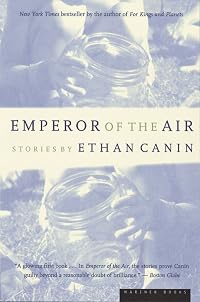
Ethan Canin was born in Michigan, in 1960. Although he did not publish his first book, a collection of short stories titled Emperor of the Air until 1988, he has enjoyed considerable success in a short period of time. The collection of short stories received high praise and encouragement from Danielle Steel, Canin's high school English teacher. show more All the more impressive is the fact that the book was written and published while Canin was at Harvard Medical School, where he received his M.D. in 1992. Canin asserts that medicine is a more useful profession than fiction writing. Canin's subsequent books include The Palace Thief (1994), a collection of stories that appeared in Esquire, Granta and The Paris Review; the novel Blue River (1991); and For Kings and Planets (1998). In addition to his M.D., Canin earned his undergraduate degree at Stanford in 1982 and his M.F.A. from the University of Iowa in 1984. Canin lives in California and has taught creative writing at the University of Iowa, Columbia University, The University of Michigan, The University of California at Irvine, and San Francisco State University. (Bowker Author Biography) Ethan Canin is the author of "For Kings & Planets", "The Palace Thief", "Blue River", & "Emperor of the Air". He is a graduate of Harvard Medical School & on the faculty of the University of Iowa Writer's Workshop. He lives in California & Iowa. (Publisher Provided) show less
Awards and Honors
Distinctions
Common Knowledge
- Canonical title*
- Portami al di là del fiume
- People/Characters
- August Kleinman
- Dedication
- For Barbara, Amiela, and Ayla
- First words
- My Most Divine Umi-
- Last words
- (Click to show. Warning: May contain spoilers.)The plane roared and tilted; in his chest the lightness of escape, then lift.
*Some information comes from Common Knowledge in other languages. Click "Edit" for more information.
Classifications
Statistics
- Members
- 362
- Popularity
- 86,698
- Reviews
- 13
- Rating
- (3.77)
- Languages
- 5 — Dutch, English, French, Italian, Spanish
- Media
- Paper, Ebook
- ISBNs
- 13
- ASINs
- 5