On This Page
Description
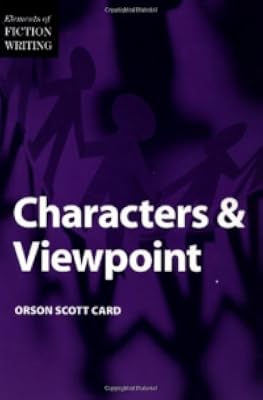
Vivid and memorable characters aren't born: they have to be madeThis book is a set of tools: literary crowbars, chisels, mallets, pliers and tongs. Use them to pry, chip, yank and sift good characters out of the place where they live in your imagination. Award-winning author Orson Scott Card explains in depth the techniques of inventing, developing and presenting characters, plus handling viewpoint in novels and short stories. With specific examples, he spells out your narrative options--the show more choices you'll make in creating fictional people so "real" that readers will feel they know them like mem. show lessTags
Recommendations



Member Reviews
Love Orson Scott Card's science fiction books and loved this book, especially the portions on characterization. He gives excellent examples that he writes specifically for this book. The information he provides are clear and useful.
An editor once told me that if you're going to take advice on writing, take it either from name-bestselling writers or gatekeepers such as acquiring editors or agents--not necessarily anyone who writes for Writer's Digest. Well, I've ordinarily liked the Elements of Fiction Writing series Writer's Digest put out, but in this case you get the "name" too, and Orson Scott Card happens to be someone whose writing I admire. I liked the various examples he gave, especially in illustrating the effects of different points of view. Particularly memorable was his treatment of omniscience, which he said was particularly effective in comedy--complete with an example. The book is a keeper.
There's nothing new in books about writing fiction, only on how they're presented.
Some are written by academics and you need to be one to understand them. Others are written by authors who use them as a means of self-aggrandizement constantly quoting examples from their own work. These may not necessarily be good examples of what they're trying to demonstrate, but they're not about to let an opportunity to promote their work slip by.
In Characters and Viewpoint, Card uses straight forward prose and not a lot of examples from his own work and gives good insight into these two important aspects of writing fiction.
This is a solid book about what is stated in the title.
Some are written by academics and you need to be one to understand them. Others are written by authors who use them as a means of self-aggrandizement constantly quoting examples from their own work. These may not necessarily be good examples of what they're trying to demonstrate, but they're not about to let an opportunity to promote their work slip by.
In Characters and Viewpoint, Card uses straight forward prose and not a lot of examples from his own work and gives good insight into these two important aspects of writing fiction.
This is a solid book about what is stated in the title.
I was initially skeptical about reading this book because of a few bad reviews I read before picking it up. Then I saw several good reviews and decided to give it a go. I do like "Ender's Game" after all. I can't say I was surprised by what I read in the book, it did cover a lot of common ground with other books on the same subject. However, I found the in depth discussions and use of well written examples to be very useful in illustrating the points. In my opinion, one of the better books on this topic out there.
This book concentrates on inventing and writing memorable characters and telling their stories from different viewpoints. It is part of Writer's Digest Elements of Fiction Writing series. Because of its limited scope, it delves further into its subject matter than many writing books. It provides lots of hints, ideas, and techniques for bringing characters into existence, how to develop their profiles, and how each viewpoint can be used to tell their stories in different ways. The subject matter is provided with a little humour, which helps lighten it. But there are none of the exercises you might see in other writing books. I give this book 4 stars.
I thought this book on writing was very good, although I tend to like Card's later, more informal discussions better. Seeing how I've read almost all of his work, it's interesting to see what he has to say about it, too. :)
Card's written a very good handbook here. There isn't much in the way of anectdotes or stories to keep you interested; this is a fairly bare-bones manual to the different types of viewpoint and characterization you can use, and the pitfalls of each. It can be hard to find writing books that actually give you useful information without a lot of fluff on the side, so this book is worth it if that's what you're looking for.
Members
- Recently Added By
Lists

Julie's Read in 2021
19 works; 1 member

Books Read in 2021
5,361 works; 114 members
Author Information

575+ Works 214,662 Members
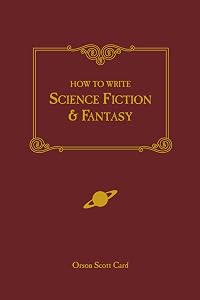
Orson Scott Byron Walley Card, was born in 1951 and studied theater at Brigham Young University. He received his B.A. in 1975 and his M.A. in English in 1981. He wrote plays during that time, including Stone Tables (1973) and the musical, Father, Mother, Mother and Mom (1974). A Mormon, Scott served a two-year mission in Brazil before starting show more work as a journalist in Utah. He also designed games at Lucas Film Games, 1989-92. He is best known for his science fiction novels, including the popular Ender series. Well known titles include A Planet Called Treason (1979), Treasure Box (1996), and Heartfire (1998). He has also written the guide called How to Write Science Fiction and Fantasy (1990). His novel Ender's Game and its sequel Speaker for the Dead, both won Hugo and Nebula awards, making Card the only author to win both prizes in consecutive years. His titles Shadows in Flight, Ruins and Ender's Game made The New York Times Best Seller List. He is also the author of The First Formic War Series, which includes the titles Earth Unaware, Earth Afire, and Earth Awakens. (Bowker Author Biography) show less
Series

Common Knowledge
- Canonical title
- Characters and Viewpoint
- Original publication date
- 1988
- Canonical DDC/MDS
- 808.3; 808
- Canonical LCC
- PN3383.C4C37
Classifications
Statistics
- Members
- 1,617
- Popularity
- 14,074
- Reviews
- 20
- Rating
- (3.98)
- Languages
- English, French
- Media
- Paper, Ebook
- ISBNs
- 9
- UPCs
- 2
- ASINs
- 11