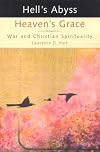
Hell's Abyss, Heaven's Grace: War and Christian Spirituality
by Lawrence Hart
On This Page
Description
"War, before it is ever manifested in physical, observable violence, and peace, before it is ever felt as harmony or seen in acts of kindness, are the inner realities of the human heart and mind. They are states of consciousness, conditions of the soul. . . . War is 'hell's abyss, ' and peace is 'heaven's grace.' Moment by moment we choose which we will live into; indeed, which we will become." --from the Introduction In a stirring call to nonviolent resistance, Episcopal priest Larry Hart show more confronts the compromises Christians around the world have made with their nations' uses of violence. Comparing Just War theory with the United States' national history of war and exploitation, Hart voices the need for personal and social transformation to live in keeping with the Gospel. At the center of his argument, Hart lifts up the images of Christian leaders around the world who have chosen nonviolence to resist oppression, showing the real historical possibilities for peace when we bear truth, courage, and faith as our only weapons. show lessTags
Recommendations
Member Recommendations

Guns by Stephen King
by Othemts
Member Reviews
Hell's Abyss, Heaven's Grace: War and Christian Spirituality (2006) by Lawrence D. Hart refers in the title to the paradox within each of us that we can be drawn to violence and hatred or to the peace and grace of God. The basic question of the book is whether or not a Christian can support war and the simple answer is no. A large portion of the book is dedicated to the ways in which the United States government has interfered militarily in the affairs of other countries for corporations and aims of empire. A central chapter reviews the War in Iraq and how a Christian could not support it as a Holy War.
The author also challenges the hypothetical dilemma asked of pacifists of what they would do should their own loved ones be under attack show more by a violent intruder. Drawing heavily on an earlier work What Would You Do? A Serious Answer to a Standard Question by John Howard Yoder, Hart shows that there really are many more options than kill or be killed, and that it's also irrelevant to the question of supporting or opposing a national war effort. Living the Gospel allows for transformative powers both individually and socially.
From my perspective, reading this book was like Hart preaching to the choir. Sadly, I also felt that the many American's, even Christians, who justify our country's use of warfare would not be swayed.
Dale Brown has suggested that the holy wars of Hebrew Scriptures are to be understood as miracle stories. Decisive victories against incredible odds were meant to teach people to rely on God rather than on their own military strength. If the entire Old Testament Story of Gideon is read in this light, which seems to be the obvious way to read it, then there is very little support to be found for trust inn nuclear arsenals, military technology that shocks and terrorizes, unproven trillion-dollar defense shields, or for relying on a superpower status that will never end.
It is also possible that the holy war tradition in Scripture is to be understood as a concession by God, so that holy wars represent no God's original intention but a kind of divine concession. When the people of Israel demand a king, God warns them that if they choose a king an oppressive military complex will dominate their lives [in 1 Samuel 8:7-22]. -- p. 52-53
"Contemplation," therefore, measures what is high above and what is below together. The earthly temple in Jerusalem is built according to the heavenly vision (Exodus 25:8-9). The vision from above determines the course of action below. There are those who say that contemplation is a long, loving look at God, and they are absolutely correct. It is that sustained gaze at God that leads to wisdom of heart, to a conscience of compassion -- the mystical knowledge of God's dream that we are to help make real in our own personal and public situation.
So the unifying theme of this book is the Christian conscience -- a conscience that compels all who have heard the transcendent voice of God to do their best to love as God loves, to champion the cause of the poor and vulnerable, to pursue peace, to overcome evil with good, to insist on integrity and truth, and to vigorously oppose injustice and violence. Anne Lamott's summary interpretation of the teaching of Jesus succinctly describes this idea: "The point is not to hate and kill each other today, and if you can, to help the forgotten and powerless." -- p. 140 show less
The author also challenges the hypothetical dilemma asked of pacifists of what they would do should their own loved ones be under attack show more by a violent intruder. Drawing heavily on an earlier work What Would You Do? A Serious Answer to a Standard Question by John Howard Yoder, Hart shows that there really are many more options than kill or be killed, and that it's also irrelevant to the question of supporting or opposing a national war effort. Living the Gospel allows for transformative powers both individually and socially.
From my perspective, reading this book was like Hart preaching to the choir. Sadly, I also felt that the many American's, even Christians, who justify our country's use of warfare would not be swayed.
Dale Brown has suggested that the holy wars of Hebrew Scriptures are to be understood as miracle stories. Decisive victories against incredible odds were meant to teach people to rely on God rather than on their own military strength. If the entire Old Testament Story of Gideon is read in this light, which seems to be the obvious way to read it, then there is very little support to be found for trust inn nuclear arsenals, military technology that shocks and terrorizes, unproven trillion-dollar defense shields, or for relying on a superpower status that will never end.
It is also possible that the holy war tradition in Scripture is to be understood as a concession by God, so that holy wars represent no God's original intention but a kind of divine concession. When the people of Israel demand a king, God warns them that if they choose a king an oppressive military complex will dominate their lives [in 1 Samuel 8:7-22]. -- p. 52-53
"Contemplation," therefore, measures what is high above and what is below together. The earthly temple in Jerusalem is built according to the heavenly vision (Exodus 25:8-9). The vision from above determines the course of action below. There are those who say that contemplation is a long, loving look at God, and they are absolutely correct. It is that sustained gaze at God that leads to wisdom of heart, to a conscience of compassion -- the mystical knowledge of God's dream that we are to help make real in our own personal and public situation.
So the unifying theme of this book is the Christian conscience -- a conscience that compels all who have heard the transcendent voice of God to do their best to love as God loves, to champion the cause of the poor and vulnerable, to pursue peace, to overcome evil with good, to insist on integrity and truth, and to vigorously oppose injustice and violence. Anne Lamott's summary interpretation of the teaching of Jesus succinctly describes this idea: "The point is not to hate and kill each other today, and if you can, to help the forgotten and powerless." -- p. 140 show less
Members
- Recently Added By
Author Information
2+ Works 19 Members
Classifications
- Genres
- Nonfiction, Religion & Spirituality
- DDC/MDS
- 261.8 — Religion Christian organization, social work & worship Social theology and interreligious relations and attitudes Christianity and socioeconomic problems
- LCC
- BT736.2 .H295 — Philosophy, Psychology and Religion Doctrinal Theology Doctrinal Theology Creation
- BISAC
Statistics
- Members
- 18
- Popularity
- 1,384,542
- Reviews
- 1
- Rating
- (2.00)
- Languages
- English
- Media
- Paper
- ISBNs
- 1