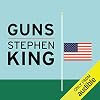
Guns
by Stephen King
On This Page
Description
In a pulls-no-punches essay intended to provoke rational discussion, Stephen King sets down his thoughts about gun violence in America. Anger and grief in the wake of the shootings at Sandy Hook Elementary School are palpable in this urgent piece of writing, but no less remarkable are King's keen thoughtfulness and composure as he explores the contours of the gun-control issue and constructs his argument for what can and should be done.King's earnings from the sale of this essay will go to show more the Brady Campaign to Prevent Gun Violence.Stephen King is the author of 11/22/63, Under the Dome, Carrie, The Shining, and many other bestselling works. show lessTags
Recommendations
















Member Recommendations

Member Reviews
I am emphatically not part of the target audience for this essay, for the simple reason that I do not live in the United States of America and hence do not have to worry overmuch about guns getting into the hands of psychopaths who go on killing sprees. Stephen King wrote Guns (to quite some public stir) in the wake of the shooting at Sandy Hook Elementary School. It represents what I gather is a moderate viewpoint in the ongoing weapons control debate, maintaining a right to own arms for US citizens but arguing in favour of banning automatic weaponry for general sale. The arguments are solid and reasonable and, this being Stephen King, the rhetoric is persuasive as a matter of course and the whole thing is immensely readable.
But that show more is not really what interested me about Guns – being fortunate enough to live in a civilized part of the world I do not have to be convinced that unrestricted public access to guns is a bad idea, nor do I need to convince anyone else of it, as the laws of the country I live in severely limit and control who is allowed to possess guns, and quite obviously and to almost unanimous public agreement (we do have some right wing nuts here, too, but fortunately they’re a minority, and for the most part a not very vocal one) everyone is all the better for it.
And what is so utterly baffling to every Non-USian is precisely how in spite of every single reasonable argument and every single available fact demonstrating that unrestricted access to guns is A Very Bad Thing Indeed there still is a huge lobby in favour of gun possession, to the point that often even otherwise quite reasonable people stubbornly ignore the blatantly obvious when it comes to private ownership of guns. I suspect that the majority of USians does not even realise just how weird and bizarre this attitude appears to the rest of the world, and I was hoping on some insight as to how such a wilful ignoring of empirical evidence in favour of a paranoid fantasia can take hold of a whole nation.
It is not really something the essay does provide, but then it is not something it ever set out to, and at the end of the day I suppose that Stephen King is too much caught up in the whole matter himself to be able to get an in-depth perspective on it. Probably only some future historian will have the necessary distance and detachment, but when he or she writes the definite monograph on “The Gun Craze in the Late Capitalist USA”, I could imagine King’s essay providing some useful material for the study. He opens with a satirical salvo about the way the media report on mass killings (which would make for a fascinating subject in and of itself), moves into autobiographical narrative for a bit to tell about one of his early novels that turned up on the bookshelf of several shooters, and concludes with taking apart several “arguments” (one really can’t call them that without quotation marks) in favour of unrestricted gun acess.
All of which makes Guns well worth reading if you happen to live in the United States and are in need of some striking arguments in favour of gun control (it would be naive to assume that anyone who is not in favour of that is ever going to read the essay). However, it should be kept in mind that in the final analysis, this is only curing the symptoms and that the problem will not go away for as long as guns are considered to be sexy. I recommend this excellent blog post by Matt Cheney for placing the gun control debate in a wider cultural context. show less
But that show more is not really what interested me about Guns – being fortunate enough to live in a civilized part of the world I do not have to be convinced that unrestricted public access to guns is a bad idea, nor do I need to convince anyone else of it, as the laws of the country I live in severely limit and control who is allowed to possess guns, and quite obviously and to almost unanimous public agreement (we do have some right wing nuts here, too, but fortunately they’re a minority, and for the most part a not very vocal one) everyone is all the better for it.
And what is so utterly baffling to every Non-USian is precisely how in spite of every single reasonable argument and every single available fact demonstrating that unrestricted access to guns is A Very Bad Thing Indeed there still is a huge lobby in favour of gun possession, to the point that often even otherwise quite reasonable people stubbornly ignore the blatantly obvious when it comes to private ownership of guns. I suspect that the majority of USians does not even realise just how weird and bizarre this attitude appears to the rest of the world, and I was hoping on some insight as to how such a wilful ignoring of empirical evidence in favour of a paranoid fantasia can take hold of a whole nation.
It is not really something the essay does provide, but then it is not something it ever set out to, and at the end of the day I suppose that Stephen King is too much caught up in the whole matter himself to be able to get an in-depth perspective on it. Probably only some future historian will have the necessary distance and detachment, but when he or she writes the definite monograph on “The Gun Craze in the Late Capitalist USA”, I could imagine King’s essay providing some useful material for the study. He opens with a satirical salvo about the way the media report on mass killings (which would make for a fascinating subject in and of itself), moves into autobiographical narrative for a bit to tell about one of his early novels that turned up on the bookshelf of several shooters, and concludes with taking apart several “arguments” (one really can’t call them that without quotation marks) in favour of unrestricted gun acess.
All of which makes Guns well worth reading if you happen to live in the United States and are in need of some striking arguments in favour of gun control (it would be naive to assume that anyone who is not in favour of that is ever going to read the essay). However, it should be kept in mind that in the final analysis, this is only curing the symptoms and that the problem will not go away for as long as guns are considered to be sexy. I recommend this excellent blog post by Matt Cheney for placing the gun control debate in a wider cultural context. show less
The novelist Stephen King's thoroughly reasonable contribution to the gun control debate in the United States. Unfortunately, the gun control debate itself is not reasonable and, as King acknowledges, his words aren't going to affect any political change. Having better arguments won't result in a more harmonious relationship between Americans and their guns, because the underlying issues are too complex, too emotional and too illogical.
However, King attempts to circumvent this by appealing to the silent majority: the ordinary American voters, many of whom own guns and are sensible with them and with their rights. They are quite different from the NRA and the rest of the pro-gun lobby. He is successful in this argument because he is one show more of them: a reasonable, level-headed, middle-of-the-road American gun-owner.
Elsewhere, King exposes the flimsiness of pro-gun arguments like the necessity of guns for home defence and the claim that it is pop culture which encourages gun violence. I particularly liked how he pointed out that the most popular films at the moment are superhero movies, in which the heroes use their special powers or their fists. In these films, guns are only used by the bad guys too cowardly to fight.
Overall, King has managed to write a good, short polemic (less than 20 pages long), with an occasional artistic flair which betrays his writing background and really helps knit the piece together. He writes with a caustic humour which disguises his outrage and bafflement that gun control is, at least to such a great extent, even a political issue in a 21st-century civilised society. show less
However, King attempts to circumvent this by appealing to the silent majority: the ordinary American voters, many of whom own guns and are sensible with them and with their rights. They are quite different from the NRA and the rest of the pro-gun lobby. He is successful in this argument because he is one show more of them: a reasonable, level-headed, middle-of-the-road American gun-owner.
Elsewhere, King exposes the flimsiness of pro-gun arguments like the necessity of guns for home defence and the claim that it is pop culture which encourages gun violence. I particularly liked how he pointed out that the most popular films at the moment are superhero movies, in which the heroes use their special powers or their fists. In these films, guns are only used by the bad guys too cowardly to fight.
Overall, King has managed to write a good, short polemic (less than 20 pages long), with an occasional artistic flair which betrays his writing background and really helps knit the piece together. He writes with a caustic humour which disguises his outrage and bafflement that gun control is, at least to such a great extent, even a political issue in a 21st-century civilised society. show less
Whatever can be said about Stephen King's fiction--I like some of it, love a few things, can take or leave (and have mostly left) the rest--he has always been a perceptive observer of American culture with a talent for noting the holes in the social fabric that create openings for monsters to do their worst.
This is an interesting publishing experiment--too short and urgent for published book and arguably too long for a magazine piece, it is King's post-Newtown examination of America's gun culture and what it would take to limit its most destructive excesses. You can read it on a Kindle for a dollar. King advocates the main prongs of the Obama administration's proposals on guns and opines that a universal background check is the most show more likely piece to be passed and an assault weapons ban, the least likely.
There are some flashy passages of writing and some powerful stories of the mass shooters and some of their victims. But basically, King is calling for responsible citizenship and common sense in responding to this awful moment with sensible gun policies.
If you go to amazon.com and run the search , the first two results retrieved are this essay and a response titled "Stephen King Don't Know Shit." King would not be the least bit surprised at the tone of that self-parodying title. In discussing the uphill battle to pass an assault weapons ban, King notes:
"[P]lenty of gun advocates cling to their semi-automatics the way Amy Winehouse and Michael Jackson clung to the shit that was killing them. There are rationalizations but very little actual discourse on the subject of banning assault weapons. What we get mostly are incoherent screams of outrage and furious references to 'the liberal agenda.' When I listen to gun advocates and NRA brass on this subject, I get an image of a little kid doing a tantrum in the dirt, rolling around with his hands plastered over his ears. No! No! No! No!"
He addresses the wide chasm between activists of the left and right, the tendency to scream back and forth over the impotent center in current debates. This piece speaks to conservatives and gun owners who may be willing to seek sensible solutions before this moment passes. Despite the lack of evidence that common sense will prevail on the assault weapons ban, King is an optimist. But he notes that change will only happen if gun owners and even NRA members break ranks and insist that Congress do the right thing. I hope his optimism is justified. show less
This is an interesting publishing experiment--too short and urgent for published book and arguably too long for a magazine piece, it is King's post-Newtown examination of America's gun culture and what it would take to limit its most destructive excesses. You can read it on a Kindle for a dollar. King advocates the main prongs of the Obama administration's proposals on guns and opines that a universal background check is the most show more likely piece to be passed and an assault weapons ban, the least likely.
There are some flashy passages of writing and some powerful stories of the mass shooters and some of their victims. But basically, King is calling for responsible citizenship and common sense in responding to this awful moment with sensible gun policies.
If you go to amazon.com and run the search , the first two results retrieved are this essay and a response titled "Stephen King Don't Know Shit." King would not be the least bit surprised at the tone of that self-parodying title. In discussing the uphill battle to pass an assault weapons ban, King notes:
"[P]lenty of gun advocates cling to their semi-automatics the way Amy Winehouse and Michael Jackson clung to the shit that was killing them. There are rationalizations but very little actual discourse on the subject of banning assault weapons. What we get mostly are incoherent screams of outrage and furious references to 'the liberal agenda.' When I listen to gun advocates and NRA brass on this subject, I get an image of a little kid doing a tantrum in the dirt, rolling around with his hands plastered over his ears. No! No! No! No!"
He addresses the wide chasm between activists of the left and right, the tendency to scream back and forth over the impotent center in current debates. This piece speaks to conservatives and gun owners who may be willing to seek sensible solutions before this moment passes. Despite the lack of evidence that common sense will prevail on the assault weapons ban, King is an optimist. But he notes that change will only happen if gun owners and even NRA members break ranks and insist that Congress do the right thing. I hope his optimism is justified. show less
I read this when it first came out and in view of March for Our Lives and more recent events, I decided to reread it. It holds up just as well as a cogent plea for America to rethink our views on widespread gun availability and violence.
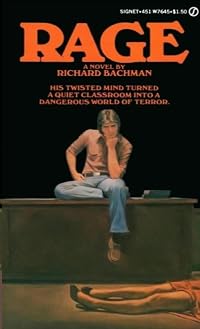
Mr. King is a gun owner himself, but numbers himself among the responsible gun owners who acquire their weapons legally and treat them as weapons. He talks about a book of his own, Rage, that he had pulled from bookshelves due to content that might be interpreted as incitement of gun violence. He offers a cogent assessment of the impact of the constant shootings, not just at schools, but all over the country.
An excellent book for our times, but sad that America has not already heeded his advice.
Mr. King is a gun owner himself, but numbers himself among the responsible gun owners who acquire their weapons legally and treat them as weapons. He talks about a book of his own, Rage, that he had pulled from bookshelves due to content that might be interpreted as incitement of gun violence. He offers a cogent assessment of the impact of the constant shootings, not just at schools, but all over the country.
An excellent book for our times, but sad that America has not already heeded his advice.
A short essay, should not count towards my book total for the year.
King writes in a style that is both measured and emotionally evocative. The opening drips with cynicism as we've grown so used to regular shootings we've developed an ineffective rhythm to reporting them.
He talks about his early Bachman novel, Rage...you know, the school shooting book. I read Rage, as well as, well, nearly everything in King's extensive bibliography. Probably at a younger age than I should have been reading them. King discussed multiple events in which Rage was likely a contributing factor - the not sole factor, mind you, but a possible variable. As a result, he choose to pull publication of the book. (Used copies are regularly for sale for $500 ) He show more talks about how the novel itself isn't bad or evil or this mad catalyst - it talks about the horror of high school. I read Rage while in high school. As a bullied, thoroughly miserable teenager. He isn't wrong - there was an emotional core to the novel that resonated with me while the actions within the novel horrified me.
The rest of the essay is King's position on gun control and where the blame lies. I think he cherry-picks his references a bit and is a little hand wavey - he is so careful to cite exact books he's misquoted in but doesn't seem to have similar citations for his statistical quotes. But I suppose this is more of an editorial than academic paper. You would think he would be the poster child for gun advocacy - someone familiar with guns, who owns and uses multiple guns, who is not interested in banning all guns. He calls for downright minimalistic approaches - comprehensive background checks and brief waiting periods, magazine limits, no automatic weapons, etc. His arguments are clear, articulate, and to the point. But they are also the same bare minimum common sense suggestions people have been asking for for decades now, to no avail.
This essay is already dated, 5-6 years out. The stats on gun violence are no better, the NRA is worse than ever (," she said, grimly remembering the NRA commercial that suggested she should be shot, for the crime of being a scientist.), and the alt right is far worse than the Tea Party. I'd love to see an update to this essay. show less
King writes in a style that is both measured and emotionally evocative. The opening drips with cynicism as we've grown so used to regular shootings we've developed an ineffective rhythm to reporting them.
He talks about his early Bachman novel, Rage...you know, the school shooting book. I read Rage, as well as, well, nearly everything in King's extensive bibliography. Probably at a younger age than I should have been reading them. King discussed multiple events in which Rage was likely a contributing factor - the not sole factor, mind you, but a possible variable. As a result, he choose to pull publication of the book. (Used copies are regularly for sale for $500 ) He show more talks about how the novel itself isn't bad or evil or this mad catalyst - it talks about the horror of high school. I read Rage while in high school. As a bullied, thoroughly miserable teenager. He isn't wrong - there was an emotional core to the novel that resonated with me while the actions within the novel horrified me.
The rest of the essay is King's position on gun control and where the blame lies. I think he cherry-picks his references a bit and is a little hand wavey - he is so careful to cite exact books he's misquoted in but doesn't seem to have similar citations for his statistical quotes. But I suppose this is more of an editorial than academic paper. You would think he would be the poster child for gun advocacy - someone familiar with guns, who owns and uses multiple guns, who is not interested in banning all guns. He calls for downright minimalistic approaches - comprehensive background checks and brief waiting periods, magazine limits, no automatic weapons, etc. His arguments are clear, articulate, and to the point. But they are also the same bare minimum common sense suggestions people have been asking for for decades now, to no avail.
This essay is already dated, 5-6 years out. The stats on gun violence are no better, the NRA is worse than ever (," she said, grimly remembering the NRA commercial that suggested she should be shot, for the crime of being a scientist.), and the alt right is far worse than the Tea Party. I'd love to see an update to this essay. show less
This reads more as a general letter to the American populace than an essay. I'd compare it to the Entertainment Weekly pieces King has written for years on various pop-culture topics. The voice is the same, which it should be...it's his own true voice. The main points are explained well and with anecdotal and statistical evidence. Some of it is blurred and not quite as clear cut at King would like the readers to believe, but the intention is appreciated by this reader.
King applies a relatively equal amount of vitriol to both the left and the right involved in the gun debate asking both sides to come to the middle. There are points where his personal opinions come through stronger than the arguments he's making, which many will jump on show more as an example of his political leanings. In the end, though, this is a celebrity author expressing his thoughts on the subject. He's not a policy maker nor a politician. It's a quick read that can make either side of the debate think a little bit about their own stance(s) and if there is any way to move toward the middle ground...you know...that magical place where things can actually be changed rather than shouted about. show less
King applies a relatively equal amount of vitriol to both the left and the right involved in the gun debate asking both sides to come to the middle. There are points where his personal opinions come through stronger than the arguments he's making, which many will jump on show more as an example of his political leanings. In the end, though, this is a celebrity author expressing his thoughts on the subject. He's not a policy maker nor a politician. It's a quick read that can make either side of the debate think a little bit about their own stance(s) and if there is any way to move toward the middle ground...you know...that magical place where things can actually be changed rather than shouted about. show less
This piece frickin' amazing. Even if you are not a gun advocate - there is something in here for you.
1. Maybe it's the 'attack' on the modern 72 hour news cycle with tragedies like Sandy Hook.
2. Maybe it's the reality on what the two purposes of semi-automatic weapons are for...
3. Maybe it's a comment on the fact our 'so called culture of violence' is .. NOT a culture of violence (I found that part extraordinarily interesting.)
4. Or maybe it's what happened in Australia that is a remarkable result of some type of assault rifles ban.
5. Maybe it's just (the totally awesome) idea that everyone who watches Fox News and MSNBC should be foreced to watch the opposite view for a year.
Gun pro or not, this piece is brilliantly written and show more should be read for everyone.
The only reason I give it 4 stars is that I feel it should be a free Kindle single - but there's nothing to say that King isn't on contract to charge /something/ for the works that he produces for the Kindle.
All in all. Absolutely fucking brilliant. show less
1. Maybe it's the 'attack' on the modern 72 hour news cycle with tragedies like Sandy Hook.
2. Maybe it's the reality on what the two purposes of semi-automatic weapons are for...
3. Maybe it's a comment on the fact our 'so called culture of violence' is .. NOT a culture of violence (I found that part extraordinarily interesting.)
4. Or maybe it's what happened in Australia that is a remarkable result of some type of assault rifles ban.
5. Maybe it's just (the totally awesome) idea that everyone who watches Fox News and MSNBC should be foreced to watch the opposite view for a year.
Gun pro or not, this piece is brilliantly written and show more should be read for everyone.
The only reason I give it 4 stars is that I feel it should be a free Kindle single - but there's nothing to say that King isn't on contract to charge /something/ for the works that he produces for the Kindle.
All in all. Absolutely fucking brilliant. show less
Members
- Recently Added By
Lists

Books about Gun Violence
54 works; 1 member

Books Read By artturnerjr - 2013
24 works; 1 member
Talk Discussions
Past Discussions
Sept. 2014's SK Flavor of the Month - Guns in King's Dear Constant Readers (September 2014)
Author Information

966+ Works 867,771 Members
Stephen King was born in Portland, Maine, on September 21, 1947. After graduating with a Bachelor's degree in English from the University of Maine at Orono in 1970, he became a teacher. His spare time was spent writing short stories and novels. King's first novel would never have been published if not for his wife. She removed the first few show more chapters from the garbage after King had thrown them away in frustration. Three months later, he received a $2,500 advance from Doubleday Publishing for the book that went on to sell a modest 13,000 hardcover copies. That book, Carrie, was about a girl with telekinetic powers who is tormented by bullies at school. She uses her power, in turn, to torment and eventually destroy her mean-spirited classmates. When United Artists released the film version in 1976, it was a critical and commercial success. The paperback version of the book, released after the movie, went on to sell more than two-and-a-half million copies. Many of King's other horror novels have been adapted into movies, including The Shining, Firestarter, Pet Semetary, Cujo, Misery, The Stand, and The Tommyknockers. Under the pseudonym Richard Bachman, King has written the books The Running Man, The Regulators, Thinner, The Long Walk, Roadwork, Rage, and It. He is number 2 on the Hollywood Reporter's '25 Most Powerful Authors' 2016 list. King is one of the world's most successful writers, with more than 100 million copies of his works in print. Many of his books have been translated into foreign languages, and he writes new books at a rate of about one per year. In 2003, he received the National Book Foundation Medal for Distinguished Contribution to American Letters. In 2012 his title, The Wind Through the Keyhole made The New York Times Best Seller List. King's title's Mr. Mercedes and Revival made The New York Times Best Seller List in 2014. He won the Edgar Allan Poe Award in 2015 for Best Novel with Mr. Mercedes. King's title Finders Keepers made the New York Times bestseller list in 2015. Sleeping Beauties is his latest 2017 New York Times bestseller. (Bowker Author Biography) Stephen King is the author of more than thirty books, all of them worldwide bestsellers. Among his most recent are "Hearts in Atlantis", "The Girl Who Loved Tom Gordon", "Bag of Bones", & "The Green Mile". "On Writing" is his first book of nonfiction since "Danse Macabre", published in 1981. He served as a judge for Prize Stories: The Best of 1999, The O. Henry Awards. He lives in Bangor, Maine with his wife, novelist Tabitha King. King's book, The Bazaar of Bad Dreams: Stories, made the 2015 New York Times bestseller list. (Publisher Provided) show less
Some Editions
Common Knowledge
- Quotations
- You don't leave a can of gasoline where a boy with firebug tendencies can lay hands on it.
The idea that America exists in a culture of violence is bullshit. What America exists in is a culture of Kardashian.
To claim that America's “culture of violence” is responsible for school shootings is tantamount to cigarette company executives declaring that environmental pollution is the chief cause of lung cancer.
Semi-automatics have only two purposes. One is so owners can take them to the shooting range once in awhile, yell yeehaw, and get all horny at the rapid fire and the burning vapor spurting from the end of the barrel. Their ot... (show all)her use — their only other use — is to kill people.
[P]lenty of gun advocates cling to their semi-automatics the way Amy Winehouse and Michael Jackson clung to the shit that was killing them.
Classifications
Statistics
- Members
- 301
- Popularity
- 106,579
- Reviews
- 37
- Rating
- (4.07)
- Languages
- English, Italian
- Media
- Paper, Audiobook, Ebook
- ISBNs
- 5
- ASINs
- 2