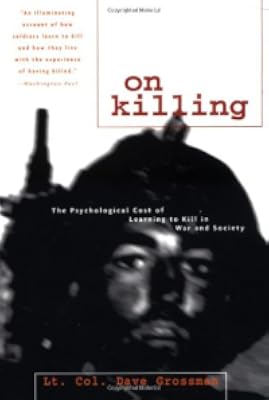
On Killing: The Psychological Cost of Learning to Kill in War and Society
by Dave Grossman
On This Page
Description
The good news is that the vast majority of soldiers are loath to kill in battle. Unfortunately, modern armies, using Pavlovian and operant conditioning, have developed sophisticated ways of overcoming this instinctive aversion. The psychological cost for soldiers, as witnessed by the increase in post-traumatic stress, is devastating. The psychological cost for the rest of us is even more so: contemporary civilian society, particularly the media, replicates the army's conditioning techniques show more and, according to Grossman's controversial thesis, is responsible for our rising rate of murder and violence, especially among the young. ON KILLING is an important study of the techniques the military uses to overcome the powerful reluctance to kill, of how killing affects the soldier, and of the societal implications of escalating violence. show lessTags
Recommendations

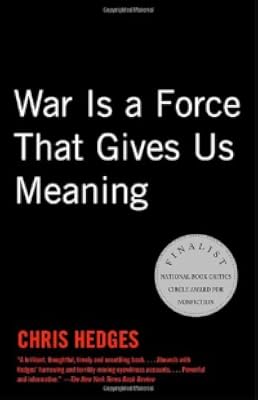

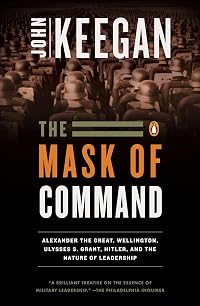
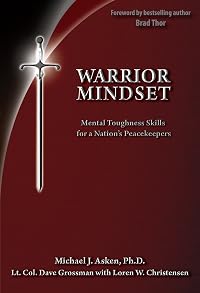
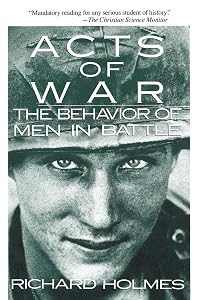








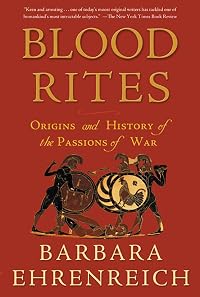
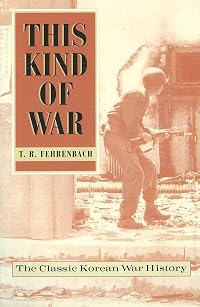
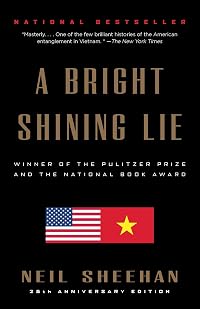

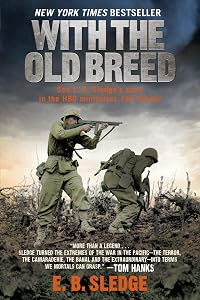

Member Recommendations

Guns by Stephen King
by jmulick
Member Reviews
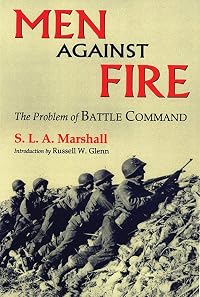
In 1947, military historian S.L.A. Marshall published “Men Against Fire,” in which he sought to establish that at least 75% of American WWII riflemen in frontline combat had never fired their weapons, even when under fire and even for the purpose of saving their own lives and the lives of their buddies. His conclusion was that civilian conditioning against killing was so profound that most men could not bring themselves to kill in combat.
Grossman takes Marshall’s research as his starting point and builds toward an understanding of the powerful psychological blocks most people have against killing fellow humans, the types of conditioning and structures modern militaries have implemented to overcome these blocks, the drastic show more psychological damage done to the individual who kills, and the critical rituals and support systems combat veterans need in order to live whole, healthy, and productive lives after the war.
The patterns of human behavior Grossman surfaces are powerful and compelling, and make for brutal reading. This book is not for the faint of heart, and perhaps this alone illustrates his central thesis: our core resistance to killing fellow humans is so deep that even sustained reading on the topic exhausts heart and mind. The saddest section is that in which he unfolds with unforgiving clarity the way in which both the American military and American society catastrophically failed its Vietnam veterans, psychologically devastating a generation of its young men.
Where Grossman stumbles, in my opinion, is in his tendency to draw big conclusions from general patterns. In part, this is a byproduct of the topic. With no ethical way to set up controlled studies of the psychology of killing, observations of patterns from case studies is the best you can do. In part, this may also be a byproduct of Grossman’s psychological training, which seems to trend strongly toward a materialist reductionism; i.e., man resembles a machine which, if you can control for all variables and feed it specific inputs, it will yield predictable outputs. I question whether you can construct natural laws from case studies of “machines” as complex and ill-understood as individual human beings.
This tendency is most palpably illustrated in Grossman’s section on violence in America, in which he takes several chapters trying to establish that violent movies and video games are responsible for a rising tide of violence in America. Here he leaves the safe halls of concrete case studies and statistical analyses and runs untethered and free in vast fields of speculation that, to my mind, contradict everything that came before.
Grossman argues convincingly that only a complex and sustained mesh of structural and social conditioning can bring soldiers in combat to take lives; and that even after all that, veterans are statistically less likely to engage in violence than the general population after returning to civilian life. Yet he would have us believe that all it takes is an uneven and decentralized diffusion of violent themes in movies and video games, with none of the targeted conditioning and authoritarian structures of military training, to turn America’s youth en masse into mindless assassins. There are certainly debates to be had over whether violence in media is healthy, desirable, or moral; but the notion that this represents an uncontrolled programming of children to kill without thought or remorse seems an extraordinary claim that requires extraordinary evidence.
In summary, I think Grossman’s book is valuable and interesting, and I believe I benefited from his insights into the complicated leadup and aftermath to killing. I have a greater appreciation for the sacrifices made by those who’ve fought and survived for my country. I would, however, handle his work with caution when he attempts to build holistic and mechanistic natural laws from individual case studies and historical statistics. I’m not at all confident his useful patterns are strong enough to support a truly unified theory of violence. show less
Grossman takes Marshall’s research as his starting point and builds toward an understanding of the powerful psychological blocks most people have against killing fellow humans, the types of conditioning and structures modern militaries have implemented to overcome these blocks, the drastic show more psychological damage done to the individual who kills, and the critical rituals and support systems combat veterans need in order to live whole, healthy, and productive lives after the war.
The patterns of human behavior Grossman surfaces are powerful and compelling, and make for brutal reading. This book is not for the faint of heart, and perhaps this alone illustrates his central thesis: our core resistance to killing fellow humans is so deep that even sustained reading on the topic exhausts heart and mind. The saddest section is that in which he unfolds with unforgiving clarity the way in which both the American military and American society catastrophically failed its Vietnam veterans, psychologically devastating a generation of its young men.
Where Grossman stumbles, in my opinion, is in his tendency to draw big conclusions from general patterns. In part, this is a byproduct of the topic. With no ethical way to set up controlled studies of the psychology of killing, observations of patterns from case studies is the best you can do. In part, this may also be a byproduct of Grossman’s psychological training, which seems to trend strongly toward a materialist reductionism; i.e., man resembles a machine which, if you can control for all variables and feed it specific inputs, it will yield predictable outputs. I question whether you can construct natural laws from case studies of “machines” as complex and ill-understood as individual human beings.
This tendency is most palpably illustrated in Grossman’s section on violence in America, in which he takes several chapters trying to establish that violent movies and video games are responsible for a rising tide of violence in America. Here he leaves the safe halls of concrete case studies and statistical analyses and runs untethered and free in vast fields of speculation that, to my mind, contradict everything that came before.
Grossman argues convincingly that only a complex and sustained mesh of structural and social conditioning can bring soldiers in combat to take lives; and that even after all that, veterans are statistically less likely to engage in violence than the general population after returning to civilian life. Yet he would have us believe that all it takes is an uneven and decentralized diffusion of violent themes in movies and video games, with none of the targeted conditioning and authoritarian structures of military training, to turn America’s youth en masse into mindless assassins. There are certainly debates to be had over whether violence in media is healthy, desirable, or moral; but the notion that this represents an uncontrolled programming of children to kill without thought or remorse seems an extraordinary claim that requires extraordinary evidence.
In summary, I think Grossman’s book is valuable and interesting, and I believe I benefited from his insights into the complicated leadup and aftermath to killing. I have a greater appreciation for the sacrifices made by those who’ve fought and survived for my country. I would, however, handle his work with caution when he attempts to build holistic and mechanistic natural laws from individual case studies and historical statistics. I’m not at all confident his useful patterns are strong enough to support a truly unified theory of violence. show less
I am truly puzzled why this book is on the U.S. Army Center of Military History professional reading list and has received mostly glowing reviews on Amazon. The book is a perfect example of "truthiness". Why do research if it sounds right? Grossman's errors range from the trivial ("a millennia") to conceptual to historical to sociological to strange ethics. He is wrong on so many levels that the book makes for painful reading.
"... for the most part we are given James Bond, Luke Skywalker, Rambo, and Indiana Jones blithely and remorselessly killing off men by the hundreds." One wonders whether Grossman has ever seen the movies in question: Luke Skywalker, played by baby-faced Mark Hamill, a remorseless killer? Luke throws away his own show more weapon in not one but two movies! John Rambo, at least in his original conception in First Blood, certainly feels remorse. Rambo might have been the ideal persona to discuss different aspects of killing. Instead, Grossman rolls out the tired (and intellectually bankrupt): Kid, only a killer truly knows about killing (which incidentally disqualifies the non-killer Grossman himself). Konrad Lorenz was able to explain the behavior of bees and geese without being one or the other himself. Lorenz, however, was a scientist (and a Nazi). Grossman (unfortunately and fortunately, respectively) is neither.
Grossman fails to understand the scientific approach. It is not about cherry-picking examples to confirm your bias. It is about testing alternative explanations on reliable data. One of Grossman's cherished ideas is that humans are blocked from killing due to their love for mankind (what I call the New Testament approach). Chief witness for Grossman is SLA Marshall's debunked idea that most soldiers do not fire their guns. Grossman, as he often does without noticing, provides his own falsification: Many soldiers shoot to posture (by far the best part of the book), as heavy ammunition expenditure and most TV footage of soldiers amply testify. There is also interdiction fire (which Grossman does not mention).
Grossman fails to do research. The bibliography is short and lacking in essentials, e.g. Martin van Creveld's Fighting Power could have supplied Grossman with WWII data instead of the anecdotes he cherishes. As Grossman fails to supply citations, a History Channel version of the past clogs the text. Just one small example: He claims "the professional Roman army went up against the Greek citizen-soldiers". In fact, during the first major encounter of the Romans and Greeks in the invasion of Pyrrhus of Epirus, the Romans were the citizen-soldiers and the Greeks the professionals. In contrast to what Grossman writes, the Greeks always had missile troops ("psiloi"). The fame of Cretan archers apparently has not yet managed to penetrate the Ozarks. The consistency of Grossman's misunderstanding of history is shocking. Truly amazing is that the U.S. Army Center of Military History recommends such hackwork.
Grossman fails to develop a framework. Grossman fails to categorize the different forms of killing. He tries to cast all killing into the New Testament approach ("remorseful killer") and tries to hide the Old Testament approach ("foreskin collector"). While a brief chapter on killing at sexual range touches on this, he fails to provide a framework for this behavior and represses it calling it the behavior of 2% of sociopaths. Neglecting this approach to killing, airbrushes out Achilles dragging dead Hector around Troy, Confederate soldiers massacring black troops to Somalis and Iraqis parading dead Americans. Grossman also fails to discuss the (changing) laws of war and just killings. His lack of an analytical framework and conceptual rigor leaves him struggling with the aspects of killing.
Grossman is severely biased. In contrast to that remorseless killer, Indiana Jones, Grossman is easily shocked. In order to uphold the purity and goodness of the United States of America and its army, most despicable forms of killing presented in the book are done by Nazis and various assortments of brown and yellow colored folks. Contrast the elliptical treatment of My Lai to the extended example of a black Congolese raping a white nun (to be valiantly saved by white men). "Yet still we had our My Lai, and our efforts in that war were profoundly, perhaps fatally, undermined by that single incident." Instead of being a scientist neutrally gathering the facts and analyzing the data, Grossman is a patriotic cheerleader, and denier in the tradition of that already forgotten president "The United States of America does not torture". Grossman fails to offer a teaching moment that good guys can do bad things (and deepen the understanding of his too short account of the Milgram experiments). Grossman's take on Vietnam reads as if the Vietnam vet's PTSD is caused not by war but by the dirty hippies and the unwelcoming society at home.
In conclusion, the book is an undistilled and unreflected collection of cookie-cutter psychology (Milgram, Kübler-Ross), History Channel history and Oprah-style soldier lore. It is a sad that the US Army promotes such a flawed work. A better intellectual and moral foundation at the start of the millennium might have led to better trained and educated officers and soldiers committing fewer war crimes. Books such as these are a testament that the reform of the military has yet to begin. show less
"... for the most part we are given James Bond, Luke Skywalker, Rambo, and Indiana Jones blithely and remorselessly killing off men by the hundreds." One wonders whether Grossman has ever seen the movies in question: Luke Skywalker, played by baby-faced Mark Hamill, a remorseless killer? Luke throws away his own show more weapon in not one but two movies! John Rambo, at least in his original conception in First Blood, certainly feels remorse. Rambo might have been the ideal persona to discuss different aspects of killing. Instead, Grossman rolls out the tired (and intellectually bankrupt): Kid, only a killer truly knows about killing (which incidentally disqualifies the non-killer Grossman himself). Konrad Lorenz was able to explain the behavior of bees and geese without being one or the other himself. Lorenz, however, was a scientist (and a Nazi). Grossman (unfortunately and fortunately, respectively) is neither.
Grossman fails to understand the scientific approach. It is not about cherry-picking examples to confirm your bias. It is about testing alternative explanations on reliable data. One of Grossman's cherished ideas is that humans are blocked from killing due to their love for mankind (what I call the New Testament approach). Chief witness for Grossman is SLA Marshall's debunked idea that most soldiers do not fire their guns. Grossman, as he often does without noticing, provides his own falsification: Many soldiers shoot to posture (by far the best part of the book), as heavy ammunition expenditure and most TV footage of soldiers amply testify. There is also interdiction fire (which Grossman does not mention).
Grossman fails to do research. The bibliography is short and lacking in essentials, e.g. Martin van Creveld's Fighting Power could have supplied Grossman with WWII data instead of the anecdotes he cherishes. As Grossman fails to supply citations, a History Channel version of the past clogs the text. Just one small example: He claims "the professional Roman army went up against the Greek citizen-soldiers". In fact, during the first major encounter of the Romans and Greeks in the invasion of Pyrrhus of Epirus, the Romans were the citizen-soldiers and the Greeks the professionals. In contrast to what Grossman writes, the Greeks always had missile troops ("psiloi"). The fame of Cretan archers apparently has not yet managed to penetrate the Ozarks. The consistency of Grossman's misunderstanding of history is shocking. Truly amazing is that the U.S. Army Center of Military History recommends such hackwork.
Grossman fails to develop a framework. Grossman fails to categorize the different forms of killing. He tries to cast all killing into the New Testament approach ("remorseful killer") and tries to hide the Old Testament approach ("foreskin collector"). While a brief chapter on killing at sexual range touches on this, he fails to provide a framework for this behavior and represses it calling it the behavior of 2% of sociopaths. Neglecting this approach to killing, airbrushes out Achilles dragging dead Hector around Troy, Confederate soldiers massacring black troops to Somalis and Iraqis parading dead Americans. Grossman also fails to discuss the (changing) laws of war and just killings. His lack of an analytical framework and conceptual rigor leaves him struggling with the aspects of killing.
Grossman is severely biased. In contrast to that remorseless killer, Indiana Jones, Grossman is easily shocked. In order to uphold the purity and goodness of the United States of America and its army, most despicable forms of killing presented in the book are done by Nazis and various assortments of brown and yellow colored folks. Contrast the elliptical treatment of My Lai to the extended example of a black Congolese raping a white nun (to be valiantly saved by white men). "Yet still we had our My Lai, and our efforts in that war were profoundly, perhaps fatally, undermined by that single incident." Instead of being a scientist neutrally gathering the facts and analyzing the data, Grossman is a patriotic cheerleader, and denier in the tradition of that already forgotten president "The United States of America does not torture". Grossman fails to offer a teaching moment that good guys can do bad things (and deepen the understanding of his too short account of the Milgram experiments). Grossman's take on Vietnam reads as if the Vietnam vet's PTSD is caused not by war but by the dirty hippies and the unwelcoming society at home.
In conclusion, the book is an undistilled and unreflected collection of cookie-cutter psychology (Milgram, Kübler-Ross), History Channel history and Oprah-style soldier lore. It is a sad that the US Army promotes such a flawed work. A better intellectual and moral foundation at the start of the millennium might have led to better trained and educated officers and soldiers committing fewer war crimes. Books such as these are a testament that the reform of the military has yet to begin. show less
I grew up under the guidance of a father that like many, served his country in its time of need. He chose not to share his WWII experiences with me, or anyone for that matter. Through brave reactions to horrific circumstances, the U.S. Army bestowed the Silver Star and Purple Heart upon him. He also earned a life of anguish, regrets, self-loathing and a torchered soul. I read On Killing, to gain a greater understanding of what enabled him to destroy, especially his own kind. Broken down into many reactions and scenarios, and observed from many directions, I was thoroughly engrossed by the mind-set of the individual(s) that have to find the strength to commit the evilist of deeds, the very opposite of what we are taught to respect above show more all else in life; life itself. Lt. Col. Dave Grossman draws on first-hand accounts (including his own), past research of others and the edition I read is as current as the world we live in today. I strongly recommend reading On Killing, for those that wish to gain insight to what a killer is faced with before, during and after the ultimate decision to kill is made; or not! show less
This is an exploration of the societal and psychological influences that can aid or hinder one human being to kill another, especially when one is close enough to see the actual death. Bombing or artillery fire are covered only peripherally but, they are easy to explain once you've read this book. Grossman was a serving soldier in the USA, and this gave him access to real professional soldiers and access to psychological sources for the intellectual part of the work. It certainly was an eye opener, and should be read by those engaged in the creation of adventure fiction. I also understand that Dr. Grossman now crusades against the proliferation of "Point and Shoot!" video games. He believes they are useful in desensitizing humans so as show more to make them easier to train to fatal violence. show less
This was a book on a great and important topic, with a productive line of research, which unfortunately succumbed to two major flaws.
The two big problems are quite serious. First, the data/research he relies on is a limited set, and primarily from now-highly-questioned sources. The SLA Marshall "non-firer" data from WW2, and the civil war musket studies, are specifically highly questioned. Second, he spends the last 10-20% of the book pushing "video games are turning children into killers" through a weak link with military conditioning techniques, and crime/murder statistics.
There are some parts of the book which don't "ring true" to me, but they were addressed and may have been due to the changes in how training was conducted after show more WW2. I'm not sure, though. I have never been a sniper and have never fired a scoped rifle at a human being, but from reading about them pretty extensively and talking with a few, the idea that it's somehow "less intimate" than regular infantry combat seems false. Most of the long-range snipers are observing their targets for longer than most regular infantry ops, and a similar argument could be made for UAV operators (who might be monitoring a target for days or weeks before firing). They have a clearer view of the target than a few instants behind a red dot at 25m. As well, I don't know of anyone in Iraq/Afghanistan or modern counterterrorism/counterinsurgency who would hesitate at all to fire, and most who actually wouldn't be particularly "torn up" by dropping an adversary -- maybe this is due to the effective depersonalization which happened in spite of official policy, or maybe I've somehow just been around the 2%, but reflexive/automatic and without particular moral concern would be how I'd characterize it.
However, the core of the book was still solid. The most interesting to me was how fucked up our policies were in Vietnam (individual replacement vs. unit-level rotation, plus tolerance of anti-war activity directed against soldiers returning from Vietnam), as well as how bad pre-Vietnam military training was (bullseye ranges vs. current instruction on known distance ranges), and how we did some things right in Afghanistan/Iraq largely by accident. A topic of particular interest to me is how as a contractor I ended up experiencing some of the "high risk of PTSD" activities or lack of mitigation (constant low-grade risk, and going from war zone to a 5 star hotel or Michelin starred restaurant or hypermarket after a 2h flight on a weekly or more frequent basis; acting alone; zero other support; zero legitimacy by a larger organization), and yet aside from "fuck these people" as a general belief (for a large set of "people"), and a desire to shop for things in bulk and stockpile, no lasting consequences. My "peak risk" only happened a few times, and wasn't so much "active firefight" as "situation which almost turned into the Alamo but was defused at the last second", unlike infantry combat, but that's not particularly different from the 90% of non-combat-arms personnel involved in the wars.
It does seem like one could design a superior training, deployment, and re-integration program for participants in "20 year long wars" like Afghanistan, vs. what we've evolved from the military contractor communities, and this book provides some of the arguments. Still, a better solution is to go back to short, well-defined, winnable wars. show less
The two big problems are quite serious. First, the data/research he relies on is a limited set, and primarily from now-highly-questioned sources. The SLA Marshall "non-firer" data from WW2, and the civil war musket studies, are specifically highly questioned. Second, he spends the last 10-20% of the book pushing "video games are turning children into killers" through a weak link with military conditioning techniques, and crime/murder statistics.
There are some parts of the book which don't "ring true" to me, but they were addressed and may have been due to the changes in how training was conducted after show more WW2. I'm not sure, though. I have never been a sniper and have never fired a scoped rifle at a human being, but from reading about them pretty extensively and talking with a few, the idea that it's somehow "less intimate" than regular infantry combat seems false. Most of the long-range snipers are observing their targets for longer than most regular infantry ops, and a similar argument could be made for UAV operators (who might be monitoring a target for days or weeks before firing). They have a clearer view of the target than a few instants behind a red dot at 25m. As well, I don't know of anyone in Iraq/Afghanistan or modern counterterrorism/counterinsurgency who would hesitate at all to fire, and most who actually wouldn't be particularly "torn up" by dropping an adversary -- maybe this is due to the effective depersonalization which happened in spite of official policy, or maybe I've somehow just been around the 2%, but reflexive/automatic and without particular moral concern would be how I'd characterize it.
However, the core of the book was still solid. The most interesting to me was how fucked up our policies were in Vietnam (individual replacement vs. unit-level rotation, plus tolerance of anti-war activity directed against soldiers returning from Vietnam), as well as how bad pre-Vietnam military training was (bullseye ranges vs. current instruction on known distance ranges), and how we did some things right in Afghanistan/Iraq largely by accident. A topic of particular interest to me is how as a contractor I ended up experiencing some of the "high risk of PTSD" activities or lack of mitigation (constant low-grade risk, and going from war zone to a 5 star hotel or Michelin starred restaurant or hypermarket after a 2h flight on a weekly or more frequent basis; acting alone; zero other support; zero legitimacy by a larger organization), and yet aside from "fuck these people" as a general belief (for a large set of "people"), and a desire to shop for things in bulk and stockpile, no lasting consequences. My "peak risk" only happened a few times, and wasn't so much "active firefight" as "situation which almost turned into the Alamo but was defused at the last second", unlike infantry combat, but that's not particularly different from the 90% of non-combat-arms personnel involved in the wars.
It does seem like one could design a superior training, deployment, and re-integration program for participants in "20 year long wars" like Afghanistan, vs. what we've evolved from the military contractor communities, and this book provides some of the arguments. Still, a better solution is to go back to short, well-defined, winnable wars. show less
I don't agree with some of what Grossman says--he seems for example not to have read the literature on suicide bombers, but his book convincingly describes the psychology of lethal violence: the innate abhorrence almost all humans have for killing one another, the methods used to train soldiers to kill and the causes of post-traumatic stress disorder. Grossman also offers in this context a persuasive critique of violence in film, television and video games. This is an essential book, one that is required reading at West Point and one I would make required reading for anyone who, like me, is working to create nonviolent alternatives.
I dislike the word killology which is used in the book and evidently invented by the author. But I suppose that is a personal problem. Another reviewer slammed the science in the book. I am not well enough versed in the subject to know one way or another. I did, however, find that the oral testimony of the various veterans were close to my own experience.
This book should be read. Wether you agree with the author or not, it is a starting point for an important discussion. How we train our men and women for combat and what to do afterward.
Grossman's knowledge of history is poor. He mentions the Japanese giving up the gun. Nevertheless, when Commodore Perry sailed into the Japanese harbor he was fired on by artillery. A Japanese official show more later committed sepuku in atonement for this act.
Further, when I checked the bibliography I discovered he cited articles from Soldier of Fortune magazine. I can not consider this as an accurate and truthful source of information.
I think the book should be read with a great deal of skepticism. The book may not be accurate but the ideas expressed should be considered. show less
This book should be read. Wether you agree with the author or not, it is a starting point for an important discussion. How we train our men and women for combat and what to do afterward.
Grossman's knowledge of history is poor. He mentions the Japanese giving up the gun. Nevertheless, when Commodore Perry sailed into the Japanese harbor he was fired on by artillery. A Japanese official show more later committed sepuku in atonement for this act.
Further, when I checked the bibliography I discovered he cited articles from Soldier of Fortune magazine. I can not consider this as an accurate and truthful source of information.
I think the book should be read with a great deal of skepticism. The book may not be accurate but the ideas expressed should be considered. show less
Members
- Recently Added By
Lists

Shaykh Hamza's Book Recommendations
439 works; 3 members
Author Information

11+ Works 2,955 Members
Awards and Honors
Notable Lists
Work Relationships
Has as a student's study guide
Common Knowledge
- Canonical title
- On Killing: The Psychological Cost of Learning to Kill in War and Society
- Original publication date
- 1995
- First words
- Our first step in the study of killing is to understand the existence, extent, and nature of the average human being's resistance to killing his fellow human.
- Last words
- (Click to show. Warning: May contain spoilers.)That is the purpose of killology, and that has been the purpose of this book.
- Blurbers
- Holmes, Richard; Manchester, William
Classifications
Statistics
- Members
- 1,976
- Popularity
- 10,728
- Reviews
- 27
- Rating
- (3.89)
- Languages
- English, Polish, Spanish
- Media
- Paper, Audiobook, Ebook
- ISBNs
- 17
- UPCs
- 1
- ASINs
- 10