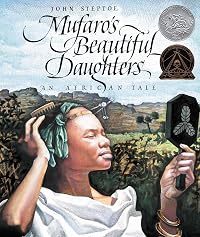
Mufaro’s Beautiful Daughters: An African Tale
by John Steptoe
On This Page
Description
Mufaro's two beautiful daughters, one bad-tempered, one kind and sweet, go before the king, who is choosing a wife.Tags
Recommendations
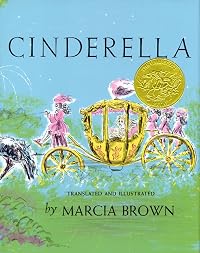
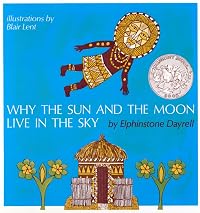
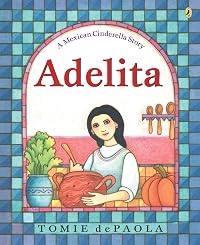
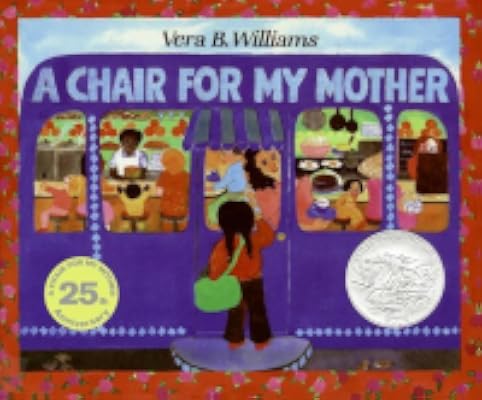
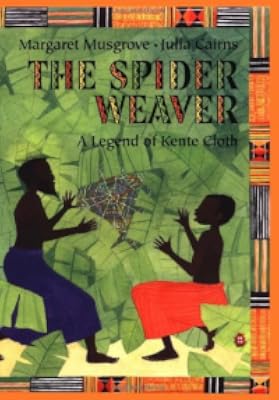
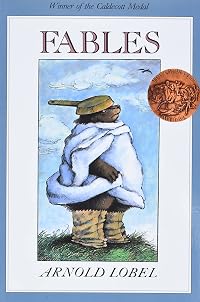
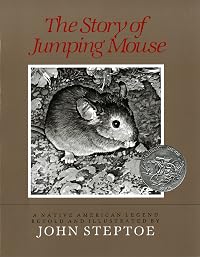
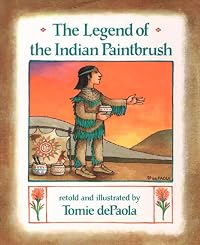


Member Recommendations
Member Reviews
As a new grandmother, I’ve been searching for more diverse children’s books to add to my library, and I ran across Mufaro’s Beautiful Daughters at the library sale a while back. I bought it and I’m so glad I did. It’s a lovely Cinderella-esque story of a man named Mufaro who lives in an African village and has two beautiful daughters, Manyara and Nyasha. Manyara is selfish and cruel, while Nyasha is always sweet and kind to humans and animals alike. One day, a messenger arrives from the city, saying that the king is searching for a wife and he’s invited all the most beautiful and worthy daughters in the land to appear before him. Wanting to be the first to arrive, Manyara sneaks out ahead of everyone else, but fails to heed show more the warnings of the people she meets along the way. Meanwhile Nyasha leaves with everyone else the next morning and when she arrives a surprise awaits her.
As a lover of all things fairy tale, I very much enjoyed this story. It’s everything I expect a fairy tale to be, including the HEA, just with an African backdrop and characters. According to the author’s note inside, the story was inspired by an African folktale that was published in the late 19th century, while the characters names are taken from the Shona language. The illustrations are quite beautiful, detailed, and realistic, and again, according to the note, the settings were inspired by the ruins of an ancient city in Zimbabwe, as well as the plants and animals of the region. Mufaro’s Beautiful Daughters was a Caldecott Honor Book and also the recipient of the Coretta Scott King Award for its illustrations, and I can definitely see why. In addition to the wonderful illustrations and the fairy tale quality of the story, I also very much appreciated the message about true beauty having more to do with a kindness of the heart and that pride and selfishness have consequences. The book is a keeper for me, and with this being my first read by the late John Steptoe, I’ll certainly be checking out his other work. show less
As a lover of all things fairy tale, I very much enjoyed this story. It’s everything I expect a fairy tale to be, including the HEA, just with an African backdrop and characters. According to the author’s note inside, the story was inspired by an African folktale that was published in the late 19th century, while the characters names are taken from the Shona language. The illustrations are quite beautiful, detailed, and realistic, and again, according to the note, the settings were inspired by the ruins of an ancient city in Zimbabwe, as well as the plants and animals of the region. Mufaro’s Beautiful Daughters was a Caldecott Honor Book and also the recipient of the Coretta Scott King Award for its illustrations, and I can definitely see why. In addition to the wonderful illustrations and the fairy tale quality of the story, I also very much appreciated the message about true beauty having more to do with a kindness of the heart and that pride and selfishness have consequences. The book is a keeper for me, and with this being my first read by the late John Steptoe, I’ll certainly be checking out his other work. show less
Inspired by a story in George McCall Theal's 1895 collection, Kaffir Folk Tales (apologies everyone, I did not name the book), John Steptoe's 1987 picture-book, Mufaro's Beautiful Daughters, was awarded a Caldecott Honor (as well as being chosen as a Reading Rainbow selection), and it is not difficult to see why! The gorgeous illustrations capture the beauty of Mufaro's village, and the surrounding countryside, the majesty of the King's great city, and the very different dispositions of Mufaro's two beautiful daughters, Nyasha and Manyara. The tale itself, in which inner beauty is rewarded, while vanity and disrespect are not, has many motifs that folklore enthusiasts will recognize, from the competition amongst sisters for royal favor, show more to the three tests which the characters must face.
Chosen as one of our April selections, over in the Picture-Book Club to which I belong, where our theme this month is "Royalty," Mufaro's Beautiful Daughters is a book that I first encountered as a young girl, and which I have always loved. The story itself is charming, the artwork immensely appealing, and the setting at Great Zimbabwe - an ancient civilization that has always intrigued me - all combine in a most satisfying way. I was struck, on this rereading, by the disconnect between Steptoe's source material (the original tale would have been Xhosa) and the cultural setting he chose (Shona), but appreciated his honesty, in not trying to claim that his retelling was traditional. Leaving this issue aside, this is a wonderful book, one I would recommend to young folk and fairy-tale lover everywhere! show less
Chosen as one of our April selections, over in the Picture-Book Club to which I belong, where our theme this month is "Royalty," Mufaro's Beautiful Daughters is a book that I first encountered as a young girl, and which I have always loved. The story itself is charming, the artwork immensely appealing, and the setting at Great Zimbabwe - an ancient civilization that has always intrigued me - all combine in a most satisfying way. I was struck, on this rereading, by the disconnect between Steptoe's source material (the original tale would have been Xhosa) and the cultural setting he chose (Shona), but appreciated his honesty, in not trying to claim that his retelling was traditional. Leaving this issue aside, this is a wonderful book, one I would recommend to young folk and fairy-tale lover everywhere! show less
This book captured my attention the whole time with the narratives, dialogue, and illustrations. The language used to describe the setting painted a very detailed picture in the reader’s minds. The author never specified which part of Africa this was placed in, nor did he date the time this was taking place, but the words on the page brought the whole story alive, “A long time ago, in a certain place in Africa, a small village lay across a river and a half day’s journey from a city where a great king lived…Nyasha kept a small plot of land, on which she grew millet, sunflowers, yams, and vegetables.” Another thing I enjoyed about this book was the character’s thoughts because it highlighted certain aspects of who they are as show more a person, making them more realistic and believable. The language used between the characters’ dialogues are appropriate for children who may experience the same sort of encounters with their siblings as they feel the need to compete with them, “ ‘ Because everyone talks about how kind you are, and they praise everything you do,’ Manyara replied, ‘I’m certain that Father loves you best”. The illustrations that are displayed on the page accurately portray the beautiful parts of Africa such as their clothing, the animals (like the birds and snakes), and the jungle that surrounds them. These accentuate the beautiful cultural parts of Africa that not many students will be able to see or experience for themselves in their lives. I really appreciate the depth and artwork that the illustrator went through to create such vibrant and colorful aspects to enhance the text. The main idea of the book is to live an honest, kind, and morally upright life even if you think no one is watching, because pretending just to get ahead of people will not bring you happiness. show less
I remember enjoying this book as a child. It was such a fantastic tale with good lessons in it, and the artwork is absolutely gorgeous. We need more books like this. Thinking about this book made me so nostalgic that I ordered a copy for myself to read again some 20 years later. Absolutely fantastic book, would recommend, A+++
I remember this book well, as it was a favorite of mine when I was a child. Growing up with my Grandmother, who was a teacher, I spent much of my free time in the library. I loved this book and have fond memories of posing exactly like Nyasha is on the cover and feeling beautiful.
Author John Steptoe, the father of Radiant Child's Javaka Steptoe, illustrates exquisite features - you can actually feel the gentleness in Nyasha's face and the deftness in her fingertips. Mufaro's Beautiful Daughters is an African Tale that many have associated with modern day Cinderella, I see the similarity, but this folktale is much more than that. This was the first book that I can recall where the illustrations were equally as telling as the text show more itself, and I found comfort in those pictures. As I write this review, and don't think any book has made me feel that way - even now.
Two sisters, Nyasha and Manyara, raised by their father, Mufaro, are both very beautiful. With little in common besides shared beauty, their differences are brought to light when a magical king disguises himself in three different forms - all of which Manyara treats poorly and Nyasha quite the opposite. The king revels his true form to Nyasha as her kindness has won him over and she becomes the most worthy of the two.
Reading this book years later, I was pleased to read the Author's Note in the back describing what each character's name meant in their native language. show less
Author John Steptoe, the father of Radiant Child's Javaka Steptoe, illustrates exquisite features - you can actually feel the gentleness in Nyasha's face and the deftness in her fingertips. Mufaro's Beautiful Daughters is an African Tale that many have associated with modern day Cinderella, I see the similarity, but this folktale is much more than that. This was the first book that I can recall where the illustrations were equally as telling as the text show more itself, and I found comfort in those pictures. As I write this review, and don't think any book has made me feel that way - even now.
Two sisters, Nyasha and Manyara, raised by their father, Mufaro, are both very beautiful. With little in common besides shared beauty, their differences are brought to light when a magical king disguises himself in three different forms - all of which Manyara treats poorly and Nyasha quite the opposite. The king revels his true form to Nyasha as her kindness has won him over and she becomes the most worthy of the two.
Reading this book years later, I was pleased to read the Author's Note in the back describing what each character's name meant in their native language. show less
Mufaro's Beautiful Daughters is a gorgeous folktale picture book that tells the tale of two sisters in line to become Queen. We learn the moral of this story when Nyasha becomes Queen because she proves kindness is a strength, not a weakness. Nyasha's sister Manyara is just as beautiful as Nyasha, but she does not treat her sister or others around her well. This really exemplifies the idea that beauty and power do not make a person worthy; your actions and how you treat people do. Mufaro's Beautiful Daughters has a Caldecott Honor Award and it definitely lives up to that honor. The illustrations of the characters are so beautiful and detailed that you can interpret their characteristics from the pictures alone. During part of the book, show more Manyara is walking through the woods at night, ignoring those in need, disregarding advice, and behaving badly. This is reflected in eerie, dark illustrations of her journey. When Nyasha journeys through the same woods, the illustrations are bright and full of plants and wildlife, reflecting her kindness and generosity toward the same scenario. I also love the lesson that your actions have consequences, which is perfectly personified in Mufaro's Beautiful Daughters. This was a very enjoyable read with amazing illustration. show less
I picked up this book recently for the first time in years after reading a recommendation in Why Are All the Black Kids Sitting Together in the Cafeteria? by Beverly Daniel Tatum. I had previously felt the depiction of women had not aged well, in particular, the king asking everyone to send him a daughter. When I reread this book, I was pleasantly surprised by the relationship between the two sisters. While Nyasha and Manyara struggle in the beginning of the book to get a long, by the end Manyara's worry for Nyasha moved me. The illustrations are beautiful and timeless.
Members
- Recently Added By
Lists

Caldecott Honor Books
296 works; 23 members

1001 Children's Books You Must Read Before You Grow Up
774 works; 101 members
Honey For a Child's Heart
1,152 works; 25 members

A Child's Book Tour of South Africa ::: Botswana, Mozambique, Zimbabwe
33 works; 3 members

Reading Rainbow
193 works; 10 members

Princess Tales
130 works; 4 members

Africa
109 works; 8 members

SYES Library Wishlist
1,080 works; 4 members

Books Read in 2023
5,547 works; 145 members

The Story of the World: History for the Classical Child: Activity Book Two
415 works; 2 members

Books by Black Men
49 works; 2 members
Author Information

15+ Works 7,271 Members
John Steptoe was born in Brooklyn, New York on September 14, 1950. He attended the High School of Art and Design in Manhattan. He was an author and illustrator of children's books. His first book, Stevie, was published in 1969. During his lifetime, he illustrated 15 more books, 9 of which he also wrote. The Story of Jumping Mouse and Mufaro's show more Beautiful Daughters were named Caldecott honor books. Mother Crocodile and Mufaro's Beautiful Daughters received the Coretta Scott King Award for Illustration. He died of AIDS on August 28, 1989 at the age of 38. (Bowker Author Biography) show less
Some Editions
Awards and Honors
Awards
Distinctions
Notable Lists
Work Relationships
Was inspired by
Common Knowledge
- Canonical title
- Mufaro’s Beautiful Daughters: An African Tale
- Alternate titles
- Mufaro’s Beautiful Daughters
- Original publication date
- 1987; 2019 (revised edition) (revised edition)
- People/Characters
- Mufaro (father of Manyara and Nyasha); Manyara (daughter of Mufaro); Nyasha (daughter of Mufaro); Nyoka
- Important places
- Africa; Zimbabwe
- Dedication
- To the Children of South Africa
- First words
- A long time ago, in a certain place in Africa, a small village lay across a river and half a day's journey from a city where a great king lived.
- Last words
- (Click to show. Warning: May contain spoilers.)Mufaro proclaimed to all who would hear him that he was the happiest father in all the land, for he was blessed with two beautiful and worthy daughters - Nyasha, the queen; and Manyara, a servant in the queen's household.
- Original language
- English
Classifications
Statistics
- Members
- 5,075
- Popularity
- 2,734
- Reviews
- 215
- Rating
- (4.24)
- Languages
- English, French, Spanish
- Media
- Paper, Audiobook, Ebook
- ISBNs
- 43
- UPCs
- 3
- ASINs
- 23