On This Page
Description
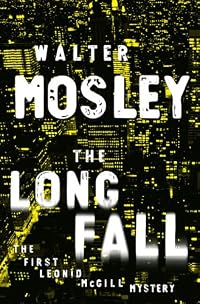
Leonid McGill, a New York City private detective, tries to put his past life behind him. But it's not that easy when someone like Tony "The Suit" Towers expects you to do a job; when an Albany PI hires you to track down four men known only by their youthful street names; and when your 16-year-old son, Twill, is getting in over his head with a suicidal girl.Tags
Recommendations















Member Reviews
This is Mosley near the top of his form, creating a new character with such a complete back story that it's hard to remember this is the first time we've met Leonid McGill. McGill is a tough black PI with some heavy baggage: a communist upbringing, a wife he doesn't love, 3 kids who aren't all his blood, a none-too-pure past, and a death on his conscience. The latter has pushed him to a decision to go "straight", setting him and us up for a classic noir journey through the underworld as Leonid struggles to be upright in a profession that rarely makes that easy. Robert B. Parker called this book "quite simply splendid", which is perfectly fitting, since Parker's Spenser had that white hat gig sewed up for such a long time. McGill is more show more complicated, less predictable than Spenser; Mosley's prose is denser, much less dialog-driven, and he requires more of the reader than Parker did. But anyone who appreciated Spenser's unwavering adherence to his "code" is going to love watching McGill try to "get there". Live long and write, Mr. Mosley.
Review written in September, 2014 show less
Review written in September, 2014 show less
Not really sure why I picked this up considering I hadn't really enjoyed the only other book (the first of the Fearless Jones series) from Walter Mosley that I'd read, somewhere around 2001-2002. I guess it was probably all the positive blurbs taking up several pages at the beginning of the book that convinced me to give Mosley another try, and I'm very glad I took that chance, as I flat out loved the Leonid McGill character. I have since gone back and read the first Easy Rawlins book and, while the story was enjoyable, I prefer the modern New York setting of The Long Fall.
I have a friend who will not read Mosley because he thinks there's too much "preaching" about racism, but I did not detect anything in this book that I thought could show more not reasonably befall a black man under the circumstances presented in this story, nor did I feel McGill's thoughts on race would be out of place for his character.
I give this book show less
I have a friend who will not read Mosley because he thinks there's too much "preaching" about racism, but I did not detect anything in this book that I thought could show more not reasonably befall a black man under the circumstances presented in this story, nor did I feel McGill's thoughts on race would be out of place for his character.
I give this book show less
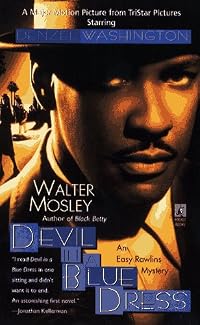
I tried very hard to stay objective while I read this book. But really, it was impossible. The author also wrote “The Devil in the Blue Dress,’ which was made into a film starring Denzel Washington. In “The Long Fall,” he creates a character, Leonid McGill, who is an intelligent, charming, ex-boxer with killer instincts but a good heart, and somehow, I was just incapable of not imagining him as Denzel Washington. (If McGill were white, I would have had just as hard of a time not thinking of him as Humphrey Bogart.) Mosley’s prose is compact, like his protagonist, and it even reads a bit like a screenplay.
So yes, I really liked this book and I loved the character. But to be honest, I can’t say if it was Leonid or Denzel I was show more liking so much. Probably both.
McGill is a private investigator in his early fifties whose work used to be “dirty,” but now he’s trying to go straight. It’s not easy. His past keeps trying to catch up with him. He goes after the stress aggressively. He boxes at the gym three times a week. He keeps trying and failing to give up smoking. With drinking, he doesn’t even try.
He has a Scandinavian wife, and children in a rainbow of colors by a mishmash of fathers, but his love is a father’s love for all of them. The other characters are as multi-dimensional as Leonid. They neither lose your interest nor stretch your belief system.
Mosley incorporates the diversity, rage, and complexity of blackness into his created world in tightly coiled sentences that pack a punch. At one point, McGill walks into an obviously white bar named Oddfellows in Albany. He writes: “It wasn’t 2008 everywhere in America. Some people lived in the sixties, and others might as well have been veterans of the Civil War. In many establishments I was considered a Black Man; other folks, in more genteel joints, used the term “African-American,” but at Oddfellows I was a nigger where there were no niggers allowed.”
His prose is admirable for expressing so much so economically. Take this paragraph: “The best time to kill someone is when they’re going through a door. While passing from one place to another most people are a little off guard, distracted by the subtle displacement separating here from there.”
Mosley’s book is well worth reading, even if you don’t picture Denzel while you read. But especially if you do! show less
So yes, I really liked this book and I loved the character. But to be honest, I can’t say if it was Leonid or Denzel I was show more liking so much. Probably both.
McGill is a private investigator in his early fifties whose work used to be “dirty,” but now he’s trying to go straight. It’s not easy. His past keeps trying to catch up with him. He goes after the stress aggressively. He boxes at the gym three times a week. He keeps trying and failing to give up smoking. With drinking, he doesn’t even try.
He has a Scandinavian wife, and children in a rainbow of colors by a mishmash of fathers, but his love is a father’s love for all of them. The other characters are as multi-dimensional as Leonid. They neither lose your interest nor stretch your belief system.
Mosley incorporates the diversity, rage, and complexity of blackness into his created world in tightly coiled sentences that pack a punch. At one point, McGill walks into an obviously white bar named Oddfellows in Albany. He writes: “It wasn’t 2008 everywhere in America. Some people lived in the sixties, and others might as well have been veterans of the Civil War. In many establishments I was considered a Black Man; other folks, in more genteel joints, used the term “African-American,” but at Oddfellows I was a nigger where there were no niggers allowed.”
His prose is admirable for expressing so much so economically. Take this paragraph: “The best time to kill someone is when they’re going through a door. While passing from one place to another most people are a little off guard, distracted by the subtle displacement separating here from there.”
Mosley’s book is well worth reading, even if you don’t picture Denzel while you read. But especially if you do! show less
I've only read one other book by Walter Mosley that I can recall, The Man in my Basement. I enjoyed it greatly, and wanted to pick up some more books by him, but there are so many books, and so little time.
I found this gem alredy in my bookcase, probably from some long-ago sale. Once again, my instincts for good writing came through.
This is the first of the Leonid McGill series, and I can't wait to get some more of them. Mosley brings to life a private eye that should be washed up: almost sixty, in a loveless marriage, trying to stay out of real trouble, raising 3 kids, two of whom he knows aren't his. McGill should be looking forward to death, by most standards. Yet Mosley shows the reader that the spark of life need not fade, even as show more the fear of Judgment looms.
Mosley has also done a great job of drawing the secondary characters, his "son" Twill and his lover Aura. And the specter of McGill's father, long gone, lives large in his son's mind day to day.
We spend a lot of time in McGill's mind, and it's a fascinating place. I look forward to visiting it again soon. show less
I found this gem alredy in my bookcase, probably from some long-ago sale. Once again, my instincts for good writing came through.
This is the first of the Leonid McGill series, and I can't wait to get some more of them. Mosley brings to life a private eye that should be washed up: almost sixty, in a loveless marriage, trying to stay out of real trouble, raising 3 kids, two of whom he knows aren't his. McGill should be looking forward to death, by most standards. Yet Mosley shows the reader that the spark of life need not fade, even as show more the fear of Judgment looms.
Mosley has also done a great job of drawing the secondary characters, his "son" Twill and his lover Aura. And the specter of McGill's father, long gone, lives large in his son's mind day to day.
We spend a lot of time in McGill's mind, and it's a fascinating place. I look forward to visiting it again soon. show less
I found this to be a compelling launch to Mosley's new series. As with the Easy Rawlins books, Mosley brilliant weaves biting social commentary into the conventions and fast pace of noir fiction. Some reviewers have argued that Mosley spends too much time on character development -- filling in the back story on even minor characters. For me this was refreshing. Much of his recent writing outside of the (seemingly) concluded Rawlins series seems rushed with hasty and superficial character development. Here he takes the time to draw his characters fully. And for me, noir fiction is driven by character, not plot (as in who-dunnits). So I'm looking forward to future chapters in the Leonid McGill story.
I became a big fan of Mosely with [b:Devil in a Blue Dress|37100|Devil in a Blue Dress (Easy Rawlins, #1)|Walter Mosley|https://i.gr-assets.com/images/S/compressed.photo.goodreads.com/books/1336545202l/37100._SY75_.jpg|1344080]. After reading a few of the Easy Rawlins novels, I love Mosely's prose. I'm not sure what he's trying to do here. Although I enjoyed it, there were some things that really weakened it. Too many characters. Too many plot lines in such a short book. It bounced all over the place. Mosely seems to have an obsession with folks' skin color or nationality. We are told the pigmentation and how light or dark it is of every character, and sometimes their parents as well. That was especially annoying. And, if I was told one show more more time how short Leonid was, I probably would have had a fit of some kind. show less
Each time I read a Walter Mosley book--which isn't very often--I wonder to myself why I don't read every Walter Mosley book. Each one I've read is a beautiful, violent gem. In simple, unflinching, often poetic language Mosely writes hard-boiled detective fiction like no one writing today.
The Long Fall introduces a new character, Leonid McGill, an African American private investigator in his fifties. For those who wonder how a black man comes by such a name, McGill--or LT, as most people call him--replies that, "My father was a Communist. He tried to cut me from the same red cloth. He believed in living with everybody but his family. McGill is my slave name." LT boxed in his youth, and still spars to keep in shape; his short compact show more frame is heavily muscled and deceptively strong. In the past LT pursued a less than ethical career path, working for the mob and other lowlifes, killing--or, at least, being the conduit for information that would lead to death--when the job called for it. In recent years, though, he's gone, well, if not straight, then, as he would put it, just slightly bent. It's a struggle.
The Long Fall opens with LT tracking down, for a client once removed whose identity he doesn't know, the last of four young men known only by their youthful nicknames. One, he discovers is dead, one is in prison, one is out on bail and awaiting sentencing, and the fourth has made a good life for himself in the straight world. Within days of his finding these men, the two out in the world are dead and an attempt has been made on the life of the imprisoned man as well. Not long after, an attempt is made on LT's life.
The next couple of hundred pages follow McGill's quest to discover why. Why was he hired to find these men, and by whom? Why are they now being killed? Why does somebody want him dead? Why is it so hard to do the right thing? During the course of his investigation LT is beaten, interrogated by the police and even has to go to Albany (he's a Manhattanite born and bred).
The novel is rich with detail, yet there's nothing in it that shouldn't be there. Leonid McGill's home life is as complex as his work life. He's married to a Scandinavian woman and is father to three children, only one of whom is actually his biologically (although they don't know this). His wife recently left him but has now returned, amping up the housewife meter and turning LT's domestic world into a surrealistic dream (or maybe nightmare).
There are several subplots which are nicely resolved, as well as a number of tantalizing references to events in McGill's past. Mosley evokes present day New York as spot-on perfectly as he does the Los Angeles of decades past in his Easy Rawlins novels. show less
The Long Fall introduces a new character, Leonid McGill, an African American private investigator in his fifties. For those who wonder how a black man comes by such a name, McGill--or LT, as most people call him--replies that, "My father was a Communist. He tried to cut me from the same red cloth. He believed in living with everybody but his family. McGill is my slave name." LT boxed in his youth, and still spars to keep in shape; his short compact show more frame is heavily muscled and deceptively strong. In the past LT pursued a less than ethical career path, working for the mob and other lowlifes, killing--or, at least, being the conduit for information that would lead to death--when the job called for it. In recent years, though, he's gone, well, if not straight, then, as he would put it, just slightly bent. It's a struggle.
The Long Fall opens with LT tracking down, for a client once removed whose identity he doesn't know, the last of four young men known only by their youthful nicknames. One, he discovers is dead, one is in prison, one is out on bail and awaiting sentencing, and the fourth has made a good life for himself in the straight world. Within days of his finding these men, the two out in the world are dead and an attempt has been made on the life of the imprisoned man as well. Not long after, an attempt is made on LT's life.
The next couple of hundred pages follow McGill's quest to discover why. Why was he hired to find these men, and by whom? Why are they now being killed? Why does somebody want him dead? Why is it so hard to do the right thing? During the course of his investigation LT is beaten, interrogated by the police and even has to go to Albany (he's a Manhattanite born and bred).
The novel is rich with detail, yet there's nothing in it that shouldn't be there. Leonid McGill's home life is as complex as his work life. He's married to a Scandinavian woman and is father to three children, only one of whom is actually his biologically (although they don't know this). His wife recently left him but has now returned, amping up the housewife meter and turning LT's domestic world into a surrealistic dream (or maybe nightmare).
There are several subplots which are nicely resolved, as well as a number of tantalizing references to events in McGill's past. Mosley evokes present day New York as spot-on perfectly as he does the Los Angeles of decades past in his Easy Rawlins novels. show less
Members
- Recently Added By
Author Information

105+ Works 26,567 Members
Walter Mosley was born in Los Angeles, California on January 12, 1952. He graduated from Johnson State College in Vermont. His first book, Devil in a Blue Dress, was published in 1990, won a John Creasy Award for best first novel, and was made into a motion picture starring Denzel Washington in 1995. He is the author of the Easy Rawlins Mystery show more series, the Leonid McGill Mystery series, and the Fearless Jones series. His other works include Always Outnumbered, Always Outgunned, 47, Last Days of Ptolemy Grey, and Twelve Steps toward Political Revelation. He has received numerous awards, including an O. Henry Award, the Carl Brandon Society Parallax Award, and PEN America's Lifetime Achievement Award. (Bowker Author Biography) Walter Mosley is the author of the acclaimed Easy Rawlins series of mysteries, the novels "Blue Light" and "RL's Dream", and two collections of stories featuring Socrates Fortlow, "Always Outnumbered", "Always Outgunned", for which he received the Anisfield-Wolf Award, and "Walkin' the Dog". He is a member of the board of directors of the National Book Awards and the founder of the PEN American Center's Open Book Committee. At various times in his life he has been a potter, a computer programmer, & a poet. He was born in Los Angeles & now lives in New York. (Publisher Provided) show less
Awards and Honors
Awards
Distinctions
Series

Common Knowledge
- Original title
- The Long Fall
- Original publication date
- 2009
- People/Characters
- Leonid McGill; Aura Ullmann; Norman Fell; Carson Kitteridge; Harris Vartan; Alphonse Rinaldo (show all 8); Bug Bateman; Katrina McGill
- Important places
- New York, New York, USA; Albany, New York, USA; New York, USA
- Dedication
- In memory of St. Clair Bourne, documentarian extraordinaire
- First words
- "I'm sorry, Mr. um?..." the skinny receptionist said.
- Last words
- (Click to show. Warning: May contain spoilers.)"Okay," she said and I felt once more that I was falling, but I didn't mind at all.
- Blurbers
- Diaz, Junot; Parker, Robert B.; Kellerman, Jonathan; Pelecanos, George
- Original language
- English
Classifications
Statistics
- Members
- 843
- Popularity
- 32,301
- Reviews
- 48
- Rating
- (3.66)
- Languages
- Danish, English, French, German
- Media
- Paper, Audiobook, Ebook
- ISBNs
- 20
- ASINs
- 10