Black, White, and Jewish: Autobiography of a Shifting Self
by Rebecca Walker
On This Page
Description
In a memoir about the power of race to share one's personal identity, the daughter of Jewish father and African-American mother recalls her confusing but ultimately rewarding life lived between two conflicting ethnic identities. When Mel Leventhal married Alice Walker during the civil rights movement in the late 1960s, his mother declared him dead and did not reconcile until after the birth of her first grandchild. After Mel and Alice divorced, their daughter, Rebecca, alternated homes every show more two years, spending time in Mississippi, Brooklyn, San Francisco's Haight Ashbury, Washington, D.C., the Bronx, and suburban Westchester. With each new place came a new identity and desperate attempts to fit in: as white or black, as Puerto Rican or Jewish, as a party girl, a fighter, or a lover. Confused, and mostly alone, she turned to sex, drugs, books, and a cast of dangerous and thrilling characters. Black, White, and Jewish is the story of a child's unique struggle for identity and home when nothing in her world told her who she was or where she belonged. Poetic reflections on memory, time, and identity punctuate this gritty exploration of race and sexuality. Rebecca Walker has taken up the lineage of her mother, Alice, whose last name she chose to carry, and has written a lucid and inventive memoir that marks the launch of a major new literary talent. show lessTags
Recommendations











Member Recommendations
by booklove2
Member Reviews
beautiful and moving exploration of identity and belonging, of race and where we fit in and how we include/exclude each other and ourselves. the shifting memories and the changing perception and understanding of self, based on who she was around and where she was, was really poignant.
this is really well written. my only quibble is that it was often hard to know the time period she was writing about, and as she was kind of forced into maturity before her time, i never knew how old she was - i was constantly assuming she was much older - until she'd say so. and then i'd have to recalibrate everything i'd just read because i'd found out she was much younger than i'd thought.
other than that, the writing is fantastic and the ideas profound. show more i really, really liked this.
and she made me understand something i never had before:
"...and when I ask Jodi or Pam why people are sometimes quiet or reserved around me, they say that I am intimidating, which doesn't really answer my question but gives me a general idea of how I am perceived. It doesn't occur to me that intimidating might be another word for black." and then: "Instead of intimidating, the word white people have used to describe what they find unsettling about me, Michael says I am snobby, the term black people use." show less
this is really well written. my only quibble is that it was often hard to know the time period she was writing about, and as she was kind of forced into maturity before her time, i never knew how old she was - i was constantly assuming she was much older - until she'd say so. and then i'd have to recalibrate everything i'd just read because i'd found out she was much younger than i'd thought.
other than that, the writing is fantastic and the ideas profound. show more i really, really liked this.
and she made me understand something i never had before:
"...and when I ask Jodi or Pam why people are sometimes quiet or reserved around me, they say that I am intimidating, which doesn't really answer my question but gives me a general idea of how I am perceived. It doesn't occur to me that intimidating might be another word for black." and then: "Instead of intimidating, the word white people have used to describe what they find unsettling about me, Michael says I am snobby, the term black people use." show less
Never before has a book so completely spoken to my heart. I originally found this last year when I was looking around for around for women's memoirs to be put into my Diverse Books Tag focused on that genre (a book with a biracial protagonist). I recommended it to my library but got quickly absorbed in a number of other books while I waited for it to be available or for the right time to pop up. At last, my library purchased it and I was the first one to get it when it came out.
I have to say that waiting for the right time worked out fantastically. Some books just seem to know when you need them. As I said, this one just spoke right to my heart. That's not to suggest that I "know" what it was like for Rebecca Walker to navigate her life show more or what it's like to be black and white and Jewish all at the same time. What I do know is that I am quite familiar with that sense of not quite belonging to anyone, but maybe belonging enough to be claimed here and there for this or that trait. I have drifted from one home to another within my family or neighborhood or group of friends and felt that change that Walker describes as "switching radio stations". I've felt the sting of being in one group while people denigrate the other part of you, the part that they don't claim, while they insist that it's not you but you know that it is, even if only in part. I've felt it on both sides of me.
We've lived vastly different lives in different times within this country and I couldn't possibly relate to all of Walker's experiences, but I had never known anyone to describe this being and not being so well, so beautifully. The idea of being a "movement baby" sounds terrifying, like for too much to live up to. Later, I found it far easier to relate to what happened when the ideas of the movement were gone and she was treated like her existence was half-oppressor and half-oppressed, when people asked her navigate those waters and explain what it felt like. I was never able to explain what it was like to be fragmented this way and now I have someone to turn to for that.
I loved Walker's style of writing and relating everything back to memory and the way that memory shifts, that way that it can be wrong and right at the same time and the way it shapes us and perceptions of us without ever asking for permission. I loved the poetic feel that accompanies most of the book. I peaked at some other reviews and it's not the kind of book that everyone loves, but I still find it an important book to read and discuss. Perhaps it would make a great book club memoir because it does bring in questions of race on several fronts and it could open conversations about sex in adolescence, the effect of divorce and/or neglect on a child's upbringing and other important issues that Walker goes through that still plague us.
The downside to that, of course, is that using the book that way invites criticism of Walker and her parents as people who were theoretically doing the best they could. I don't mean to sound like I doubt that anyone was doing their best but I also don't want to make it sound like I'm making assumptions about what could/should have been done. The point is simply that getting judgey about someone's life and story like this would miss the point of reading the book.
Despite what others might think, I found this book engaging, even at it's lowest moments. I appreciated the way it was a little episodic, moving through periods in her life and only stopping to fit in the moments that best sums up the time-frame for her rather than dwelling on incidentals. As mentioned above, what I loved the most was the way she relates what it is like to not fit succinctly into any single category of race, to be a part of something and not a part of it at the same time, close and yet removed from it. I have felt these things so many times in life when I am in Hispanic or not Hispanic depending on the way whoever I'm talking to feels about it and it rarely seems up to me to let them know who I am and how I fit into these categories and whether or not I even want to. show less
I have to say that waiting for the right time worked out fantastically. Some books just seem to know when you need them. As I said, this one just spoke right to my heart. That's not to suggest that I "know" what it was like for Rebecca Walker to navigate her life show more or what it's like to be black and white and Jewish all at the same time. What I do know is that I am quite familiar with that sense of not quite belonging to anyone, but maybe belonging enough to be claimed here and there for this or that trait. I have drifted from one home to another within my family or neighborhood or group of friends and felt that change that Walker describes as "switching radio stations". I've felt the sting of being in one group while people denigrate the other part of you, the part that they don't claim, while they insist that it's not you but you know that it is, even if only in part. I've felt it on both sides of me.
We've lived vastly different lives in different times within this country and I couldn't possibly relate to all of Walker's experiences, but I had never known anyone to describe this being and not being so well, so beautifully. The idea of being a "movement baby" sounds terrifying, like for too much to live up to. Later, I found it far easier to relate to what happened when the ideas of the movement were gone and she was treated like her existence was half-oppressor and half-oppressed, when people asked her navigate those waters and explain what it felt like. I was never able to explain what it was like to be fragmented this way and now I have someone to turn to for that.
I loved Walker's style of writing and relating everything back to memory and the way that memory shifts, that way that it can be wrong and right at the same time and the way it shapes us and perceptions of us without ever asking for permission. I loved the poetic feel that accompanies most of the book. I peaked at some other reviews and it's not the kind of book that everyone loves, but I still find it an important book to read and discuss. Perhaps it would make a great book club memoir because it does bring in questions of race on several fronts and it could open conversations about sex in adolescence, the effect of divorce and/or neglect on a child's upbringing and other important issues that Walker goes through that still plague us.
The downside to that, of course, is that using the book that way invites criticism of Walker and her parents as people who were theoretically doing the best they could. I don't mean to sound like I doubt that anyone was doing their best but I also don't want to make it sound like I'm making assumptions about what could/should have been done. The point is simply that getting judgey about someone's life and story like this would miss the point of reading the book.
Despite what others might think, I found this book engaging, even at it's lowest moments. I appreciated the way it was a little episodic, moving through periods in her life and only stopping to fit in the moments that best sums up the time-frame for her rather than dwelling on incidentals. As mentioned above, what I loved the most was the way she relates what it is like to not fit succinctly into any single category of race, to be a part of something and not a part of it at the same time, close and yet removed from it. I have felt these things so many times in life when I am in Hispanic or not Hispanic depending on the way whoever I'm talking to feels about it and it rarely seems up to me to let them know who I am and how I fit into these categories and whether or not I even want to. show less
This autobiography about the daughter of an interracial couple-father Jewish and white and mother is black. The economy of the writing is spellbindingly poetic. After her parents’ divorce and Rebecca feels like a remnant. An eerie scene where it’s the last time she’ll be in the bathroom when her father is bathing and she is watching. Rebecca wants to be known as a not a black girl, to be able to pass as white. She begs her mother not to come to her performance in the play The Wizard of Oz because then everyone will know she is black. There is a beautiful line-she and her stepmother are doing battle for her father’s soul-scratching the dirt off pale Jewish roots she didn’t know her father had. Unfortunately, the remainder of show more the book turns into a tell all about all the boys she slept with. Despite her confused identity between being black and white, her Jewishness is hardly spoken up. A few mentions towards the end. Very unsatisfying. show less
I haven't read many autobiographies, but this is certainly one of the best I have read. Rebecca Walker is the daughter of Alice Walker and Mel Leventhal. In the sixties, her black mother and Jewish father married. She was a Movement Child. But, when her parents seperate, she loses this identity and grows up struggling to find herself when she doesn't fit in either her mother's or her father's world. This book was wonderful, and I highly recommend it.
Experiments in Reading
Experiments in Reading
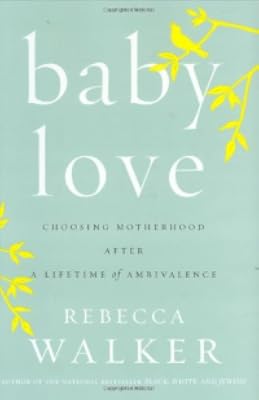
I read this book after reading a Bitch Magazine article that cited the author's other book Baby Love. I initially wanted to read Baby Love but decided to read this book first to get a feel for the author's writing. I thought the book was well written and would be a good book for adolescents dealing with their own identity issues. I also thought the book was broken up well even though at first I didn't like how each thought was only given a few paragraphs. However , I soon grew to like this staccato style of writing and thought it was appropriate for her story. Walker also has the great ability to seamlessly interchange the past and the future.
Quote of the book: "It all comes to this. I stand with those who stand with me. I am tired of show more claiming for claiming's sake, hiding behind masks of culture, creed, religion. My blood is made from water and so it is bloodwater that I am made of, and so it is a constant empathic link with others which claims me, not only carefully drawn lines of relation. I exist somewhere between black and white, family and friend. I am flesh and blood, yes, but I am also ether.
This, too, is how memory works." show less
Quote of the book: "It all comes to this. I stand with those who stand with me. I am tired of show more claiming for claiming's sake, hiding behind masks of culture, creed, religion. My blood is made from water and so it is bloodwater that I am made of, and so it is a constant empathic link with others which claims me, not only carefully drawn lines of relation. I exist somewhere between black and white, family and friend. I am flesh and blood, yes, but I am also ether.
This, too, is how memory works." show less
I read this as part of the Free Library's immigrant stories collections. I enjoyed this.. even if it isnt your typical immigrant story. It is more of how she felt likea stranger no matter where she went.. her father's family didn't make her comfortable.. neither did her mother's. A good book about growing up in the 80s and feeling like you were always in teh wrong place at the wrong time.
Honest portrayal of one Bi-racial woman's struggle to determine her identity. Enjoyable. However, I found myself frustrated with her anger and ignorance, and blind willingness to follow the "leaders" of colour. Frustrated that she succumbed to confusion and let her voice be suppressed.
Members
- Recently Added By
Author Information

9+ Works 1,585 Members
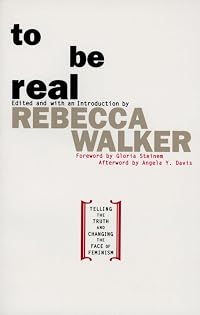
Rebecca Walker is the author of the memoirs Black, White, and Jewish and Baby Love and editor of the anthologies To Be Real, What Makes a Man, and One Big Happy Family. Her writing has appeared in Glamour, The Washington Post, Book-forum, BOMB, Newsweek, Vibe, Real Simple, and Interview, among many others.
Awards and Honors
Awards
Notable Lists
Common Knowledge
- Canonical title
- Black, White, and Jewish: Autobiography of a Shifting Self
Classifications
- Genres
- Biography & Memoir, Nonfiction, General Nonfiction, History, Sexuality and Gender Studies
- DDC/MDS
- 973.04960730092 — History & geography History of North America United States United States Ethnic And National Groups Other Groups African Americans African Americans
- LCC
- E184 .A1 .W214 — History of the United States United States Elements in the population Afro-Americans
- BISAC
Statistics
- Members
- 730
- Popularity
- 38,681
- Reviews
- 11
- Rating
- (3.53)
- Languages
- English
- Media
- Paper, Audiobook, Ebook
- ISBNs
- 8
- ASINs
- 7