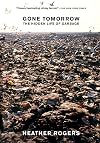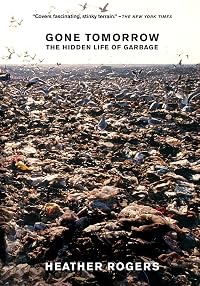
Gone Tomorrow: The Hidden Life of Garbage
by Heather Rogers
On This Page
Description
Eat a take-out meal, buy a pair of shoes, or read a newspaper, and you're soon faced with a bewildering amount of garbage. The United States is the planet's number-one producer of trash. Each American throws out 4.5 pounds daily. But garbage is also a global problem; the Pacific Ocean is today six times more abundant with plastic waste than zooplankton. How did we end up with this much rubbish, and where does it all go? Journalist and filmmaker Heather Rogers answers these questions by show more taking readers on a grisly, oddly fascinating tour through the underworld of garbage.Said to ""r show lessTags
Recommendations






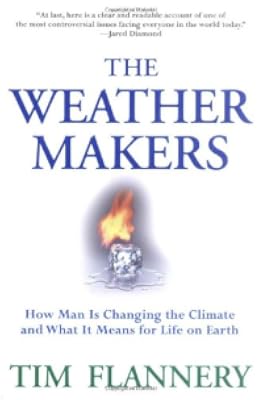
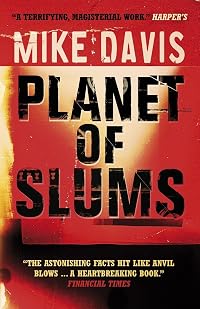
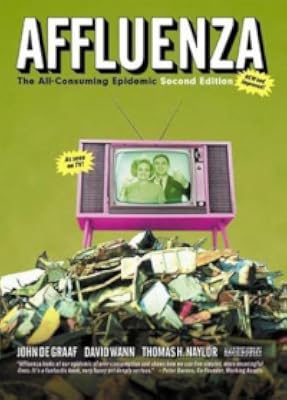
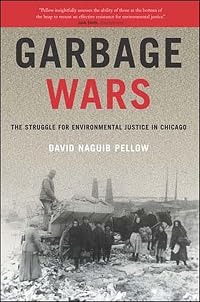

Member Recommendations
Member Reviews
I read this when it first came out, in 2006, and despite other reviewers' complaints of its dullness, I found it fascinating and extremely readable. And it angered me. One particular chapter I remember most clearly - one that I tend to cite during dinner parties, before I stop myself - is called "The Golden Age of Waste", and deals with the post-war consumer boom in America. Everyone had a kitchen full of shiny new appliances, so advertisers began to convince people they needed a second fridge for the garage, a second washer and dryer for the "related living" setup in their new sprawling ranches. When this tactic failed to move enough units, the idea of built-in obsolescence began to take hold.
Or take the neat trick that pop bottlers show more have pulled on the American public since the early 1970s: To maximize profits, they did away with multi-use, refillable bottles, and shifted the burden of bottle disposal onto the consumer, then admonished the consumer to "Keep America Beautiful(KAB)." The story of how this was effected, and the cynicism of the KAB campaign is enough to make any recycling-minded person weep.
Author Heather Rogers was born the year before this reviewer, and one suspects she, too, was a child of PBS's "Sesame Street" and "The Big Blue Marble," and was also encouraged to "Give a Hoot" by Woodsy the Owl. Her clear prose and meticulous research make this a book to be savored and revisited, and recommended to anyone with even a passing interested in understanding the history and problems of garbage in America. show less
Or take the neat trick that pop bottlers show more have pulled on the American public since the early 1970s: To maximize profits, they did away with multi-use, refillable bottles, and shifted the burden of bottle disposal onto the consumer, then admonished the consumer to "Keep America Beautiful(KAB)." The story of how this was effected, and the cynicism of the KAB campaign is enough to make any recycling-minded person weep.
Author Heather Rogers was born the year before this reviewer, and one suspects she, too, was a child of PBS's "Sesame Street" and "The Big Blue Marble," and was also encouraged to "Give a Hoot" by Woodsy the Owl. Her clear prose and meticulous research make this a book to be savored and revisited, and recommended to anyone with even a passing interested in understanding the history and problems of garbage in America. show less
Gone Tomorrow is a strident and conventional environmentalist screed against trash. In a kind of cosmological sense, the third law of thermodynamics is a harsh mistress, and every process produces some kind of waste as it runs down towards entropy. But 20th and 21st century American civilization is a particular kind of grotesquely wasteful, a life of single-user plastics which endure for millennia, electronics that obsolete themselves, bruised fruit, shoddy fast fashion, machines that are more expensive to fix than toss, and so on, all formed into a massive waste stream that gets picked up from bins behind our houses, and through a clever little social magic trick, seems to disappear.
Of course, this is just a trick. The garbage isn't show more really gone. Instead it's compressed and trucked off to be buried in a plastic lined pit in the ground, and we have to trust the corporations involved, like the massive Waste Management, and the thoroughly captured regulatory agencies like the EPA, that it won't be leaking toxic leachate into the ground in a few decades. Garbage is typically finally dumped in areas with large numbers of BIPOC residents, or these days sent off to the Global South. It's a real problem.
I think my issue with this book is that Rogers is gesturing at the idea that trash is just another logistics space plugged into our homes, but she's coming in with such a resolutely antagonistic attitude that she can't see how the system works, instead only seeing the corruption and the harms. This book has an extremely romantic attitude towards the pre-Progressive era system of 'gleaners' who'd rummage through the garbage stream to pull as much value out of it before the remains would get tossed in the nearest body of water, and modern equivalents in zero-waste communes.
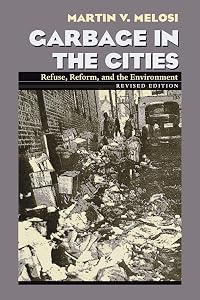
There are some interesting historical facts in here about the rise of sanitation engineering as a profession, almost all of which appear to be pulled from Melosi's classic Garbage in the Cities, and while this book opens an interesting question to think about how the advantages of garbage have been privatized by manufacturers and shippers, while individuals and society bear the cost, it's hoary environmentalism hasn't held up. show less
Of course, this is just a trick. The garbage isn't show more really gone. Instead it's compressed and trucked off to be buried in a plastic lined pit in the ground, and we have to trust the corporations involved, like the massive Waste Management, and the thoroughly captured regulatory agencies like the EPA, that it won't be leaking toxic leachate into the ground in a few decades. Garbage is typically finally dumped in areas with large numbers of BIPOC residents, or these days sent off to the Global South. It's a real problem.
I think my issue with this book is that Rogers is gesturing at the idea that trash is just another logistics space plugged into our homes, but she's coming in with such a resolutely antagonistic attitude that she can't see how the system works, instead only seeing the corruption and the harms. This book has an extremely romantic attitude towards the pre-Progressive era system of 'gleaners' who'd rummage through the garbage stream to pull as much value out of it before the remains would get tossed in the nearest body of water, and modern equivalents in zero-waste communes.
There are some interesting historical facts in here about the rise of sanitation engineering as a profession, almost all of which appear to be pulled from Melosi's classic Garbage in the Cities, and while this book opens an interesting question to think about how the advantages of garbage have been privatized by manufacturers and shippers, while individuals and society bear the cost, it's hoary environmentalism hasn't held up. show less
I read this book immediately after finishing GarbageLand. Both authors are from New York City, both books came out in 2006. Two authers dealing with the same subject, starting in the same geographic area, could I possibly learn anything from a second book about garbage? Unequivocally: YES.
Rogers' work is vastly superior in her analysis of historic, political and economic information. After a start that was nearly a mirror of GarbageLand where she talked about how city trash was handled in the early days (mostly pigs roaming the streets), to early sanitation attempts, the evolution of landfills and other disposal methods. After the historic overview, Rogers moves into how garbage came to be such an enormous problem. Much of what we show more discard is still usable as it is, or could be put to use in a different fashion.
According to the author, our society had to be conditioned and encouraged to create waste. A marketing consultant from the mid-twentieth century named Victor Lebow is quoted, "Our enormously productive economy demands that we make consumption our way of life, that we convert the buying and use of goods into rituals, that we seek our spiritual satisfactions, our ego satisfactions, in consumption..."
p. 114
Rogers points out that while recycling does offer real benefits, it also functions to divert public attention away from stronger reforms. The idea of recycling serves as a message that greater consumption is fine because the act of discarding can be environmentally responsible. Manufacturers also improve their own image by reinventing themselves as "caretakers of the planet" and unleashed what Rogers calls, "a new phase in corporate greenwashing."
Polluters, regardless of how touching their ad campaigns, will not willingly engage in any meaningful change in their production practices without regulation. Unfortunately, the current popular terror against government regulation of anything works to maintain the problem as it is. Rogers appeals to citizens of the U.S. to remember that governments must act in the public interest, and not simply an agent of business. show less
Rogers' work is vastly superior in her analysis of historic, political and economic information. After a start that was nearly a mirror of GarbageLand where she talked about how city trash was handled in the early days (mostly pigs roaming the streets), to early sanitation attempts, the evolution of landfills and other disposal methods. After the historic overview, Rogers moves into how garbage came to be such an enormous problem. Much of what we show more discard is still usable as it is, or could be put to use in a different fashion.
According to the author, our society had to be conditioned and encouraged to create waste. A marketing consultant from the mid-twentieth century named Victor Lebow is quoted, "Our enormously productive economy demands that we make consumption our way of life, that we convert the buying and use of goods into rituals, that we seek our spiritual satisfactions, our ego satisfactions, in consumption..."
p. 114
Rogers points out that while recycling does offer real benefits, it also functions to divert public attention away from stronger reforms. The idea of recycling serves as a message that greater consumption is fine because the act of discarding can be environmentally responsible. Manufacturers also improve their own image by reinventing themselves as "caretakers of the planet" and unleashed what Rogers calls, "a new phase in corporate greenwashing."
Polluters, regardless of how touching their ad campaigns, will not willingly engage in any meaningful change in their production practices without regulation. Unfortunately, the current popular terror against government regulation of anything works to maintain the problem as it is. Rogers appeals to citizens of the U.S. to remember that governments must act in the public interest, and not simply an agent of business. show less
The first official Earth Day occurred April 22, 1970 in our country. Since then, school children have developed posters, teachers have created displays, and citizens have picked trash from local waterways and roadsides to celebrate. How will you observe this year’s eco-friendly date? Might I suggest books on the environment?
Rachel Carson’s Silent Spring is held as the catalyst for early environmental reform. The 1962 book explains the ill-effects of DDT. First debuting as a series of articles in The New Yorker, editors insisted the advantages of pesticides be included for a balanced argument. DDT was the miracle that eradicated malaria-causing mosquitoes in the Pacific during World War II.
It is hard to imagine spring without birds show more singing and flowers blooming. Carson’s vision, in the chapter titled, “A Fable for Tomorrow,” is haunting. We read of a small town void of life—streams without fish, skies without birds, and backyards without children, all creating an eerie silence.
Heather Rogers’ new book Gone Tomorrow: The Hidden Life of Garbage not only explains how garbage is disposed, but also provides an excellent history of American trash. Rogers reports that even though we grew-up with slogans like, “Use It Up, Wear It Out, Make It Do, Or Do Without,” we still lead world production in trash.
Rogers does an excellent job explaining and proving planned obsolesces—goods built with failure in mind. As early as 1939, General Electric manufactured light bulbs to burn out fast. A Fairchild representative said, “It is wasteful to make any component more durable than the weakest link, and ideally a product should fall apart all at once.”
After WWII, industries were over producing products, led by an abundance of man-power, cheap materials, and postwar factory machines. One just needed consumers. Author Vance Packard of The Waste Makers said, “The way to end glut was to produce gluttons.”
Personally, I prefer the word consumer to glutton. In our current consumer culture it is cheaper to buy new products than replace parts. Think about the vacuum cleaners, coffee makers, and microwaves we replace instead of repairing. With the parts being made of plastic, it’s a wonder appliances work at all. show less
Rachel Carson’s Silent Spring is held as the catalyst for early environmental reform. The 1962 book explains the ill-effects of DDT. First debuting as a series of articles in The New Yorker, editors insisted the advantages of pesticides be included for a balanced argument. DDT was the miracle that eradicated malaria-causing mosquitoes in the Pacific during World War II.
It is hard to imagine spring without birds show more singing and flowers blooming. Carson’s vision, in the chapter titled, “A Fable for Tomorrow,” is haunting. We read of a small town void of life—streams without fish, skies without birds, and backyards without children, all creating an eerie silence.
Heather Rogers’ new book Gone Tomorrow: The Hidden Life of Garbage not only explains how garbage is disposed, but also provides an excellent history of American trash. Rogers reports that even though we grew-up with slogans like, “Use It Up, Wear It Out, Make It Do, Or Do Without,” we still lead world production in trash.
Rogers does an excellent job explaining and proving planned obsolesces—goods built with failure in mind. As early as 1939, General Electric manufactured light bulbs to burn out fast. A Fairchild representative said, “It is wasteful to make any component more durable than the weakest link, and ideally a product should fall apart all at once.”
After WWII, industries were over producing products, led by an abundance of man-power, cheap materials, and postwar factory machines. One just needed consumers. Author Vance Packard of The Waste Makers said, “The way to end glut was to produce gluttons.”
Personally, I prefer the word consumer to glutton. In our current consumer culture it is cheaper to buy new products than replace parts. Think about the vacuum cleaners, coffee makers, and microwaves we replace instead of repairing. With the parts being made of plastic, it’s a wonder appliances work at all. show less
Not even thinly disguised watermelon propaganda. This is a book treatment of a documentary by Heather Rogers. There is the usual environmental litany – landfills leach “toxics”, incinerators “spew” smoke, Diesel garbage trucks “belch” exhaust (sometimes the incinerators belch and the trucks spew, for variety). It is all, of course, the fault of Capitalism, which forces the downtrodden to consume and discard. Rogers quotes Das Kapital three or four times, and at one point describes how the masses inexplicably cooperate with their “class enemies”. Needless to say, the solution to the garbage problem is always increased government oversight (to give her some small credit, she never actually uses the word show more “socialism”).
Unfortunately for her, Rogers repeatedly dilutes her own argument by recounting numerous examples of the benevolent government making things worse on the trash front, starting all the way back with the New York City banning free-roaming pigs in 1849 (free-roaming pigs were good in Roger’s book, since they gave the working class a source of protein, and their elimination put the workers even more into the grip of Capital, since now they had to buy ham instead of growing it themselves). The unintentional self-parody goes on; somehow home incinerators are good but their bad when Capital runs them; privately owned trash collection is bad but when the government puts small scavengers out of business by prohibiting landfill picking that’s bad too; the huge trash conglomerates like BFI and Waste Management are extremely bad, because they are capitalistic, but it was good when the cities contracted with them to lower rates. Like the EPA, Rogers favors lower consumption rather than recycling – but then argues that recycling creates jobs. When I was in the business, the major obstacles to recycling were EPA regulations.
Rogers has the same affection for “the good old days” held by many people who didn’t live through them, pointing out (with several references to the previously reviewed Waste and Want) that Americans used to use it up, fix it up, make it do, or do without – without the accompanying note that those things involved boiling down fireplace ashes to mix with hog fat for soap or having you children gather dog excrement off the street to sell to tanners. She praises a San Francisco commune that recycles its “grey water” for irrigating a garden - without noting that government health code regulations almost always prohibit such use (they do in all the Colorado jurisdictions I’ve checked; don’t know about San Francisco), and washing and reusing glass jars for drinking containers instead of disposable cups (without doing the energy analysis to demonstrate that such use is actually beneficial or studying the health risks involved). And she tiptoes around the disposable diaper issue, noting that it makes things more convenient for mothers but again managing to blame capitalists by claiming that they could have made reusable diapers just as convenient if they had devoted the same amount or research effort. The book is full of blanket, undocumented assertions like this.
Even blind pigs find acorns (until regulations prohibit it) so there is a short redeeming section on the New York City garbage wars. Up until the 1990s, the NYC trash hauling business was run by the Mob (in a peculiar lack of political correctness, Rogers goes out of her way to point out that the earlier gangsters in the trash business were Italian-Americans and Jews. Oh, wait, I forgot it’s politically correct to dis Jews now). The NYC garbage business (for commercial and industrial customers; residential trash was municipal) was composed of hundreds of small companies, some with as little as one truck and four employees. They all paid protection and were guaranteed business – unpleasant things happened to you if you jumped somebody else’s trash claim. New York City disposal rates were the two to three times as high as any other major city. BFI and WM decided they were tougher than the Mob, and (with the assistance of the NYC district attorney and the FBI) that turned out to be the case – even though one of the WM executives had a dead dog wired to his doorknob with a note reading “Welcome to New York” in its mouth. A couple of small company owners that had assisted the prosecutors were shot to death in their office, but other than the dead dog the most the big companies got were threatening phone calls and some equipment sabotage (they had armed guards on their trucks for a while). I remember reading part of the story serialized in Waste Age, but didn’t read the whole thing until here.
Well, I really can’t recommend this one to anybody who doesn’t want their blood pressure raised to potentially dangerous levels. I suppose it should be read, just like Creationist literature should be read, just to get a handle on how to rebut stuff like this – but it’s a strain. show less
Unfortunately for her, Rogers repeatedly dilutes her own argument by recounting numerous examples of the benevolent government making things worse on the trash front, starting all the way back with the New York City banning free-roaming pigs in 1849 (free-roaming pigs were good in Roger’s book, since they gave the working class a source of protein, and their elimination put the workers even more into the grip of Capital, since now they had to buy ham instead of growing it themselves). The unintentional self-parody goes on; somehow home incinerators are good but their bad when Capital runs them; privately owned trash collection is bad but when the government puts small scavengers out of business by prohibiting landfill picking that’s bad too; the huge trash conglomerates like BFI and Waste Management are extremely bad, because they are capitalistic, but it was good when the cities contracted with them to lower rates. Like the EPA, Rogers favors lower consumption rather than recycling – but then argues that recycling creates jobs. When I was in the business, the major obstacles to recycling were EPA regulations.
Rogers has the same affection for “the good old days” held by many people who didn’t live through them, pointing out (with several references to the previously reviewed Waste and Want) that Americans used to use it up, fix it up, make it do, or do without – without the accompanying note that those things involved boiling down fireplace ashes to mix with hog fat for soap or having you children gather dog excrement off the street to sell to tanners. She praises a San Francisco commune that recycles its “grey water” for irrigating a garden - without noting that government health code regulations almost always prohibit such use (they do in all the Colorado jurisdictions I’ve checked; don’t know about San Francisco), and washing and reusing glass jars for drinking containers instead of disposable cups (without doing the energy analysis to demonstrate that such use is actually beneficial or studying the health risks involved). And she tiptoes around the disposable diaper issue, noting that it makes things more convenient for mothers but again managing to blame capitalists by claiming that they could have made reusable diapers just as convenient if they had devoted the same amount or research effort. The book is full of blanket, undocumented assertions like this.
Even blind pigs find acorns (until regulations prohibit it) so there is a short redeeming section on the New York City garbage wars. Up until the 1990s, the NYC trash hauling business was run by the Mob (in a peculiar lack of political correctness, Rogers goes out of her way to point out that the earlier gangsters in the trash business were Italian-Americans and Jews. Oh, wait, I forgot it’s politically correct to dis Jews now). The NYC garbage business (for commercial and industrial customers; residential trash was municipal) was composed of hundreds of small companies, some with as little as one truck and four employees. They all paid protection and were guaranteed business – unpleasant things happened to you if you jumped somebody else’s trash claim. New York City disposal rates were the two to three times as high as any other major city. BFI and WM decided they were tougher than the Mob, and (with the assistance of the NYC district attorney and the FBI) that turned out to be the case – even though one of the WM executives had a dead dog wired to his doorknob with a note reading “Welcome to New York” in its mouth. A couple of small company owners that had assisted the prosecutors were shot to death in their office, but other than the dead dog the most the big companies got were threatening phone calls and some equipment sabotage (they had armed guards on their trucks for a while). I remember reading part of the story serialized in Waste Age, but didn’t read the whole thing until here.
Well, I really can’t recommend this one to anybody who doesn’t want their blood pressure raised to potentially dangerous levels. I suppose it should be read, just like Creationist literature should be read, just to get a handle on how to rebut stuff like this – but it’s a strain. show less
This is an excellently written and informative history of residential trash handling over the last century. The author's focus is primarily on presenting the facts to support her central thesis: wasting is immoral. This very strong persuasive style permeates the book almost to the point of calling into question the factual content. In places where I knew facts before reading the book, I was surprised by her presentation at times. Nevertheless, I thoroughly enjoyed each and every chapter, and put down the book each day better educated than the day before.
Social history of garbage, well illustrated, and stinky and messy in the best sense. If you ever wondered where all of our refuse goes and what happens to it, this books does provide some answers. But perhaps limited by its strict north american outlook, a shame for that.
Members
- Recently Added By
Author Information
7+ Works 351 Members
Awards and Honors
Distinctions
Work Relationships
Has the adaptation
Classifications
- Genres
- Nonfiction, Science & Nature, Sociology, General Nonfiction, History, Economics, Politics and Government
- DDC/MDS
- 363.72850973 — Society, government, & culture Social problems and social services Public Safety - Police, Crime Investigation Environmental Issues - Pollution, Recycling, Global Warming Sanitation - Waste control, recycling Wastes
- LCC
- HD4483 .R64 — Social sciences Industries. Land use. Labor Industries. Land use. Labor Industry Industrial policy. The state and industrial
- BISAC
Statistics
- Members
- 219
- Popularity
- 149,073
- Reviews
- 8
- Rating
- (3.50)
- Languages
- English
- Media
- Paper, Ebook
- ISBNs
- 3
- ASINs
- 2