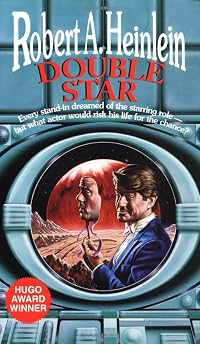
Double Star
by Robert A. Heinlein
On This Page
Description
Every stand-in dreamed of the starring role - but what actor would risk his life for the chance? One minute, down-and-out actor Lorenzo Smythe is, as usual, in a bar, drinking away his troubles while watching his career circle the drain. Then a space pilot buys him a drink, and the next thing Smythe knows, he's shanghaied to Mars. Smythe suddenly finds himself agreeing to the most difficult role of his career: impersonating an important politician who has been kidnapped. Peace with the show more Martians is at stake, and failure to pull off the act could result in interplanetary war. Smythe knows nothing of the issues concerning free interplanetary trade and equal rights for aliens and cares even less, but the handsome compensation is impossible to refuse. He soon realizes, however, that he faces a lifetime masquerade if the real politician never shows up. show lessTags
Recommendations


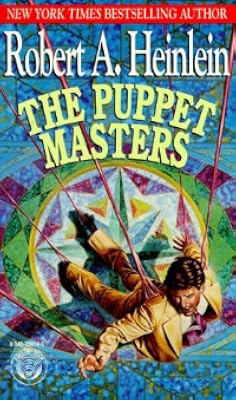
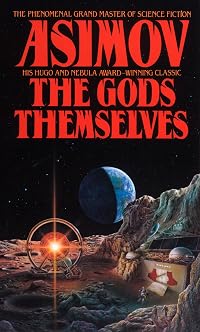
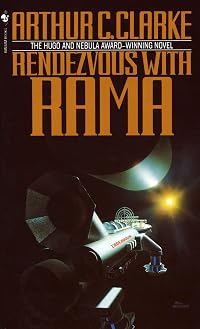
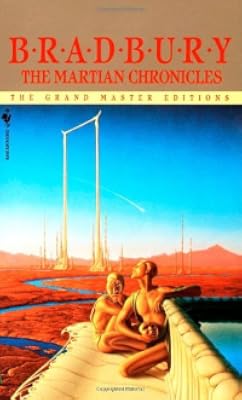



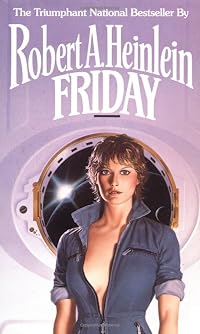
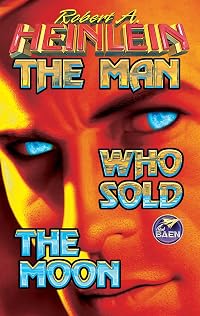
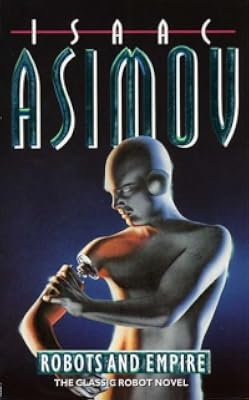


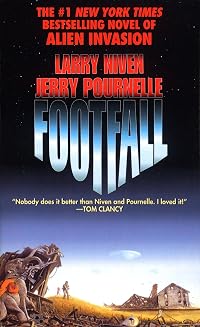











Member Recommendations

themulhern Two very different political impersonation novels. Zenda is a great deal more fun, but the comparisons are interesting.

SylviaC Both books play with identity.
Member Reviews
Role of a Lifetime
Robert A. Heinlein was certainly an intellectually dexterous man with many skills and varying and sometimes self-contradictory viewpoints. He was a naval officer (USNA graduate), politician (ran unsuccessfully for office in California in the 1930s), counterculturist (sexual freedom, nudism, etc.), an early life liberal who passed through conservatism to libertarianism, and, of course, a gifted writer. He espoused racial inclusion and he for quite a long time believed that a strong central government stood between human salvation and destruction. Too, he was scientifically based in physics, a perfect foundation for space fiction.
What he thought about at different junctures in his life often ended up in the pages of his show more novels and stories. In the case of Double Star, the novel reflects his then current views on government, his personal knowledge of politics, his belief in racial fairness, and the characteristics he supposed a decent politician might incorporate. Even the typical sexism of the period is toned down a bit. These ideas given life in Double Star resonate as strongly today as back in the 1950s when some of them could be considered, well, outré. And these make Double Star, the 1956 Hugo Best Novel winner, eminently readable and enjoyable today.
Characters switching roles and coming out better for it can be found throughout literature, among examples Dickens’ A Tale of Two Cities and Twain’s The Prince and the Pauper. Heinlein employs this effectively by creating an engaging character in the person of near-do-well actor Lorenzo Smythe, who begins as pompous and progresses to personable and finally to a completely subsumed personality. Lorenzo tells the story about how he came to play the greatest and final role of his life, assuming the persona of the solar system’s greatest politician, John Joseph Bonforte.
In the future, the various inhabited planets of the solar system live under one central government, a constitutional monarchy governed by a parliamentary system under the auspices of a titular monarch, the Emperor of the Solar System. While various political parties contend for leadership, the two prominent ones are the Expansionist and Humanity parties. Their political viewpoints aren’t readily discernible from their names. The Expansionists wish to extend equality to all the intelligent species in the system, whereas the Humanists advocate for human being supremacy. They have lots of support on Earth, which represents the most strongest power in the system, including Lorenzo, who openly despises Martians and the Expansionist leader who wishes to gain representation for Martians and other species, namely Bonforte.
To prevent Bonforte from attending a Martian ceremony in which he will become a Martian, the Humanists kidnap him. Not attending would constitute the highest insult imaginable in the Martian culture. To thwart them, Bonforte’s associates persuade Lorenzo to play the role of Bonforte so the ceremony can take place. Not able to pass up the role of a lifetime, and well as the compensation, Lorenzo accepts the role. Then, of course, one thing leads to another, until the role turns into a lifetime commitment and Lorenzo for all purposes becomes Bonforte. How and why this all happens constitutes the crux of the story, every moment of which is not only propulsive and engaging but also thoughtful and insightful on a political level. It’s Robert A. Heinlein at his best and not only one of the really great sci-fi novels but just a terrific novel in and of itself. show less
Robert A. Heinlein was certainly an intellectually dexterous man with many skills and varying and sometimes self-contradictory viewpoints. He was a naval officer (USNA graduate), politician (ran unsuccessfully for office in California in the 1930s), counterculturist (sexual freedom, nudism, etc.), an early life liberal who passed through conservatism to libertarianism, and, of course, a gifted writer. He espoused racial inclusion and he for quite a long time believed that a strong central government stood between human salvation and destruction. Too, he was scientifically based in physics, a perfect foundation for space fiction.
What he thought about at different junctures in his life often ended up in the pages of his show more novels and stories. In the case of Double Star, the novel reflects his then current views on government, his personal knowledge of politics, his belief in racial fairness, and the characteristics he supposed a decent politician might incorporate. Even the typical sexism of the period is toned down a bit. These ideas given life in Double Star resonate as strongly today as back in the 1950s when some of them could be considered, well, outré. And these make Double Star, the 1956 Hugo Best Novel winner, eminently readable and enjoyable today.
Characters switching roles and coming out better for it can be found throughout literature, among examples Dickens’ A Tale of Two Cities and Twain’s The Prince and the Pauper. Heinlein employs this effectively by creating an engaging character in the person of near-do-well actor Lorenzo Smythe, who begins as pompous and progresses to personable and finally to a completely subsumed personality. Lorenzo tells the story about how he came to play the greatest and final role of his life, assuming the persona of the solar system’s greatest politician, John Joseph Bonforte.
In the future, the various inhabited planets of the solar system live under one central government, a constitutional monarchy governed by a parliamentary system under the auspices of a titular monarch, the Emperor of the Solar System. While various political parties contend for leadership, the two prominent ones are the Expansionist and Humanity parties. Their political viewpoints aren’t readily discernible from their names. The Expansionists wish to extend equality to all the intelligent species in the system, whereas the Humanists advocate for human being supremacy. They have lots of support on Earth, which represents the most strongest power in the system, including Lorenzo, who openly despises Martians and the Expansionist leader who wishes to gain representation for Martians and other species, namely Bonforte.
To prevent Bonforte from attending a Martian ceremony in which he will become a Martian, the Humanists kidnap him. Not attending would constitute the highest insult imaginable in the Martian culture. To thwart them, Bonforte’s associates persuade Lorenzo to play the role of Bonforte so the ceremony can take place. Not able to pass up the role of a lifetime, and well as the compensation, Lorenzo accepts the role. Then, of course, one thing leads to another, until the role turns into a lifetime commitment and Lorenzo for all purposes becomes Bonforte. How and why this all happens constitutes the crux of the story, every moment of which is not only propulsive and engaging but also thoughtful and insightful on a political level. It’s Robert A. Heinlein at his best and not only one of the really great sci-fi novels but just a terrific novel in and of itself. show less
A brief review for a brief story. Double Star focuses on our main character, Smythe, an actor who is recruited to double for an important politician who has been kidnapped. The plot moves briskly along, and while there's a little of the expected Heinlein action early on, there's less than one might expect. Absent also are some of his usual tropes about sexism and sexuality (though we do have an almost entirely male cast of characters). Strangely, in a book centered around politics, there is also little to none of his usual diatribes against socialism, for capitalism, or for some pseudo-fascist libertarian regime. Instead, we see Smythe grow out of initial close-minded, racist and isolationist beliefs and into someone who embraces show more collectivism across cultures and species. There's also some interesting ranting about the 'artist' and how/why/when he creates/participates in his art that whole ostensibly speaking about acting, feels like it must have been to some degree self-referential for Heinlein regarding writing. Overall, great, short read. show less
I was surprised how much I liked this book. It's a relatively simple and predictable plot: Lorenzo Smythe is an actor hired to impersonate a politician at a key political moment. Only thing is, the politician is pro-Martian, and Smythe is racist against Martians. Plus, things kind of spiral out of control, and the impersonation keeps going on longer and longer...
I was rarely surprised by what happened, but often surprised by how much I felt it regardless. This is a story of a man coming to understand what it means to be a good person, to stand for something bigger than the self. It's actually quite moving in parts, and dreadfully earnest, but earnest in the sense that you want people like this to be out there. But it's also not naïve show more (there are no Pollyannas here), and even if the set-up is contrived, Heinlein imbues it with enough procedural and character detail to make it work. For example, I liked the idea of the Farleyfile, but also the way in which it ultimately let Lorenzo down made sense.
I've read Heinlein before, of course, but everything I've read previously came from his imperial phase (Stranger in a Strange Land, Starship Troopers) or from his twilight era (Friday). I've never read anything from his early career before, when he was making his name as a solid, successful writer, but Double Star makes me want to read more of his early stuff. This is solidly successful sf; I zipped through the whole book in about an evening, and I enjoyed every word of it. show less
I was rarely surprised by what happened, but often surprised by how much I felt it regardless. This is a story of a man coming to understand what it means to be a good person, to stand for something bigger than the self. It's actually quite moving in parts, and dreadfully earnest, but earnest in the sense that you want people like this to be out there. But it's also not naïve show more (there are no Pollyannas here), and even if the set-up is contrived, Heinlein imbues it with enough procedural and character detail to make it work. For example, I liked the idea of the Farleyfile, but also the way in which it ultimately let Lorenzo down made sense.
I've read Heinlein before, of course, but everything I've read previously came from his imperial phase (Stranger in a Strange Land, Starship Troopers) or from his twilight era (Friday). I've never read anything from his early career before, when he was making his name as a solid, successful writer, but Double Star makes me want to read more of his early stuff. This is solidly successful sf; I zipped through the whole book in about an evening, and I enjoyed every word of it. show less
Harlan Ellison once said that the best sentence in all of science fiction was Heinlein's "The door dilated" because it packed so much into so little. Double Star is a lot like that, with an action-packed thriller plot surrounded by a mess of fascinating details about the developing solar system and relations between humans and Martians.
The basic plot follows Lorenzo Smythe, an egotistical and underworked actor who finds himself roped into the role of a lifetime, impersonating the great politician John Bonforte for a vital Martian deal, since the real thing has been kidnapped by the dastardly Opposition. One thing leads to another, and Lorenzo winds up playing for far higher stakes than he signed on for. The story is pretty basic, a show more transition between 'juvenile Heinlein' (Space Cadet, Have Space Suit Will Travel) and 'classic Heinlein' (Starship Troopers, Stranger in a Strange Land). Smythe begins as delightfully weaselly narcissist who develops integrity by playing a man with some, and the supporting cast are some of the best examples of Heinlein's stock square-jawed pilots and uber-competent secretaries.
So about those amazing details. The description of a spaceman's walk and terrible ground clothes that open the book are some of the greatest expository writing in the genre. Martian society is mostly sketched at, but all seems quite consistent for a race that reproduces by budding and holds propriety above all else. Heinlein's politics are too expansive to box in, aside from the basic claim that he loves thinking about them, but this novel is some of his more honest thoughts on politics. Democracy is the worst system we have, except for all the others, and the greatest game of all. There should be a division between the messy business of policy and the symbols of State, so that we can have change with continuity, and one quote which I'll reproduce in full.
"If there were ethical basics that transcended time and place, then they were true for both for Martians and for men. They were true on any planet around any star-and if the human race did not behave accordingly they weren't ever going to win to the stars because some better race would slap them down for double-dealing.
The price of expansion was virtue. "Never give a sucker an even break" was too narrow a philosophy to fit the broad reaches of pace."
Dang, Heinlein, dang. show less
The basic plot follows Lorenzo Smythe, an egotistical and underworked actor who finds himself roped into the role of a lifetime, impersonating the great politician John Bonforte for a vital Martian deal, since the real thing has been kidnapped by the dastardly Opposition. One thing leads to another, and Lorenzo winds up playing for far higher stakes than he signed on for. The story is pretty basic, a show more transition between 'juvenile Heinlein' (Space Cadet, Have Space Suit Will Travel) and 'classic Heinlein' (Starship Troopers, Stranger in a Strange Land). Smythe begins as delightfully weaselly narcissist who develops integrity by playing a man with some, and the supporting cast are some of the best examples of Heinlein's stock square-jawed pilots and uber-competent secretaries.
So about those amazing details. The description of a spaceman's walk and terrible ground clothes that open the book are some of the greatest expository writing in the genre. Martian society is mostly sketched at, but all seems quite consistent for a race that reproduces by budding and holds propriety above all else. Heinlein's politics are too expansive to box in, aside from the basic claim that he loves thinking about them, but this novel is some of his more honest thoughts on politics. Democracy is the worst system we have, except for all the others, and the greatest game of all. There should be a division between the messy business of policy and the symbols of State, so that we can have change with continuity, and one quote which I'll reproduce in full.
"If there were ethical basics that transcended time and place, then they were true for both for Martians and for men. They were true on any planet around any star-and if the human race did not behave accordingly they weren't ever going to win to the stars because some better race would slap them down for double-dealing.
The price of expansion was virtue. "Never give a sucker an even break" was too narrow a philosophy to fit the broad reaches of pace."
Dang, Heinlein, dang. show less
As far as I was aware, this was one of the less objectionable novels in Heinlein’s oeuvre, and I’ve seen much praise for it which was careful to make that point. And yet I have to wonder if those people had actually bothered reading it recently. I can understand a thirteen-year-old lapping it up, and nostalgia putting even more of a shine on the book many decades later… but there’s no way Double Star stands up to scrutiny for anyone with a modicum of intelligence, taste or sensitivity. What else to think of a novel that contains the line “a woman will forgive any action, up to and including assault with violence, but is easily insulted by language”? And there is only one female named character in the entire book. And she’s show more the hero’s personal assistant. The world-building is also piss-poor, something at which Heinlein is normally quite good. It’s not just the idea of a Solar System-wide empire ruled by a member of the House of Orange, or Mars, Venus and Jupiter having native intelligent life, or the really clunky technology (much of which is behind the state of the art for 1955)… Everything just feels weirdly anachronistic and old-fashioned, even for sf of the 1950s – no, especially for sf of the 1950s. Then there’s the lectures on free trade, all of which are patent bollocks. (Free trade does not generate wealth, it concentrates wealth. In the hands of those who already possess wealth. History has been telling us this for centuries.) An actor is asked to impersonate an important politican who has been kidnapped, but is desperately needed at a ceremony which will result in a treaty with the Martians. The actor does so, the politician is rescued but proves too ill to return to his job, and so the impersonation continues… As far as I know, Double Star was never published as a juvenile, but it’s hard to believe it was aimed at an adult audience. show less
Could be Heinlein's best book; for all its talking (and there is plenty), it's a fast-moving story and explores lots of fascinating topics. "The Great Lorenzo" is a ham actor who bears a resemblance to a leading political leader, whose party is working to bring into citizenship humans and aliens from around the solar system. When the leader is kidnapped, Lorenzo is drafted to stand in for him at an important Martian ceremony. This leads to a continued doubling of the leader, and Lorenzo's efforts to, on one hand, get out from under the role, and also to play it as well as he can.
Lorenzo is a fascinating character, and it feels as though Heinlein draws on real experience as an actor. Bonfort (the politician) is also fascinating, and show more watching one turn into the other makes for the drama of the book. But it also comes from a real feeling of politics and culture. The Martian culture is very strange, very different from ours (and different from the one Heinlein portrayed a few years later in Stranger In A Strange Land). It's a bit odd to see civilizations, seriously, presented on Mars, Venus and a moon of Jupiter, kind of a holdover from a much earlier science fiction era. Still, they are there in service of Heinlein's other points, about cultures and the people who make them up. I've read this book at least half a dozen times since my first reading of it in high school, and it's always rewarding. show less
Lorenzo is a fascinating character, and it feels as though Heinlein draws on real experience as an actor. Bonfort (the politician) is also fascinating, and show more watching one turn into the other makes for the drama of the book. But it also comes from a real feeling of politics and culture. The Martian culture is very strange, very different from ours (and different from the one Heinlein portrayed a few years later in Stranger In A Strange Land). It's a bit odd to see civilizations, seriously, presented on Mars, Venus and a moon of Jupiter, kind of a holdover from a much earlier science fiction era. Still, they are there in service of Heinlein's other points, about cultures and the people who make them up. I've read this book at least half a dozen times since my first reading of it in high school, and it's always rewarding. show less
Role of a Lifetime
Robert A. Heinlein was certainly an intellectually dexterous man with many skills and varying and sometimes self-contradictory viewpoints. He was a naval officer (USNA graduate), politician (ran unsuccessfully for office in California in the 1930s), counterculturist (sexual freedom, nudism, etc.), an early life liberal who passed through conservatism to libertarianism, and, of course, a gifted writer. He espoused racial inclusion and he for quite a long time believed that a strong central government stood between human salvation and destruction. Too, he was scientifically based in physics, a perfect foundation for space fiction.
What he thought about at different junctures in his life often ended up in the pages of his show more novels and stories. In the case of Double Star, the novel reflects his then current views on government, his personal knowledge of politics, his belief in racial fairness, and the characteristics he supposed a decent politician might incorporate. Even the typical sexism of the period is toned down a bit. These ideas given life in Double Star resonate as strongly today as back in the 1950s when some of them could be considered, well, outré. And these make Double Star, the 1956 Hugo Best Novel winner, eminently readable and enjoyable today.
Characters switching roles and coming out better for it can be found throughout literature, among examples Dickens’ A Tale of Two Cities and Twain’s The Prince and the Pauper. Heinlein employs this effectively by creating an engaging character in the person of near-do-well actor Lorenzo Smythe, who begins as pompous and progresses to personable and finally to a completely subsumed personality. Lorenzo tells the story about how he came to play the greatest and final role of his life, assuming the persona of the solar system’s greatest politician, John Joseph Bonforte.
In the future, the various inhabited planets of the solar system live under one central government, a constitutional monarchy governed by a parliamentary system under the auspices of a titular monarch, the Emperor of the Solar System. While various political parties contend for leadership, the two prominent ones are the Expansionist and Humanity parties. Their political viewpoints aren’t readily discernible from their names. The Expansionists wish to extend equality to all the intelligent species in the system, whereas the Humanists advocate for human being supremacy. They have lots of support on Earth, which represents the most strongest power in the system, including Lorenzo, who openly despises Martians and the Expansionist leader who wishes to gain representation for Martians and other species, namely Bonforte.
To prevent Bonforte from attending a Martian ceremony in which he will become a Martian, the Humanists kidnap him. Not attending would constitute the highest insult imaginable in the Martian culture. To thwart them, Bonforte’s associates persuade Lorenzo to play the role of Bonforte so the ceremony can take place. Not able to pass up the role of a lifetime, and well as the compensation, Lorenzo accepts the role. Then, of course, one thing leads to another, until the role turns into a lifetime commitment and Lorenzo for all purposes becomes Bonforte. How and why this all happens constitutes the crux of the story, every moment of which is not only propulsive and engaging but also thoughtful and insightful on a political level. It’s Robert A. Heinlein at his best and not only one of the really great sci-fi novels but just a terrific novel in and of itself. show less
Robert A. Heinlein was certainly an intellectually dexterous man with many skills and varying and sometimes self-contradictory viewpoints. He was a naval officer (USNA graduate), politician (ran unsuccessfully for office in California in the 1930s), counterculturist (sexual freedom, nudism, etc.), an early life liberal who passed through conservatism to libertarianism, and, of course, a gifted writer. He espoused racial inclusion and he for quite a long time believed that a strong central government stood between human salvation and destruction. Too, he was scientifically based in physics, a perfect foundation for space fiction.
What he thought about at different junctures in his life often ended up in the pages of his show more novels and stories. In the case of Double Star, the novel reflects his then current views on government, his personal knowledge of politics, his belief in racial fairness, and the characteristics he supposed a decent politician might incorporate. Even the typical sexism of the period is toned down a bit. These ideas given life in Double Star resonate as strongly today as back in the 1950s when some of them could be considered, well, outré. And these make Double Star, the 1956 Hugo Best Novel winner, eminently readable and enjoyable today.
Characters switching roles and coming out better for it can be found throughout literature, among examples Dickens’ A Tale of Two Cities and Twain’s The Prince and the Pauper. Heinlein employs this effectively by creating an engaging character in the person of near-do-well actor Lorenzo Smythe, who begins as pompous and progresses to personable and finally to a completely subsumed personality. Lorenzo tells the story about how he came to play the greatest and final role of his life, assuming the persona of the solar system’s greatest politician, John Joseph Bonforte.
In the future, the various inhabited planets of the solar system live under one central government, a constitutional monarchy governed by a parliamentary system under the auspices of a titular monarch, the Emperor of the Solar System. While various political parties contend for leadership, the two prominent ones are the Expansionist and Humanity parties. Their political viewpoints aren’t readily discernible from their names. The Expansionists wish to extend equality to all the intelligent species in the system, whereas the Humanists advocate for human being supremacy. They have lots of support on Earth, which represents the most strongest power in the system, including Lorenzo, who openly despises Martians and the Expansionist leader who wishes to gain representation for Martians and other species, namely Bonforte.
To prevent Bonforte from attending a Martian ceremony in which he will become a Martian, the Humanists kidnap him. Not attending would constitute the highest insult imaginable in the Martian culture. To thwart them, Bonforte’s associates persuade Lorenzo to play the role of Bonforte so the ceremony can take place. Not able to pass up the role of a lifetime, and well as the compensation, Lorenzo accepts the role. Then, of course, one thing leads to another, until the role turns into a lifetime commitment and Lorenzo for all purposes becomes Bonforte. How and why this all happens constitutes the crux of the story, every moment of which is not only propulsive and engaging but also thoughtful and insightful on a political level. It’s Robert A. Heinlein at his best and not only one of the really great sci-fi novels but just a terrific novel in and of itself. show less
Members
- Recently Added By
Lists

Hugo Award Winning Novels
63 works; 23 members

Hugo Awards - Best Novel
69 works; 10 members

S.F. Masterworks (Complete)
229 works; 15 members

SF Masterworks
193 works; 8 members

Political Science Fiction
43 works; 3 members

Favorite Childhood Books
1,651 works; 519 members

Read
293 works; 4 members

Books Read in 2022
5,218 works; 112 members

Books Read in 2011
684 works; 20 members

Books Read in 2024
4,712 works; 128 members

Books Read in 2025
4,092 works; 98 members
Author Information

457+ Works 174,476 Members
Robert Anson Heinlein was born on July 7, 1907 in Butler, Mo. The son of Rex Ivar and Bam Lyle Heinlein, Robert Heinlein had two older brothers, one younger brother, and three younger sisters. Moving to Kansas City, Mo., at a young age, Heinlein graduated from Central High School in 1924 and attended one year of college at Kansas City Community show more College. Following in his older brother's footsteps, Heinlein entered the Navel Academy in 1925. After contracting pulmonary tuberculosis, of which he was later cured, Heinlein retired from the Navy and married Leslyn MacDonald. Heinlein was said to have held jobs in real estate and photography, before he began working as a staff writer for Upton Sinclair's EPIC News in 1938. Still needing money desperately, Heinlein entered a writing contest sponsored by the science fiction magazine Thrilling Wonder Stories. Heinlein wrote and submitted the story "Life-Line," which went on to win the contest. This guaranteed Heinlein a future in writing. Using his real name and the pen names Caleb Saunders, Anson MacDonald, Lyle Monroe, John Riverside, and Simon York, Heinlein wrote numerous novels including For Us the Living, Methuselah's Children, and Starship Troopers, which was adapted into a big-budget film for Tri-Star Pictures in 1997. The Science Fiction Writers of America named Heinlein its first Grand Master in 1974, presented 1975. Officers and past presidents of the Association select a living writer for lifetime achievement. Also, the Science Fiction and Fantasy Hall of Fame inducted Heinlein in 1998. Heinlein died in 1988 from emphysema and other related health problems. Heinlein's remains were scattered from the stern of a Navy warship off the coast of California. (Bowker Author Biography) show less
Some Editions
Awards and Honors
Awards
Distinctions
Notable Lists
Series
Belongs to Publisher Series
Signet SF (P3669, S1444)
Urania [Mondadori] (31)
Colecção Argonauta (39)
UTOPIA Grossband (176)
Panther Books (1120)
SF Masterworks (New design)
Delta Science Fiction (144)
Gallimard, Folio SF (294)
Zwarte Beertjes (1388)
Heyne Science Fiction & Fantasy (06/3922)
Work Relationships
Is contained in
Has as a commentary on the text
Common Knowledge
- Canonical title
- Double Star
- Original title
- Double Star
- Original publication date
- 1956 (Astounding Feb ∙ Mar ∙ Apr) (Astounding Feb ∙ | Mar ∙ | Apr)
- People/Characters
- Lorenzo Smythe, aka "The Great Lorenzo"; Bonforte; Kkkahrrreash (no, really!); Dak Broadbent
- Important places
- Earth; Mars
- Dedication
- To Henry and Catherine Kuttner
- First words
- If a man walks in dressed like a hick and acting as if he owned the place, he's a spaceman.
- Last words
- (Click to show. Warning: May contain spoilers.)They can hurt.
- Publisher's editor*
- Editrice Nord S.r.l.
- Blurbers
- King, Stephen
- Original language
- English
*Some information comes from Common Knowledge in other languages. Click "Edit" for more information.
Classifications
Statistics
- Members
- 3,387
- Popularity
- 4,971
- Reviews
- 86
- Rating
- (3.71)
- Languages
- 17 — Czech, Danish, Dutch, English, Finnish, French, German, Greek, Hebrew, Hungarian, Italian, Portuguese, Romanian, Russian, Spanish, Swedish, Turkish
- Media
- Paper, Audiobook, Ebook
- ISBNs
- 68
- UPCs
- 1
- ASINs
- 56