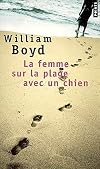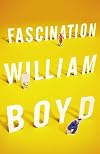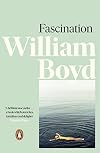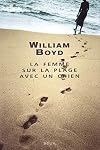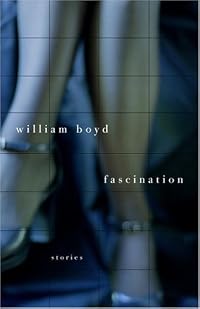
Fascination
by William Boyd
On This Page
Description
This is William Boyd's third volume of short stories following his acclaimed collections On the Yankee Station (1981) and The Destiny of Nathalie X (1995). Described as "the finest storyteller of his generation", Boyd shows his mastery of the form as these stories range widely through time and space. In a brilliant array of styles and narratives we move from 1930s Germany to Los Angeles in the Second World War, from contemporary Oxford to 19th century Russia. Whether in London or Amsterdam. show more Eastbourne or a Normandy village these stories explore and expose the fraught, funny, absurd, poignant and lovelorn lives of their many and varied characters. show lessTags
Recommendations















Member Reviews
In graduate school, my creative writing instructor would make us write one-sentence summaries of short stories she assigned us to read (in Hollywood, this is known as "the pitch"). While reading William Boyd's new story collection, Fascination, I decided to apply this exercise to his short fictions:
* An 11-year-old boy is given a bicycle as a gift from his mother's lover so that he'll ride around the French countryside while the adulterers have afternoon sex. ("Varengeville")
* A filmmaker's journal gradually reveals his obsession for his leading lady. ("Notebook No. 9")
* An architect is possessed by a 19th-century Scottish engineer, causing him to lose his job, his wife and perhaps his sanity. ("A Haunting")
* While putting his show more body-building girlfriend on a steroid regimen, a philosophy student wrestles with the hypothesis that the mind can exist independently matter. ("The Mind/Body Problem")
Paring Boyd's plots down to single sentences, however, robs these and the other 10 tales in Fascination of their artistry, depth and complexity. There are strata upon strata here on these pages.
The most memorable short stories--by everyone from Anton Chekhov to Alice Munro--are novels condensed into miniature, hard gems. Or, as Boyd himself recently wrote in The Guardian: "Like a multivitamin pill, a good short story can provide a compressed blast of discerning, intellectual pleasure, one no less intense than that delivered by a novel, despite the shorter duration of its consumption."
In Fascination, which is packed with literary multivitamins, the author of the novels Any Human Heart and A Good Man in Africa wades neck-deep into the swamp of humanity to bring us 14 tales of desperation and desire. Boyd's writing is sharp, precise and often very funny. In this collection, it is also as diverse in tone, structure and subject matter as any book of short stories I've read.
Some of the stories read like grad school writing exercises ("Beulah Berlin, An A-Z," for instance, is broken into 26 sections, each ending with a word that linguistically reverberates into the first word of the next section). But beneath the clever narrative tricks lies not only a fascination with language but with the way we react in moments of crisis, especially those times we try to suppress sexual urges. One story's epigraph, a quote from Chekhov, seems especially apropos to the collection as a whole: "Every person lives his real, most interesting life under the cover of secrecy."
Not coincidentally, that particular story is "The Woman on the Beach with a Dog," a re-vision of the master's "The Lady With the Dog." Boyd moves the adulterers' rendezvous from a beach in Yalta to Cape Cod in 1944. When the man, Garrett Rising, arrives at the crossroads where he must choose between wife and lover, Boyd turns on a brilliant show of Chekhovian agony as the lovers wallow in post-coital conversation in a motel room whose carpet is patterned with knights in shining armor:
"We have to do something," she said.
"We will, I promise."
"What're we going to do?"
He felt a small uplifting of his spirits now that he knew she was ready to try it with him, this life of momentsâ€âÂ?moments of happiness.
"I'll think of something."
"What?"
"I don't know," he said, staring at the knights on their prancing chargers. "I don't know."
Most of Boyd's characters are caught in similar moments of indecision. As the narrator of "Beulah Berlin, An A-Z" muses, "How do you know when your life is intrinsically uninteresting? You just do. Some people live quietly, unhappily, with this knowledge; others do something about it." Some readers--especially those turned-off by Woody Allen films--might find this collection unbearably full of self-indulgent anxiety. However, I for one was fascinated by the way Boyd turns angst into art and consistently makes it a fresh experience from story to story.
The collection's standout centerpiece, "Incandescence"--true to its title--burns with the kind of artistry that turns a piece of short fiction into a work of imagination that expands beyond the boundaries of the page. Boyd creates something every bit as complex and dramatic as Ian McEwan's novel Atonement as Alexander Tobias returns to the English manor of his former girlfriend, Anna--a now-married woman for whom he still hopefully and hopelessly pines--for a what appears to be a casual family get-together.
When I saw Anna again I knew I loved her still. That I had never stopped loving her and that I would never stop loving her. And suddenly I felt a kind of grief for my life. It's a terrible thing, this, when you know your life has gone irrevocably wrong, and that, every day until the day you die, you will be confronted with the idea of an alternate life that you could have, should have, lived. There were moments that weekend when I felt suicidal. I felt that I should end my life now rather than live on with the torment of what might have been.
Anna's family has fallen on hard times and hopes that Alexander will be able to help them out of a financial jam. When he arrives, Alexander realizes he's previously met Anna's husband and he's not the successful, charming businessman he appears to be. Even while that's going on, Boyd complicates the story even further by revealing several devastating skeletons in the family's closet.
All this in less than 20 pages; and, as you can see, it's a plot that defies the one-sentence summary. The characters, events and emotions of "Incandescence" are so rich and compelling, we secretly long to explore them in a longer work.
But here's the catch: to turn "Incandescence" into a full-length book would flatten it out and make it just another pale, pudgy novel. One word more, one word less and the multi-strand narrative Boyd has spun would crumple like a spider web in a hurricane. His breadth and depth and control is simply breathtaking here and throughout the entire collection. show less
* An 11-year-old boy is given a bicycle as a gift from his mother's lover so that he'll ride around the French countryside while the adulterers have afternoon sex. ("Varengeville")
* A filmmaker's journal gradually reveals his obsession for his leading lady. ("Notebook No. 9")
* An architect is possessed by a 19th-century Scottish engineer, causing him to lose his job, his wife and perhaps his sanity. ("A Haunting")
* While putting his show more body-building girlfriend on a steroid regimen, a philosophy student wrestles with the hypothesis that the mind can exist independently matter. ("The Mind/Body Problem")
Paring Boyd's plots down to single sentences, however, robs these and the other 10 tales in Fascination of their artistry, depth and complexity. There are strata upon strata here on these pages.
The most memorable short stories--by everyone from Anton Chekhov to Alice Munro--are novels condensed into miniature, hard gems. Or, as Boyd himself recently wrote in The Guardian: "Like a multivitamin pill, a good short story can provide a compressed blast of discerning, intellectual pleasure, one no less intense than that delivered by a novel, despite the shorter duration of its consumption."
In Fascination, which is packed with literary multivitamins, the author of the novels Any Human Heart and A Good Man in Africa wades neck-deep into the swamp of humanity to bring us 14 tales of desperation and desire. Boyd's writing is sharp, precise and often very funny. In this collection, it is also as diverse in tone, structure and subject matter as any book of short stories I've read.
Some of the stories read like grad school writing exercises ("Beulah Berlin, An A-Z," for instance, is broken into 26 sections, each ending with a word that linguistically reverberates into the first word of the next section). But beneath the clever narrative tricks lies not only a fascination with language but with the way we react in moments of crisis, especially those times we try to suppress sexual urges. One story's epigraph, a quote from Chekhov, seems especially apropos to the collection as a whole: "Every person lives his real, most interesting life under the cover of secrecy."
Not coincidentally, that particular story is "The Woman on the Beach with a Dog," a re-vision of the master's "The Lady With the Dog." Boyd moves the adulterers' rendezvous from a beach in Yalta to Cape Cod in 1944. When the man, Garrett Rising, arrives at the crossroads where he must choose between wife and lover, Boyd turns on a brilliant show of Chekhovian agony as the lovers wallow in post-coital conversation in a motel room whose carpet is patterned with knights in shining armor:
"We have to do something," she said.
"We will, I promise."
"What're we going to do?"
He felt a small uplifting of his spirits now that he knew she was ready to try it with him, this life of momentsâ€âÂ?moments of happiness.
"I'll think of something."
"What?"
"I don't know," he said, staring at the knights on their prancing chargers. "I don't know."
Most of Boyd's characters are caught in similar moments of indecision. As the narrator of "Beulah Berlin, An A-Z" muses, "How do you know when your life is intrinsically uninteresting? You just do. Some people live quietly, unhappily, with this knowledge; others do something about it." Some readers--especially those turned-off by Woody Allen films--might find this collection unbearably full of self-indulgent anxiety. However, I for one was fascinated by the way Boyd turns angst into art and consistently makes it a fresh experience from story to story.
The collection's standout centerpiece, "Incandescence"--true to its title--burns with the kind of artistry that turns a piece of short fiction into a work of imagination that expands beyond the boundaries of the page. Boyd creates something every bit as complex and dramatic as Ian McEwan's novel Atonement as Alexander Tobias returns to the English manor of his former girlfriend, Anna--a now-married woman for whom he still hopefully and hopelessly pines--for a what appears to be a casual family get-together.
When I saw Anna again I knew I loved her still. That I had never stopped loving her and that I would never stop loving her. And suddenly I felt a kind of grief for my life. It's a terrible thing, this, when you know your life has gone irrevocably wrong, and that, every day until the day you die, you will be confronted with the idea of an alternate life that you could have, should have, lived. There were moments that weekend when I felt suicidal. I felt that I should end my life now rather than live on with the torment of what might have been.
Anna's family has fallen on hard times and hopes that Alexander will be able to help them out of a financial jam. When he arrives, Alexander realizes he's previously met Anna's husband and he's not the successful, charming businessman he appears to be. Even while that's going on, Boyd complicates the story even further by revealing several devastating skeletons in the family's closet.
All this in less than 20 pages; and, as you can see, it's a plot that defies the one-sentence summary. The characters, events and emotions of "Incandescence" are so rich and compelling, we secretly long to explore them in a longer work.
But here's the catch: to turn "Incandescence" into a full-length book would flatten it out and make it just another pale, pudgy novel. One word more, one word less and the multi-strand narrative Boyd has spun would crumple like a spider web in a hurricane. His breadth and depth and control is simply breathtaking here and throughout the entire collection. show less
Sometimes it’s merely the uncanny juxtaposition of two simple words that lets us know we’re reading a great writer. “(V)ast insouciance” — from the short story “The Pigeon” — is such an example.
William Boyd is not just a wordsmith; he’s a magician who pulls rabbit-words out of hats, throws them together, then lets us marvel at the effect. Problem is, we come away from the page thinking — we, the rest of us, we other purveyors of English prose — what’s the point? Why even bother? With writers like William Boyd to contend with, why not just throw in the towel and remain content to be readers?
If Boyd has any weakness as a short story writer, it’s in relying too much upon his readers to supply those bits he has show more clearly decided — perhaps in the interest of grace or economy — to omit. Consequently, his stories, as eloquent as they are imaginative, are not easy to read. Full and unforgiving concentration is a requirement. As well, a leap of faith in Boyd-logic — an equal necessity if we, his readers, are to grasp and hold that thin reed of a story we, ourselves, could not even begin to imagine, much less tell.
Do I recommend Fascination? Only to the intrepid. But to the intrepid, without reservation. Let your imagination run wild with only eyes and ears to chaperone and guide. And then, enjoy the party. William Boyd, like few others, knows how to throw one — at least, on the page.
RRB
5/12/13
Brooklyn, NY show less
William Boyd is not just a wordsmith; he’s a magician who pulls rabbit-words out of hats, throws them together, then lets us marvel at the effect. Problem is, we come away from the page thinking — we, the rest of us, we other purveyors of English prose — what’s the point? Why even bother? With writers like William Boyd to contend with, why not just throw in the towel and remain content to be readers?
If Boyd has any weakness as a short story writer, it’s in relying too much upon his readers to supply those bits he has show more clearly decided — perhaps in the interest of grace or economy — to omit. Consequently, his stories, as eloquent as they are imaginative, are not easy to read. Full and unforgiving concentration is a requirement. As well, a leap of faith in Boyd-logic — an equal necessity if we, his readers, are to grasp and hold that thin reed of a story we, ourselves, could not even begin to imagine, much less tell.
Do I recommend Fascination? Only to the intrepid. But to the intrepid, without reservation. Let your imagination run wild with only eyes and ears to chaperone and guide. And then, enjoy the party. William Boyd, like few others, knows how to throw one — at least, on the page.
RRB
5/12/13
Brooklyn, NY show less
The short stories in this collection are definitely not the sort you find in Woman's Weekly Fiction Special. They are distinctly literary, suitable for people who like to read, re-read and puzzle over stories to tease out the meaning. You certainly have to sit up and pay attention - I found I couldn't read these with the football on in the background. Miss a line and the whole thing doesn't make sense. To be honest there were some where I didn't miss a line and the whole lot still didn't make sense, but that could just be me.
The traditional format of a story - beginning, middle and end - is rarely observed here. They all have a middle,certainly. As far as the end is concerned, in many cases I would compare it with taking a pleasant walk show more through a meadow, admiring the varied flora, and suddenly finding the ground has disappeared and instead you fall to your death down a chasm. Sudden, unexpected, inexplicable.
Many of the stories seemed to have been written as a cerebral exercise. For example "Beulah Berlin A-Z" in which each paragraph starts with the same word that ended the previous paragraph (or an approximation of it) and furthermore, these words all start with a different letter, arranged alphabetically. It was the sort of exercise I would expect to find in '100 Ideas To Cure Writer's Block', and one suspects entertainment for the reader might have been a secondary concern. Having said that, this particular story like all the others had high points, and moments of spectacular luminance, typical of Boyd's writing.
Maybe irrelevant, since everyone's tastes are different, but my personal favourites were 'Lunch', 'Incandescence' and 'The Ghost of a Bird'. All written in edgy style, but in plot terms a little more conventional than most of the others here. show less
The traditional format of a story - beginning, middle and end - is rarely observed here. They all have a middle,certainly. As far as the end is concerned, in many cases I would compare it with taking a pleasant walk show more through a meadow, admiring the varied flora, and suddenly finding the ground has disappeared and instead you fall to your death down a chasm. Sudden, unexpected, inexplicable.
Many of the stories seemed to have been written as a cerebral exercise. For example "Beulah Berlin A-Z" in which each paragraph starts with the same word that ended the previous paragraph (or an approximation of it) and furthermore, these words all start with a different letter, arranged alphabetically. It was the sort of exercise I would expect to find in '100 Ideas To Cure Writer's Block', and one suspects entertainment for the reader might have been a secondary concern. Having said that, this particular story like all the others had high points, and moments of spectacular luminance, typical of Boyd's writing.
Maybe irrelevant, since everyone's tastes are different, but my personal favourites were 'Lunch', 'Incandescence' and 'The Ghost of a Bird'. All written in edgy style, but in plot terms a little more conventional than most of the others here. show less
I did it, I finished my Christmas reading. Okay, it took until Twelfth Night (kinda 13) but I did it. This was yet another completely enjoyable short story collection by a growing favorite author. All were interesting, a few were a bit enigmatic. Must put more Boyd into my reading plans.
Hugely enjoyable collection of short stories, showing Boyd's mastery of the art.
Malgré les éloges de la 4è de couverture, j'ai trouvé ces nouvelles assez peu convaincantes, et sous une forme très particulière : écriture froide, pour certaines sous la forme d'un rapport, ou d'un dialogue.
Jan 9, 2013French
Neuf nouvelles nerveuses. Ecriture très masculine, ce qui ne veut peut-être pas dire grand-chose, mais ressenti fortement ainsi. Des instants de vie. Beaucoup aimé la nouvelle éponyme, et celle intitulée "Le problème esprit-corps".
Mar 28, 2007French
Members
- Recently Added By
Author Information

78+ Works 20,468 Members
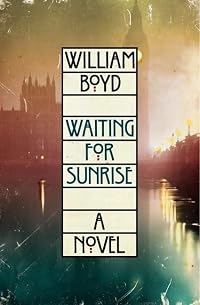
William Boyd is a writer who was born in Ghana on March 7, 1952. He was educated at Gordonstoun school; and then the University of Nice, France, the University of Glasgow, and finally Jesus College, Oxford. Between 1980 and 1983 he was a lecturer in English at St Hilda's College, Oxford, and it was while he was there that his first novel, A Good show more Man in Africa (1981), was published. He was appointed Commander of the Order of the British Empire in 2005. Boyd was selected in 1983 as one of the 20 "Best of Young British Novelists" in a promotion run by Granta magazine and the Book Marketing Council. His novels include: A Good Man in Africa, for which he won the Whitbread Book award and Somerset Maugham Award in 1981; An Ice-Cream War, which won the John Llewellyn Rhys Prize and was nominated for the Booker Prize for Fiction in 1982; Brazzaville Beach, published in 1991, and Any Human Heart, which was long-listed for the Booker Prize in 2002. Restless, the tale of a young woman who discovers that her mother had been recruited as a spy during World War II, was published in 2006 and won the Novel Award in the 2006 Costa Book Awards. Boyd published Waiting for Sunrise: A Novel in early 2012. In 2015 his title, Sweet Caress: The Many Lives of Clay, Amory made the new Zealand Best Seller List. (Bowker Author Biography) show less
Some Editions
Awards and Honors
Distinctions
Work Relationships
Common Knowledge
- Original publication date
- 2004
Classifications
Statistics
- Members
- 298
- Popularity
- 107,273
- Reviews
- 7
- Rating
- (3.49)
- Languages
- English, French
- Media
- Paper, Ebook
- ISBNs
- 14
- ASINs
- 3