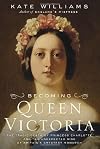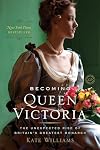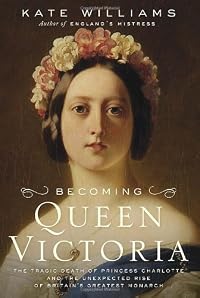
Becoming Queen Victoria: The Tragic Death of Princess Charlotte and the Unexpected Rise of Britain's Greatest Monarch
by Kate Williams
On This Page
Description
From the acclaimed author of "England's Mistress" comes a smart, gripping account of the rise to the throne and the early life of Queen Victoria, and the tragic, little-known story of Princess Charlotte, the queen who never was.Tags
Recommendations










Member Reviews
Where I got the book: purchased online. Amazon? I've had it for a while.
This is, in a sense, a two-part book, and the blurb is pretty deceptive. Fortunately I do not remove stars for publisher shenanigans. From the blurb you'd think this book is all about Queen Victoria whereas in fact 100+ of the 346 pages of text are devoted to her far less well-known cousin Charlotte, daughter of George IV (better known as the Prince Regent) and, during her short lifetime, heir-presumptive to the British throne. If she had lived to become Queen, Victoria would probably be a minor footnote in history and we could be talking about the Charlottian age (OK, probably some variation on Carolingian). Charlotte and Leopold instead of Victoria and Albert; I show more would like to spend some time developing that idea. (Leopold, interestingly enough, eventually became the first King of the Belgians.)
I'm not complaining about the time spent learning about Charlotte, because this lively soap-opera of a dual biography is exactly what I needed to understand a vital point in British history; the transition between the reign of the Hanoverians with their (not all at once--well, not always all at once) dull, incompetent, vice-ridden, hard-drinking, insane, eccentric, greedy and peculiar German princes and the new age of propriety and pantaloons we call the Victorian era. I had always thought of Victoria as the last of the Hanoverians but in fact she was never a Hanoverian ruler; under Salic Law a female could not inherit the Hanoverian title so it passed to Victoria's uncle the Duke of Cumberland. Even that's not as simple as it sounds, but that's another story... Suffice it to say that if Victoria had died before she ensured the succession so very effectively (nine children), the British and German succession would have got all mixed up again so thanks for all the childbearing, Ma'am. And George V got rid of all the British monarchy's German titles during World War I and renamed his family Windsor...
But I digress. The point is that the period between George III and Victoria wasn't an easy one for Britons longing for dynastic stability and Kate Williams has rightly fastened on it as a wonderful story, especially as two of the main players were young girls with parental issues. Charlotte's parents hated each other and the closer she got to the throne, the more they began to battle to get control of her. Victoria lost her father at an early age and fought throughout her teenage years to get out from under her power-hungry mother and her "special advisor" (ahem.)
The result is a fantastic soap-opera that would stand up to the Tudors any day and Kate Williams does a wonderful job with it, keeping the threads of the story in front of the reader so that I never lost track. She also covers the courtship and very early years of Victoria and Albert, which is a great story in itself. My appetite is whetted for much, much more about this period in British history, which also covers the century when Britain went from being a mostly rural, slightly backward (culturally speaking) society to the industrial and cultural superpower it was by the dawn of WWI. Suggestions for further reading are very welcome. show less
This is, in a sense, a two-part book, and the blurb is pretty deceptive. Fortunately I do not remove stars for publisher shenanigans. From the blurb you'd think this book is all about Queen Victoria whereas in fact 100+ of the 346 pages of text are devoted to her far less well-known cousin Charlotte, daughter of George IV (better known as the Prince Regent) and, during her short lifetime, heir-presumptive to the British throne. If she had lived to become Queen, Victoria would probably be a minor footnote in history and we could be talking about the Charlottian age (OK, probably some variation on Carolingian). Charlotte and Leopold instead of Victoria and Albert; I show more would like to spend some time developing that idea. (Leopold, interestingly enough, eventually became the first King of the Belgians.)
I'm not complaining about the time spent learning about Charlotte, because this lively soap-opera of a dual biography is exactly what I needed to understand a vital point in British history; the transition between the reign of the Hanoverians with their (not all at once--well, not always all at once) dull, incompetent, vice-ridden, hard-drinking, insane, eccentric, greedy and peculiar German princes and the new age of propriety and pantaloons we call the Victorian era. I had always thought of Victoria as the last of the Hanoverians but in fact she was never a Hanoverian ruler; under Salic Law a female could not inherit the Hanoverian title so it passed to Victoria's uncle the Duke of Cumberland. Even that's not as simple as it sounds, but that's another story... Suffice it to say that if Victoria had died before she ensured the succession so very effectively (nine children), the British and German succession would have got all mixed up again so thanks for all the childbearing, Ma'am. And George V got rid of all the British monarchy's German titles during World War I and renamed his family Windsor...
But I digress. The point is that the period between George III and Victoria wasn't an easy one for Britons longing for dynastic stability and Kate Williams has rightly fastened on it as a wonderful story, especially as two of the main players were young girls with parental issues. Charlotte's parents hated each other and the closer she got to the throne, the more they began to battle to get control of her. Victoria lost her father at an early age and fought throughout her teenage years to get out from under her power-hungry mother and her "special advisor" (ahem.)
The result is a fantastic soap-opera that would stand up to the Tudors any day and Kate Williams does a wonderful job with it, keeping the threads of the story in front of the reader so that I never lost track. She also covers the courtship and very early years of Victoria and Albert, which is a great story in itself. My appetite is whetted for much, much more about this period in British history, which also covers the century when Britain went from being a mostly rural, slightly backward (culturally speaking) society to the industrial and cultural superpower it was by the dawn of WWI. Suggestions for further reading are very welcome. show less
Very engaging book. I particularly like how tying the life and death of Princess Charlotte in to the life of Victoria gives a much better context for the time than any book I've read on the subject previously.
Well-written and funny in parts, but this book is just so DENSE. I didn't make it very far. Williams is brilliant and thorough and for long-time fans of Queen Victoria, I imagine reading this would be a delight. Unfortunately, I was instantly bogged down by the minutiae and found it difficult to stay focused on the slim thread of story throughout. I will be moving on to a more accessible non-fiction in order to actually learn something about Victoria, a historical figure who intrigues me greatly.
This is not the book that I expected it to be – it’s more in some ways but less in others.
The title, the image on the front cover, the words on the back cover – they all suggest that this is a book about the early years and the beginning of the reign of Queen Victoria. And it is, but there’s a great deal of ground to cover before the story gets there, because this story goes much further back.
It tells the story of two young women who might have been Queen. Each was her presumptive to the British throne, each seemed likely to ascend to that throne, but only one of them did. And she was only born because the other did not.
It’s an amazing true story – or it might be truer to say a series of stories – very well told, in a show more style that is both chatty and informative. It’s clear that the storyteller knows and loves her subject, and that she is eager to share what she knows.
Princess Charlotte of Wales was born in 1796 to Prince George – later Prince Regent, later George IV – and his wife, Princess Caroline of Brunswick. Although her parents adored her, they detested one another and used her as a weapon in their squabbles. She had a lonely childhood, surrounded by governesses and servants but seeing few other children, and seeing her parents very rarely.
And although it was apparent early on that she might become Queen of England, she was given little education or preparation for the role she was expected to be called upon to play.
Charlotte was born into an age when the large, profligate royal family was poorly regarded by its subjects. But she was popular; the hope of not just the masses but also those of the upper class who saw the desperate need for reform. Her dissolute, spendthrift father hated that, and so he did his level best to keep her away from the public gaze, shut up in a grand mansion run by his own trusted servants. .
She grew up to be spoiled and wilful; but she also grew up to be vibrant, energetic, and very good at managing people.
When her father tried to marry her off to the unattractive and unappealing Prince of Orange she finally rebelled. Charlotte made some missteps, but eventually she turned to Prince Leopold of Saxe-Coburg, who she described as “a good tempered man with good sence, with whom I could have a reasonable hope of being less unhappy & comfortless than I have been in a single state.”
Charlotte was eager to escape from her father’s tyranny, and her father was eager to marry her off to a foreign prince and hopefully get her out of England for at least part of each year.
The young couple were married on May 2, 1816, and then moved into their Surrey estate, Claremont House, where for the first time in her life Charlotte was secure and happy. Very soon she was expecting a child.
On November 5, 1817, after nearly three days of labour, Charlotte gave birth to a stillborn boy. The next day, she followed him to the grave.
Public grief was overwhelming. And after the Prince Regent and his six brothers, there was no heir to the throne. George III had ore than fifty grandchildren, but not one was legitimate.
Charlotte’s death set off an unseemly rush to the altar by several the of the sons of George III. Mistresses and morganic wives were cast aside. The Duke of Kent, a lifelong military man, set out to court Prince Leopold’s widowed sister, Victoire. They married in 1818, and barely nine months later, the duchess gave birth to a girl, who would be named Alexandrina Victoria.
The Duke died before his daughter was a year old.
Her mother kept her close, and kept her away from the world, determined that she would reign as her daughter’s regent.
William IV – her uncle, who had come to the throne after the death of George IV – steeled himself to live long enough for his niece to come of age, so that she could rule without a regent.
And her widowed uncle, Prince Leopold, who later became King of the Belgians, remained close to his sister and niece; and he spent years groomed his young nephew, Price Albert of Saxe-Coburg and Gotha, for the role that Leopold himself had hoped to assume – Prince Consort to the Queen of England.
That story rolls on until Victoria is a wife and mother and twenty-two years old – the age that Charlotte was when she died.
The telling of this whole extraordinary story is wonderful; it’s full of detail and it is clearly underpinned by a great deal of research.
I loved that it made history a very human story.
But I was disappointed that it didn’t highlight the parallels between Charlotte and Victoria, and that the author seemed more interested in comparisons with the present day. I was disappointed with that lack of analysis generally, and that momentum of the story overtook almost everything else.
I was left to do all of my own thinking, and I loved doing that but I couldn’t help thinking that I shouldn’t have had to do quite so muc hwork.
And yet I was engaged from start to finish by a story I already knew; I had a lovely time reading, and I am eager to read more about many people and events that this books touched upon. show less
The title, the image on the front cover, the words on the back cover – they all suggest that this is a book about the early years and the beginning of the reign of Queen Victoria. And it is, but there’s a great deal of ground to cover before the story gets there, because this story goes much further back.
It tells the story of two young women who might have been Queen. Each was her presumptive to the British throne, each seemed likely to ascend to that throne, but only one of them did. And she was only born because the other did not.
It’s an amazing true story – or it might be truer to say a series of stories – very well told, in a show more style that is both chatty and informative. It’s clear that the storyteller knows and loves her subject, and that she is eager to share what she knows.
Princess Charlotte of Wales was born in 1796 to Prince George – later Prince Regent, later George IV – and his wife, Princess Caroline of Brunswick. Although her parents adored her, they detested one another and used her as a weapon in their squabbles. She had a lonely childhood, surrounded by governesses and servants but seeing few other children, and seeing her parents very rarely.
And although it was apparent early on that she might become Queen of England, she was given little education or preparation for the role she was expected to be called upon to play.
Charlotte was born into an age when the large, profligate royal family was poorly regarded by its subjects. But she was popular; the hope of not just the masses but also those of the upper class who saw the desperate need for reform. Her dissolute, spendthrift father hated that, and so he did his level best to keep her away from the public gaze, shut up in a grand mansion run by his own trusted servants. .
She grew up to be spoiled and wilful; but she also grew up to be vibrant, energetic, and very good at managing people.
When her father tried to marry her off to the unattractive and unappealing Prince of Orange she finally rebelled. Charlotte made some missteps, but eventually she turned to Prince Leopold of Saxe-Coburg, who she described as “a good tempered man with good sence, with whom I could have a reasonable hope of being less unhappy & comfortless than I have been in a single state.”
Charlotte was eager to escape from her father’s tyranny, and her father was eager to marry her off to a foreign prince and hopefully get her out of England for at least part of each year.
The young couple were married on May 2, 1816, and then moved into their Surrey estate, Claremont House, where for the first time in her life Charlotte was secure and happy. Very soon she was expecting a child.
On November 5, 1817, after nearly three days of labour, Charlotte gave birth to a stillborn boy. The next day, she followed him to the grave.
Public grief was overwhelming. And after the Prince Regent and his six brothers, there was no heir to the throne. George III had ore than fifty grandchildren, but not one was legitimate.
Charlotte’s death set off an unseemly rush to the altar by several the of the sons of George III. Mistresses and morganic wives were cast aside. The Duke of Kent, a lifelong military man, set out to court Prince Leopold’s widowed sister, Victoire. They married in 1818, and barely nine months later, the duchess gave birth to a girl, who would be named Alexandrina Victoria.
The Duke died before his daughter was a year old.
Her mother kept her close, and kept her away from the world, determined that she would reign as her daughter’s regent.
William IV – her uncle, who had come to the throne after the death of George IV – steeled himself to live long enough for his niece to come of age, so that she could rule without a regent.
And her widowed uncle, Prince Leopold, who later became King of the Belgians, remained close to his sister and niece; and he spent years groomed his young nephew, Price Albert of Saxe-Coburg and Gotha, for the role that Leopold himself had hoped to assume – Prince Consort to the Queen of England.
That story rolls on until Victoria is a wife and mother and twenty-two years old – the age that Charlotte was when she died.
The telling of this whole extraordinary story is wonderful; it’s full of detail and it is clearly underpinned by a great deal of research.
I loved that it made history a very human story.
But I was disappointed that it didn’t highlight the parallels between Charlotte and Victoria, and that the author seemed more interested in comparisons with the present day. I was disappointed with that lack of analysis generally, and that momentum of the story overtook almost everything else.
I was left to do all of my own thinking, and I loved doing that but I couldn’t help thinking that I shouldn’t have had to do quite so muc hwork.
And yet I was engaged from start to finish by a story I already knew; I had a lovely time reading, and I am eager to read more about many people and events that this books touched upon. show less
I found this book to be fairly meh. It actually has nothing to do with the fact that the first third of this book is about Charlotte, Victoria's cousin and heir apparent to George IV before her untimely death. I understood why this book ended with the year 1841, as the book was more about the circumstances of Victoria becoming queen and how the royal family was during the Regency, but by the end of the book I really wanted to know what happened between her and her mother. What was Conroy's ultimate fate? Did Victoria's mother ever give her daughter the respect she needed? I felt that the biography was incomplete, even though to give due credit, the author's sources were extensive.
A dual biography of Princess Charlotte, daughter of George IV, and Queen Victoria. Princess Charlotte was in direct line for the throne until her death at the age of 21 in childbirth. Her death was one of the contributing factors leading to Victoria's birth and her eventual ascension to the throne.
I picked up this biography after watching The Young Victoria last weekend, which piqued my curiousity about a British monarch I knew relatively little about. This book, while intriguing, was not as illuminating as I had hoped. The first half of the book focuses on Charlotte, and considering the book as a whole, it seems that Williams was far more interested in her first subject as opposed to her second. While her discussion of Victoria's life show more is sufficient, I felt that it provided me with little extra information from what I had already gleaned from the film. She also doesn't not go into as much detail on Victoria's life following her marriage to Prince Albert, and glosses over most of the Queen's life following the birth of her second child.
Williams does an excellent job of providing a strong context for the lives of both Charlotte and Victoria, exploring the various political machinations that surrounded them and the social upheaval related to enclosure and industrialization that was occurring at that time. However, her book suffers for having two subjects and Victoria, considering her tremendously long reign, gets shorted out of space due to the extended consideration given to Charlotte. Also, for some individuals the lack of footnotes may be off-putting although references for all quotations are listed in the endnotes and there is a decent bibliography provided.
Overall, a decent exploration of the circumstances contributing to and surrounding Victoria's rise to the throne but not a highly definitive biography of Britain's longest reigning monarch. show less
I picked up this biography after watching The Young Victoria last weekend, which piqued my curiousity about a British monarch I knew relatively little about. This book, while intriguing, was not as illuminating as I had hoped. The first half of the book focuses on Charlotte, and considering the book as a whole, it seems that Williams was far more interested in her first subject as opposed to her second. While her discussion of Victoria's life show more is sufficient, I felt that it provided me with little extra information from what I had already gleaned from the film. She also doesn't not go into as much detail on Victoria's life following her marriage to Prince Albert, and glosses over most of the Queen's life following the birth of her second child.
Williams does an excellent job of providing a strong context for the lives of both Charlotte and Victoria, exploring the various political machinations that surrounded them and the social upheaval related to enclosure and industrialization that was occurring at that time. However, her book suffers for having two subjects and Victoria, considering her tremendously long reign, gets shorted out of space due to the extended consideration given to Charlotte. Also, for some individuals the lack of footnotes may be off-putting although references for all quotations are listed in the endnotes and there is a decent bibliography provided.
Overall, a decent exploration of the circumstances contributing to and surrounding Victoria's rise to the throne but not a highly definitive biography of Britain's longest reigning monarch. show less
Note: please click on See Review to see the illustrations.
The so-called Regency Romance is a popular genre of historical romantic fiction. Usually the story is set roughly in the first twenty years of 19th century Great Britain, when the Prince of Wales served as regent for his insane father, King George III. They are populated by dukes and earls going to ton balls and Vauxhall Gardens. Occasionally, the Prince Regent, commonly called “Prinny,” makes a cameo appearance. Even his gang of drunken, dissolute brothers may show up.
One member of the royal family of whom I was completely unaware, however, was Prinny’s only child, Princess Charlotte of Wales. She was born in 1796 to Prinny and his wife, Princess Caroline of Brunswick. show more Although her parents adored her, they detested one another and used her as a weapon in their squabbles. She had a lonely childhood, surrounded by governesses and servants but few other children. She saw her parents rarely. Although it was apparent early on that she might become Queen of England, her education was desultory, and she was not a diligent student. She was vibrant and energetic, and remarkably sweet given how spoiled she was.
This was a politically perilous time in Great Britain and the large, profligate royal family was uniformly disdained. As Charlotte grew older, she became more popular with the masses while her spendthrift father became more hated. After he was named regent for his father, Prinny feared that upon George III’s death he might be skipped over in favor of his daughter. His solution was to virtually imprison her in a ramshackle mansion full of toadies and spies. Her mother is without power to help her and doesn’t seem very interested in doing so anyway. Occasionally, Charlotte was allowed to visit the sea at Weymouth, but other than that she never traveled outside of London and Windsor.
Charlotte, who was known to have Whiggish tendencies, became the hope of not just the masses but also those of the upper class who saw the desperate need for reform. She was only vaguely aware of her potential power, but when Prinny tried to marry her off to the unattractive Prince of Orange she finally rebelled. After a brief infatuation with a Prussian prince, known by all to be a worthless rake, she turned to Prince Leopold of Saxe-Coburg, a strikingly handsome cavalry officer in the Russian army. He was no virgin hero, though, having once had a passionate affair with Napoleon’s stepdaugher, Hortense de Beauharnais. He was, however, strong, steady, disciplined and honorable – quite a contrast to Charlotte’s father and uncles.
Although she was stung by the Prussian prince’s rejection, she decided to marry Leopold, terming him as “the next best thing, which was a good tempered man with good sence, with whom I could have a reasonable hope of being less unhappy & comfortless than I have been in a single state.” (And ladies, take a look at this fellow and tell me if you wouldn't have settled for him too.)
Charlotte was desperate to escape from her father’s tyranny, and her father was eager to marry her off to a foreign prince and hopefully get her out of England for at least part of each year.
They were married on May 2, 1816, in a ceremony deliberately kept small by Prinny. Her dress, however, was said to have cost £10,000.
The newly wedded couple moved into their Surrey estate, Claremont House, and for the first time in her life Charlotte was independent and content. Just like in a romance novel, she and Leopold soon fell deeply in love, and before their first anniversary, they announced the expected birth of their first child.
Sadly, there was no HEA. On November 5, 1817, after nearly three days of labor, she gave birth to a stillborn boy. The next day, Charlotte herself succumbed. The medical care she received was atrocious by today’s standards but probably the best available at the time.
The public’s grief was overwhelming; everyone, even the poorest beggars, wore some form of mourning and shops closed for two weeks. “Her death is one of the most serious misfortunes the country has ever met with,” said the Duke of Wellington. After Prinny and his six brothers, there simply was no heir to the throne. Of George III’s estimated fifty-six grandchildren, not one was legitimate.
Charlotte’s death set off an unseemly rush to the altar by several of Prinny’s brothers, including the relatively respectable lifelong military man, the Duke of Kent. Not coincidentally, he set out to court Prince Leopold’s widowed sister, Victoire. They married in 1818, and barely nine months later, the duchess gave birth to a girl, whom Prinny decreed would be named Alexandrina Victoria. Sadly, the duke died before his daughter was even a year old.
The story of Queen Victoria’s upbringing and marriage comprises the second half of this book. Those events are well known, and I won’t summarize them here. Suffice it to say that her widowed uncle, Prince Leopold, who later became King of the Belgians, remained close to his sister and niece, and young Victoria looked upon him almost as a father. For that reason, as well as for his own ambition, he spent years grooming his young nephew, Price Albert of Saxe-Coburg and Gotha, for the role that Leopold himself had hoped to assume – Prince Consort to the Queen of England.
If you’re interested in learning more about the regency period, I recommend this book. The writing is lively and not pedantic, even though the author holds a D. Phil. from Oxford. Neither George III nor Prinny come off looking very good here; they both were just awful parents. Moreover, Prinny, later George IV, and his brother, later William IV, were drunken, selfish kings who cared only for their own comfort and privilege. As with Charlotte, the public pinned their hopes on young Victoria, and this time their hearts were not broken. show less
The so-called Regency Romance is a popular genre of historical romantic fiction. Usually the story is set roughly in the first twenty years of 19th century Great Britain, when the Prince of Wales served as regent for his insane father, King George III. They are populated by dukes and earls going to ton balls and Vauxhall Gardens. Occasionally, the Prince Regent, commonly called “Prinny,” makes a cameo appearance. Even his gang of drunken, dissolute brothers may show up.
One member of the royal family of whom I was completely unaware, however, was Prinny’s only child, Princess Charlotte of Wales. She was born in 1796 to Prinny and his wife, Princess Caroline of Brunswick. show more Although her parents adored her, they detested one another and used her as a weapon in their squabbles. She had a lonely childhood, surrounded by governesses and servants but few other children. She saw her parents rarely. Although it was apparent early on that she might become Queen of England, her education was desultory, and she was not a diligent student. She was vibrant and energetic, and remarkably sweet given how spoiled she was.
This was a politically perilous time in Great Britain and the large, profligate royal family was uniformly disdained. As Charlotte grew older, she became more popular with the masses while her spendthrift father became more hated. After he was named regent for his father, Prinny feared that upon George III’s death he might be skipped over in favor of his daughter. His solution was to virtually imprison her in a ramshackle mansion full of toadies and spies. Her mother is without power to help her and doesn’t seem very interested in doing so anyway. Occasionally, Charlotte was allowed to visit the sea at Weymouth, but other than that she never traveled outside of London and Windsor.
Charlotte, who was known to have Whiggish tendencies, became the hope of not just the masses but also those of the upper class who saw the desperate need for reform. She was only vaguely aware of her potential power, but when Prinny tried to marry her off to the unattractive Prince of Orange she finally rebelled. After a brief infatuation with a Prussian prince, known by all to be a worthless rake, she turned to Prince Leopold of Saxe-Coburg, a strikingly handsome cavalry officer in the Russian army. He was no virgin hero, though, having once had a passionate affair with Napoleon’s stepdaugher, Hortense de Beauharnais. He was, however, strong, steady, disciplined and honorable – quite a contrast to Charlotte’s father and uncles.
Although she was stung by the Prussian prince’s rejection, she decided to marry Leopold, terming him as “the next best thing, which was a good tempered man with good sence, with whom I could have a reasonable hope of being less unhappy & comfortless than I have been in a single state.” (And ladies, take a look at this fellow and tell me if you wouldn't have settled for him too.)
Charlotte was desperate to escape from her father’s tyranny, and her father was eager to marry her off to a foreign prince and hopefully get her out of England for at least part of each year.
They were married on May 2, 1816, in a ceremony deliberately kept small by Prinny. Her dress, however, was said to have cost £10,000.
The newly wedded couple moved into their Surrey estate, Claremont House, and for the first time in her life Charlotte was independent and content. Just like in a romance novel, she and Leopold soon fell deeply in love, and before their first anniversary, they announced the expected birth of their first child.
Sadly, there was no HEA. On November 5, 1817, after nearly three days of labor, she gave birth to a stillborn boy. The next day, Charlotte herself succumbed. The medical care she received was atrocious by today’s standards but probably the best available at the time.
The public’s grief was overwhelming; everyone, even the poorest beggars, wore some form of mourning and shops closed for two weeks. “Her death is one of the most serious misfortunes the country has ever met with,” said the Duke of Wellington. After Prinny and his six brothers, there simply was no heir to the throne. Of George III’s estimated fifty-six grandchildren, not one was legitimate.
Charlotte’s death set off an unseemly rush to the altar by several of Prinny’s brothers, including the relatively respectable lifelong military man, the Duke of Kent. Not coincidentally, he set out to court Prince Leopold’s widowed sister, Victoire. They married in 1818, and barely nine months later, the duchess gave birth to a girl, whom Prinny decreed would be named Alexandrina Victoria. Sadly, the duke died before his daughter was even a year old.
The story of Queen Victoria’s upbringing and marriage comprises the second half of this book. Those events are well known, and I won’t summarize them here. Suffice it to say that her widowed uncle, Prince Leopold, who later became King of the Belgians, remained close to his sister and niece, and young Victoria looked upon him almost as a father. For that reason, as well as for his own ambition, he spent years grooming his young nephew, Price Albert of Saxe-Coburg and Gotha, for the role that Leopold himself had hoped to assume – Prince Consort to the Queen of England.
If you’re interested in learning more about the regency period, I recommend this book. The writing is lively and not pedantic, even though the author holds a D. Phil. from Oxford. Neither George III nor Prinny come off looking very good here; they both were just awful parents. Moreover, Prinny, later George IV, and his brother, later William IV, were drunken, selfish kings who cared only for their own comfort and privilege. As with Charlotte, the public pinned their hopes on young Victoria, and this time their hearts were not broken. show less
Members
- Recently Added By
Author Information

14+ Works 1,599 Members
Kate Williams is the author of the New York Times bestseller Becoming Queen Victoria, which was the inspiration for the Academy Award-winning film The Young Victoria, starring Emily Blunt and Rupert Friend as Queen Victoria and Prince Albert. Kate works as CNN's British royalty and historical expert. She lives in England.
Common Knowledge
- Canonical title
- Becoming Queen Victoria: The Tragic Death of Princess Charlotte and the Unexpected Rise of Britain's Greatest Monarch
- Original publication date
- 2008
- People/Characters
- Victoria, Queen of the United Kingdom; Princess Charlotte of Wales; Caroline of Brunswick, Queen Consort of the United Kingdom; Prince Edward, Duke of Kent and Strathearn; George IV, King of the United Kingdom; Leopold I, King of the Belgians (show all 7); Victoria of Saxe-Coburg-Saalfeld, Duchess of Kent
Classifications
- Genres
- History, Nonfiction, Biography & Memoir, General Nonfiction
- DDC/MDS
- 941.081 — History & geography History of Europe British Isles Historical periods of British Isles 1837- Period of Victoria and House of Windsor Victoria 1837-1901
- LCC
- DA555 .W55 — History of Europe, Asia, Africa and Oceania Great Britain History of Great Britain England History By period Modern, 1485- Victorian era, 1837-1901
- BISAC
Statistics
- Members
- 398
- Popularity
- 77,896
- Reviews
- 19
- Rating
- (3.75)
- Languages
- English
- Media
- Paper, Audiobook, Ebook
- ISBNs
- 15
- ASINs
- 6