On This Page
Description
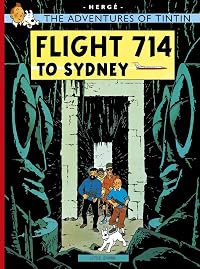
The classic graphic novel. On their way to Sydney, Tintin and Captain Haddock run into an old friend, a pilot who offers them a ride on a private jet. But when the plane gets hijacked, Tintin and the Captain find themselves prisoners on a deserted volcanic island!Tags
Recommendations









Member Recommendations
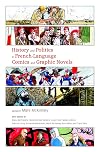
Artymedon Has a brilliant analyses of this album's implicit biases by Professor Hugo Grey of the University of Chichester.
Member Reviews
Tintin and friends are on board a private supersonic jet owned by a weird rich guy when it's hijacked and diverted to an island, where the millionaire is held and questioned about his bank account details. And then for some reason, they're rescued by aliens.
Like the previous Tintin books I've read, this was lent to me by a friend who's a fan of the series. I don't think I'm ever going to be able to match his enthusiasm for it; I suspect it's the sort of thing you have to encounter early in life if you're really going to love it. But the others I've read have been at least mildly amusing, and that's true of this one, too. It's utterly ridiculous. But mildly amusing.
I think my friend chose this one to lend me because of the science show more fictional elements, but, honestly those were just... weird. On the other hand, the scene in which the kidnapper and the millionaire have a drugged-up argument about which of them is the bigger bad guy did actually make me laugh out loud a little. show less
Like the previous Tintin books I've read, this was lent to me by a friend who's a fan of the series. I don't think I'm ever going to be able to match his enthusiasm for it; I suspect it's the sort of thing you have to encounter early in life if you're really going to love it. But the others I've read have been at least mildly amusing, and that's true of this one, too. It's utterly ridiculous. But mildly amusing.
I think my friend chose this one to lend me because of the science show more fictional elements, but, honestly those were just... weird. On the other hand, the scene in which the kidnapper and the millionaire have a drugged-up argument about which of them is the bigger bad guy did actually make me laugh out loud a little. show less
My review, as published at Tintin Books:
For a man who has been criticised (fairly or not) for sexism, padding of stories and racism to (among others) Africans, Jews, Native Americans, Japanese, Russians and Indians, it's amusing to think that his most controversial work amongst fans is probably "Flight 714", the penultimate completed adventure in the series. But, on re-reading, you can count me amongst those who think it was probably one big mistake.
"Flight 714" starts off strongly enough, with the first 12 pages devoted to something Herge had perfected in The Castafiore Emerald - comedies of manners featuring the main characters and others bound to annoy them - but combining it with that genuine sense of unease and discord which show more underlies all of his best works. Laszlo Carreidas is a truly fascinating character, and he brings out various dimensions of Captain Haddock; Snowy gets some business; and Calculus is at his rip-roaring malapropistic best. But from the moment Carreidas' plane is hijacked, we're into prime James Bond territory. The evil villain and his henchmen have co-opted an entire volcanic island for their ridiculously complex plan (any villain with a past like Rastopopolous can surely find a better means to cash than this...), and characters are tied up, tortured and pursued through various jungle locations.
None of the business in the first two-thirds of the album is bad; indeed it all has precedents in the series. But perhaps that's the problem? It's clear that we've come a long way: note the monitor and the proboscis monkey, who each receive two frames in a show of ambience. In early "Tintin" books, these guys would've been the subject of a one-or-two page adventure. Herge has learnt now how to balance the atmosphere with the plot. Yet, when we spend an entire third of the book on a chase sequence, one begins to realise that this in no way matches up to the amazing stretch of classic works that immediately preceded it. With the exception of Carreidas himself, the album lacks the emotional resonance of Tintin in Tibet; has none of the elegant plotting of The Red Sea Sharks; and - in spite of the jungle atmosphere - lacks the bravura artwork that so embodies The Calculus Affair and Explorers on the Moon.
Strangely, the only recent "Tintin" work that the album calls to mind is "The Castafiore Emerald" itself! Herge relished using the claustrophobic, trivial atmosphere of Marlinspike in that album, and it comes across here too. Entire pages focus on the petty trials of Rastopopolous, to the point where he isn't interesting or scary, but just... bumbling. And sequences in which henchmen stutter without teeth, or the villain literally emerges from a bomb blast with his clothes in tatters, are just beneath this era. Comdey is welcomed, and delightful in the early part of the album, but sections where Herge was just painting-by-numbers are brutally evident.
This isn't to deny the enjoyment of Carreidas as a character, or the hilarity of the sticking-plaster callback, but much is limited here. I've never noticed the severe drop in quality of art that Michael Farr mentions, but the frames certainly don't sparkle here.
And then there's the ending... Where to begin? From page 45, things get weird. Tintin and Haddock have been hearing voices that turn out to be telepathic communications from the queer little man, Mit Kanrokitoff. In and of himself, Kanrokitoff calls to mind other members of Herge's pantheon of humorous bores such as Jolyon Wagg: so far acceptable. And the idea that the ancient Sondonesians had met aliens, and their statues and totems are actually monuments to this? Not terribly original, but still captivating. (The image of a statue to a god turning out to be a man with communications equipment is startling).
So far, none of that really contradicts any of the wackier elements of some previous stories. But... the revelation that Kanrokitoff genuinely is an alien, and that he uses his powers - and his flying saucer(!) - to save our characters... is taking things a little too far, don't you think? For a series that has always held some connection to reality, the sudden switch to such fantastic adventures seems unnatural. It doesn't help that the final ten pages expose the formula so much, with literally every major character getting an end-of-page cliffhanger in a seemingly neverending chase. Closing with a four-page news story is also too wordy, and only serves to rehash what happened on the previous eight pages. (The closing revelation that Snowy actually remembers everything is a good one, but can't make up for what has passed.)
I'm far from certain about my feelings on "Flight 714". As an idea, it's quite intriguing. But with the exception of the opening act, the story never comes together as anything more than one giant chase. The villian is unappealing; the stakes feel too consistently high; and the alien nonsense is from another series altogether. (Again, there are many series where this could be done WONDERFULLY. It's just not in "Tintin"'s wheelhouse.) A shame, and a true letdown. show less
For a man who has been criticised (fairly or not) for sexism, padding of stories and racism to (among others) Africans, Jews, Native Americans, Japanese, Russians and Indians, it's amusing to think that his most controversial work amongst fans is probably "Flight 714", the penultimate completed adventure in the series. But, on re-reading, you can count me amongst those who think it was probably one big mistake.
"Flight 714" starts off strongly enough, with the first 12 pages devoted to something Herge had perfected in The Castafiore Emerald - comedies of manners featuring the main characters and others bound to annoy them - but combining it with that genuine sense of unease and discord which show more underlies all of his best works. Laszlo Carreidas is a truly fascinating character, and he brings out various dimensions of Captain Haddock; Snowy gets some business; and Calculus is at his rip-roaring malapropistic best. But from the moment Carreidas' plane is hijacked, we're into prime James Bond territory. The evil villain and his henchmen have co-opted an entire volcanic island for their ridiculously complex plan (any villain with a past like Rastopopolous can surely find a better means to cash than this...), and characters are tied up, tortured and pursued through various jungle locations.
None of the business in the first two-thirds of the album is bad; indeed it all has precedents in the series. But perhaps that's the problem? It's clear that we've come a long way: note the monitor and the proboscis monkey, who each receive two frames in a show of ambience. In early "Tintin" books, these guys would've been the subject of a one-or-two page adventure. Herge has learnt now how to balance the atmosphere with the plot. Yet, when we spend an entire third of the book on a chase sequence, one begins to realise that this in no way matches up to the amazing stretch of classic works that immediately preceded it. With the exception of Carreidas himself, the album lacks the emotional resonance of Tintin in Tibet; has none of the elegant plotting of The Red Sea Sharks; and - in spite of the jungle atmosphere - lacks the bravura artwork that so embodies The Calculus Affair and Explorers on the Moon.
Strangely, the only recent "Tintin" work that the album calls to mind is "The Castafiore Emerald" itself! Herge relished using the claustrophobic, trivial atmosphere of Marlinspike in that album, and it comes across here too. Entire pages focus on the petty trials of Rastopopolous, to the point where he isn't interesting or scary, but just... bumbling. And sequences in which henchmen stutter without teeth, or the villain literally emerges from a bomb blast with his clothes in tatters, are just beneath this era. Comdey is welcomed, and delightful in the early part of the album, but sections where Herge was just painting-by-numbers are brutally evident.
This isn't to deny the enjoyment of Carreidas as a character, or the hilarity of the sticking-plaster callback, but much is limited here. I've never noticed the severe drop in quality of art that Michael Farr mentions, but the frames certainly don't sparkle here.
And then there's the ending... Where to begin? From page 45, things get weird. Tintin and Haddock have been hearing voices that turn out to be telepathic communications from the queer little man, Mit Kanrokitoff. In and of himself, Kanrokitoff calls to mind other members of Herge's pantheon of humorous bores such as Jolyon Wagg: so far acceptable. And the idea that the ancient Sondonesians had met aliens, and their statues and totems are actually monuments to this? Not terribly original, but still captivating. (The image of a statue to a god turning out to be a man with communications equipment is startling).
So far, none of that really contradicts any of the wackier elements of some previous stories. But... the revelation that Kanrokitoff genuinely is an alien, and that he uses his powers - and his flying saucer(!) - to save our characters... is taking things a little too far, don't you think? For a series that has always held some connection to reality, the sudden switch to such fantastic adventures seems unnatural. It doesn't help that the final ten pages expose the formula so much, with literally every major character getting an end-of-page cliffhanger in a seemingly neverending chase. Closing with a four-page news story is also too wordy, and only serves to rehash what happened on the previous eight pages. (The closing revelation that Snowy actually remembers everything is a good one, but can't make up for what has passed.)
I'm far from certain about my feelings on "Flight 714". As an idea, it's quite intriguing. But with the exception of the opening act, the story never comes together as anything more than one giant chase. The villian is unappealing; the stakes feel too consistently high; and the alien nonsense is from another series altogether. (Again, there are many series where this could be done WONDERFULLY. It's just not in "Tintin"'s wheelhouse.) A shame, and a true letdown. show less
After experimenting with a plotless story in The Castafiore Emerald, Hergé seems to have decided that was a bad idea. Well, half a bad idea anyway, as Flight 714 more or less has half a story and then takes a massive left turn when it meets a deus ex machina that appears out of left field. This is easily the most outlandish of Tintin's adventures, and the one that fits most firmly into the science fiction genre. As typical for Tintin stories late in the series, it is also full of inside references and recycled characters, although it does bring the character arc of a handful of long-running characters to a fairly definitive ending.
The book opens with Tintin, Haddock, and Calculus changing planes in Djakarta on their way to Sydney, show more Australia for the International Astronautical Congress where they are to be honored for being the first men on the moon. Oddly omitted are Thompson and Thomson, who also made the journey to the moon despite the fact that their trip was accidental. Due to the structure of the story, their absence at the opening means that they play no role in this book. Although the bumbling detectives are missing from Flight 714, the Estonian pilot Skut, last seen in The Red Sea Sharks, shows up now employed by the eccentric millionaire Lazlo Carreidas, who also happens to be on his way to the International Astronautical Congress. Carreidas is "the millionaire who never laughs", and is so gloomy and unassuming that Haddock initially mistakes him for a vagrant down on his luck, which sets up a sequence in which Calculus accomplishes the impossible by making Carreidas laugh. Carreidas finds Calculus' hearing impaired cluelessness hilarious, and immediately offers to take our heroes to Sydney in his private plane. In a strange twist, this means that no one actually flies on Flight 714, as this is the plane that Tintin, Haddock, and Calculus were going to catch in Djakarta, but forewent in order to hitch a ride with Carreidas.
This turns out to be a fortuitous turn of evens for the millionaire, because Carreidas' private secretary Spalding, along with most of the plane crew, has become embroiled in a plot to try to steal the millionaire's fortune. The plot doesn't materialize until after Carreidas proves himself to be a petty crook by cheating at a game of Battleships against Captain Haddock. However, he also proves himself to be an aviation pioneer as his aircraft is a shifting wing design that allows the plane to function better at supersonic speeds. This technological tidbit is a reminder of how long-running the Tintin series was: the series started with pre-World War II propeller driven fighter planes and now features supersonic passenger planes. After some in-air action, including an attempted rescue by Tintin that Carreidas manages to mess up, everyone reaches the secret island the hijackers have prepared for them and we learn the identity of the mastermind behind the plot: the recurring villain Rastapopoulos and his sidekick Captain Allan both last seen in The Red Sea Sharks, adding to the list of characters recycled from that book alongside Skut. Clad in a bright pink shirt, cowboy hat and cowboy boots, Rastapopoulos strikes a fairly silly looking figure now, a development that starts to make sense once one realizes that without characters like Thompson and Thomson or Bianca Castafiore, the evil mastermind and his sidekick Allan serve double duty in the book as both the villains and the comic relief, which Rastapopoulos starts off by messing up an attempt to stamp on a spider. This character element gives the adventure portion of the book something of a slapstick feel, and reduces Rastapopoulos and Allen from being serious threats to being nothing more than cheap cartoon villains.
The book then lurches back and forth between action sequences as Tintin, Haddock and Skut try to figure out a way to escape from the clutches of Rastapopoulos and rescue Carreidas and silly comic interludes as Rastapopoulos and Allen prove to be remarkably incompetent at being criminals: Rastapopoulos gets stuck with Doctor Krollspell's truth serum he is attempting to use to get Carreidas to reveal his Swiss bank account number and reveals that he is planning on double crossing almost all of those who are in his own employ. But this is not before Carreidas, under the influence of the truth serum, reveals every moral failing on his part, large and small, to comic effect. In a classic Bond-villain form, Rastapopoulos is planning on killing off Doctor Krollspell and the Sondonesian rebels he had recruited to aid him by destroying their ships with mines so he doesn't have to pay them off. One has to wonder who Rastapopoulos is planning on having mine the Sondonesian ships, since the Sondonesians appear to be the bulk of the manpower he would have available to mine the ships, and it seems implausible that they would mine their own ships for him. The only other alternative would be for Allan or the conspirators from Carreidas' flight crew to do the job, and a shady merchant captain, a pilot, a navigator, and a private secretary don't seem very likely to have the appropriate skill set in their repertoire.
These details aside, the book meanders back and forth with Tintin and Haddock evading Allen and the Sondonesians while rescuing Calculus, Skut, and Carredias. As has become de rigeur for the series, there is a joke involving sticking plaster and Captain Haddock, but the sticking plaster humor expands to also include Carreidas, Rastapopoulos, and Krollspell. Interspersed with the dramatic gun play and fisticuffs is a running gag involving heaping inadvertent abuse upon Rastapopoulos as he is hit on the head by a broken rifle butt, runs headlong into a tree, has most of his facial hair pulled off with sticking plaster, gets blasted by a stray grenade, hit in the face with an elbow, and knocked on the head by a falling chunk of stalactite. Through his travails, Rastapopolous' appearance becomes more and more haggard as the abuse takes its toll. But this highlights one of the problems with making your primary villain into your comic relief: it transforms them from a menacing figure into a subject of mockery and pity. This point becomes very clear late in the book when Allen, having been dispatched to obtain dynamite to blow up an obstacles, returns to Rastapopoulos having had all his teeth knocked out and his skipper cap knocked off (revealing a bald spot on his head), morphs from a cruel villain into a pathetic toothless old man. One might suggest that this sort of treatment is poetic justice for characters that have been a thorn in Tintin's side for several books, but at a certain point poetic justice becomes overkill, and the reader begins to have sympathy for the villains. And although Rastapopoulos and Allen are greedy unrepentant criminals, Hergé manages to cross that line, making the two of them, and especially Allen, seem sympathetic rather than loathsome.
After seeming to have written himself into a corner with his plot, Hergé has the book take a giant and unexpected left turn into science fiction when Tintin begins hearing a voice in his head that guides him and the rest of our heroes to safety. After winding through several underground caverns worked filled with strange looking stone statues, the characters meet up with Mik Kanrokitoff, who we are told is from Space Week magazine, and who informs the travelers that he has been guiding them with telepathy. And, it turns out, that he is on the island for his twice yearly meeting with extra-terrestrials. This rescue comes entirely out of the blue, with no groundwork laid in this book or any earlier Tintin books for the character of Kanrokitoff or alien activity on Earth. The Tintin series is full of plots driven by coincidence and serendipity, but the development that leads to the last portion of Flight 714 is nothing more than a deus ex machina in which the aliens literally come down from the sky, rescue the heroes from impending doom, sweep up the villains, and transport the protagonists to safety, and carry the evildoers away to parts unknown. This set of plot twists turns Tintin, Captain Haddock and the rest of the central characters into passive bystanders. Instead of acting to save themselves and foil the villians, the heroes and their foes are literally reduced to hypnotized zombies carried along by events to the resolution of the story. As a result, while this installment of the series does give closure to the story of Rastapopoulos and Allan, it is an unsatisfying end, because Tintin really didn't have anything to do with bringing it about.
Overall, Flight 714 is a strange and ultimately frustrating book. It starts off with a complex villainous plot involving two recurring villains, escape attempts, and action, and then it devolves into everyone standing around while godlike aliens fix all the resulting problems. With villains reduced to buffoons as a result of doing double duty as comic relief and a plot that resolves without any real effort on the part of the heroes, the book seems like Hergé was more or less out of story ideas and was more or less just mailing in his efforts. Although the book does have some interesting visuals, and half of a good story, this is simply not enough to raise it to the standards one would expect out of the Tintin series. In many ways, the book is so disappointing that even a late appearance by the annoying insurance salesman Jolyon Wagg passes by almost unnoticed. Possibly the most disappointing element of the book is that at the end, Hergé effectively pushes the reset button by having everyone forget most of the events that transpire in the book, leaving only a strange piece of metal in Calculus' possession and Snowy's intact memory as evidence of the kidnapping or the subsequent strange happenings on the island. With no real foundation for the plot twist, and a complete lack of follow up in subsequent adventures, Flight 714 is a moderately fun story with an ending that is likely to leave most readers feeling unsatisfied.
This review has also been posted to my blog Dreaming About Other Worlds. show less
The book opens with Tintin, Haddock, and Calculus changing planes in Djakarta on their way to Sydney, show more Australia for the International Astronautical Congress where they are to be honored for being the first men on the moon. Oddly omitted are Thompson and Thomson, who also made the journey to the moon despite the fact that their trip was accidental. Due to the structure of the story, their absence at the opening means that they play no role in this book. Although the bumbling detectives are missing from Flight 714, the Estonian pilot Skut, last seen in The Red Sea Sharks, shows up now employed by the eccentric millionaire Lazlo Carreidas, who also happens to be on his way to the International Astronautical Congress. Carreidas is "the millionaire who never laughs", and is so gloomy and unassuming that Haddock initially mistakes him for a vagrant down on his luck, which sets up a sequence in which Calculus accomplishes the impossible by making Carreidas laugh. Carreidas finds Calculus' hearing impaired cluelessness hilarious, and immediately offers to take our heroes to Sydney in his private plane. In a strange twist, this means that no one actually flies on Flight 714, as this is the plane that Tintin, Haddock, and Calculus were going to catch in Djakarta, but forewent in order to hitch a ride with Carreidas.
This turns out to be a fortuitous turn of evens for the millionaire, because Carreidas' private secretary Spalding, along with most of the plane crew, has become embroiled in a plot to try to steal the millionaire's fortune. The plot doesn't materialize until after Carreidas proves himself to be a petty crook by cheating at a game of Battleships against Captain Haddock. However, he also proves himself to be an aviation pioneer as his aircraft is a shifting wing design that allows the plane to function better at supersonic speeds. This technological tidbit is a reminder of how long-running the Tintin series was: the series started with pre-World War II propeller driven fighter planes and now features supersonic passenger planes. After some in-air action, including an attempted rescue by Tintin that Carreidas manages to mess up, everyone reaches the secret island the hijackers have prepared for them and we learn the identity of the mastermind behind the plot: the recurring villain Rastapopoulos and his sidekick Captain Allan both last seen in The Red Sea Sharks, adding to the list of characters recycled from that book alongside Skut. Clad in a bright pink shirt, cowboy hat and cowboy boots, Rastapopoulos strikes a fairly silly looking figure now, a development that starts to make sense once one realizes that without characters like Thompson and Thomson or Bianca Castafiore, the evil mastermind and his sidekick Allan serve double duty in the book as both the villains and the comic relief, which Rastapopoulos starts off by messing up an attempt to stamp on a spider. This character element gives the adventure portion of the book something of a slapstick feel, and reduces Rastapopoulos and Allen from being serious threats to being nothing more than cheap cartoon villains.
The book then lurches back and forth between action sequences as Tintin, Haddock and Skut try to figure out a way to escape from the clutches of Rastapopoulos and rescue Carreidas and silly comic interludes as Rastapopoulos and Allen prove to be remarkably incompetent at being criminals: Rastapopoulos gets stuck with Doctor Krollspell's truth serum he is attempting to use to get Carreidas to reveal his Swiss bank account number and reveals that he is planning on double crossing almost all of those who are in his own employ. But this is not before Carreidas, under the influence of the truth serum, reveals every moral failing on his part, large and small, to comic effect. In a classic Bond-villain form, Rastapopoulos is planning on killing off Doctor Krollspell and the Sondonesian rebels he had recruited to aid him by destroying their ships with mines so he doesn't have to pay them off. One has to wonder who Rastapopoulos is planning on having mine the Sondonesian ships, since the Sondonesians appear to be the bulk of the manpower he would have available to mine the ships, and it seems implausible that they would mine their own ships for him. The only other alternative would be for Allan or the conspirators from Carreidas' flight crew to do the job, and a shady merchant captain, a pilot, a navigator, and a private secretary don't seem very likely to have the appropriate skill set in their repertoire.
These details aside, the book meanders back and forth with Tintin and Haddock evading Allen and the Sondonesians while rescuing Calculus, Skut, and Carredias. As has become de rigeur for the series, there is a joke involving sticking plaster and Captain Haddock, but the sticking plaster humor expands to also include Carreidas, Rastapopoulos, and Krollspell. Interspersed with the dramatic gun play and fisticuffs is a running gag involving heaping inadvertent abuse upon Rastapopoulos as he is hit on the head by a broken rifle butt, runs headlong into a tree, has most of his facial hair pulled off with sticking plaster, gets blasted by a stray grenade, hit in the face with an elbow, and knocked on the head by a falling chunk of stalactite. Through his travails, Rastapopolous' appearance becomes more and more haggard as the abuse takes its toll. But this highlights one of the problems with making your primary villain into your comic relief: it transforms them from a menacing figure into a subject of mockery and pity. This point becomes very clear late in the book when Allen, having been dispatched to obtain dynamite to blow up an obstacles, returns to Rastapopoulos having had all his teeth knocked out and his skipper cap knocked off (revealing a bald spot on his head), morphs from a cruel villain into a pathetic toothless old man. One might suggest that this sort of treatment is poetic justice for characters that have been a thorn in Tintin's side for several books, but at a certain point poetic justice becomes overkill, and the reader begins to have sympathy for the villains. And although Rastapopoulos and Allen are greedy unrepentant criminals, Hergé manages to cross that line, making the two of them, and especially Allen, seem sympathetic rather than loathsome.
After seeming to have written himself into a corner with his plot, Hergé has the book take a giant and unexpected left turn into science fiction when Tintin begins hearing a voice in his head that guides him and the rest of our heroes to safety. After winding through several underground caverns worked filled with strange looking stone statues, the characters meet up with Mik Kanrokitoff, who we are told is from Space Week magazine, and who informs the travelers that he has been guiding them with telepathy. And, it turns out, that he is on the island for his twice yearly meeting with extra-terrestrials. This rescue comes entirely out of the blue, with no groundwork laid in this book or any earlier Tintin books for the character of Kanrokitoff or alien activity on Earth. The Tintin series is full of plots driven by coincidence and serendipity, but the development that leads to the last portion of Flight 714 is nothing more than a deus ex machina in which the aliens literally come down from the sky, rescue the heroes from impending doom, sweep up the villains, and transport the protagonists to safety, and carry the evildoers away to parts unknown. This set of plot twists turns Tintin, Captain Haddock and the rest of the central characters into passive bystanders. Instead of acting to save themselves and foil the villians, the heroes and their foes are literally reduced to hypnotized zombies carried along by events to the resolution of the story. As a result, while this installment of the series does give closure to the story of Rastapopoulos and Allan, it is an unsatisfying end, because Tintin really didn't have anything to do with bringing it about.
Overall, Flight 714 is a strange and ultimately frustrating book. It starts off with a complex villainous plot involving two recurring villains, escape attempts, and action, and then it devolves into everyone standing around while godlike aliens fix all the resulting problems. With villains reduced to buffoons as a result of doing double duty as comic relief and a plot that resolves without any real effort on the part of the heroes, the book seems like Hergé was more or less out of story ideas and was more or less just mailing in his efforts. Although the book does have some interesting visuals, and half of a good story, this is simply not enough to raise it to the standards one would expect out of the Tintin series. In many ways, the book is so disappointing that even a late appearance by the annoying insurance salesman Jolyon Wagg passes by almost unnoticed. Possibly the most disappointing element of the book is that at the end, Hergé effectively pushes the reset button by having everyone forget most of the events that transpire in the book, leaving only a strange piece of metal in Calculus' possession and Snowy's intact memory as evidence of the kidnapping or the subsequent strange happenings on the island. With no real foundation for the plot twist, and a complete lack of follow up in subsequent adventures, Flight 714 is a moderately fun story with an ending that is likely to leave most readers feeling unsatisfied.
This review has also been posted to my blog Dreaming About Other Worlds. show less
The unfortunate and recent disappearance of a Malaysian jetliner gave rise to many speculations over the reasons, rational and irrational, for this event. This led many pundits to read this Tintin adventure in which a private jet disappears suddenly between Macassar and Darwin. Terrorists and air pirates, abduction by aliens, including a glimpse over how the 1% travel the world. Herge in 1968 had perceived the times to come with a lot of insight by putting his heroes on a Qantas flight to Sidney via Djakarta.
Haddock's fatal compassion act for a little man in the Airport who looked like a Airport hobo starts things going very wrong. He turns out to be the airplane manufacturer Laszlo Carreidas, a billionaire and invites Haddock, Tintin show more and Tournesol to reach their final destination, Sydney Australia, aboard his private jet.
Fans of "Tintinology" are not deceived. The villain Captain Allen reappears as well as Tournesol's pendulum and a bottle of Loch Lomond. Rastapopoulos gets the new look of a Texan businessman with a trendy black monocle and a pink shirt. A final TV interview reassures the reader. It all could have happened due to flying saucers.
This being said, we knew that Herge had many explicit and implicit bias. Some that were shared by a majority of Belgians and other Europeans at the early stages of Tintin's journalistic career. His biographies made ample references to the historical context in which these biases were developed: colonialism, anti-Semitism, raw anti-communism. He remained faithful to his friendships in conservative religious and extreme-right circles. However, a brilliant analyses of Flight 714 for Sidney and its hidden anti-Semitic and far right references has been made by Professor Hugo Frey from the University of Chichester in the book History and Politics in French Language Comics, edited by Mark McKinney in 2008. I therefore reference it for further research. show less
Haddock's fatal compassion act for a little man in the Airport who looked like a Airport hobo starts things going very wrong. He turns out to be the airplane manufacturer Laszlo Carreidas, a billionaire and invites Haddock, Tintin show more and Tournesol to reach their final destination, Sydney Australia, aboard his private jet.
Fans of "Tintinology" are not deceived. The villain Captain Allen reappears as well as Tournesol's pendulum and a bottle of Loch Lomond. Rastapopoulos gets the new look of a Texan businessman with a trendy black monocle and a pink shirt. A final TV interview reassures the reader. It all could have happened due to flying saucers.
This being said, we knew that Herge had many explicit and implicit bias. Some that were shared by a majority of Belgians and other Europeans at the early stages of Tintin's journalistic career. His biographies made ample references to the historical context in which these biases were developed: colonialism, anti-Semitism, raw anti-communism. He remained faithful to his friendships in conservative religious and extreme-right circles. However, a brilliant analyses of Flight 714 for Sidney and its hidden anti-Semitic and far right references has been made by Professor Hugo Frey from the University of Chichester in the book History and Politics in French Language Comics, edited by Mark McKinney in 2008. I therefore reference it for further research. show less
This one was a little more offbeat (less believable...?) of a story than the other Tin Tin's I have read. I was reading it aloud to my son and we turned to look quizzically at each other at a certain point towards the conclusion. I have to say that it's more creative genius than oddball despite the venture into sci-fi in a otherwise very rooted style of storytelling. Tin Tin is just great but it's Professor Calculus and Snowy who are my favorites:)
All Titin is excellent. Flight 714 had false notes (a literal deus ex machina), but is still excellent.
Members
- Recently Added By
Lists

Favorite Childhood Books
1,651 works; 519 members

Books Read in 2014
2,344 works; 89 members

Best Sellers / Popular 1968
237 works; 5 members
Author Information

'Hergé' was born Georges Remi on 22 May, 1907 in Etterbeek, a suburb of Brussels, in Belgium. After leaving school, he worked for the daily newspaper, Le XXe Siècle (The 20th Century). He was responsibe the for the section of the newspaper designed for children. Tintin, the main character in his works, was introduced on January 10, 1929 in a show more story entitled 'Tintin in the Land of the Soviets.' Each story ran as a comic strip in the newspaper and then was published as a book. Some of these books were adapted for the small screen including The Crab With The Golden Claws, Star of Mystery, Red Rakham's Treasure, Black Island, Objective Moon and The Calculus Affair. French TV produced longer versions of twenty of the books in 1992, which have been broadcast in over fifty countries. On 3 March, 1983, he died in Brussels. At the time of his death, he was working on Tintin and the Alpha-Art, which was published in an unfinished form. (Bowker Author Biography) show less
Some Editions
Awards and Honors
Notable Lists
Series

Work Relationships
Is contained in
Common Knowledge
- Canonical title
- Flight 714 to Sydney
- Original title
- Vol 714 pour Sydney
- Alternate titles*
- Tintin : Vol 714 pour Sidney
- Original publication date
- 1967
- People/Characters
- Tintin; Snowy; Captain Haddock; Professor Calculus; Laszlo Carreidas; Piotr Skut (show all 18); Doctor Krollspell; Captain Allan Thompson; Roberto Rastapopoulos; Mik Kanrokitoff; Captain Barnacle; Paolo Colombani; Mr. Spalding; Gino the Neapolitan Air Steward; Hans Boehm; Dick; Colin Chattamore; Jolyon Wagg
- Important places
- Jakarta, Indonesia; Pulau-Pulau Bompa, Celebes Sea; Kemajoran Airport, Jakarta; Sydney, New South Wales, Australia; Mataram; Lombok, Indonesia (show all 11); Sumbawa; Flores; Timor; Macassar; Erzerum
- First words
- Djakarta, dans l'île de Java.
A Qantas Boeing 707 touches down at Kemajoran airport, Djakarta. - Last words*
- (Click to show. Warning: May contain spoilers.)Dernier appel: les passagers du Vol Qantas n° 714, à destination de Sydney, sont priés de se rendre d'urgence à l'exit n° 3.
- Original language*
- Français (Belgique) (Belgique)
*Some information comes from Common Knowledge in other languages. Click "Edit" for more information.
Classifications
- Genre
- Graphic Novels & Comics
- DDC/MDS
- 741.59493 — Arts & recreation Drawing & decorative arts Drawing Comic books, graphic novels, fotonovelas, cartoons, caricatures, comic strips History, geographic treatment, biography European Other European Belgium & Luxembourg
- LCC
- PN6790 .B43 .R4613 — Language and Literature Literature (General) Literature (General) Collections of general literature Comic books, strips, etc.
- BISAC
Statistics
- Members
- 1,954
- Popularity
- 10,896
- Reviews
- 15
- Rating
- (3.85)
- Languages
- 27 — Arabic, Basque, Bengali, Catalan, Czech, Danish, Dutch, English, Finnish, French, German, Hindi, Icelandic, Indonesian, Italian, Japanese, Korean, Norwegian (Bokmål), Norwegian, Polish, Portuguese, Serbian, Spanish, Swedish, Turkish, Welsh, Chinese, simplified
- Media
- Paper, Ebook
- ISBNs
- 81
- ASINs
- 10