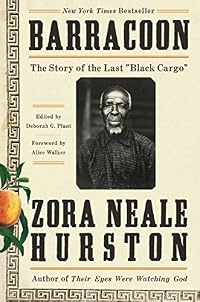
Barracoon: The Story of the Last "Black Cargo"
by Zora Neale Hurston, Cudjo Lewis (Interviewee)
On This Page
Description
In 1927, Zora Neale Hurston went to Plateau, Alabama, just outside Mobile, to interview eighty-six-year-old Cudjo Lewis. Of the millions of men, women, and children transported from Africa to America as slaves, Cudjo was then the only person alive to tell the story of this integral part of the nation's history. Hurston was there to record Cudjo's firsthand account of the raid that led to his capture and bondage fifty years after the Atlantic slave trade was outlawed in the United States. In show more 1931, Hurston returned to Plateau, the African-centric community three miles from Mobile founded by Cudjo and other former slaves from his ship. Spending more than three months there, she talked in depth with Cudjo about the details of his life. During those weeks, the young writer and the elderly formerly enslaved man ate peaches and watermelon that grew in the backyard and talked about Cudjo's past--memories from his childhood in Africa, the horrors of being captured and held in a barracoon for selection by American slavers, the harrowing experience of the Middle Passage packed with more than 100 other souls aboard the Clotilda, and the years he spent in slavery until the end of the Civil War. Based on those interviews, featuring Cudjo's unique vernacular, and written from Hurston's perspective with the compassion and singular style that have made her one of the preeminent American authors of the twentieth-century, Barracoon masterfully illustrates the tragedy of slavery and of one life forever defined by it. Offering insight into the pernicious legacy that continues to haunt us all, black and white, this poignant and powerful work is an invaluable contribution to our shared history and culture.--Publisher's website. show lessTags
Recommendations



Member Reviews
Back in 1927 and 1928, anthropologist Zora Neale Hurston interviewed a man called Cudjo Lewis in Africatown, Alabama. The elderly Lewis, whose birth name was Kossola, had been captured in 1860 in his native Africa, in what is now Benin, and transported aboard the very last slave ship to Louisiana. In 1927, he held the tragic distinction of being the last known survivor of those "cargo" who had been aboard. Hurston visited Lewis and, over the course of several months, recorded his fascinating but heartbreaking history, but she was unable to find a publisher willing to include either Lewis' speech as transcribed or descriptions of Africans' own involvement in the slave trade, and the book's release was aborted — until 2018.
It feels show more awkward to express affection for a book whose roots lie in dehumanizing hardship and misery, but I truly treasure this book and what it contributes to history. Lewis had an amazing memory, and the reader will be astounded at the level of detail he was able to recall, well into his late eighties, about his early life and his native culture. Hurston's patience and kindness shine during times when Lewis didn't feel like opening up because he had to mend a fence or work in the garden, as well as on the days when the heaviness of his losses overwhelm him to the extent that he was unable to speak at all. The scenes in which they just sit around eating peaches are so heartwarmingly wholesome. This is a quick, insightful read, and once you recognize the patterns, Lewis' speech is not difficult at all to understand, so it's unfortunate that was a reason given for it not having been published nearly 100 years ago. Highly recommended. show less
It feels show more awkward to express affection for a book whose roots lie in dehumanizing hardship and misery, but I truly treasure this book and what it contributes to history. Lewis had an amazing memory, and the reader will be astounded at the level of detail he was able to recall, well into his late eighties, about his early life and his native culture. Hurston's patience and kindness shine during times when Lewis didn't feel like opening up because he had to mend a fence or work in the garden, as well as on the days when the heaviness of his losses overwhelm him to the extent that he was unable to speak at all. The scenes in which they just sit around eating peaches are so heartwarmingly wholesome. This is a quick, insightful read, and once you recognize the patterns, Lewis' speech is not difficult at all to understand, so it's unfortunate that was a reason given for it not having been published nearly 100 years ago. Highly recommended. show less
Barracoon is about a man named Cudjoe Lewis (nee Oluale Kossola), who at the time was the last known survivor of the Clotilda. This was a ship that was involved in bringing slaves from Africa to America at a time when slavery was still legal within the U.S. but transporting slaves from other countries was made illegal. After years of being a slave, Cudjoe lives through the Civil War and is freed. But his life is not all uphill there by a long shot. He and his family go through many sufferings, including the early deaths of his children. Some of his stories sadly still resonant today, such as the shooting of his youngest son by a police officer and the feeling of hopelessness he expresses of ever being able to see justice done. show more Nevertheless, Cudjoe is often times optimistic about his life.
This book originated from an article that Zora Neale Hurston wrote as an anthropologist; it is NOT a novel like her more famous Their Eyes Were Watching God. Despite Hurston interviewing the main subject in the late 1920s to early 1930s, this book was not published until 2018. One reason it was not published during Hurston's lifetime is that it is written in vernacular language; I could see this maybe being a bit of a hurdle reading in print but the audiobook narrator was so excellent that it wasn't a problem.
For the audiobook listener, this is a relatively quick read clocking in at about 4 hours long in total, and about 45 minutes to an hour at the top was an academic introduction. There were a couple of informative tidbits from that section, but it meandered for a bit too long about the origins of this work ... apparently there was a bit of controversy about Hurston not properly quoting some source material in the first article she wrote about Cudjoe. Robin Miles, the audiobook narrator, was wonderful all around. I felt like I was sitting down having a conversation with Cudjoe for the main part of the book; during the introduction, I felt like I was sitting in a college classroom listening to a really good lecturer.
All in all, this was a fascinating read. Cudjoe's ways of thinking are so open and honest; Hurston lets his voice come through on the page with little interference from herself except as a narrator coming to collect his stories. It's heart-breaking at times and occasionally humorous at other times. It may be far too many years late, but it's good his story is finally being told to a broader audience. show less
This book originated from an article that Zora Neale Hurston wrote as an anthropologist; it is NOT a novel like her more famous Their Eyes Were Watching God. Despite Hurston interviewing the main subject in the late 1920s to early 1930s, this book was not published until 2018. One reason it was not published during Hurston's lifetime is that it is written in vernacular language; I could see this maybe being a bit of a hurdle reading in print but the audiobook narrator was so excellent that it wasn't a problem.
For the audiobook listener, this is a relatively quick read clocking in at about 4 hours long in total, and about 45 minutes to an hour at the top was an academic introduction. There were a couple of informative tidbits from that section, but it meandered for a bit too long about the origins of this work ... apparently there was a bit of controversy about Hurston not properly quoting some source material in the first article she wrote about Cudjoe. Robin Miles, the audiobook narrator, was wonderful all around. I felt like I was sitting down having a conversation with Cudjoe for the main part of the book; during the introduction, I felt like I was sitting in a college classroom listening to a really good lecturer.
All in all, this was a fascinating read. Cudjoe's ways of thinking are so open and honest; Hurston lets his voice come through on the page with little interference from herself except as a narrator coming to collect his stories. It's heart-breaking at times and occasionally humorous at other times. It may be far too many years late, but it's good his story is finally being told to a broader audience. show less
https://fromtheheartofeurope.eu/barracoon-the-story-of-the-last-black-cargo-by-z...
it was written in 1927 and 1928 by the great Zora Neale Hurston, but published only in 2018, ninety years after it was written and more than half a century after she died. It’s an account of her interviews with Cudjoe Lewis, born Oluale Kossola, who was one of the last Africans to be captured, enslaved, and sold into the American South. About a third of the book describes his childhood and life in Africa. As a teenager, he was captured by the ruler of a neighbouring territory in 1860, and sold to an American slaver who brought him along with more than a hundred others to Mobile, Alabama. Importing slaves had supposedly been illegal since 1808, but one show more could politely describe the enforcement of the ban as rather patchy.
Kossola / Lewis’s slavery lasted only five years, as the South lost the Civil War and all slaves were freed. He and some of the other ex-slaves tried to raise enough money to return to Africa, but the odds were stacked against them, and in the end they formed a new community south of Mobile called Africatown (or Plateau). He married and had six children, all of whom he outlived. (He would have been in his late 80s when Hurston interviewed him.) One of his sons was shot dead by a sheriff’s deputy; nothing new there. He himself was severely injured in a railway accident in 1902; he sued the train company and won compensation, but the award was overturned on appeal.
There are questions about how much of the text is Hurston’s and how much by local Mobile writer Emma Langdon Roche, but there are no questions about the effective immediacy of the first-person account of slavery and its aftermath. Apparently one of the reasons that the book was not published in Hurston’s lifetime is that she reports Kossola/Lewis’s words in his own dialect; for me that adds to the impact. I was startled to discover that 40 seconds of footage of him survives at the start of a short film compiling Hurston’s fieldwork.
A really interesting and moving book. show less
it was written in 1927 and 1928 by the great Zora Neale Hurston, but published only in 2018, ninety years after it was written and more than half a century after she died. It’s an account of her interviews with Cudjoe Lewis, born Oluale Kossola, who was one of the last Africans to be captured, enslaved, and sold into the American South. About a third of the book describes his childhood and life in Africa. As a teenager, he was captured by the ruler of a neighbouring territory in 1860, and sold to an American slaver who brought him along with more than a hundred others to Mobile, Alabama. Importing slaves had supposedly been illegal since 1808, but one show more could politely describe the enforcement of the ban as rather patchy.
Kossola / Lewis’s slavery lasted only five years, as the South lost the Civil War and all slaves were freed. He and some of the other ex-slaves tried to raise enough money to return to Africa, but the odds were stacked against them, and in the end they formed a new community south of Mobile called Africatown (or Plateau). He married and had six children, all of whom he outlived. (He would have been in his late 80s when Hurston interviewed him.) One of his sons was shot dead by a sheriff’s deputy; nothing new there. He himself was severely injured in a railway accident in 1902; he sued the train company and won compensation, but the award was overturned on appeal.
There are questions about how much of the text is Hurston’s and how much by local Mobile writer Emma Langdon Roche, but there are no questions about the effective immediacy of the first-person account of slavery and its aftermath. Apparently one of the reasons that the book was not published in Hurston’s lifetime is that she reports Kossola/Lewis’s words in his own dialect; for me that adds to the impact. I was startled to discover that 40 seconds of footage of him survives at the start of a short film compiling Hurston’s fieldwork.
A really interesting and moving book. show less
55. Barracoon : The Story of the Last "Black Cargo" (audio) by Zora Neale Hurston
rediscovered and edited by Deborah G. Plant
reader: Robin Miles
published: 2018, but originally written in 1931
format: 3:53 Libby audiobook (~107 pages equivalent, stretched to 208 pages in paperback)
acquired: Library
listened: Oct 8-12
rating: 4½
The story of the last living African born American slave, told in his own voice. Hurston interviewed Cudjo Lewis in 1927, and she includes herself in the book, but she gives him control of the narrative, and he takes it in some unexpected places, and colors it in his own variety of southern black English. His language, beautifully captured by Robin Miles on the audio, hangs around after the book.
Lewis, born Kossola show more (pronounced here, roughly, KUH-zoolah), insists on talking first about his ancestry in Africa. And spends the heart of narrative on his home continent, including the story of his capture in a gruesome village massacre. But he also goes into his time in the barracoon in Ouidah (modern Benin), his purchase, 70-day passage across the Atlantic to Mobile, Alabama, his life as a slave, and then a free man who married, had several children, and lost several in tragic, and sometimes mysterious ways in Alabama. He was 19 when he made the passage to America in 1859, and so 87 years old when Hurston interviewed him.
It's not clear to me whether she continued to interview him, but she wrote up this book in 1931 and then when tried to get it published, there were no takers. Publishers were uncomfortable with the extended dialect, and especially with his Africa. In the mythology of the time, Africa should have been something of positive, something to long for. But, despite his painfully missing his home, the Africa he writes about is brutal, marred with terrible violence. Deborah G. Plant recently (?) discovered the manuscript and it was first published earlier this year.
“We cry ’cause we slave. In night time we cry, we say we born and raised to be free people and now we slave. We doan know why we be bring ’way from our country to work lak dis. It strange to us. Everybody lookee at us strange. We want to talk wid de udder colored folkses but dey doan know whut we say. Some makee de fun at us.”
2018
https://www.librarything.com/topic/288371#6604136 show less
rediscovered and edited by Deborah G. Plant
reader: Robin Miles
published: 2018, but originally written in 1931
format: 3:53 Libby audiobook (~107 pages equivalent, stretched to 208 pages in paperback)
acquired: Library
listened: Oct 8-12
rating: 4½
The story of the last living African born American slave, told in his own voice. Hurston interviewed Cudjo Lewis in 1927, and she includes herself in the book, but she gives him control of the narrative, and he takes it in some unexpected places, and colors it in his own variety of southern black English. His language, beautifully captured by Robin Miles on the audio, hangs around after the book.
Lewis, born Kossola show more (pronounced here, roughly, KUH-zoolah), insists on talking first about his ancestry in Africa. And spends the heart of narrative on his home continent, including the story of his capture in a gruesome village massacre. But he also goes into his time in the barracoon in Ouidah (modern Benin), his purchase, 70-day passage across the Atlantic to Mobile, Alabama, his life as a slave, and then a free man who married, had several children, and lost several in tragic, and sometimes mysterious ways in Alabama. He was 19 when he made the passage to America in 1859, and so 87 years old when Hurston interviewed him.
It's not clear to me whether she continued to interview him, but she wrote up this book in 1931 and then when tried to get it published, there were no takers. Publishers were uncomfortable with the extended dialect, and especially with his Africa. In the mythology of the time, Africa should have been something of positive, something to long for. But, despite his painfully missing his home, the Africa he writes about is brutal, marred with terrible violence. Deborah G. Plant recently (?) discovered the manuscript and it was first published earlier this year.
“We cry ’cause we slave. In night time we cry, we say we born and raised to be free people and now we slave. We doan know why we be bring ’way from our country to work lak dis. It strange to us. Everybody lookee at us strange. We want to talk wid de udder colored folkses but dey doan know whut we say. Some makee de fun at us.”
2018
https://www.librarything.com/topic/288371#6604136 show less
It’s shocking to me that it took this long to get it published, because what Hurston achieves here is extraordinary. In 1927 she visited the last surviving African brought over in the last slave ship to America, which was the Clotilda in 1860. Kossola (Cudjo Lewis) was 19 years old when he was enslaved, and 86 when Hurston began interviewing him. Hurston was intelligent and a great writer, but she very wisely puts herself in the background by letting Kossola tell his own story. The result is that for the majority of the short book, I felt as though I was sitting on the porch with him back in 1927, and he in turn was transporting me back to Africa in the 1850’s, and America in the mid-late 19th century. That alone makes the book show more special.
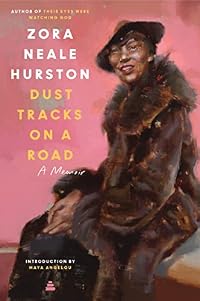
Another thing that is striking is how Kossola and others were subjugated. I felt a wave run through me when I learned that the vast majority of the roughly 13 million Africans enslaved over 1450-1900 were captured by other Africans, held in holding areas called ‘barracoons’, and then sold to white slavers when their ships came in. It’s a harrowing and very painful truth, so painful that many didn’t want to hear about it, but Hurston confronts it. In her autobiography ‘Dust Tracks on a Road’ she would later write “But the inescapable fact that stuck in my craw, was: my people had sold me and the white people had bought me…It impressed upon me the universal nature of greed and glory.” I still get goosebumps thinking about it.
In Kossola’s case, his tribe was simply annihilated by the stronger Dahomey, in an area that is now part of Benin. After talking about his grandfather and father, and remembering some interesting customs of his tribe, he relates how early one morning the Dahomey warriors surprised them. The middle aged and elderly were decapitated by a group that included fierce female warriors, and the rest enslaved. To read about the brutality, and things like the Dahomey king’s house being made of skulls and bones, is not for the squeamish. It ended life as he knew it as a young man, but for the rest of his life, he longed to return to Africa.
If you’re thinking this is going to be a book describing nothing but the horrific evils of slavery and racism in America, you’ll be surprised. That’s in here of course, but it’s stunning in just how little Kossola dwells on the five years as a slave in Alabama, before one day Union soldiers simply tell him and others that they’re free. It simply does not define him or his life, and he moves on. However, keep in mind that he and others are not given reparations, not given passage back to Africa, and not given any land after they’re freed. He faces discrimination not only from whites, but also from African-Americans who have been in America for generations. He forms a town with others and names it “Africatown” (later known as Plateau, and part of Mobile today). He marries and has six children, but then sees them all tragically die over the years, so that he’s alone when Hurston meets him.
Aside from the Dahomey atrocities, then, it’s the stories of his childhood in Africa, and his children in America, that really stand out in this book. There is great honesty in that, as this was this man’s life. The Africa of his childhood is highly patriarchal. Men have multiple wives, and it’s the wives who go out and find the man new girls or women to marry. Men keep their daughters in the “fat house” for up to two years, with minimal movement so that they could gain weight and therefore be more attractive to prospective husbands. Justice is unforgiving. As Kossola puts it, there are no excuses allowed for being ‘crazy’ at the time of a crime. “If you kill anybody, you goin die, too.” And one way capital punishment is carried out is particularly brutal; the guilty man’s limbs are tied to his dead victim’s limbs, his nose and mouth touch those of the victim’s, and he is left there to wither away, exposed and inhaling noxious fumes over a few days.
The stories of his children dying, some of sickness, and others of injustice, are very sad. Several are killed under very suspicious circumstances. Part of the problem is that as the children of new “immigrants”, his boys were picked on, and had to fight throughout their lives, resulting in enemies among other African-Americans. Again, it’s just not what you might expect, that the Klan or a group of whites lynch them. On the other hand, Kossola’s story of getting first hit by a train because it doesn’t ring its bell or horn for him, and then later swindled by a slick lawyer, is infuriating. There is such quiet dignity in how he relates these stories, while at the same time he makes clear his deep emotions for what were traumatic events. As Hurston leaves him after he’s given her two last peaches from his tree, I really felt as if I were riding with her, and away from this simple man who had endured so much in life.
The editor of this book, Deborah G. Plant, should be commended as well. Her Introduction and Afterward sections are essentially reading, and her documentation is meticulous. In getting this book published, it’s clear that a lot of time and attention went into it, and the result is of very high quality. Highly recommended. show less
Another thing that is striking is how Kossola and others were subjugated. I felt a wave run through me when I learned that the vast majority of the roughly 13 million Africans enslaved over 1450-1900 were captured by other Africans, held in holding areas called ‘barracoons’, and then sold to white slavers when their ships came in. It’s a harrowing and very painful truth, so painful that many didn’t want to hear about it, but Hurston confronts it. In her autobiography ‘Dust Tracks on a Road’ she would later write “But the inescapable fact that stuck in my craw, was: my people had sold me and the white people had bought me…It impressed upon me the universal nature of greed and glory.” I still get goosebumps thinking about it.
In Kossola’s case, his tribe was simply annihilated by the stronger Dahomey, in an area that is now part of Benin. After talking about his grandfather and father, and remembering some interesting customs of his tribe, he relates how early one morning the Dahomey warriors surprised them. The middle aged and elderly were decapitated by a group that included fierce female warriors, and the rest enslaved. To read about the brutality, and things like the Dahomey king’s house being made of skulls and bones, is not for the squeamish. It ended life as he knew it as a young man, but for the rest of his life, he longed to return to Africa.
If you’re thinking this is going to be a book describing nothing but the horrific evils of slavery and racism in America, you’ll be surprised. That’s in here of course, but it’s stunning in just how little Kossola dwells on the five years as a slave in Alabama, before one day Union soldiers simply tell him and others that they’re free. It simply does not define him or his life, and he moves on. However, keep in mind that he and others are not given reparations, not given passage back to Africa, and not given any land after they’re freed. He faces discrimination not only from whites, but also from African-Americans who have been in America for generations. He forms a town with others and names it “Africatown” (later known as Plateau, and part of Mobile today). He marries and has six children, but then sees them all tragically die over the years, so that he’s alone when Hurston meets him.
Aside from the Dahomey atrocities, then, it’s the stories of his childhood in Africa, and his children in America, that really stand out in this book. There is great honesty in that, as this was this man’s life. The Africa of his childhood is highly patriarchal. Men have multiple wives, and it’s the wives who go out and find the man new girls or women to marry. Men keep their daughters in the “fat house” for up to two years, with minimal movement so that they could gain weight and therefore be more attractive to prospective husbands. Justice is unforgiving. As Kossola puts it, there are no excuses allowed for being ‘crazy’ at the time of a crime. “If you kill anybody, you goin die, too.” And one way capital punishment is carried out is particularly brutal; the guilty man’s limbs are tied to his dead victim’s limbs, his nose and mouth touch those of the victim’s, and he is left there to wither away, exposed and inhaling noxious fumes over a few days.
The stories of his children dying, some of sickness, and others of injustice, are very sad. Several are killed under very suspicious circumstances. Part of the problem is that as the children of new “immigrants”, his boys were picked on, and had to fight throughout their lives, resulting in enemies among other African-Americans. Again, it’s just not what you might expect, that the Klan or a group of whites lynch them. On the other hand, Kossola’s story of getting first hit by a train because it doesn’t ring its bell or horn for him, and then later swindled by a slick lawyer, is infuriating. There is such quiet dignity in how he relates these stories, while at the same time he makes clear his deep emotions for what were traumatic events. As Hurston leaves him after he’s given her two last peaches from his tree, I really felt as if I were riding with her, and away from this simple man who had endured so much in life.
The editor of this book, Deborah G. Plant, should be commended as well. Her Introduction and Afterward sections are essentially reading, and her documentation is meticulous. In getting this book published, it’s clear that a lot of time and attention went into it, and the result is of very high quality. Highly recommended. show less
"This is such an important book" may be something that we toss around too often, but in this case it certainly applies. In Barracoon, Zora Neale Hurston interviews Cudjo Lewis in the late 1920s. Cudjo was brought to the American South as a slave in 1860 on the last shipment of African slaves, decades after the slave trade was supposedly outlawed. Hurston gives this man a chance to tell his story in his own voice. He relates his life in Africa - he was captured at age 19 by a rival tribe - and of his trip to America. He was a slave for about 5 years, but when he gained his freedom after the Civil War, he had to try to craft a life for himself in a hostile land. It will be no surprise that he had a hard and tragic life.
I loved that show more Hurston writes his words in his dialect, truly giving this man a voice after a lifetime of being treated as subhuman. This is a brief book that I really think everyone should read. show less
I loved that show more Hurston writes his words in his dialect, truly giving this man a voice after a lifetime of being treated as subhuman. This is a brief book that I really think everyone should read. show less
There are actually two pieces of history here. One, of course the primary one, is the content of the book, what amounts to the oral memoir of Oluale Kossola (Cudjo Lewis was his American name), the last survivor of the last slave ship to bring slaves from Africa to America, in 1860. The other is the history of the book itself, completed as a manuscript by Hurston in 1931 but only now published.
First, the story told by Kossola. Hurston interviewed him at his house in Africatown (also known as Plateau), near Mobile, Alabama. Hurston of course was a trained anthropologist, and an excellent writer. Here she let Kossola tell his own story, and she set it down in dialect, to preserve his storytelling rhythm and vocabulary.
Kossola explains to show more her that, to tell his own story, he has to go back to the life of his grandfather — you can’t understand a man without knowing where he has come from. So, unlike other slave narratives, his story begins in Africa, with his life (and his father’s and grandfather’s lives) before his capture, transport to America, and his life as a slave.
Kossola was born in Bantè, in West Africa in 1841. He was a member of the Isha subgroup of the Yoruba people. He was captured in a raid of conquest by the King of Dahomey and traded to American slaver Timothy Meaher. Meaher, along with William Foster , the builder of the slave ship, the Clotilda, was scornfully flaunting the 1808 ban on the trans-Atlantic slave trade.
Kossola gives some detail about his life in Africa, and that sets up what to me was the emotional impact of his story. He had the expectations of a life in Africa, passed along from his father and grandfather and set into the practices and customs of his people, just like anyone growing up anywhere. Then he, along with others of his people, was suddenly abducted from his home, and his life, in a surprise raid by the King of Dahomey. He had no idea what was happening to him. He was placed in the hold of a ship (later brought up on deck) for the long “middle passage” to America, where he began the life of a slave.
To Kossola, this was a life interrupted, not a life changed. His home was in Africa, and that never changed. When emancipation came, along with an immense joy for his freedom, Kossola’s first thoughts were of how to get back home. But of course, that wasn’t part of emancipation. Nor was land, nor was a path even to subsistence. All of that had to be improvised on the spot.
Africatown was the result, and you get the feeling listening to Kossola that no matter how long he lived there, it was just a place where he and others stayed in the absence of an opportunity to go home.
Kossola’s story is much more a personal one than a political one, or even one about the lives of slaves in general. There’s very little about broader historical context — you get the feeling that such things never really reached Kossola’s life directly. It’s his own story. That strong personal feel, especially reinforced by Hurston’s maintaining his dialect, is what makes the story so impactful. As Alice Walker says in the Foreword, “We are being shown the wound.”
The wound is a personal story of enslavement, and the loss of home that Kossola felt every day of his life.
Another major part of the wound is the complicity of African people in the slave trade — Kossola’s account of, as Walker writes, “how African chiefs deliberately set out to capture Africans from neighboring tribes, to provoke wars of conquest in order to capture for the slave trade people — men, women, children — who belonged to Africa.” This complicity appeared to have a great affect on Hurston herself, writing in her autobiography (Dust Tracks on a Road), “The white people had held my people in slavery in America. They had bought us, it is true and exploited us. But the inescapable fact that stuck in my craw was: my people had sold me and the white people had bought me.” The realization doesn’t diminish the abomination that white American slaveowners committed, but it implicates Africans as well in “the universal nature of greed and glory.”
Hurston actually conducted two sets of interviews with Kossola. The first set, in 1927, resulted in an article written by Hurston but with some controversy regarding its pedigree (recounted in the Afterword to this book). Hurston returned to interview Kossola again, and this time wrote the manuscript that became this book.
Why was the book only now published? Hurston certainly doesn’t lack for credibility, both as anthropologist and as a writer. The principal reason may be the very thing that, to me anyway, makes it so impactful — the dialect that Hurston preserved from Kossola’s oral history. Deborah Plant, the book’s editor, implied that in her Introduction, saying that Hurston submitted Barracoon to various publishers but found no takers during her lifetime. show less
First, the story told by Kossola. Hurston interviewed him at his house in Africatown (also known as Plateau), near Mobile, Alabama. Hurston of course was a trained anthropologist, and an excellent writer. Here she let Kossola tell his own story, and she set it down in dialect, to preserve his storytelling rhythm and vocabulary.
Kossola explains to show more her that, to tell his own story, he has to go back to the life of his grandfather — you can’t understand a man without knowing where he has come from. So, unlike other slave narratives, his story begins in Africa, with his life (and his father’s and grandfather’s lives) before his capture, transport to America, and his life as a slave.
Kossola was born in Bantè, in West Africa in 1841. He was a member of the Isha subgroup of the Yoruba people. He was captured in a raid of conquest by the King of Dahomey and traded to American slaver Timothy Meaher. Meaher, along with William Foster , the builder of the slave ship, the Clotilda, was scornfully flaunting the 1808 ban on the trans-Atlantic slave trade.
Kossola gives some detail about his life in Africa, and that sets up what to me was the emotional impact of his story. He had the expectations of a life in Africa, passed along from his father and grandfather and set into the practices and customs of his people, just like anyone growing up anywhere. Then he, along with others of his people, was suddenly abducted from his home, and his life, in a surprise raid by the King of Dahomey. He had no idea what was happening to him. He was placed in the hold of a ship (later brought up on deck) for the long “middle passage” to America, where he began the life of a slave.
To Kossola, this was a life interrupted, not a life changed. His home was in Africa, and that never changed. When emancipation came, along with an immense joy for his freedom, Kossola’s first thoughts were of how to get back home. But of course, that wasn’t part of emancipation. Nor was land, nor was a path even to subsistence. All of that had to be improvised on the spot.
Africatown was the result, and you get the feeling listening to Kossola that no matter how long he lived there, it was just a place where he and others stayed in the absence of an opportunity to go home.
Kossola’s story is much more a personal one than a political one, or even one about the lives of slaves in general. There’s very little about broader historical context — you get the feeling that such things never really reached Kossola’s life directly. It’s his own story. That strong personal feel, especially reinforced by Hurston’s maintaining his dialect, is what makes the story so impactful. As Alice Walker says in the Foreword, “We are being shown the wound.”
The wound is a personal story of enslavement, and the loss of home that Kossola felt every day of his life.
Another major part of the wound is the complicity of African people in the slave trade — Kossola’s account of, as Walker writes, “how African chiefs deliberately set out to capture Africans from neighboring tribes, to provoke wars of conquest in order to capture for the slave trade people — men, women, children — who belonged to Africa.” This complicity appeared to have a great affect on Hurston herself, writing in her autobiography (Dust Tracks on a Road), “The white people had held my people in slavery in America. They had bought us, it is true and exploited us. But the inescapable fact that stuck in my craw was: my people had sold me and the white people had bought me.” The realization doesn’t diminish the abomination that white American slaveowners committed, but it implicates Africans as well in “the universal nature of greed and glory.”
Hurston actually conducted two sets of interviews with Kossola. The first set, in 1927, resulted in an article written by Hurston but with some controversy regarding its pedigree (recounted in the Afterword to this book). Hurston returned to interview Kossola again, and this time wrote the manuscript that became this book.
Why was the book only now published? Hurston certainly doesn’t lack for credibility, both as anthropologist and as a writer. The principal reason may be the very thing that, to me anyway, makes it so impactful — the dialect that Hurston preserved from Kossola’s oral history. Deborah Plant, the book’s editor, implied that in her Introduction, saying that Hurston submitted Barracoon to various publishers but found no takers during her lifetime. show less
Members
- Recently Added By
Published Reviews
ThingScore 100
The book's uniqueness is in its recounting of a story in which we are all equally bound up by this cycle of oppression – the former slave plagued by the trauma of losing his homeland and family, the writer whose work survived the desire of intellectuals for white approval, the reader forced to challenge their own ideas about race and the internalisation of oppression. But more than anything show more it brings an African past up close to an African American present, at a time of great searching. "Throughout her life, Hurston fought against this idea that there was no connection to Africa once people arrived on these shores, and everything was forgotten," Wall says. "We know that's not true. But a book like this really brings that to life." show less
added by Cynfelyn
Brimming with observational detail from a man whose life spanned continents and eras, the story is at times devastating, but Hurston's success in bringing it to light is a marvel.
added by Shortride
Lists

Top Five Books of 2019
387 works; 107 members

Books Read in 2018
4,360 works; 110 members

Schwob Nederland
207 works; 2 members

HarperCollins Publishers
144 works; 3 members

Books Read in 2020
4,379 works; 124 members

Club Read's Recommended Nonfiction Written by Women
618 works; 30 members

Not the NYT list of top 100 21st century books
100 works; 6 members

Book Riot Read Harder 2026
80 works; 1 member

Books Read in 2026
1,749 works; 62 members
Author Information

111+ Works 34,606 Members
Zora Neale Hurston was born in 1901 in Eatonville, Fla. She left home at the age of 17, finished high school in Baltimore, and went on to study at Howard University, Barnard College, and Columbia University before becoming one of the most prolific writers in the Harlem Renaissance. Her works included novels, essays, plays, and studies in folklore show more and anthropology. Her most productive years were the 1930s and early 1940s. It was during those years that she wrote her autobiography Dust Tracks on a Road, worked with the Federal Writers Project in Florida, received a Guggenheim fellowship, and wrote four novels. She is most remembered for her novel Their Eyes Were Watching God, published in 1937. In 2018, her previously unpublished work, Barracoon: The Story of the Last Black Cargo, was published. She died penniless and in obscurity in 1960 and was buried in an unmarked grave. In 1973, her grave was rediscovered and marked and her novels and autobiography have since been reprinted. (Bowker Author Biography) show less

Some Editions
Awards and Honors
Awards
Distinctions
Notable Lists
Common Knowledge
- Canonical title
- Barracoon: The Story of the Last "Black Cargo"
- Original title
- Barracoon: The Story of the Last "Black Cargo"
- Alternate titles
- Barracoon: The Story of the Last Slave
- Original publication date
- 2018-04-24
- People/Characters
- Cudjo Lewis (Oluale Kossola); Zora Neale Hurston
- Important places
- Plateau, Alabama, USA; Bante, West Africa
- Important events
- Slavery
- Epigraph
- But the inescapable fact that stuck in my craw, was: my people had sold me and the white people had bought me.... It impressed upon me the universal nature of greed and glory.
—Zora Neale Hurston, Dust Tracks o... (show all)n a Road - First words
- This is the life story of Cudjo Lewis, as told by himself. (Preface)
It was summer when I went to talk with Cudjo so his door was standing wide open. - Last words
- (Click to show. Warning: May contain spoilers.)But he is full of trembling awe before the altar of the past.
- Publisher's editor
- Plant, Deborah G.
- Blurbers
- Morrison, Toni; Dennis-Benn, Nicole; Smith, Tracy K.; Flourney, Angela; Twitty, Michael; Baszile, Natalie
- Original language
- English
- Canonical DDC/MDS
- 306.362092
- Canonical LCC
- E444.L49
Classifications
- Genres
- History, General Nonfiction, Biography & Memoir, Nonfiction
- DDC/MDS
- 306.362092 — Society, Government, and Culture Social sciences, sociology & anthropology Social Behavior - Dating, Marriage, Divorce Economic institutions Systems of labor Slavery Biography And History Biography And History Biography
- LCC
- E444 .L49 — History of the United States United States Revolution to the Civil War, 1775/1783-1861 Slavery in the United States. Antislavery
- BISAC
Statistics
- Members
- 2,171
- Popularity
- 9,312
- Reviews
- 80
- Rating
- (3.98)
- Languages
- 5 — English, French, German, Greek, Italian
- Media
- Paper, Audiobook, Ebook
- ISBNs
- 36
- ASINs
- 9