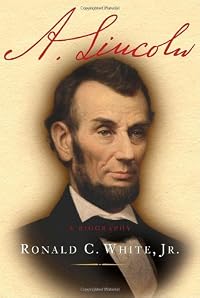
A. Lincoln: A Biography
by Ronald C. White
On This Page
Description
“If you read one book about Lincoln, make it A. Lincoln.”—USA TodayNAMED ONE OF THE BEST BOOKS OF THE YEAR BY
The Washington Post • The Philadelphia Inquirer • The Christian Science Monitor • St. Louis Post-Dispatch.
NEW YORK TIMES BESTSELLER
WINNER OF THE CHRISTOPHER AWARD
Everyone wants to define the man who signed his name “A. Lincoln.” In his lifetime and ever since, friend and foe have taken it upon themselves to characterize Lincoln according to their own show more label or libel. In this magnificent book, Ronald C. White, Jr., offers a fresh and compelling definition of Lincoln as a man of integrity–what today’s commentators would call “authenticity”–whose moral compass holds the key to understanding his life.
Through meticulous research of the newly completed Lincoln Legal Papers, as well as of recently discovered letters and photographs, White provides a portrait of Lincoln’s personal, political, and moral evolution. White shows us Lincoln as a man who would leave a trail of thoughts in his wake, jotting ideas on scraps of paper and filing them in his top hat or the bottom drawer of his desk; a country lawyer who asked questions in order to figure out his own thinking on an issue, as much as to argue the case; a hands-on commander in chief who, as soldiers and sailors watched in amazement, commandeered a boat and ordered an attack on Confederate shore batteries at the tip of the Virginia peninsula; a man who struggled with the immorality of slavery and as president acted publicly and privately to outlaw it forever; and finally, a president involved in a religious odyssey who wrote, for his own eyes only, a profound meditation on “the will of God” in the Civil War that would become the basis of his finest address.
Most enlightening, the Abraham Lincoln who comes into focus in this stellar narrative is a person of intellectual curiosity, comfortable with ambiguity, unafraid to “think anew and act anew.”
A transcendent, sweeping, passionately written biography that greatly expands our knowledge and understanding of its subject, A. Lincoln will engage a whole new generation of Americans. It is poised to shed a profound light on our greatest president just as America commemorates the bicentennial of his birth.
. show less
Tags
Recommendations
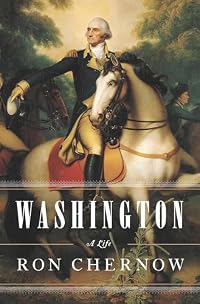
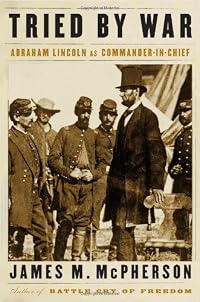
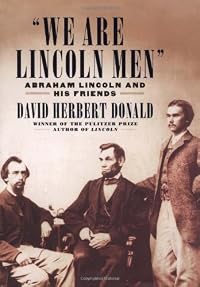
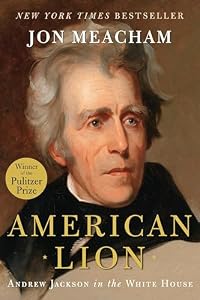

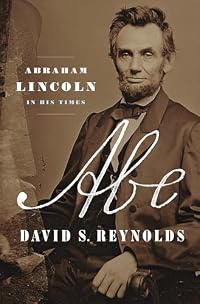

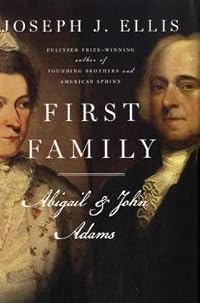
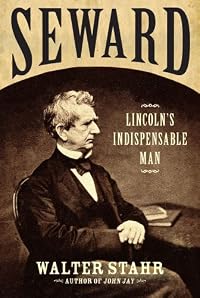
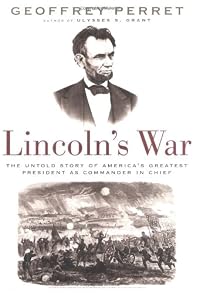
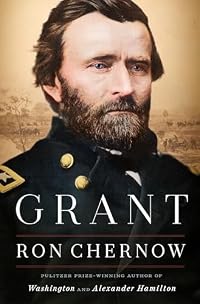
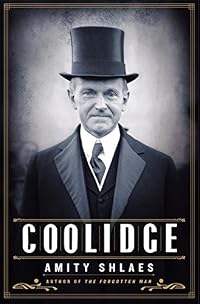
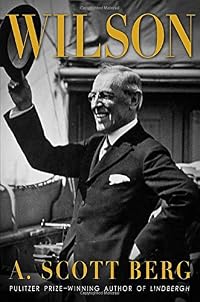

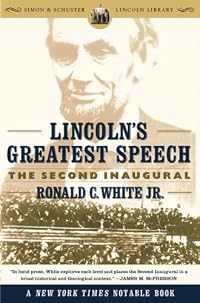
Member Recommendations
Member Reviews
Since his assassination Abraham Lincoln has become the most written about American in history and his life has crossed over to film and cable television 'documentaries'. Early written portraits of Lincoln included elements that bordered myth, however the increased gathering of sources and attention to detail the story of Lincoln life has outgrown those earlier "mythic" elements to an even richer story. A. Lincoln by Ronald C. White, Jr., has emerged as not only the finest biography of the 16th President of the United States, but the most in-depth and fantastically written.
White begins his biography by describing how Abraham Lincoln wrote his longest autobiography during the campaign of 1860, which was scant of detail and length to the show more frustration of newspaper editors. White then gives the reader a short, but detailed Lincoln family biography not only giving Lincoln's place within the whole of American history even greater context but giving the reader a taste of the depth of his research and what they're about to read.
White describes Lincoln's early life in the context of frontier life and how it transformed as the frontier in which he lived transformed into a center of population and commerce. Lincoln's early Illinois political campaigns and career are examined, with White highlighting elements that showed Lincoln's progression not only as a politician and lawyer but as a leader as well. After the earlier successes in his political career up to 1848, Lincoln would not find election day success for himself until 1860 but White shows how the political leader Lincoln emerged not only in Illinois but onto the national stage to would springboard him to the Republican nomination and eventually the White House.
The progression of Lincoln's executive and military leadership are fascinatingly written by White as Lincoln's presidency covers the last half of the biography. However, it is White's examination of Lincoln's evolving policy and speeches during this time that truly gives the reader a better understanding of the man himself.
Having read Doris Kearns Goodwin's Team of Rivals, I was introduced to many of the things White would highlight and truly give understanding to the reader. Although Goodwin's description and analysis of the 1860 and 1864 Presidential elections in Team of Rivals is superior to that found in White's A. Lincoln, it is minor to the fact that with White one gets a fuller sense of Abraham Lincoln himself while with Goodwin he is seen in connection and comparison with his cabinet.
If you read one Lincoln biography or if you have read a hundred, I can not recommend A. Lincoln enough. Ronald C. White, Jr., book is the crowning achievement in Lincoln biographies and will be for decades to come. show less
White begins his biography by describing how Abraham Lincoln wrote his longest autobiography during the campaign of 1860, which was scant of detail and length to the show more frustration of newspaper editors. White then gives the reader a short, but detailed Lincoln family biography not only giving Lincoln's place within the whole of American history even greater context but giving the reader a taste of the depth of his research and what they're about to read.
White describes Lincoln's early life in the context of frontier life and how it transformed as the frontier in which he lived transformed into a center of population and commerce. Lincoln's early Illinois political campaigns and career are examined, with White highlighting elements that showed Lincoln's progression not only as a politician and lawyer but as a leader as well. After the earlier successes in his political career up to 1848, Lincoln would not find election day success for himself until 1860 but White shows how the political leader Lincoln emerged not only in Illinois but onto the national stage to would springboard him to the Republican nomination and eventually the White House.
The progression of Lincoln's executive and military leadership are fascinatingly written by White as Lincoln's presidency covers the last half of the biography. However, it is White's examination of Lincoln's evolving policy and speeches during this time that truly gives the reader a better understanding of the man himself.
Having read Doris Kearns Goodwin's Team of Rivals, I was introduced to many of the things White would highlight and truly give understanding to the reader. Although Goodwin's description and analysis of the 1860 and 1864 Presidential elections in Team of Rivals is superior to that found in White's A. Lincoln, it is minor to the fact that with White one gets a fuller sense of Abraham Lincoln himself while with Goodwin he is seen in connection and comparison with his cabinet.
If you read one Lincoln biography or if you have read a hundred, I can not recommend A. Lincoln enough. Ronald C. White, Jr., book is the crowning achievement in Lincoln biographies and will be for decades to come. show less
In so many ways, I really enjoyed this biography of Abraham Lincoln. I learned a great deal about his upbringing, the challenges he had early in his life and the number of choices he had to make - and sometimes reverse - before becoming the savior of the Union. A. Lincoln also shined a spotlight on the conditions of the American Midwest in the middle of the nineteenth century as the pressures of an expanding country ran into the pull of slavery. This biography does an outstanding job of portraying America in the leadup to the Civil War.
While there is so much to applaud with A. Lincoln, there are shortcomings as well. White has a propensity to linger on small points for far too long and then slip right past major points barely an show more acknowledgement. These are minor quibbles. The real disappointment was the way White cruised right over the final months of Lincoln's life, barely mentioned his assassination and completely ignored any discussion of the impact of his life on the years and decades that came after.
As much as I learned from A. Lincoln, I have to admit I was a bit disappointed with it in places, especially at the end. It may be that other presidential biographies have set a bar to high, it is difficult to achieve. But for Honest Abe, that bar is certainly worth exceeding. Still, despite its shortcomings, A. Lincoln is still worth spending time with. show less
While there is so much to applaud with A. Lincoln, there are shortcomings as well. White has a propensity to linger on small points for far too long and then slip right past major points barely an show more acknowledgement. These are minor quibbles. The real disappointment was the way White cruised right over the final months of Lincoln's life, barely mentioned his assassination and completely ignored any discussion of the impact of his life on the years and decades that came after.
As much as I learned from A. Lincoln, I have to admit I was a bit disappointed with it in places, especially at the end. It may be that other presidential biographies have set a bar to high, it is difficult to achieve. But for Honest Abe, that bar is certainly worth exceeding. Still, despite its shortcomings, A. Lincoln is still worth spending time with. show less
A solid and full biography of the 16th President. It fully shows Lincoln's personality and insurmountable situation he and the nation faced.
The biography is short on his childhood and ends abruptly with Lincoln's death. But it covers his presidency in full detail and perspective. White shows, despite issuing the Emancipation Proclamation, how Lincoln was just shaped by the time he lived and his hesitancy to potentially sacrifice a unified nation for abolitionism.
The biography is short on his childhood and ends abruptly with Lincoln's death. But it covers his presidency in full detail and perspective. White shows, despite issuing the Emancipation Proclamation, how Lincoln was just shaped by the time he lived and his hesitancy to potentially sacrifice a unified nation for abolitionism.
I have read a few books on the Civil War, but this is my first biography of Lincoln. I am left in wonder and awe of our past President. As I read this biography, I hungered for more about the time, other people in this great trajedy, and especially more about Lincoln.
White builds a good narrative history of Lincoln and his world that ends with Lincoln’s second inaugural address. I am deeply moved by the religious beliefs that White focused on with Lincoln’s writings near the end of his life. It actually means more if Lincoln truly avoided religion in his public life up to that point as much as the author describes.
While I don't know a deep knowledge of the history involved here, I can still say this biography is a great read and show more study of Lincoln. It only builds a desire for further study. show less
White builds a good narrative history of Lincoln and his world that ends with Lincoln’s second inaugural address. I am deeply moved by the religious beliefs that White focused on with Lincoln’s writings near the end of his life. It actually means more if Lincoln truly avoided religion in his public life up to that point as much as the author describes.
While I don't know a deep knowledge of the history involved here, I can still say this biography is a great read and show more study of Lincoln. It only builds a desire for further study. show less
White's biography, released at the bicentennial of Lincoln's birthday, incorporates new information mined since David Donald's 1996 "Lincoln," but does not improve on it. If you are only going to read one book on Lincoln, I would suggest Donald's book. If you plan to read more than that you will naturally want to read White's book as well (and probably Doris Kearns Goodwin's "Team of Rivals," with it's slightly larger scope and shorter time frame).
White's most substantive variations from Donald's work is in his account of Lincoln's pre-Presidential life and in his parsing of Lincoln's speeches. The former serves to flesh out a subject with additional detail and structure than Donald's work. The latter is interesting to a point, but one show more could choose to read Gary Will's "Lincoln at Gettysburg" or White's own "Eloquent President" if one wanted an analysis of Lincoln's rhetoric. White also spends substantial time attempting to support the argument that Lincoln was more religious than popularly believed. This argument puzzles me somewhat - White seems to want to stretch Lincoln's church attendance and use of biblical rhetoric beyond where one can safely go in reconstructing the inner beliefs of a man over a century dead. While it is obvious Lincoln's early fatalism and near-agnosticism was tempered later in life by a belief in divine providence, I read nothing that indicated Lincoln became anything close to an orthodox Protestant Christian. And it hardly matters, anyway, except perhaps to religious history professors, like White.
White does a good job of conveying Lincoln's development over time - how he became more confident of his own judgment on the war instead of simply deferring to the Generals, and especially his slow, pragmatic approach to emancipation, but the book as a whole is vaguely unsatisfying. But then, the more I read of and about Lincoln, the more I want to read and the less satisfied I become. White seems to recognize the appetite Lincoln awakens in those who study his life and work, as he himself seems to have acquired it, too. show less
White's most substantive variations from Donald's work is in his account of Lincoln's pre-Presidential life and in his parsing of Lincoln's speeches. The former serves to flesh out a subject with additional detail and structure than Donald's work. The latter is interesting to a point, but one show more could choose to read Gary Will's "Lincoln at Gettysburg" or White's own "Eloquent President" if one wanted an analysis of Lincoln's rhetoric. White also spends substantial time attempting to support the argument that Lincoln was more religious than popularly believed. This argument puzzles me somewhat - White seems to want to stretch Lincoln's church attendance and use of biblical rhetoric beyond where one can safely go in reconstructing the inner beliefs of a man over a century dead. While it is obvious Lincoln's early fatalism and near-agnosticism was tempered later in life by a belief in divine providence, I read nothing that indicated Lincoln became anything close to an orthodox Protestant Christian. And it hardly matters, anyway, except perhaps to religious history professors, like White.
White does a good job of conveying Lincoln's development over time - how he became more confident of his own judgment on the war instead of simply deferring to the Generals, and especially his slow, pragmatic approach to emancipation, but the book as a whole is vaguely unsatisfying. But then, the more I read of and about Lincoln, the more I want to read and the less satisfied I become. White seems to recognize the appetite Lincoln awakens in those who study his life and work, as he himself seems to have acquired it, too. show less
An excellent biography of Lincoln, but I wish it had contained a little more information about what happened to other players in the aftermath of his death. While its true that the story of Abraham Lincoln as a living man ended in 1865, his legacy has lived on much longer than that. I'm not advocating that White comment on the modern view of Lincoln, but a few pages discussing how close family and friends behaved in the immediate aftermath would have added a nice bit of closure for this reader.
I really enjoyed this book. However, I did feel that parts of it dragged. I had problems getting through chapters that were more about local politics, I wanted to read about Lincoln and would have been happy to have something with not quite so much detail. I do see how it was important for White to set up the background events and current political climate that allowed/caused Lincoln to become president and ultimately amazing person that he became.
The section on the civil war, and really Lincolns entire time in the presidency, was fascinating. A real page turner. It was exactly how I wanted to read about Lincoln. Even though I of course knew what was going to happen I still found myself absolutely gutted at the end of the book.
The section on the civil war, and really Lincolns entire time in the presidency, was fascinating. A real page turner. It was exactly how I wanted to read about Lincoln. Even though I of course knew what was going to happen I still found myself absolutely gutted at the end of the book.
Members
- Recently Added By
Author Information

14+ Works 2,957 Members
Ronald C. White, Jr. was born in Minneapolis, Minnesota and grew up in California. He graduated from Northwestern University in 1961 with a B.A., received an M.Div. in 1964 from Princeton Theological Seminary, and earned a Ph.D. from Princeton University in 1972. He also studied as a World Council of Churches Scholar at Lincoln Theological College show more in England. White has written several books, including three on Abraham Lincoln: The Eloquent President: A Portrait of Lincoln Through His Words, Lincoln's Greatest Speech: The Second Inaugural, and A. Lincoln: A Biography. He has also been published in the New York Times, Washington Post, Los Angeles Times, and The Christian Science Monitor. White is Professor of American Religious History Emeritus at San Francisco Theological Seminary, and he has taught at UCLA, Princeton Theological Seminary, Whitworth University, Colorado College, Fuller Seminary, and Rider University. (Bowker Author Biography) show less
Awards and Honors
Distinctions
Common Knowledge
- Canonical title
- A. Lincoln: A Biography
- Original publication date
- 2009
- People/Characters
- Abraham Lincoln
- Important events
- American Civil War (1861 | 1865)
- Dedication
- For my wife,
Cynthia Conger White - First words
- He signed his name "A. Lincoln."
- Last words
- (Click to show. Warning: May contain spoilers.)One badge, seen everywhere in Washington during those sad days, said what was in people's hearts": "With malice toward none; with charity for all."
- Blurbers
- McPherson, James M.; Howe, Daniel Walker; Holzer, Harold; Meacham, Jon; Noll, Mark A.; Fox, Richard Wightman (show all 8); Williams, Frank J.; Gallagher, Gary W.
Classifications
- Genres
- Biography & Memoir, History, Nonfiction, General Nonfiction
- DDC/MDS
- 973.7092 — History & geography History of North America United States Administration of Abraham Lincoln, 1861-1865 Civil War
- LCC
- E457 .W597 — History of the United States United States Civil War period, 1861-1865 Lincoln's administrations, 1861-April 15, 1865
- BISAC
Statistics
- Members
- 1,089
- Popularity
- 23,297
- Reviews
- 17
- Rating
- (4.23)
- Languages
- English
- Media
- Paper, Audiobook, Ebook
- ISBNs
- 17
- ASINs
- 4