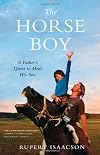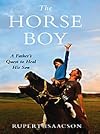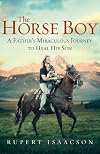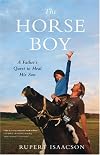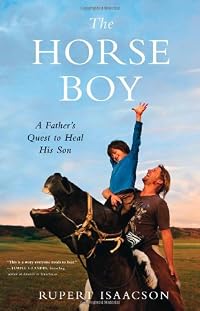
The Horse Boy: A Father's Quest to Heal His Son
by Rupert Isaacson
On This Page
Description
When his son Rowan was diagnosed with autism, Rupert Isaacson was devastated, afraid he might never be able to communicate with his child. But when Isaacson, a lifelong horseman, rode their neighbor's horse with Rowan, Rowan improved immeasurably. He was struck with a crazy idea: why not take Rowan to Mongolia, the one place in the world where horses and shamanic healing intersected? The Horse Boy is the dramatic and heartwarming story of that impossible adventure.Tags
Recommendations





Member Reviews
I approached this book with equal measures of curiosity and trepidation. My eight-year-old son is autistic. The subject of autism is personal for me. I was concerned that this book would be New Agey and wishy-washy and that they were trying to cure their child. There is a world of difference between "healing" and "curing," and I was relieved right away when Isaacson made that distinction. They didn't want to take away their son's autism and make him a stranger, but they did want Rowan to cope with and exist in the world. They wanted a child who wouldn't tantrum in frightening ways or defecate all over himself.
I get that. My son's autism isn't as severe as their Rowan's condition, but I spent two years going through that potty training show more hell. I get that desperation.
Therefore, I understood that when their son connected in a profound way with their neighbor's horse, that they were willing to explore that in a spiritual way and do something beyond the standard therapy. Their journey leads them to Mongolia and out into Siberia. Some of the things done by the shamans made me wince, as they seemed abusive--the whole family gets flogged by one shaman, though their son gets the gentlest measure--but the journey is utterly fascinating. That's really one of the amazing things about the book. It's not merely about a family's struggle with autism. It's a journey into one of the most remote areas of the world, where Soviet concrete crumbles and Reindeer People wander the taiga. It's about how shamanism hid away during the communist years but didn't die completely. Sure, some of their traditions aren't quite so appealing (like medicine made of every part of the reindeer, including poop) but it's still just plain fascinating.
The take away at the end is very rational, too. The journey completely changed their son. Rowan emerged as a boy who could make friends with other children, who could ride his own horse, and could handle his own bowel movements. Isaacson doesn't make any grand claims that the shamanism or magic did it; it may have been the journey itself was the turning point, and what an incredible journey it was.
Now I want to watch the documentary about their experience to see how well it matches what's in my mind. show less
I get that. My son's autism isn't as severe as their Rowan's condition, but I spent two years going through that potty training show more hell. I get that desperation.
Therefore, I understood that when their son connected in a profound way with their neighbor's horse, that they were willing to explore that in a spiritual way and do something beyond the standard therapy. Their journey leads them to Mongolia and out into Siberia. Some of the things done by the shamans made me wince, as they seemed abusive--the whole family gets flogged by one shaman, though their son gets the gentlest measure--but the journey is utterly fascinating. That's really one of the amazing things about the book. It's not merely about a family's struggle with autism. It's a journey into one of the most remote areas of the world, where Soviet concrete crumbles and Reindeer People wander the taiga. It's about how shamanism hid away during the communist years but didn't die completely. Sure, some of their traditions aren't quite so appealing (like medicine made of every part of the reindeer, including poop) but it's still just plain fascinating.
The take away at the end is very rational, too. The journey completely changed their son. Rowan emerged as a boy who could make friends with other children, who could ride his own horse, and could handle his own bowel movements. Isaacson doesn't make any grand claims that the shamanism or magic did it; it may have been the journey itself was the turning point, and what an incredible journey it was.
Now I want to watch the documentary about their experience to see how well it matches what's in my mind. show less
Rupert Isaacson is a travel writer, who happens to have a son with autism. His memoir of their efforts to heal Rowan is a beautiful piece of writing, taking the reader along their journey from a neighbor’s land in Texas, where they discovered a link between horses and autists, to Outer Mongolia, the birthplace of horses and shamanism. From rude people, depressed economies, to helpful, caring people, and the beauty of the land, the author’s writing shines through.
”… the view required more than mere looking at. Homage had to be given, for here was where one great ecosystem ended and another began. At this mountaintop the great grasslands of the steppe gave way to the beginning of the taiga, the great Siberian forest, the largest show more forest in the world which stretches all the way from the Pacific Ocean in the east clear across Russia to Scandinavia in the west. I stood in the last of the great, continent-sized meadow that is the steppe and gazed at the forest wall. It was like facing an army. An ancient army. Its charge, its presence, was palpable. The sound of the wind in the trees was like the sighing of God’s breath.”
About shamanism, I don’t know what to think; I have not walked in his shoes. Mr. Isaacson believes that it was a great help for his son. And for this reader, who knew only the very most rudimentary facts about autism, his quest was very interesting to read about – from educating themselves about what to expect with autism, how to deal with the problems that accompany the condition, to his quest for a cure.
”Healed or cured? There was a difference. Long ago I’d given up wanting him to be cured. Cured as in not being autistic anymore – for that was part of his essence. But I did want him healed. If there was anything Kristin and I wanted to say to the shamans, it was Please let him come back toilet-trained. Please let him no longer be held at the mercy of his tantrums, of his wild-storm nervous system. No longer hyperactive, with that incessant edge of anxiety that was like a fist around the heart, always ready to close suddenly and hard.”
Informational and beautifully written. 3.6 stars show less
”… the view required more than mere looking at. Homage had to be given, for here was where one great ecosystem ended and another began. At this mountaintop the great grasslands of the steppe gave way to the beginning of the taiga, the great Siberian forest, the largest show more forest in the world which stretches all the way from the Pacific Ocean in the east clear across Russia to Scandinavia in the west. I stood in the last of the great, continent-sized meadow that is the steppe and gazed at the forest wall. It was like facing an army. An ancient army. Its charge, its presence, was palpable. The sound of the wind in the trees was like the sighing of God’s breath.”
About shamanism, I don’t know what to think; I have not walked in his shoes. Mr. Isaacson believes that it was a great help for his son. And for this reader, who knew only the very most rudimentary facts about autism, his quest was very interesting to read about – from educating themselves about what to expect with autism, how to deal with the problems that accompany the condition, to his quest for a cure.
”Healed or cured? There was a difference. Long ago I’d given up wanting him to be cured. Cured as in not being autistic anymore – for that was part of his essence. But I did want him healed. If there was anything Kristin and I wanted to say to the shamans, it was Please let him come back toilet-trained. Please let him no longer be held at the mercy of his tantrums, of his wild-storm nervous system. No longer hyperactive, with that incessant edge of anxiety that was like a fist around the heart, always ready to close suddenly and hard.”
Informational and beautifully written. 3.6 stars show less
An interesting story of how one family dealt with their autistic son. The decision to travel Mongolia on horseback and visit local shamans was certainly an unconventional treatment. I was a little uneasy about the attitude toward the shamans -- it felt like they were just being used, without any attempt to understand or internalize the spirituality of the religion the author was so blithely ready to appropriate as a purely functional, therapeutic treatment.
However, it was interesting to get an inside look into the desperation of a parent with an uncontrollable child, the hopes and disappointments, the sense of shame and guilt, the need to stand up for their child when other people are condemning them as bad parents. I will have more show more sympathy, I think, with the families who include children with autism.
This was a fast-moving, attention-grabbing book. There were really no places where I felt, as I so often do with memoirs, "move it along, already!" show less
However, it was interesting to get an inside look into the desperation of a parent with an uncontrollable child, the hopes and disappointments, the sense of shame and guilt, the need to stand up for their child when other people are condemning them as bad parents. I will have more show more sympathy, I think, with the families who include children with autism.
This was a fast-moving, attention-grabbing book. There were really no places where I felt, as I so often do with memoirs, "move it along, already!" show less
I liked this book more than I thought I would. It was very well-written. From the first page I was into the story. And what a story! I won't recount the story line as that's been done before, but I will say that it was an interesting read, to say the least. It's part medical story/mystery, part travel journal, part adventure story, and ALWAYS an unflinchingly honest personal account of a family's efforts to help their son. Anyone interested in autism, non-Western healing,the beauty of Mongolia, or who just loves memoires will enjoy this book.
AMAZING! EXTRAORDINARY! I loved this book! Rupert Isaacson takes you on an adventure to Mongolia and gives you a window into his life as a parent of an autistic child. Mr. Isaacson shares his doubts and fears about the trip and his son openly. You share moments of hope and despair, excitment and embarassment with the desperate father. You travel on horseback beside them day after day, watching the sunsets, being eaten alive by bugs, and enjoying the company of your friends. Rupert's writing in exceptional, descriptive, and interesting. He has a tendency toward run on sentences but they are quickly overlooked as you read his descriptions of the Mongolian landscape or his son. Rowan has such a connection with animals, horses especially. I show more volunteer at a therapeutic riding center for children with mental and physical disabilities. It's amazing to watch them grow and change and do things that doctors told them they couldn't. Following Rowan's story was just like that. I revelled in the challenge and the joy and in the end I felt the satisfaction that accompanies overcoming what everyone else says is impossible or crazy. Rowan is an exceptional boy. And this is an exceptional story. Definately something I would recommend to anyone with an open heart and mind. show less
The Horse Boy is the story of Rupert, his wife Kristin, and their son Rowan, who was diagnosed with autism when he was 2 1/2 years old. They struggle with different suggested methods to help his autism, which were not only costly but seemed to make no difference with his speech delay, his inability to connect with others, and his habit of pooping his pants. In fact, his therapy seemed to be making his uncontrollable tantrums even worse.
Rupert is a journalist who, if I remember correctly when Rowan was about 4, was working on a story about Bushmen from the Kalahari Desert who were struggling with their government over land rights. Some Bushmen healers performed a healing on Rowan and he showed marked improvement for a few days show more after.
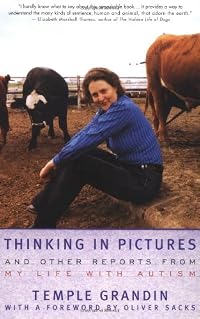
Rupert also noticed that his son had a strange connection to animals. Rupert was raised around horses and noticed that whenever Rowan approached a horse it immediately dropped its head in submission. Between the Bushmen healers and the horses he gets it in his head to take Rowan to Mongolia on a healing journey, because Mongolia is the birthplace of the horse and known for its powerful shamans. He even consults Temple Grandin when he comes up with the idea to see what she thinks. She basically tells him he should do it because so little is known about autism and at the very least it can be eliminated as something that doesn't help.
The bulk of the book is the family's journey (when Rowan is 7) through Mongolia on horseback and in a van as they visit various healers. The shaman are so thankful for Rupert's faith in them because when China occupied Mongolia the Mongolians could have been jailed just for having a drum. After the communist era, shamanism had died off somewhat and has only recently made a stronger comeback.
I won't tell you what happens during their quest to help Rowan but the story really struck a chord with me. It was heartbreaking to see what parents of an autistic child go through, and amazing to learn what the Shaman say and do for Rowan. show less
Rupert is a journalist who, if I remember correctly when Rowan was about 4, was working on a story about Bushmen from the Kalahari Desert who were struggling with their government over land rights. Some Bushmen healers performed a healing on Rowan and he showed marked improvement for a few days show more after.
Rupert also noticed that his son had a strange connection to animals. Rupert was raised around horses and noticed that whenever Rowan approached a horse it immediately dropped its head in submission. Between the Bushmen healers and the horses he gets it in his head to take Rowan to Mongolia on a healing journey, because Mongolia is the birthplace of the horse and known for its powerful shamans. He even consults Temple Grandin when he comes up with the idea to see what she thinks. She basically tells him he should do it because so little is known about autism and at the very least it can be eliminated as something that doesn't help.
The bulk of the book is the family's journey (when Rowan is 7) through Mongolia on horseback and in a van as they visit various healers. The shaman are so thankful for Rupert's faith in them because when China occupied Mongolia the Mongolians could have been jailed just for having a drum. After the communist era, shamanism had died off somewhat and has only recently made a stronger comeback.
I won't tell you what happens during their quest to help Rowan but the story really struck a chord with me. It was heartbreaking to see what parents of an autistic child go through, and amazing to learn what the Shaman say and do for Rowan. show less
Fascinating! This is the story of a man who takes his reluctant wife and autistic son to Mongolia to see if the shamen of the horse people and the reindeer people could cure their son of the problems associated with autism.
The author is from South Africa, and works mainly as a travel writer. His wife is an American, and they live in Texas. Rowan is their son, diagnosed with autism at age 3. Rowan is given to tantrums of shrieks and wild flailing arms and legs at the slightest provocation - dozens of times a day, refuses to be toilet trained, is high energy, has little language other than echoing a word or phrase from the videos he watches obsessively, and shows no connection to other people, but he is interested in animals. In other show more words, he requires constant supervision, and provides little of the joy a parent expects from a child.
One thing the author did was host some Bushmen who were to speak at the UN about the lack of a homeland, and the author accompanied them to a "Shaman's conference" in California. In the course of that, there was some laying on of hands, and Rowan seemed to be less violent for a time. But then he regressed. One day, he got away from his father during a walk /run in the woods, and ended up in the corral of a neighbor with horses. Rowan threw himself down at the feet of the lead mare, who instead of being her irrascible self, instead started licking and chewing - in essence, submitting to him. Rowan laughed with delight.
The author got permission to ride the horse with his son on the saddle in front, and Rowan seemed to get better during the rides -- words were sometimes used in a manner appropriate for the context (Run!), fewer tantrums for that time, and so on. From this was born the wild idea of taking Rowan to see the shamen of the horse people. And that meant a trip to Mongolia. This is the story of that three-week journey. They had a rough time, but they returned with a child who was not an imminent danger to himself or others.
The book is a fascinating journey into another culture halfway around the world, and into another way of looking at life from both the perspective of a shaman, and that of the parents of an autistic child.
Highly recommended. show less
The author is from South Africa, and works mainly as a travel writer. His wife is an American, and they live in Texas. Rowan is their son, diagnosed with autism at age 3. Rowan is given to tantrums of shrieks and wild flailing arms and legs at the slightest provocation - dozens of times a day, refuses to be toilet trained, is high energy, has little language other than echoing a word or phrase from the videos he watches obsessively, and shows no connection to other people, but he is interested in animals. In other show more words, he requires constant supervision, and provides little of the joy a parent expects from a child.
One thing the author did was host some Bushmen who were to speak at the UN about the lack of a homeland, and the author accompanied them to a "Shaman's conference" in California. In the course of that, there was some laying on of hands, and Rowan seemed to be less violent for a time. But then he regressed. One day, he got away from his father during a walk /run in the woods, and ended up in the corral of a neighbor with horses. Rowan threw himself down at the feet of the lead mare, who instead of being her irrascible self, instead started licking and chewing - in essence, submitting to him. Rowan laughed with delight.
The author got permission to ride the horse with his son on the saddle in front, and Rowan seemed to get better during the rides -- words were sometimes used in a manner appropriate for the context (Run!), fewer tantrums for that time, and so on. From this was born the wild idea of taking Rowan to see the shamen of the horse people. And that meant a trip to Mongolia. This is the story of that three-week journey. They had a rough time, but they returned with a child who was not an imminent danger to himself or others.
The book is a fascinating journey into another culture halfway around the world, and into another way of looking at life from both the perspective of a shaman, and that of the parents of an autistic child.
Highly recommended. show less
1
Members
- Recently Added By
Author Information

14 Works 580 Members
Rupert Isaacson was born in London and has traveled extensively in Africa, Asia, and North America for the British press. He lives in Austin, Texas, with his wife, Kristin, and their son, Rowan.
Some Editions
Awards and Honors
Common Knowledge
- Canonical title*
- De paardenjongen
- Original title
- The Horse Boy
- Original publication date
- 2009-04
- People/Characters
- Rupert Isaacson; Kristin Isaacson; Rowan Isaacson
- Important places
- Austin, Texas, USA (area); Mongolia
- Related movies
- The Horse Boy (2009 : http://www.horseboymovie.com/Film.php...)
- Dedication
- For my son
And for Kristin, for her unrelenting bravery - First words
- The horse digs its back hooves into the dirt and gives one last, scrambling effort to reach the top of the rise.
- Last words
- (Click to show. Warning: May contain spoilers.)She took off in a gentle jog-trot, back toward the barn. My son sitting up in perfect balance. Riding away from me. Free.
- Blurbers
- Urrea, Luis Alberto
- Original language*
- Engels
*Some information comes from Common Knowledge in other languages. Click "Edit" for more information.
Classifications
- Genres
- Nonfiction, Biography & Memoir, General Nonfiction, Travel
- DDC/MDS
- 618.92 — Applied Science & Technology Medicine & health Gynecology, obstetrics, pediatrics, geriatrics Pediatrics & Geriatrics Pediatric Care
- LCC
- RJ506 .A9 .I795 — Medicine Pediatrics Pediatrics Diseases of children and adolescents Mental disorders. Child psychiatry
- BISAC
Statistics
- Members
- 469
- Popularity
- 64,613
- Reviews
- 28
- Rating
- (4.09)
- Languages
- 9 — Dutch, English, Finnish, French, German, Italian, Portuguese, Spanish, Swedish
- Media
- Paper, Audiobook, Ebook
- ISBNs
- 41
- ASINs
- 6