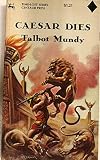
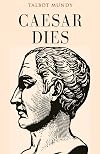
Caesar Dies
by Talbot Mundy
On This Page
Description
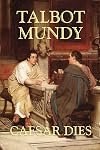
Set during the reign of the Emperor Commodus, here is Talbot Mundy's tale of palace intrigue, the brutalities and debaucheries of Rome, and a man who would make himself ruler of the civilized world! Features an introduction by scholar Darrell Schweitzer.Tags
Recommendations
















Member Reviews
1932. The same year Talbot Mundy wrote "Caesar Dies", the depiction of a Roman dictator, the Emperor Commodus and of life in a police state, Mussolini was writing for Enciclopedia Italiana his "Doctrine of Fascism" in which he said:Therefore it is a spiritualized conception, itself the result of the general reaction of modern times against the flabby materialistic positivism of the nineteenth century. . . . Fascism desires an active man, one engaged in activity with all his energies: it desires a man conscious of the difficulties that exist in action and ready to face them. It conceives of life as a struggle, considering that it behooves man to conquer for himself that life truly worthy of him, creating first of all in himself the show more instrument (physical, moral, intellectual) in order to construct it. Thus for the single individual, thus for the nation, thus for humanity. . . . Had Mundy Mussolini in mind when he narrates how Commodus insults the senators as effeminates while he fights in the arena or skilfully drives a chariot at the races under the name of Paulus surrounded by a posse of gladiators? This book transcends its time period voluntarily chosen remote, to depict the myth of the physical dictator. From Commodus to Mussolini through, to a certain extent, Putin, leaders who glorify their physical achievements to project the image of Leadership abound in history or in the present times. In this novel which belittles the most violent scenes of the movie Gladiator, Rome's name is changed to that of the City of Commodus. The English prose of Mundy makes this painting of Antiquity sumptuous:" Rome became the foster-parent, the possessor of authority. Rome is also a city sold to the highest bidder...Or in sentences exquisite like lace its rival Antioch is brushed: "Dawn was sparking on the mountain peaks; the misty violet of half-light crept into the passes and the sun already bathed the copper roofs of Antioch in gleaming gold above a miracle of greenery and marble." A wonderful read. show less
When Sextus's father Maximus is proscribed by Commodus and Sextus is forced to flee from Antioch, a plot to assassinate the Emperor is launched by his friends, who include Pertinax and Galen.
I found this novel rather clumsy, with a lot of background information not well integrated. Many of the characters seemed rather anachronistic, pining for the Republic and hoping it would be restored after the death of Commodus -- evidently "Gladiator" wasn't the first to come up with that idea.
I found this novel rather clumsy, with a lot of background information not well integrated. Many of the characters seemed rather anachronistic, pining for the Republic and hoping it would be restored after the death of Commodus -- evidently "Gladiator" wasn't the first to come up with that idea.
Not particularly impressive.
Ratings
Members
- Recently Added By
Author Information

123+ Works 1,461 Members
Work Relationships
Common Knowledge
- Canonical title
- Caesar Dies
- Original title
- The Falling Star
- Original publication date
- 1926-10-23
- People/Characters
- Commodus
- Important places
- Ancient Rome; Rome, Italy
Classifications
Statistics
- Members
- 37
- Popularity
- 782,377
- Reviews
- 3
- Rating
- (3.58)
- Languages
- English
- Media
- Paper, Ebook
- ISBNs
- 28
- ASINs
- 8