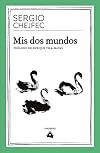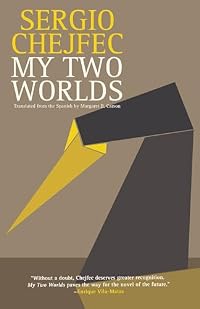
My Two Worlds
by Sergio Chejfec
On This Page
Description
"Approaching his fiftieth birthday, the narrator in "My Two Worlds" is wandering in an unfamiliar Brazilian city, in search of a park. A walker by inclination and habit, he has decided to explore the city after attending a literary conference--he was invited following the publication of his most recent novel, although, as he has been informed via anonymous e-mail, the novel is not receiving good reviews. Initially thwarted by his inability to transpose the two-dimensional information of the show more map onto the impassable roads and dead-ends of the three-dimensional city, once he finds the park the narrator begins to see his own thoughts, reflections, and memories mirrored in the landscape of the park and its inhabitants. Chejfec's "My Two Worlds"--an extraordinary meditation on experience, writing and space--is at once descriptively inventive and preternaturally familiar, a novel that challenges the limitations of the genre"--Provided by publisher. show lessTags
Recommendations












Member Reviews
Lost in Repetitions
I start reading My Two Worlds. I've been looking forward to it. I’ve had it for over ten years. I found it in a little city bookshop that always has terrific little surprises, obscure books, small press books, interesting writers I cannot find elsewhere. I’d go there during lunch hours for the relief from dull working days. I’d buy books to console myself that at the end of the day there was something left of myself. Because most days, work is about other people – agendas, demands, directives. I live as the title suggests, in two worlds. The world of the book and the world where I have more choices. Like reading this book. I would get to the book shop via a route that takes me through historical streets and show more lanes, via underground walkways until I end up in another historical part of the city surrounded by plane trees. The walk is always refreshing. I start in one mood defined by workplace problems and emerge in another, regenerated, optimistic, my own self. The route is essential to the transformational state I experience by walking. It’s partly expectation that the journey would be the same, so there can be the expectation of joy at the end.
I read about twenty pages. And I’m enjoying myself. It’s cerebral, an ideas book. And I’m in the mood. My real self, the one that reads books is having a good time. Then I come across notes and under-linings. They are as interesting as the subject matter I've been reading. Here’s the first:
”When I walk my impression is that a digital sensibility overtakes me, one governed by overlapping windows. I say this not with pride but with annoyance: nothing worse could happen to me, because it affects my intuitive side and feels like a prison sentence. The places or circumstances that have drawn my attention take the form of Internet Links and this is only true for the objects themselves, which are generally urban, part of the life of the street or of the city as a whole, shaped precisely and distinguished from their surroundings, but also in the associations they call to mind, the recollections of what is observed, which may be related, kindred, or quite distinct, depend on whichever way these links are formed.”
I have to say, Chejfec echoes my thoughts exactly from ten or so years ago. But did I have those thoughts, or did I recall these words from another time?
I’ve read this book before. But when? They are MY underlinings. And did I in fact think exactly the same coincidence ten years ago, that my thoughts were echoed then. Yes, there are two worlds and in both worlds I read this book. Or two different time frames. Because in the end, two different times are like two different worlds. And think how easily we slip from one time – when we open the computer to the time we finish. Time is meaningless, we exist in two zones. Yet, I have no recollection. Also underlined:
”On a walk an image will lead me into a memory or into several, and these in turn summon other memories or connected thoughts, often by chance, etc, all creating a delirious branching effect that overwhelms me and leaves me exhausted.”
The walk I take is part of my memory, a collection of experiences I repeat that form who I am. I often dream about that walk, or idly think about it. Never about the reason I needed to take that walk. I freely associate it with several books purchased at the end of the walk. And the joy I experienced as I walked back wondering when the opportunity would arise to read the book. Knowing of course that when I got back to work, the day would change, the switch would flick and everything would go back to the way it was. And when I get home, the patterns would repeat.
So you see, by accidentally reading this book twice, I repeat myself, my experience of purchasing the book. show less
I start reading My Two Worlds. I've been looking forward to it. I’ve had it for over ten years. I found it in a little city bookshop that always has terrific little surprises, obscure books, small press books, interesting writers I cannot find elsewhere. I’d go there during lunch hours for the relief from dull working days. I’d buy books to console myself that at the end of the day there was something left of myself. Because most days, work is about other people – agendas, demands, directives. I live as the title suggests, in two worlds. The world of the book and the world where I have more choices. Like reading this book. I would get to the book shop via a route that takes me through historical streets and show more lanes, via underground walkways until I end up in another historical part of the city surrounded by plane trees. The walk is always refreshing. I start in one mood defined by workplace problems and emerge in another, regenerated, optimistic, my own self. The route is essential to the transformational state I experience by walking. It’s partly expectation that the journey would be the same, so there can be the expectation of joy at the end.
I read about twenty pages. And I’m enjoying myself. It’s cerebral, an ideas book. And I’m in the mood. My real self, the one that reads books is having a good time. Then I come across notes and under-linings. They are as interesting as the subject matter I've been reading. Here’s the first:
”When I walk my impression is that a digital sensibility overtakes me, one governed by overlapping windows. I say this not with pride but with annoyance: nothing worse could happen to me, because it affects my intuitive side and feels like a prison sentence. The places or circumstances that have drawn my attention take the form of Internet Links and this is only true for the objects themselves, which are generally urban, part of the life of the street or of the city as a whole, shaped precisely and distinguished from their surroundings, but also in the associations they call to mind, the recollections of what is observed, which may be related, kindred, or quite distinct, depend on whichever way these links are formed.”
I have to say, Chejfec echoes my thoughts exactly from ten or so years ago. But did I have those thoughts, or did I recall these words from another time?
I’ve read this book before. But when? They are MY underlinings. And did I in fact think exactly the same coincidence ten years ago, that my thoughts were echoed then. Yes, there are two worlds and in both worlds I read this book. Or two different time frames. Because in the end, two different times are like two different worlds. And think how easily we slip from one time – when we open the computer to the time we finish. Time is meaningless, we exist in two zones. Yet, I have no recollection. Also underlined:
”On a walk an image will lead me into a memory or into several, and these in turn summon other memories or connected thoughts, often by chance, etc, all creating a delirious branching effect that overwhelms me and leaves me exhausted.”
The walk I take is part of my memory, a collection of experiences I repeat that form who I am. I often dream about that walk, or idly think about it. Never about the reason I needed to take that walk. I freely associate it with several books purchased at the end of the walk. And the joy I experienced as I walked back wondering when the opportunity would arise to read the book. Knowing of course that when I got back to work, the day would change, the switch would flick and everything would go back to the way it was. And when I get home, the patterns would repeat.
So you see, by accidentally reading this book twice, I repeat myself, my experience of purchasing the book. show less
Sergio Chejfec writes:
So I began to think about how long I’ve been taking walks. Years, decades. And if I live significantly longer I could keep on adding, because one thing I’m sure of is that I’ll never stop. But despite this great amount of walking, however, no walk has provided me with any genuine revelation. In my case it’s not as it was in the past, when walkers felt reunited with something that was revealed only during the course of the walk, or believed they had discovered aspects of the world or relationships within nature that had been hidden until then. I never discovered anything, only a vague idea of what was new and different, and rather fleeting at that. I now think I went on walks to experience a specific type of show more anxiety, one that I’ll call nostalgic anxiety, or empty nostalgia. Nostalgic anxiety would be a state of deprivation in which one has no chance for genuine nostalgia. There may be various reasons for the block. If I’m going to explain it, I have to tell the story of my borrowed ideas, which I’m full of – I say “borrowed,” but I’m not suggesting I don’t have full rights to them, on the contrary…
One of these ideas, among the first I assimilated so thoroughly as to make it my own, was the idealization, initially during the Romantic Era, then the Modern, of the long walk. There must have been something wrong with me, because at the point at which I should have chosen a way of life for my future, I found nothing persuasive. From early on I’ve felt unequal to any kind of enthusiasm: incapable of believing in almost anything, or frankly, in anything at all; disappointed beforehand by politics; skeptical of youth culture despite being, at the time, young; an idle spectator at the collective race for money and so-called material success; suspicious of the benevolence of charity and self-improvement; oblivious of the benefits of procreation and the possibilities of biological continuity; oblivious as well of the idea of following sports or any variety of spectacle; unable to work up enthusiasm for any impracticable profession or scientific vocation; inept at arts or at crafts, at physical or manual labor, also intellectual; to sum up, useless for work in general; unfit for dreaming; with no belief in any religious alternative while longing to be initiated into that realm; too shy or incompetent for an enthusiastic sex life; in short, given such failings, I had no other choice but to walk, which most resembled the vacant and available mind. show less
So I began to think about how long I’ve been taking walks. Years, decades. And if I live significantly longer I could keep on adding, because one thing I’m sure of is that I’ll never stop. But despite this great amount of walking, however, no walk has provided me with any genuine revelation. In my case it’s not as it was in the past, when walkers felt reunited with something that was revealed only during the course of the walk, or believed they had discovered aspects of the world or relationships within nature that had been hidden until then. I never discovered anything, only a vague idea of what was new and different, and rather fleeting at that. I now think I went on walks to experience a specific type of show more anxiety, one that I’ll call nostalgic anxiety, or empty nostalgia. Nostalgic anxiety would be a state of deprivation in which one has no chance for genuine nostalgia. There may be various reasons for the block. If I’m going to explain it, I have to tell the story of my borrowed ideas, which I’m full of – I say “borrowed,” but I’m not suggesting I don’t have full rights to them, on the contrary…
One of these ideas, among the first I assimilated so thoroughly as to make it my own, was the idealization, initially during the Romantic Era, then the Modern, of the long walk. There must have been something wrong with me, because at the point at which I should have chosen a way of life for my future, I found nothing persuasive. From early on I’ve felt unequal to any kind of enthusiasm: incapable of believing in almost anything, or frankly, in anything at all; disappointed beforehand by politics; skeptical of youth culture despite being, at the time, young; an idle spectator at the collective race for money and so-called material success; suspicious of the benevolence of charity and self-improvement; oblivious of the benefits of procreation and the possibilities of biological continuity; oblivious as well of the idea of following sports or any variety of spectacle; unable to work up enthusiasm for any impracticable profession or scientific vocation; inept at arts or at crafts, at physical or manual labor, also intellectual; to sum up, useless for work in general; unfit for dreaming; with no belief in any religious alternative while longing to be initiated into that realm; too shy or incompetent for an enthusiastic sex life; in short, given such failings, I had no other choice but to walk, which most resembled the vacant and available mind. show less
This work by Chejfec was a fascinating character sketch absolutely devoid of plot. The genius of it lay with its ability to reveal the narrator ever so gradually, to create a multi-dimensional view of him from one of the most talented and intimate first person points of view I have ever read. The scenes rippled back and forth through time, yet there was no confusion of the order of events, because there were no events. Chejfec used digital imagery to good effect here, and portrayed the combination of a walking habit, thoughtful personality, and varied life with a striking vividness.
This is a book about an afternoon spent wandering in a park. It's endorsed enthusiastically by Vila-Matas as an example of the future of the novel. Vila-Matas is wonderful, and I have nothing against experimental novels that try to do very little. (In a maximalist way, "The Pale King" is similar.)
The problem here is that I just can't believe Chejfec. The book has airs of the universalism of Beckett and the everyday despondency of Pessoa. The narrator isn't particular good at remembering things, making distinctions, or observing (as in Beckett's "Ill Seen Ill Said"). The city he's exploring could be any city (as in Pessoa). But I just can't believe it: the detachment, the indifference, are poses put on for this book. The narrator carries show more books wit him, and he is attending a literary conference, but we hear very little about either: it's as if the narrator is so deeply abstracted that he has lost touch with the day-to-day reality of the business of writing fiction. But I don't believe that: it's more like he wants to write a novel in which he appears as a detached, indifferent observer of the world.
What's especially telling here (and, in the end, particularly annoying) is that he won't tell us what city he's in. It's "a large city" in "the south of Brazil." Cities are never named in the novel. Now on the one hand, that's reasonable, if the purpose is to avoid the travelogue genre. But it's more a matter of a spurious seriousness. It's portentous and pretentious to keep saying "a city," and it has to be supported by an equally forceful strangeness in the narrator. Chejfec isn't "K," roaming unnamed cities, and he isn't Levi's protagonist, cataloging imaginary cities. Clearly he is a perfectly ordinary writer, traveling for a literary conference; he needs to get away, so he goes out wandering. An interview that came with the book confirms this; Chejfec tried to obscure it by writing a nameless, placeless prose. But he, and his narrator, aren't as absent-minded, or as transcendently indifferent, as they want us to think. All sorts of clues show this.
He says he's excellent at map reading, but when the book opens he's lost. That seems inadequately imagined, by which I mean Chejfec is clearly good at maps, and hasn't convinced me his narrator isn't. (He also adds "map reading is one of my few skills": that's one of many disavowals of skill and knowledge that are meant to establish the narrator as a slightly abstracted personality, but which read, to me, as entirely gratuitous assertions of a degree of detachment that the writer himself doesn't possess.) In another passage, he observes some people either playing cards or dice. We're told he can't tell which. The idea is that the narrator is slightly disengaged and has indifferent skills at observation. But it comes across as unbelievable: it doesn't seem plausible that a man in a park -- a writer! -- whose entire business is recording his thoughts about what he sees, cannot tell which game the people are playing. It's not that the book needs to be the ordinary realist memoir; I would have loved it if Chejfec were a second Pessoa. It's that the narrator's voice is a pose.
And last, it bears mentioning that the narrator's observations are not interesting, except in one or two cases. (A fairly good but brief passage on looking at animals; another on William Kentridge's depiction of people seeing.) Again it would be fine if the entire book were full of average, disconnected, stray thoughts about things, at the level of reverie appropriate to a city park: but it appears in some passages Chejfec thinks he's being insightful, but he isn't: he isn't Musil, or Canetti, or Benjamin. He is more like his narrator than he would like to think, but not enough like his narrator to make the book convincing.
Vila-Matas's unawareness of this is perplexing. I will try another novel of Chefjec's to see. I would have thought that Vila-Matas would pick up on the book's artificiality. show less
The problem here is that I just can't believe Chejfec. The book has airs of the universalism of Beckett and the everyday despondency of Pessoa. The narrator isn't particular good at remembering things, making distinctions, or observing (as in Beckett's "Ill Seen Ill Said"). The city he's exploring could be any city (as in Pessoa). But I just can't believe it: the detachment, the indifference, are poses put on for this book. The narrator carries show more books wit him, and he is attending a literary conference, but we hear very little about either: it's as if the narrator is so deeply abstracted that he has lost touch with the day-to-day reality of the business of writing fiction. But I don't believe that: it's more like he wants to write a novel in which he appears as a detached, indifferent observer of the world.
What's especially telling here (and, in the end, particularly annoying) is that he won't tell us what city he's in. It's "a large city" in "the south of Brazil." Cities are never named in the novel. Now on the one hand, that's reasonable, if the purpose is to avoid the travelogue genre. But it's more a matter of a spurious seriousness. It's portentous and pretentious to keep saying "a city," and it has to be supported by an equally forceful strangeness in the narrator. Chejfec isn't "K," roaming unnamed cities, and he isn't Levi's protagonist, cataloging imaginary cities. Clearly he is a perfectly ordinary writer, traveling for a literary conference; he needs to get away, so he goes out wandering. An interview that came with the book confirms this; Chejfec tried to obscure it by writing a nameless, placeless prose. But he, and his narrator, aren't as absent-minded, or as transcendently indifferent, as they want us to think. All sorts of clues show this.
He says he's excellent at map reading, but when the book opens he's lost. That seems inadequately imagined, by which I mean Chejfec is clearly good at maps, and hasn't convinced me his narrator isn't. (He also adds "map reading is one of my few skills": that's one of many disavowals of skill and knowledge that are meant to establish the narrator as a slightly abstracted personality, but which read, to me, as entirely gratuitous assertions of a degree of detachment that the writer himself doesn't possess.) In another passage, he observes some people either playing cards or dice. We're told he can't tell which. The idea is that the narrator is slightly disengaged and has indifferent skills at observation. But it comes across as unbelievable: it doesn't seem plausible that a man in a park -- a writer! -- whose entire business is recording his thoughts about what he sees, cannot tell which game the people are playing. It's not that the book needs to be the ordinary realist memoir; I would have loved it if Chejfec were a second Pessoa. It's that the narrator's voice is a pose.
And last, it bears mentioning that the narrator's observations are not interesting, except in one or two cases. (A fairly good but brief passage on looking at animals; another on William Kentridge's depiction of people seeing.) Again it would be fine if the entire book were full of average, disconnected, stray thoughts about things, at the level of reverie appropriate to a city park: but it appears in some passages Chejfec thinks he's being insightful, but he isn't: he isn't Musil, or Canetti, or Benjamin. He is more like his narrator than he would like to think, but not enough like his narrator to make the book convincing.
Vila-Matas's unawareness of this is perplexing. I will try another novel of Chefjec's to see. I would have thought that Vila-Matas would pick up on the book's artificiality. show less
Sometimes I feel bad for comparing every book I read to something I've read in the past. But a lot of times it seems helpful, especially when comparing books that have nothing to do with each other, in that they bring out a different way of reading, shadows of each reading experience accentuating the other.
Every once in a while, it isn't helpful, but also unavoidable. In cases like this, for instance. My Two Worlds is so firmly in the shadow of Sebald that I cannot not invoke his name. Chejfec uses many of the same devices, but doesn't achieve any of the magic of Sebald.
The question is: does he achieve anything else? Something of his own? That is hard to say. There are some good passages, but they quickly run out of steam, or become show more way too noodly, caught in a thought about a thought, instead of transcending it into a sort of meditation. A lot of it, while reading, seemed trivial while trying to be deep. The language, while interesting, doesn't sustain long enough for me to lose my breath. There is something here, but it's not enough of its own thing yet for me to truly love.
Next up on my Sebald-inspired reading list... Teju Cole's [b:Open City|8526694|Open City|Teju Cole|http://photo.goodreads.com/books/1327935192s/8526694.jpg|13393712]
PS: But wait! This awesome review makes a good case for this book. Maybe you should give it a chance. show less
Every once in a while, it isn't helpful, but also unavoidable. In cases like this, for instance. My Two Worlds is so firmly in the shadow of Sebald that I cannot not invoke his name. Chejfec uses many of the same devices, but doesn't achieve any of the magic of Sebald.
The question is: does he achieve anything else? Something of his own? That is hard to say. There are some good passages, but they quickly run out of steam, or become show more way too noodly, caught in a thought about a thought, instead of transcending it into a sort of meditation. A lot of it, while reading, seemed trivial while trying to be deep. The language, while interesting, doesn't sustain long enough for me to lose my breath. There is something here, but it's not enough of its own thing yet for me to truly love.
Next up on my Sebald-inspired reading list... Teju Cole's [b:Open City|8526694|Open City|Teju Cole|http://photo.goodreads.com/books/1327935192s/8526694.jpg|13393712]
PS: But wait! This awesome review makes a good case for this book. Maybe you should give it a chance. show less
Although I did not like the book enough to give it a goodreads "three stars" that says that I do, the book is far better than most. For that reason I will mark it three. At least I finished it. And that was for two reasons: it was short and it came to me recommended from a friend. The many problems I had with the book I explain in the following review which can be found here if one is so inclined to read my views:
http://mewlhouse.hubpages.com/hub/A-Walk-with-Sergio-Chejfec
http://mewlhouse.hubpages.com/hub/A-Walk-with-Sergio-Chejfec
Ratings
Members
- Recently Added By
Author Information

26+ Works 383 Members
Some Editions
Awards and Honors
Series
Belongs to Publisher Series
Candaya Narrativa (10)
Common Knowledge
- Original title
- Mis dos mundos
- Original publication date
- 2008
- Original language
- Spanish
Classifications
- Genres
- Fiction and Literature, General Fiction
- DDC/MDS
- 863.64 — Literature & rhetoric Spanish Literature Spanish fiction 20th Century 1945-2000
- LCC
- PQ7798.13 .H38 .M57 — Language and Literature French, Italian, Spanish and Portuguese literatures Spanish literature Provincial, local, colonial, etc. Spanish America
- BISAC
Statistics
- Members
- 114
- Popularity
- 284,480
- Reviews
- 6
- Rating
- (3.50)
- Languages
- English, French, Spanish
- Media
- Paper, Ebook
- ISBNs
- 7
- ASINs
- 2