Psycho [1960 film]
by Alfred Hitchcock (Director), Joseph Stefano (Screenwriter)
Psycho {film series} (1), High Quality Content by Wikipedia Articles
On This Page
Description
Horror melodrama in which a woman disappears after spending the night in an isolated motel which adjoins an eerie Victorian mansion, inhabited by a disturbed young man and his mother.Tags
Recommendations











Member Recommendations

jseger9000 Though the stories and characters are different, Dressed to Kill is essentially a remake of Psycho. Interesting to watch them back to back.
31

Litrvixen A reimagining of the origin of Norman Bates and his mothers from Psycho.
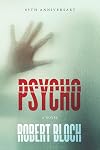
by Litrvixen
Member Reviews
Marion Crane, a real estate secretary, has a secret relationship with her boyfriend Sam. She wants to get married, but he's too concerned about his debts and general lack of money...so when Marion is handed an envelope with $40,000 at work and told to immediately deposit it at the bank, she instead decides at the spur-of-the-moment to steal the money for her and Sam.
Increasingly concerned about the amount of attention she's getting from a cop, Marion ends up at the Bates Motel off the main highway. The proprietor, Norman Bates, seems a little odd and awkward, but Marion feels sympathetic towards him when she overhears Norman's mother berating her for wanting to allow Marion over for dinner. Now that she's had some time to think, Marion show more is reconsidering her decision to steal the money. Unfortunately, the Bates Motel was the wrong place to stop for the night.
I had never previously seen this, although cultural osmosis meant that I already knew about the twist ending, and I'd seen stills of the shower scene before. Although aspects of it haven't aged well, this was still worth watching.
Marion and Sam didn't work at all for me as a couple, and her sudden decision to steal the $40,000 immediately came across as a giant, stupid mistake. Buying a different car as the suspicious cop watched didn't really help - she was doomed to failure, one way or another. But her increasing tension and fear were believable, and I liked the way the creepiness of the cop made Norman Bates seem safer by comparison. Of course, I already knew that wasn't going to be the case, but as it turns out, I've never seen the outcome of the shower scene, so that was still a bit of a shock.
Anthony Perkins was excellent as Norman, shifting effortlessly between shy and kind of pitiful to something darker and more ominous. Unfortunately, the ending was one of those things that hasn't aged well. The big reveal wasn't so much shocking and scary as it was unintentionally funny, and the psychologist's monologue at the end was dated and came across as extremely insensitive - he treated this case like a fascinating puzzle, laying out all the pieces, apparently unbothered by the fact that he was talking to, among others, the victim's sister and boyfriend.
Extras:
Trailers, production photographs, behind-the-scenes photographs, storyboards for the shower scene, some behind-the-scenes info on the shower scene, and more. Nothing as helpful as the extras on the Dial "M" for Murder DVD I watched, although I appreciated the info on the shower scene. It sounded like Hitchcock went out of his way to make sure that filming the scene wouldn't be distressing for anyone involved, although the end result had to look violent.
(Original review posted on A Library Girl's Familiar Diversions.) show less
Increasingly concerned about the amount of attention she's getting from a cop, Marion ends up at the Bates Motel off the main highway. The proprietor, Norman Bates, seems a little odd and awkward, but Marion feels sympathetic towards him when she overhears Norman's mother berating her for wanting to allow Marion over for dinner. Now that she's had some time to think, Marion show more is reconsidering her decision to steal the money. Unfortunately, the Bates Motel was the wrong place to stop for the night.
I had never previously seen this, although cultural osmosis meant that I already knew about the twist ending, and I'd seen stills of the shower scene before. Although aspects of it haven't aged well, this was still worth watching.
Marion and Sam didn't work at all for me as a couple, and her sudden decision to steal the $40,000 immediately came across as a giant, stupid mistake. Buying a different car as the suspicious cop watched didn't really help - she was doomed to failure, one way or another. But her increasing tension and fear were believable, and I liked the way the creepiness of the cop made Norman Bates seem safer by comparison. Of course, I already knew that wasn't going to be the case, but as it turns out, I've never seen the outcome of the shower scene, so that was still a bit of a shock.
Anthony Perkins was excellent as Norman, shifting effortlessly between shy and kind of pitiful to something darker and more ominous. Unfortunately, the ending was one of those things that hasn't aged well. The big reveal wasn't so much shocking and scary as it was unintentionally funny, and the psychologist's monologue at the end was dated and came across as extremely insensitive - he treated this case like a fascinating puzzle, laying out all the pieces, apparently unbothered by the fact that he was talking to, among others, the victim's sister and boyfriend.
Extras:
Trailers, production photographs, behind-the-scenes photographs, storyboards for the shower scene, some behind-the-scenes info on the shower scene, and more. Nothing as helpful as the extras on the Dial "M" for Murder DVD I watched, although I appreciated the info on the shower scene. It sounded like Hitchcock went out of his way to make sure that filming the scene wouldn't be distressing for anyone involved, although the end result had to look violent.
(Original review posted on A Library Girl's Familiar Diversions.) show less
A secretary runs off with stolen cash and ends up at an isolated motel.
Knowing what's going to happen ruins most of the suspense, but it's still awesome.
Concept: C
Story: A
Characters: B
Dialog: B
Pacing: C
Cinematography: A
Special effects/design: A
Acting: B
Music: A
Enjoyment: B
GPA: 3.2/4
Knowing what's going to happen ruins most of the suspense, but it's still awesome.
Concept: C
Story: A
Characters: B
Dialog: B
Pacing: C
Cinematography: A
Special effects/design: A
Acting: B
Music: A
Enjoyment: B
GPA: 3.2/4
Acting: 5.0; Theme: 5.0; Content: 4.0; Language: 5.0; Overall: 5.0
An attractive woman decides to steal a large sum of money from the bank that she works at and leave town. When she decides to stay at a hotel in the middle of nowhere, her horror begins. Classic Hitchcockian thriller. Highly recommend.
***June 10, 2024***
An attractive woman decides to steal a large sum of money from the bank that she works at and leave town. When she decides to stay at a hotel in the middle of nowhere, her horror begins. Classic Hitchcockian thriller. Highly recommend.
***June 10, 2024***
Phoenix office worker Marion Crane is fed up with the way life has treated her. She has to meet her lover Sam in lunch breaks, and they cannot get married because Sam has to give most of his money away in alimony. One Friday, Marion is trusted to bank forty thousand dollars by her employer. Seeing the opportunity to take the money and start a new life, Marion leaves town and heads towards Sam's California store. Tired after the long drive and caught in a storm, she gets off the main highway and pulls into the Bates Motel. The motel is managed by a quiet young man called Norman who seems to be dominated by his mother.
Senarathne Weerasinghe
Edward Hopper's eerie 1925 painting, House by the Railroad later inspired Norman Bates' 1960 Psycho house, which later inspired Cornelia Parker’s 2016 PsychoBarn, all of which inspired this review! ;-) The impact Psycho has had on modern film is taken for granted. It changed all the rules about filmmaking, not just horror. Outside of being a cultural landmark, it's essentially a perfect movie: the score, the acting, the framing - everything comes together here.
Jan 17, 2025Portuguese (Brazil)
Marion Crane, una joven secretaria, tras cometer el robo de un dinero en su empresa, huye de la ciudad y, después de conducir durante horas, decide descansar en un pequeño y apartado motel de carretera regentado por un tímido joven llamado Norman Bates, que vive en la casa de al lado con su madre.
Aug 24, 2017Spanish
Members
- Recently Added By
Published Reviews
It was the most shocking film its original audience members had ever seen. "Do not reveal the surprises!" the ads shouted, and no moviegoer could have anticipated the surprises Hitchcock had in store--the murder of Marion (Janet Leigh), the apparent heroine, only a third of the way into the film, and the secret of Norman's mother. "Psycho" was promoted like a William Castle exploitation show more thriller.... Unlike modern horror films, "Psycho" never shows the knife striking flesh. There are no wounds. There is blood, but not gallons of it. Hitchcock shot in black and white because he felt the audience could not stand so much blood in color. The slashing chords of Bernard Herrmann's soundtrack substitute for more grisly sound effects. The closing shots are not graphic but symbolic, as blood and water spin down the drain, and the camera cuts to a closeup, the same size, of Marion's unmoving eyeball. This remains the most effective slashing in movie history, suggesting that situation and artistry are more important than graphic details. show less
added by Lemeritus
The “Psycho” diagnosis, commercially, is this: an unusual, good entertainment, indelibly Hitchcock, and on the right kind of boxoffice beam. The campaign backing is fitting and potent. The edict against seating customers after opening curtain, if respected may add to the intrigue. All adds up to success.
added by Lemeritus
There is not an abundance of subtlety or the lately familiar Hitchcock bent toward significant and colorful scenery in this obviously low-budget job....That's the way it is with Mr. Hitchcock's picture -- slow buildups to sudden shocks that are old-fashioned melodramatics, however effective and sure, until a couple of people have been gruesomely punctured and the mystery of the haunted house show more has been revealed. show less
added by Lemeritus
Lists

Movies wishlist
134 works; 2 members

Great Films Based on Books
319 works; 140 members
Author Information

Alfred Hitchcock was born on August 13, 1899 in London, England. He graduated from St. Ignatius College, where he studied engineering, and took art courses at the University of London. He worked briefly as a technical calculator for a cable company, but soon decided to focus on art, becoming an advertising layout draftsman for a London department show more store. In 1920, he got a job writing and illustrating title cards for silent pictures. He rose quickly, to script writer, art director and assistant director. By 1925, he had become a director, making a melodrama called The Pleasure Garden. In 1929, he directed Blackmail, Britain's first widely successful talking feature. The other movies he directed in England included The Lodger (U.S. title, The Case of Jonathan Drew), The Man Who Knew Too Much, The 39 Steps, and The Lady Vanishes. He was approached by producer David O. Selznick about directing in the United States, and he accepted so he could take advantage of the better-equipped American studios. His first American film, Rebecca, won the Academy Award for best picture. The other movies he directed in the United States included Shadow of a Doubt, Spellbound, Rear Window, Vertigo, Psycho, The Birds, Frenzy, and Family Plot. In 1979, he was awarded the American Film Institute Life Achievement Award. In 1980, he was knighted by Queen Elizabeth II. He died from liver failure and heart problems on April 29, 1980 at the age of 80. (Bowker Author Biography) show less

All Editions
Awards and Honors
Awards
Series


Work Relationships
Is contained in
The Alfred Hitchcock Collection: The Best of Hitchcock, Vol. 1 (Psycho / Rear Window / Shadow of a Doubt / The Man Who Knew Too Much (1956) / Rope / Topaz / Family Plot / Alfred Hitchcock Presents Vol. 2) by Alfred Hitchcock
Alfred Hitchcock Classics Collection: Rear Window, Vertigo, Psycho and The Birds by Alfred Hitchcock
Alfred Hitchcock ,The Masterpiece Collection, Discs 5-8: The Trouble With Harry / The Man Who Knew Too Much / Vertigo / Psycho [Psycho HDX digital / all DVD] by Alfred Hitchcock
Alfred Hitchcock Collection: Saboteur, Shadow of Doubt, Rope, Rear Window, The Trouble with Harry, The Man Who Knew Too Much, Psycho by Alfred Hitchcock
Is retold in
Is an adaptation of
Is parodied in
Has as a reference guide/companion
Has as a study
Has as a supplement
Has as a student's study guide
Common Knowledge
- Canonical title
- Psycho [1960 film]
- Original title
- Psycho
- Original publication date
- 1960-06-16
- People/Characters
- Norman Bates (Anthony Perkins); Marion Crane (Janet Leigh); Lila Crane (Vera Miles); Sam Loomis (John Gavin)
- Important places
- Phoenix, Arizona, USA; Arizona, USA; Fairvale, California, USA; California, USA; Bates Motel
- Related movies
- Psycho (1960 | IMDb)
- Original language
- English
- Canonical DDC/MDS
- 791.4372
- Canonical LCC
- PS3503.L718
- Disambiguation notice
- This is the 1960 film version directed by Alfred Hitchcock. Based on the book by Robert Bloch.
Classifications
- DDC/MDS
- 791.4372 — Arts & recreation Recreation, sports, and performing arts Public performances Motion pictures, radio, television, podcasting Motion pictures Films; screenplays Single films
- LCC
- PS3503 .L718 — Language and Literature American literature American literature Individual authors 1900-1960
Statistics
- Members
- 500
- Popularity
- 60,543
- Reviews
- 9
- Rating
- (4.38)
- Languages
- 5 — English, French, Italian, Portuguese, Spanish
- ISBNs
- 17
- UPCs
- 15
- ASINs
- 32