On This Page
Description
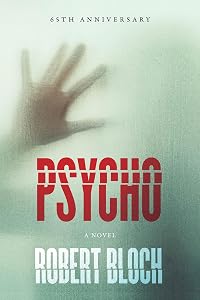
It was a dark and stormy night when Mary Crane glimpsed the unlit neon sign announcing the vacancy at the Bates Motel. Exhausted, lost, and at the end of her rope, she was eager for a hot shower and a bed for the night. Her room was musty but clean, and the manager seemed nice ... if a little odd.Norman Bates loves his Mother. She has been dead for the past twenty years, or so people think. Norman knows better though. He has lived with Mother ever since leaving the hospital in the old house show more up on the hill above the Bates Motel. One night, Norman spies on a beautiful woman that has checked into the hotel. Norman can't help but spy on her. Mother is there though. She is there to protect Norman from his filthy thoughts. She is there to protect him with her butcher knife.
This classic horror novel, which inspired the famous film by Alfred Hitchcock, has been thrilling people for more than fifty years. It introduced one of the most unexpectedly twisted villains of all time in Norman Bates, the reserved motel manager with a mother complex, and has been called the first psychoanalytic thriller.
. show less
Tags
Recommendations

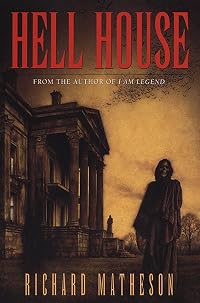
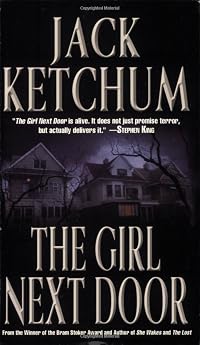
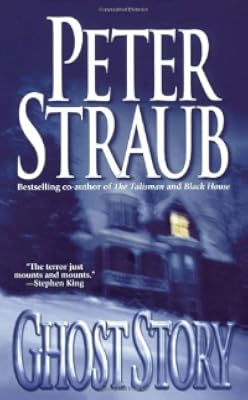


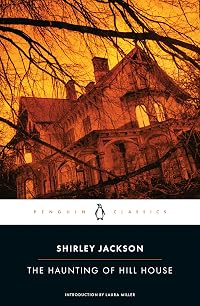






Member Recommendations


Member Reviews
Reading *Psycho* more than sixty years after the release of Alfred Hitchcock’s film creates a strange problem for the novel. The book itself is strong—tight, psychological, and sharply written—but it has been overshadowed so completely by its own adaptation that much of the suspense no longer functions the way Bloch intended.
At the time of publication, the story’s structure depended on uncertainty. Robert Bloch slowly builds unease around Norman Bates, the isolated owner of a failing roadside motel. The novel carefully layers clues about Norman’s relationship with his mother and his fragile psychological state. For an original reader, the final revelation would have landed as a genuine shock.
Modern readers, however, approach show more the book with decades of cultural memory already in place. The ending is one of the most famous twists in cinema history, and it has been referenced, parodied, and discussed endlessly since the release of Hitchcock’s 1960 film. Because of that, the central mystery of the novel is almost impossible to encounter fresh. The reader is not discovering the truth alongside the characters—they are simply waiting for the story to reach a destination they already know.
That familiarity changes the experience significantly. Instead of suspense, the novel becomes an exercise in watching the mechanics of a twist slowly assemble itself. The tension that Bloch carefully constructs feels muted because the outcome is already part of popular culture.
This is unfortunate, because *Psycho* is genuinely a strong piece of psychological horror. Bloch’s version of Norman Bates is closer to the real-life inspiration behind the character, Ed Gein: middle-aged, socially isolated, and trapped in a decaying motel that mirrors his deteriorating mental state. The book leans more heavily into Norman’s internal world than the film does, which gives the story a colder and more unsettling psychological edge.
The result is a paradox. *Psycho* is an excellent novel that has been partially undermined by its own success. The film adaptation became so iconic that it permanently removed the element of surprise that originally powered the book. What remains is still well written and historically important, but it is difficult to read it today without feeling that the story’s greatest weapon—its revelation—has already been taken away by sixty years of cultural exposure.
In that sense, *Psycho* is a rare case of a great book being weakened not by the quality of its adaptation, but by the sheer cultural dominance of that adaptation. show less
At the time of publication, the story’s structure depended on uncertainty. Robert Bloch slowly builds unease around Norman Bates, the isolated owner of a failing roadside motel. The novel carefully layers clues about Norman’s relationship with his mother and his fragile psychological state. For an original reader, the final revelation would have landed as a genuine shock.
Modern readers, however, approach show more the book with decades of cultural memory already in place. The ending is one of the most famous twists in cinema history, and it has been referenced, parodied, and discussed endlessly since the release of Hitchcock’s 1960 film. Because of that, the central mystery of the novel is almost impossible to encounter fresh. The reader is not discovering the truth alongside the characters—they are simply waiting for the story to reach a destination they already know.
That familiarity changes the experience significantly. Instead of suspense, the novel becomes an exercise in watching the mechanics of a twist slowly assemble itself. The tension that Bloch carefully constructs feels muted because the outcome is already part of popular culture.
This is unfortunate, because *Psycho* is genuinely a strong piece of psychological horror. Bloch’s version of Norman Bates is closer to the real-life inspiration behind the character, Ed Gein: middle-aged, socially isolated, and trapped in a decaying motel that mirrors his deteriorating mental state. The book leans more heavily into Norman’s internal world than the film does, which gives the story a colder and more unsettling psychological edge.
The result is a paradox. *Psycho* is an excellent novel that has been partially undermined by its own success. The film adaptation became so iconic that it permanently removed the element of surprise that originally powered the book. What remains is still well written and historically important, but it is difficult to read it today without feeling that the story’s greatest weapon—its revelation—has already been taken away by sixty years of cultural exposure.
In that sense, *Psycho* is a rare case of a great book being weakened not by the quality of its adaptation, but by the sheer cultural dominance of that adaptation. show less
It says a lot about a book that can keep your interest even when the punchline is as well known as this one. Even if you haven't seen the movie you'd know the beats from cultural osmosis. Despite this, this is good enough to draw you in. The way Bloch uses ambiguity and makes you second-guess the inevitable conclusion is great, and reminds me a lot of The Exorcist. The use of a logical, skeptical progression and people doing what seems rational rather than the usual horror genre bollocks of characters having a temporary stroke that makes them come to insane conclusions or do the dumbest actions imaginable, is the key ingredient in this book, The Exorcist and virtually all great horror novels I've read.
The contrast between this and this show more year's Halloween Challenge nadir Midnight Mass is like night and day on that point specifically. show less
The contrast between this and this show more year's Halloween Challenge nadir Midnight Mass is like night and day on that point specifically. show less
It’s rare to be able enjoy a book and its movie adaptation equally. The characters are so wonderfully drawn, it’s impossible to not have strong feelings about them all, from the skin-crawling creepiness of Norman Bates to anger and impatience for the complacently incompetent sheriff. The story and the pop-psychology it depends on is a little dated now, but not enough to detract from the fun.
Sometimes the best part of a thriller is the big reveal at the end. No doubt Psycho has an excellent one, for the .0001% of readers who don’t already know. But for the rest of us, there’s no loss in reading pleasure for already knowing the book’s secrets. The author has so many tongue-in-cheek references to it, that it’s almost designed show more for re-reads. Every time I came across a seemingly innocent remark or reference with a double-meaning, I genuinely laughed out loud.
Audiobook, via Audible. Paul Michael Garcia’s narration is fantastic – his Norman gave me shivers, but he voiced every character and their POV perfectly. At only 5 ½ hours of audio, Psycho is just short enough to go on my annual Halloween reading list. show less
Sometimes the best part of a thriller is the big reveal at the end. No doubt Psycho has an excellent one, for the .0001% of readers who don’t already know. But for the rest of us, there’s no loss in reading pleasure for already knowing the book’s secrets. The author has so many tongue-in-cheek references to it, that it’s almost designed show more for re-reads. Every time I came across a seemingly innocent remark or reference with a double-meaning, I genuinely laughed out loud.
Audiobook, via Audible. Paul Michael Garcia’s narration is fantastic – his Norman gave me shivers, but he voiced every character and their POV perfectly. At only 5 ½ hours of audio, Psycho is just short enough to go on my annual Halloween reading list. show less
Psycho
By Robert Bloch
Sally Apollon
Overall Score: 6 out of 10
By way of introduction, let me first say that there were a series of events that kept putting this book into my mind. First, I saw the film “Hitchcock” about the Director and found it to be quite interesting, especially the angle of the story where he is pushing this book into movie production against the advice of nearly everyone around him. It is with this movie that the horror genre is truly born. Also, Rude Boy George have been remaking the song “Psycho Killer” by Talking Heads, always a favorite song. And of course, like most of us, I’ve seen the original and the remake of the movie a few times. I don’t very often choose to read books AFTER seeing a film, but show more since both book (1959) and movie (1960), were created before I was born, that just wasn’t possible. So this has all been rattling around in my head & I got the book to look at but couldn’t stop reading it.
STYLE: Written in thriller style, the pace moves along quickly & you get to see different character’s perspectives and thought processes. The author goes to great pains to have you understand what Norman Bates is thinking and why he is thinking this—which I find to be compelling and fascinating as a novel-writing tactic. It’s one thing to tell the story of WHAT happened, quite another to successfully illustrate the WHY in such extreme circumstances.
TIME & PLACE: The late 1950s, West Coast, smalltown America; old-fashioned small-minded people who can’t imagine something awful & horrible happening in their backyard. I find this to be an effective setting for the events that follow. The introduction of Mary Crane doing an impulsive theft and hoping for a better life is an interesting start to a story that quickly takes one bizarre turn followed by another. The Bates Motel is well-described and translated well to the big screen, it could have been written for the screen—but this demonstrates Hitchcock’s vision.
CHARACTER: Mary Crane is intriguing, but only a sketch compared to the central character of Norman Bates. I think the others in the story work well around him, but inevitably he’s the one who’s completely filled out. Norman is multi-dimensional. This is a really detailed insight into the mind of someone who is destroyed by mental illness. Different characteristics are attributed to different personalities. Having worked closely with people suffering from this, I find the description quite convincing. I also find the historical narrative of how Norman became this way & the abusive way in which his mother treated him to provide completion.
In summary, I read about how the author was influenced by true events that occurred near where he lived in Wisconsin and it stands to reason because the character, Norman Bates, does have a ring of authenticity, even to someone who has worked with mentally ill people. The ending where Norman has sunk further into psychosis & “become” his mother is strangely appropriate. He developed the multiple personality in the first place to cope with the horror of matricide, but after further murder it would make sense that he would sink deeper into his “coping mechanism”. As is typically the case there is a lot more information in the book than in the film and some details that pan out differently. I really enjoyed this book, it was a quick & easy read—although not over-simplistic, which was what I wanted at the time. show less
By Robert Bloch
Sally Apollon
Overall Score: 6 out of 10
By way of introduction, let me first say that there were a series of events that kept putting this book into my mind. First, I saw the film “Hitchcock” about the Director and found it to be quite interesting, especially the angle of the story where he is pushing this book into movie production against the advice of nearly everyone around him. It is with this movie that the horror genre is truly born. Also, Rude Boy George have been remaking the song “Psycho Killer” by Talking Heads, always a favorite song. And of course, like most of us, I’ve seen the original and the remake of the movie a few times. I don’t very often choose to read books AFTER seeing a film, but show more since both book (1959) and movie (1960), were created before I was born, that just wasn’t possible. So this has all been rattling around in my head & I got the book to look at but couldn’t stop reading it.
STYLE: Written in thriller style, the pace moves along quickly & you get to see different character’s perspectives and thought processes. The author goes to great pains to have you understand what Norman Bates is thinking and why he is thinking this—which I find to be compelling and fascinating as a novel-writing tactic. It’s one thing to tell the story of WHAT happened, quite another to successfully illustrate the WHY in such extreme circumstances.
TIME & PLACE: The late 1950s, West Coast, smalltown America; old-fashioned small-minded people who can’t imagine something awful & horrible happening in their backyard. I find this to be an effective setting for the events that follow. The introduction of Mary Crane doing an impulsive theft and hoping for a better life is an interesting start to a story that quickly takes one bizarre turn followed by another. The Bates Motel is well-described and translated well to the big screen, it could have been written for the screen—but this demonstrates Hitchcock’s vision.
CHARACTER: Mary Crane is intriguing, but only a sketch compared to the central character of Norman Bates. I think the others in the story work well around him, but inevitably he’s the one who’s completely filled out. Norman is multi-dimensional. This is a really detailed insight into the mind of someone who is destroyed by mental illness. Different characteristics are attributed to different personalities. Having worked closely with people suffering from this, I find the description quite convincing. I also find the historical narrative of how Norman became this way & the abusive way in which his mother treated him to provide completion.
In summary, I read about how the author was influenced by true events that occurred near where he lived in Wisconsin and it stands to reason because the character, Norman Bates, does have a ring of authenticity, even to someone who has worked with mentally ill people. The ending where Norman has sunk further into psychosis & “become” his mother is strangely appropriate. He developed the multiple personality in the first place to cope with the horror of matricide, but after further murder it would make sense that he would sink deeper into his “coping mechanism”. As is typically the case there is a lot more information in the book than in the film and some details that pan out differently. I really enjoyed this book, it was a quick & easy read—although not over-simplistic, which was what I wanted at the time. show less
Roughly three decades after my first viewing of Hitchcock classic cinematic adaptation of Psycho, I finally managed to get around to reading the original source material. Having lived through so many sequels, prequels, remakes, and re-imagined takes on Hitchcock’s original film, it’s almost a struggle to read Robert Block’s novel without letting the cultural impact of what is now an entertainment franchise influence the experience. Luckily, Bloch’s Psycho has an inherent timeless built into the deviant catalyst of its story, despite how dated other elements of it might be over a half-century later.
The Norman Bates of the novel is different than the lanky, awkward cinematic persona made famous by Anthony Perkins, but many of the show more differences are understandable when translating informative text into informative visuals. Bloch’s Norman is overweight and middle-aged, potentially an alcoholic (his alcohol consumption is actually linked to violent appearances of “Mother”) and in addition to his taxidermy hobby he is an avid reader. In fact, Bloch uses Norman’s library comprised of metaphysical, historical, pornographic, and occult tomes to paint a more complex psychological profile that doesn’t necessarily replace his oedipal issues with his mother, but at the very least lends a bit more reasoning to some of his delusions and behaviors.
Of special importance to any true crime fan is Bloch’s two references to Ed Gein, whose grave-robbing, necrophilia, and eventual killing of a local woman five years earlier inspired countless horror novelists and filmmakers, Bloch included. First there is the opening of the novel, in which Norman is reading about native tribes turning a corpse into a weird kind of body drum, which is a spin on Gein’s fascination with stories of shrunken heads. Then there is the direct mention of Gein at the end, in which it is stated that news coverage of the events at the Bates Motel were fueled by comparisons to Gein’s crimes.
Reading a book you already know the details of can be a challenge, but Bloch’s writing is straightforward and engaging, and there are enough differences between Bloch’s text and Hitchcock’s vision to keep the narrative fresh for those of us looking back. The most intriguing aspect to me of Bloch’s novel was the inclusion of an epilogue that involves an evolution of Norman’s psychosis that would have resulted in a totally different franchise if Hitchcock had used it in his film.
Long story short, it takes a great literary work to withstand the effect that cultural awareness can have on a reader already familiar with the story, and Bloch’s Psycho easily withstands this test. If you’ve seen the film but never read the book, you owe it to yourself to give it a shot. show less
The Norman Bates of the novel is different than the lanky, awkward cinematic persona made famous by Anthony Perkins, but many of the show more differences are understandable when translating informative text into informative visuals. Bloch’s Norman is overweight and middle-aged, potentially an alcoholic (his alcohol consumption is actually linked to violent appearances of “Mother”) and in addition to his taxidermy hobby he is an avid reader. In fact, Bloch uses Norman’s library comprised of metaphysical, historical, pornographic, and occult tomes to paint a more complex psychological profile that doesn’t necessarily replace his oedipal issues with his mother, but at the very least lends a bit more reasoning to some of his delusions and behaviors.
Of special importance to any true crime fan is Bloch’s two references to Ed Gein, whose grave-robbing, necrophilia, and eventual killing of a local woman five years earlier inspired countless horror novelists and filmmakers, Bloch included. First there is the opening of the novel, in which Norman is reading about native tribes turning a corpse into a weird kind of body drum, which is a spin on Gein’s fascination with stories of shrunken heads. Then there is the direct mention of Gein at the end, in which it is stated that news coverage of the events at the Bates Motel were fueled by comparisons to Gein’s crimes.
Reading a book you already know the details of can be a challenge, but Bloch’s writing is straightforward and engaging, and there are enough differences between Bloch’s text and Hitchcock’s vision to keep the narrative fresh for those of us looking back. The most intriguing aspect to me of Bloch’s novel was the inclusion of an epilogue that involves an evolution of Norman’s psychosis that would have resulted in a totally different franchise if Hitchcock had used it in his film.
Long story short, it takes a great literary work to withstand the effect that cultural awareness can have on a reader already familiar with the story, and Bloch’s Psycho easily withstands this test. If you’ve seen the film but never read the book, you owe it to yourself to give it a shot. show less
"You're a Mamma's Boy. That's what they called you, and that's what you were. Were, are, and always will be. A big, fat, overgrown Mamma's Boy!"
I didn't even know Psycho was originally a novel until very recently, but since I wanted to watch the film this year in the run-up to Hallowe'en I thought maybe I should bite the bullet and read the book as well!
By now most people know the basics - Norman Bates, lonely motel, a girl murdered in the shower, a psychotic mother - but it was interesting for me to go back to the original and fill in the gaps before I watched the now-iconic Hitchcock movie. The rest of the story was new to me! It opens with Mary Crane stealing forty thousand dollars and taking off, with the intention of passing it show more off as inheritance money and giving it to her fiance Sam, who has refused to get married until he has finish paying off his late father's debts. Losing her way en route to Sam's town, she ends up at the Bates Motel, where she meets overweight, bookish Norman, who runs the motel and cares for his sick elderly mother despite her constant venomous nagging. That night the supposedly infirm old woman, jealous of Norman's attraction to their pretty guest, kills Mary, sparking off a chain of events that will pull Norman deeper and deeper into darkness and put everyone Mary loves in danger too...
It's actually quite a gripping little novel despite its age - it was first published in 1959 - and if the twist wasn't now so famous it would have been even more effective as a thriller. Of course, the film has now eclipsed it almost entirely, and in my mind I read the whole thing in that half-English-sounding posh movie-star American accent that is so ubiquitous in old black and white movies. The psychology behind the villainy is quite fascinating - Norman seems to know quite a bit about it already - and Norman's inner monologues have a kind of intoxicating, brutal poetry to them as he rattles through his conflicting thoughts and emotions. It was a quick read, but I'll definitely be keeping hold of it to reread again in the future. show less
I didn't even know Psycho was originally a novel until very recently, but since I wanted to watch the film this year in the run-up to Hallowe'en I thought maybe I should bite the bullet and read the book as well!
By now most people know the basics - Norman Bates, lonely motel, a girl murdered in the shower, a psychotic mother - but it was interesting for me to go back to the original and fill in the gaps before I watched the now-iconic Hitchcock movie. The rest of the story was new to me! It opens with Mary Crane stealing forty thousand dollars and taking off, with the intention of passing it show more off as inheritance money and giving it to her fiance Sam, who has refused to get married until he has finish paying off his late father's debts. Losing her way en route to Sam's town, she ends up at the Bates Motel, where she meets overweight, bookish Norman, who runs the motel and cares for his sick elderly mother despite her constant venomous nagging. That night the supposedly infirm old woman, jealous of Norman's attraction to their pretty guest, kills Mary, sparking off a chain of events that will pull Norman deeper and deeper into darkness and put everyone Mary loves in danger too...
It's actually quite a gripping little novel despite its age - it was first published in 1959 - and if the twist wasn't now so famous it would have been even more effective as a thriller. Of course, the film has now eclipsed it almost entirely, and in my mind I read the whole thing in that half-English-sounding posh movie-star American accent that is so ubiquitous in old black and white movies. The psychology behind the villainy is quite fascinating - Norman seems to know quite a bit about it already - and Norman's inner monologues have a kind of intoxicating, brutal poetry to them as he rattles through his conflicting thoughts and emotions. It was a quick read, but I'll definitely be keeping hold of it to reread again in the future. show less
Read in 2020
I thought knowing the big twist would ruin this book for me but that wasn't the case, thankfully. I really liked Bloch's straightforward approach to a story that is equal parts crime thriller and horror story, as it kept it from being melodramatic and gave it, instead, a rawness. It's a better peek inside the mind of Noman Bates that you may or may not have ever wanted, with some very outdated psychology (hence just four stars). I can easily see why this horror classic stuck with Hitchcock.
I thought knowing the big twist would ruin this book for me but that wasn't the case, thankfully. I really liked Bloch's straightforward approach to a story that is equal parts crime thriller and horror story, as it kept it from being melodramatic and gave it, instead, a rawness. It's a better peek inside the mind of Noman Bates that you may or may not have ever wanted, with some very outdated psychology (hence just four stars). I can easily see why this horror classic stuck with Hitchcock.
Members
- Recently Added By
Lists

Scary Stories for the Season
160 works; 94 members

501 Must-Read Books
529 works; 72 members

Jones and Newman's Horror: The 100 Best Books
100 works; 4 members

Stephen King's 'Danse Macabre' reading list
111 works; 25 members

Stephen King's Biggest Influences
46 works; 3 members
Nightmare Magazine's Top 100 Horror Books
100 works; 7 members

Cheesy pleasures and odd lots!
119 works; 7 members

Liked the Movie Better
12 works; 5 members

Best Horror Mega-List
342 works; 6 members

Horror: Page & Screen
27 works; 3 members
Kate & Cheyanne's Horror Extravaganza
144 works; 6 members

Books Read in 2012
816 works; 34 members

Lucy's Long List
69 works; 1 member

Evil Lurks Among Us
10 works; 1 member

1950s
340 works; 22 members

Anthony Boucher's Best Crime Fiction of the Year
115 works; 5 members

Overdue Podcast
806 works; 9 members

Watched the Movie, Probably Won't Read the Book
185 works; 34 members

100 Best Thrillers of All Time
100 works; 6 members

Top Five Books of 2017
757 works; 231 members

Read the book and saw the movie
1,170 works; 195 members

Books Read in 2017
4,249 works; 130 members

We all go a little mad sometimes
27 works; 2 members

Art Bourgeau's Favorites [Mystery Lovers Companion, 1986]
124 works; 2 members
Reedsydiscovery 100 Best Horror Books of All Time
100 works; 5 members

NPRs your picks: top 100 Killer Thrillers
100 works; 17 members
Best Gothic Fiction
110 works; 31 members
Author Information

418+ Works 8,530 Members
Some Editions
Awards and Honors
Distinctions
Series

Belongs to Publisher Series
Work Relationships
Is contained in
Has the (non-series) sequel
Has the adaptation
Is abridged in
Has as a student's study guide
Common Knowledge
- Canonical title
- Psycho
- Original title
- Psycho
- Alternate titles
- Il passato che urla
- Original publication date
- 1959
- People/Characters
- Norman Bates; Mary Crane; Mr. Lowrey; Sam Loomis; Milton Arbogast; Lila Crane (show all 8); Bob Summerfield; Jud Chambers
- Important places
- Bates Motel
- Related movies
- Psycho (1960 | IMDb); Psycho (1998 | IMDb)
- Dedication
- 10%
of this book
is dedicated to
HARRY ALTSHULER,
who did 90% of the work - First words
- Norman Bates heard the noise and a shock went through him.
- Quotations*
- Diese alten Plüschteppiche sind sehr saugfähig.
- Last words
- (Click to show. Warning: May contain spoilers.)Why, she wouldn't even harm a fly...
- Publisher's editor*
- Sperling & Kupfer
- Original language*
- Inglés
*Some information comes from Common Knowledge in other languages. Click "Edit" for more information.
Classifications
Statistics
- Members
- 2,144
- Popularity
- 9,525
- Reviews
- 70
- Rating
- (3.90)
- Languages
- 15 — Czech, Danish, Dutch, English, Finnish, French, German, Hungarian, Italian, Lithuanian, Polish, Portuguese, Romanian, Spanish, Swedish
- Media
- Paper, Audiobook, Ebook
- ISBNs
- 84
- ASINs
- 28