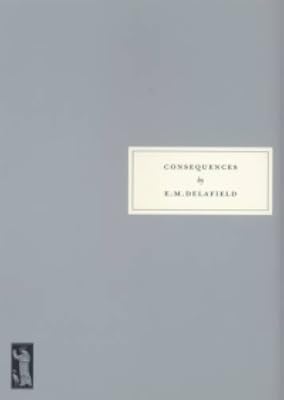
Consequences
by E. M. Delafield
On This Page
Description
In "Consequences," E.M.Delafield crafts a poignant tale of Alexandra, a young woman navigating the rigid expectations of Edwardian society, where personal desires clash with societal norms.As Alexandra grapples with the pressures of conformity, her journey becomes a haunting exploration of identity, freedom, and the cost of defiance.Tags
Recommendations















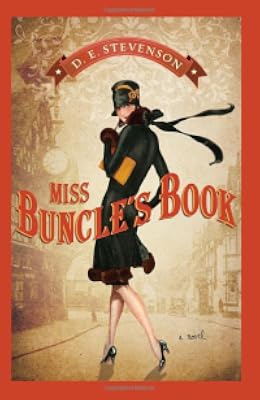

















Member Recommendations

amysisson Both books are about young women who don't quite fit in with their families, for reasons they don't understand, in a time when marriage was a woman's only acceptable goal.

souloftherose Although the two books have a very different setting and style, they are both semi-autobiographical novels about a young woman struggling to cope with the restrictions placed on her by the society of the time. As a result, neither are easy or happy reads but both are compelling and very interesting.
Member Reviews
E. M. Dalafield is best known for her delightful :Diary of a Provincial Lady" series. This book is anything but ddlightful. IT is instead a cri de coer about the plight of girls who have no opportunities in life apart from marriage.
Alex Clare is awkward and oversensitive and gets everything wrong. Her attempts at friendship at school come across as over-eager, she refuses the offer of marriage from the only man who asks her, and then turns to religion (and an obsessive adoration of the Mother Superior) and enters a convent.
At this point, her family, with some relief, thinks that Alex is finally settled. Unfortunately, Alex seems unable to settle anywhere and after nine years, just before she is to take her final vows, she leaves the show more order.
Coming home she finds herself in the unfortunate position of the maiden aunt with no financial resources and bounces from one relative to another until, totally at the end of her tether, she takes the only way out of her difficult situation.
This book was Delafield's "scream of sheer horror against Victorianism" as she writes in the preface to the book. In another 20 years, Alex could have done something with her life besides making a good marriage, but as it is, she was just born too soon. show less
Alex Clare is awkward and oversensitive and gets everything wrong. Her attempts at friendship at school come across as over-eager, she refuses the offer of marriage from the only man who asks her, and then turns to religion (and an obsessive adoration of the Mother Superior) and enters a convent.
At this point, her family, with some relief, thinks that Alex is finally settled. Unfortunately, Alex seems unable to settle anywhere and after nine years, just before she is to take her final vows, she leaves the show more order.
Coming home she finds herself in the unfortunate position of the maiden aunt with no financial resources and bounces from one relative to another until, totally at the end of her tether, she takes the only way out of her difficult situation.
This book was Delafield's "scream of sheer horror against Victorianism" as she writes in the preface to the book. In another 20 years, Alex could have done something with her life besides making a good marriage, but as it is, she was just born too soon. show less
Until I picked up this book, I had completely forgotten the old-fashioned game of consequences; taking it in turns to write out a boy’s name, a girl’s name, where they met, what he said, what she said and the consequence of their meeting; folding over the paper each time so that nobody could see what had been written before their turn came.
I had never thought about the boy or the girl whose tales – sometimes odd, sometimes funny, sometimes sad – were folded over in discarded scraps of paper, but E M Delafield did, and it made her think of the world she grew up in and of young women whose life stories played out in a way that could be as haphazard and in a world where the only possible – the only acceptable – consequence was show more the acquisition of a wedding ring.
In this book – beginning with a game of consequences in a nursery – she asks whether there was an alternative.
The answer that she reached was a sad one.
She tells the story of Alex Clare, who is first seen as an insecure and awkward child. Alex is the eldest of her siblings, and she proud of the status she believes that gives her. She is bossy and the children’s nanny is protective of the younger children and critical of Alex.
I found that it wasn’t easy to like Alex, but it was very easy to feel sympathy for her. She lacked the understanding and empathy with others that many people are born with or quickly learn, and it seemed that there was nobody who would guide and teach her.
Alex pushed her sister, Barbara, to ‘tightrope walk’ on the stair rail, and the first consequence of that was that she fell and was lucky not to break her back. The second was that her parents decided that their eldest child was unmanageable, that they had to protect her siblings, and that she must be sent away to school – at a convent in Belgium.
This was possibly the worst thing that could have happened to Alex. She had nobody who would love her, nobody who would give her the guidance that she so desperately needed; and she had no aptitude for making friends. She developed intense crushes on certain other girls, but she was so intense in her affections that even when the other girl was kind there was no real prospect of a true friendship
Alex felt that she was a failure, unable to get anything right or make anyone happy, but she clung on to the hope that one day things would be different
‘It seemed to Alex that when she joined the mysterious ranks of grown-up-people everything would be different. She never doubted that with long dresses and piled-up hair, her whole personality would change, and the meaningless chaos of life reduce itself to some comprehensible solution.’
Of course there was no magical transformation.
Alex ‘came out’ as a debutante and her mother, Lady Isabel, did everything right. She took Alex to the right parties, she made sure that she was beautifully groomed and dressed, she carefully explained what Alex should do in every situation. But Alex had no more empathy, no more understanding, than she had when she was a small child.
‘She was full of preconceived ideas as to that which constituted attractiveness, and in her very ardour to realize the conventional ideal of the day failed entirely to attract.’
She had dance partners, she thought that she was a success, but in time she realised that other girls had much more interest from young men, and that their dance partners would return to them at other functions. Alex’s didn’t do that. She began to doubt herself, her small successes dwindled, and she becomes an unhappy wallflower.
I felt very deeply for Alex as she watched other girls achieve what she most wanted, what she had been quite sure she would have, while she was failing and understanding why. The worst indignity came when a young man took her down to dinner and she found that he had asked her because he wanted to talk about his love for her school-friend; when she went home to bed and desperately prayed that somebody would love her like that one day ….
It seemed that hope was lost, but a holiday romance led to a proposal and an engagement ring for Alex.
Success at last!
After the proposal, it seemed that the romance was over. Alex’s fiance showed no interest in wedding plans and a new life together, though he would talk at length about himself and his plans for the land he was to inherit. Alex tried to persuade herself that she loved him, but she knew that she was not loved as she hoped to be loved, that she was a means to an end, and she began to fear the prospect of a loveless marriage.
She broke off the engagement.
She thought that she was doing the right thing, she thought she was being brave, but her family was horrified. She hadn’t realised that marriage was the only option for her and that she had thrown away the only chance of success she ever had.
‘Alex almost instinctively uttered the cry that, with successive generations, has passed from appeal to rebellion, then to assertion, and from the defiance of that assertion to a calm statement of facts. “It is my life. Can’t I live my own life?”
“A woman who doesn’t marry and who has eccentric tastes doesn’t have much of a life. I could never bear thinking of it for any of you.”
Alex was rather startled at the sadness in her mother’s voice.
“But, mother, why? Lots of girls don’t marry, and just live at home.”
“As long as there is a home. But things alter, Alex. Your father and I, in the nature of things, can’t go on livin’ for ever, and then this house goes to Cedric. There is no country place, as you know—your great-grandfather sold everything he could lay his hands on, and we none of us have ever had enough ready money to think of buyin’ even a small place in the country.”
“But I thought we were quite rich.”
Lady Isabel flushed delicately.
“We are not exactly poor, but such money as there is mostly came from my father, and there will not be much after my death,” she confessed. “Most of it will be money tied up for Archie, poor little boy, because he is the younger son, and your grandfather thought that was the proper way to arrange it. It was all settled when you were quite little children—in fact, before Pamela was born or thought of—and your father naturally wanted all he could hope to leave to go to Cedric, so that he might be able to live on here, whatever happened.”
“But what about Barbara and me? Wasn’t it rather unfair to want the boys to have everything?”
“Your father said, ‘The girls will marry, of course.’ There will be a certain sum for each of you on your wedding-day, but there’s no question of either of you being able to afford to remain unmarried, and live decently. You won’t have enough to make it possible,” said Lady Isabel very simply.’
That was horribly true, and from this point Alex’s life goes steadily downhill. She then turns to religion and enters a convent, but she was drawn there by a love of the mother superior – an echo of her schoolgirl crushes – and when she moves to a new community, nearly a decade later, Alex realises that she does not have a vocation and must leave.
Back in a world that has changed, where she has never lived independently, where she has never handled money and has no resources at all, she struggles to cope. Her family try to be kind, but Alex is beyond any help that they can give to her ….
‘Consequences’ is a desperately sad story but I had to keep turning the pages because E M Delafield was such a wonderful storyteller and she wrote with lyricism and with clarity. I could never doubt the truth of the characters and their circumstances, and I understood how trapped they were by the strictures of a society that might work for some but could never work for all.
I knew that there could not be a happy ending but I had understand exactly how the story would play out.
I felt the author’s anger, and I knew that it was justified. show less
I had never thought about the boy or the girl whose tales – sometimes odd, sometimes funny, sometimes sad – were folded over in discarded scraps of paper, but E M Delafield did, and it made her think of the world she grew up in and of young women whose life stories played out in a way that could be as haphazard and in a world where the only possible – the only acceptable – consequence was show more the acquisition of a wedding ring.
In this book – beginning with a game of consequences in a nursery – she asks whether there was an alternative.
The answer that she reached was a sad one.
She tells the story of Alex Clare, who is first seen as an insecure and awkward child. Alex is the eldest of her siblings, and she proud of the status she believes that gives her. She is bossy and the children’s nanny is protective of the younger children and critical of Alex.
I found that it wasn’t easy to like Alex, but it was very easy to feel sympathy for her. She lacked the understanding and empathy with others that many people are born with or quickly learn, and it seemed that there was nobody who would guide and teach her.
Alex pushed her sister, Barbara, to ‘tightrope walk’ on the stair rail, and the first consequence of that was that she fell and was lucky not to break her back. The second was that her parents decided that their eldest child was unmanageable, that they had to protect her siblings, and that she must be sent away to school – at a convent in Belgium.
This was possibly the worst thing that could have happened to Alex. She had nobody who would love her, nobody who would give her the guidance that she so desperately needed; and she had no aptitude for making friends. She developed intense crushes on certain other girls, but she was so intense in her affections that even when the other girl was kind there was no real prospect of a true friendship
Alex felt that she was a failure, unable to get anything right or make anyone happy, but she clung on to the hope that one day things would be different
‘It seemed to Alex that when she joined the mysterious ranks of grown-up-people everything would be different. She never doubted that with long dresses and piled-up hair, her whole personality would change, and the meaningless chaos of life reduce itself to some comprehensible solution.’
Of course there was no magical transformation.
Alex ‘came out’ as a debutante and her mother, Lady Isabel, did everything right. She took Alex to the right parties, she made sure that she was beautifully groomed and dressed, she carefully explained what Alex should do in every situation. But Alex had no more empathy, no more understanding, than she had when she was a small child.
‘She was full of preconceived ideas as to that which constituted attractiveness, and in her very ardour to realize the conventional ideal of the day failed entirely to attract.’
She had dance partners, she thought that she was a success, but in time she realised that other girls had much more interest from young men, and that their dance partners would return to them at other functions. Alex’s didn’t do that. She began to doubt herself, her small successes dwindled, and she becomes an unhappy wallflower.
I felt very deeply for Alex as she watched other girls achieve what she most wanted, what she had been quite sure she would have, while she was failing and understanding why. The worst indignity came when a young man took her down to dinner and she found that he had asked her because he wanted to talk about his love for her school-friend; when she went home to bed and desperately prayed that somebody would love her like that one day ….
It seemed that hope was lost, but a holiday romance led to a proposal and an engagement ring for Alex.
Success at last!
After the proposal, it seemed that the romance was over. Alex’s fiance showed no interest in wedding plans and a new life together, though he would talk at length about himself and his plans for the land he was to inherit. Alex tried to persuade herself that she loved him, but she knew that she was not loved as she hoped to be loved, that she was a means to an end, and she began to fear the prospect of a loveless marriage.
She broke off the engagement.
She thought that she was doing the right thing, she thought she was being brave, but her family was horrified. She hadn’t realised that marriage was the only option for her and that she had thrown away the only chance of success she ever had.
‘Alex almost instinctively uttered the cry that, with successive generations, has passed from appeal to rebellion, then to assertion, and from the defiance of that assertion to a calm statement of facts. “It is my life. Can’t I live my own life?”
“A woman who doesn’t marry and who has eccentric tastes doesn’t have much of a life. I could never bear thinking of it for any of you.”
Alex was rather startled at the sadness in her mother’s voice.
“But, mother, why? Lots of girls don’t marry, and just live at home.”
“As long as there is a home. But things alter, Alex. Your father and I, in the nature of things, can’t go on livin’ for ever, and then this house goes to Cedric. There is no country place, as you know—your great-grandfather sold everything he could lay his hands on, and we none of us have ever had enough ready money to think of buyin’ even a small place in the country.”
“But I thought we were quite rich.”
Lady Isabel flushed delicately.
“We are not exactly poor, but such money as there is mostly came from my father, and there will not be much after my death,” she confessed. “Most of it will be money tied up for Archie, poor little boy, because he is the younger son, and your grandfather thought that was the proper way to arrange it. It was all settled when you were quite little children—in fact, before Pamela was born or thought of—and your father naturally wanted all he could hope to leave to go to Cedric, so that he might be able to live on here, whatever happened.”
“But what about Barbara and me? Wasn’t it rather unfair to want the boys to have everything?”
“Your father said, ‘The girls will marry, of course.’ There will be a certain sum for each of you on your wedding-day, but there’s no question of either of you being able to afford to remain unmarried, and live decently. You won’t have enough to make it possible,” said Lady Isabel very simply.’
That was horribly true, and from this point Alex’s life goes steadily downhill. She then turns to religion and enters a convent, but she was drawn there by a love of the mother superior – an echo of her schoolgirl crushes – and when she moves to a new community, nearly a decade later, Alex realises that she does not have a vocation and must leave.
Back in a world that has changed, where she has never lived independently, where she has never handled money and has no resources at all, she struggles to cope. Her family try to be kind, but Alex is beyond any help that they can give to her ….
‘Consequences’ is a desperately sad story but I had to keep turning the pages because E M Delafield was such a wonderful storyteller and she wrote with lyricism and with clarity. I could never doubt the truth of the characters and their circumstances, and I understood how trapped they were by the strictures of a society that might work for some but could never work for all.
I knew that there could not be a happy ending but I had understand exactly how the story would play out.
I felt the author’s anger, and I knew that it was justified. show less
What a tremendously sad novel. I started out not knowing what to think of Alex; should I feel sorry for her or just find her unbearable? She desparately wants to bestow her love on someone but mainly meets with terrible dissaproval from those around her. At the same time, she can be mean and a terrible bully. She hardly seems to know what she is doing most of the time but finds someone to immerse her whole being in (primarily women) and then finds only despair at the end of it. It is an excellent novel but very tough to read.
Consequences is a totally different book from The Diary of a Provincial Lady, the only other EM Delafield novel I’ve read—but in a good, albeit sad way. Consequences is the story of the eldest daughter of a large, late-Victorian family, well-connected but not particularly rich. The expectation, of course, is that the daughters marry, but Alex can’t seem to get her act together.
From convent school to an engagement Alex breaks off to convent life, and then a return to London, Alex never feels quite at home anywhere she goes. She’s always looking for someone who will love her, so she finds someone to cling on to until she realizes (too late) that they don’t feel the same way about her. As a result, Alex fails miserably at nearly show more everything she does, much to the disgust and embarrassment of her siblings, who are all (but the youngest, Pamela, who is clearly a child of the post-WWI world) pretty conventional Edwardians. There’s also this minor theme about the differences between the various generations (personified by the differences between the elder Clare children and Pamela, the independent girl-about-town).
So where does Alex, who doesn’t conform with what everyone expects of her, fit in? It’s definitely not a lighthearted story, in fact, brutally bleak in many places. Alex’s inability to comprehend what’s going on is maddening at times, but very realistic and believable. I’m very interested in how societal “misfits” deal with being an outsider, and this book was satisfying in that way. Alex is a polar opposite to the Provincial Lady, who has found success as a housewife and mother, but both are well-developed, well-rounded characters. Definitely worth reading. show less
From convent school to an engagement Alex breaks off to convent life, and then a return to London, Alex never feels quite at home anywhere she goes. She’s always looking for someone who will love her, so she finds someone to cling on to until she realizes (too late) that they don’t feel the same way about her. As a result, Alex fails miserably at nearly show more everything she does, much to the disgust and embarrassment of her siblings, who are all (but the youngest, Pamela, who is clearly a child of the post-WWI world) pretty conventional Edwardians. There’s also this minor theme about the differences between the various generations (personified by the differences between the elder Clare children and Pamela, the independent girl-about-town).
So where does Alex, who doesn’t conform with what everyone expects of her, fit in? It’s definitely not a lighthearted story, in fact, brutally bleak in many places. Alex’s inability to comprehend what’s going on is maddening at times, but very realistic and believable. I’m very interested in how societal “misfits” deal with being an outsider, and this book was satisfying in that way. Alex is a polar opposite to the Provincial Lady, who has found success as a housewife and mother, but both are well-developed, well-rounded characters. Definitely worth reading. show less
Best for: Those looking for a Victorian-set novel about England that isn’t happy and (spoiler alert) doesn’t end in a happy romance.
In a nutshell: Alex Chase is miserable and cannot find a way to be happy.
Worth quoting:
“The despair that invades an undeveloped being is the blackest in the world, because of its utter want of perspective.”
“What do girls want to write to one another for? They can’t have anything to say.”
“One suffered until one could bear no more, and then it was all numbness and inertia.”
Why I chose it:
There is an amazing bookshop in London called Persephone Books (https://www.persephonebooks.co.uk/). They are not just a shop; they publish works as well, focusing primarily on forgotten female authors. I show more visited earlier this year and snapped up three books; this is the first I’ve gotten around to reading.
Review:
This book is not for those going through a rough patch. It does not end on a high note, and there isn’t much along the way to make the reader feel hopeful. But at the same time, it feels honest, as not all people experience a life that is full of happiness, or redemption, or joy.
Alex is the eldest of three girls and two boys, and is being raised in a Victorian home that is clearly well-off (her father is, in fact, a sir). We meet Alex when she is just 12 years old, and she is clearly emotionally distraught. She craves attention and seems only to think to find it by misbehaving. Not intentionally so much; she just doesn’t think about the consequences (see what I did there) of her actions. When her lack of thought leads to her sister being seriously injured, she is sent to a convent for education.
At the convent she receives an education but does not make friends, and receives negative attention (if she receives any at all). She is painfully awkward, and unable to make the connections she craves. She is infatuated with a fellow classmate who barely acknowledges her existence until she realizes that Alex might be a good social connection.
That friendship never pans out, and when Alex is of age to come out to society, she doesn’t find much success. Her mother seems to care, as does her father, although her father throughout the book says some very heartless things. No one seems to care much that Alex is clearly distraught and depressed; Alex herself is often unable to articulate her own wants and fears. Part of that stems from the Victorian era, and part of that I think stems from piss-poor parenting.
She clings to anyone who might give her attention, eventually leading her to join a convent but unfortunately things do not improve for her. The last hundred pages or so are rough to read, not because they are poorly written, but because Alex continues to experience such an inability to navigate the world she lives in.
As I said, it is not a happy book, but I think it is good enough that I can recommend it to those who might find the premise interesting. show less
In a nutshell: Alex Chase is miserable and cannot find a way to be happy.
Worth quoting:
“The despair that invades an undeveloped being is the blackest in the world, because of its utter want of perspective.”
“What do girls want to write to one another for? They can’t have anything to say.”
“One suffered until one could bear no more, and then it was all numbness and inertia.”
Why I chose it:
There is an amazing bookshop in London called Persephone Books (https://www.persephonebooks.co.uk/). They are not just a shop; they publish works as well, focusing primarily on forgotten female authors. I show more visited earlier this year and snapped up three books; this is the first I’ve gotten around to reading.
Review:
This book is not for those going through a rough patch. It does not end on a high note, and there isn’t much along the way to make the reader feel hopeful. But at the same time, it feels honest, as not all people experience a life that is full of happiness, or redemption, or joy.
Alex is the eldest of three girls and two boys, and is being raised in a Victorian home that is clearly well-off (her father is, in fact, a sir). We meet Alex when she is just 12 years old, and she is clearly emotionally distraught. She craves attention and seems only to think to find it by misbehaving. Not intentionally so much; she just doesn’t think about the consequences (see what I did there) of her actions. When her lack of thought leads to her sister being seriously injured, she is sent to a convent for education.
At the convent she receives an education but does not make friends, and receives negative attention (if she receives any at all). She is painfully awkward, and unable to make the connections she craves. She is infatuated with a fellow classmate who barely acknowledges her existence until she realizes that Alex might be a good social connection.
That friendship never pans out, and when Alex is of age to come out to society, she doesn’t find much success. Her mother seems to care, as does her father, although her father throughout the book says some very heartless things. No one seems to care much that Alex is clearly distraught and depressed; Alex herself is often unable to articulate her own wants and fears. Part of that stems from the Victorian era, and part of that I think stems from piss-poor parenting.
She clings to anyone who might give her attention, eventually leading her to join a convent but unfortunately things do not improve for her. The last hundred pages or so are rough to read, not because they are poorly written, but because Alex continues to experience such an inability to navigate the world she lives in.
As I said, it is not a happy book, but I think it is good enough that I can recommend it to those who might find the premise interesting. show less
I just finished Consequences by E.M Delafield, better known for Diary of a Provincial Lady and have been thinking about it ever since. It is a strongly autobiographical novel. E.M. Delafield also was raised in a respectable although not as wealth as they appeared family at the end of the Victorian age. She was brought out into society, expected to find a husband and make a good match, and failed to live up to expectations. Like her main character, Alex, she also entered a convent for a time and left.
Uncomfortable and unhappy in her own, middle-class, respectable world, Alex is awkward and blundering in all her relationships, from family to friends. When she finishes school and enters society she attracts very little interest. When she show more eventually becomes engaged to a young man she is unable she is unable to go through with the marriage. She wants to love her future husband and feel that he loves her in return. When she realises that does not love her and, though polite and seen as a good match for her by her family, seems to value her only for her willingness to reflect his own ideas back at him. Her family are appalled by her behaviour. Her inability to participate enthusiastically with the social world, her awkwardness and unhappiness gradually cause them to be disgusted with her and relieved when she removes herself to a convent. On leaving the convent she comes out into the Edwardian era, a rapidly modernising era. Unable to comprehend her younger siblings, completely Edwardian in outlook, Alex cannot navigate her way in a new world. Even catching the bus leaves her lost and overwhelmed. Enough of a Victorian to be mired in its values and unable to leave them behind, she is as bewildered by the society around her as her family once were with her.
It is not a happy book but it is a deeply felt book. One that I have been thinking about since I finished it. I felt impatient with Alex several times over reading the book but ultimately found her inability to fit in with her own world, her discomfort in her own skin, her endless search for someone she could give herself over to completely, very moving.
http://girl--world.blogspot.com/ show less
Uncomfortable and unhappy in her own, middle-class, respectable world, Alex is awkward and blundering in all her relationships, from family to friends. When she finishes school and enters society she attracts very little interest. When she show more eventually becomes engaged to a young man she is unable she is unable to go through with the marriage. She wants to love her future husband and feel that he loves her in return. When she realises that does not love her and, though polite and seen as a good match for her by her family, seems to value her only for her willingness to reflect his own ideas back at him. Her family are appalled by her behaviour. Her inability to participate enthusiastically with the social world, her awkwardness and unhappiness gradually cause them to be disgusted with her and relieved when she removes herself to a convent. On leaving the convent she comes out into the Edwardian era, a rapidly modernising era. Unable to comprehend her younger siblings, completely Edwardian in outlook, Alex cannot navigate her way in a new world. Even catching the bus leaves her lost and overwhelmed. Enough of a Victorian to be mired in its values and unable to leave them behind, she is as bewildered by the society around her as her family once were with her.
It is not a happy book but it is a deeply felt book. One that I have been thinking about since I finished it. I felt impatient with Alex several times over reading the book but ultimately found her inability to fit in with her own world, her discomfort in her own skin, her endless search for someone she could give herself over to completely, very moving.
http://girl--world.blogspot.com/ show less
I finished Consequences (EM Delafield) last night - or actually about 1am this morning. I picked it up in the Lambs Conduit St shop when my book group met there, and held on to read it as part of the Persephone Reading Weekend.
What a sad book - although the blurb and introductory essay had drawn out a sense of wryness or irony in the portrayal of a conventional and comfortable family at the end of the nineteenth century, I found it profoundly sad.
I felt for Alex, so uncomfortable in her own skin, unable to 'read' other people - except for their disappointment in her - and so ill equipped to be happy in any of the circumstances and societies she lived in.
--- rest of the review at my blog show more target="_top">http://rosesyear.blogspot.com/2011/02/miserable-consequences.html show less
What a sad book - although the blurb and introductory essay had drawn out a sense of wryness or irony in the portrayal of a conventional and comfortable family at the end of the nineteenth century, I found it profoundly sad.
I felt for Alex, so uncomfortable in her own skin, unable to 'read' other people - except for their disappointment in her - and so ill equipped to be happy in any of the circumstances and societies she lived in.
--- rest of the review at my blog show more target="_top">http://rosesyear.blogspot.com/2011/02/miserable-consequences.html show less
Members
- Recently Added By
Lists

1910s
90 works; 16 members

Books featuring monks and/or nuns
166 works; 33 members

Bibliography for How to be a Heroine
148 works; 12 members

Books referenced in A Very Great Profession: The Woman's Novel 1914-39
199 works; 6 members

KayStJ's to-read list
1,616 works; 11 members

Persephone
148 works; 3 members
Author Information

99+ Works 4,015 Members
Some Editions
Series
Belongs to Publisher Series
Persephone (13)
Work Relationships
Is contained in
Collected Novels of E. M. Delafield (6 Unabridged Editions in One Volume): Zella Sees Herself, The War Workers, Consequences, Tension, The Heel of Achilles ... Thank Heaven Fasting and The Way Things Are by E. M. Delafield
Common Knowledge
- Canonical title
- Consequences
- Original publication date
- 1919
- People/Characters
- Alex Clare; Cedric Clare; Violet Clare; Barbara Clare; Archie Clare; Lady Isabel Clare (show all 11); Sir Francis Clare; Noel Cardew; Queenie Torrance; Mother Gertrude; Rosemary Clare
- Dedication
- Dedicated to
M.P.P.
and, in spite of air-raids, to the
pleasant memory of our winter
in London, 1917-1918 - First words
- The firelight flickered on the nursery wall, and the children sat round the table, learning the new game which the nursery-maid said they would like ever so, directly they understood it.
- Last words
- (Click to show. Warning: May contain spoilers.)"Don't you remember -- Alex was such a pretty little girl!"
Classifications
Statistics
- Members
- 229
- Popularity
- 142,129
- Reviews
- 10
- Rating
- (3.87)
- Languages
- English
- Media
- Paper, Audiobook, Ebook
- ISBNs
- 12
- ASINs
- 7