
Nicola Beauman
Author of A Very Great Profession: The Woman's Novel 1914-39
About the Author
Works by Nicola Beauman
Associated Works
The Diary of a Provincial Lady (Omnibus) (1930) — Introduction, some editions — 680 copies, 22 reviews
Tagged
Common Knowledge
- Other names
- Phillips, Kate (translator of Manja)
- Birthdate
- 1944-06-20
- Gender
- female
- Occupations
- author
publisher (Persephone Books)
biographer - Relationships
- Beauman, Francesca (daughter)
Beauman, Ned (son)
Lacey, Josh (son)
Mann, Jessica (sister) - Nationality
- UK
- Birthplace
- London, England, UK
- Associated Place (for map)
- England, UK
Members
Reviews

Literary biography is always a tricky form to get right - writers don't tend to have very interesting lives, and the one really interesting thing about them, their writing, is also the one thing about the subject that the reader usually knows inside-out before coming to the biography. At its worst, a literary biography is little more than gossip, leaving you with the uncomfortable feeling that you've learnt things about the writer's life that they wouldn't really have wanted anyone to know show more (and you would prefer not to as well); at its best it can be a kind of extended critical study, helping you to appreciate things you'd missed in the books and putting them into the context of the writer's career.
Beauman evidently had a hard time with this book, and she's very open about the problems she encountered. She clearly feels strongly that Elizabeth Taylor is an important and unfairly neglected writer who deserves the recognition of a full-scale critical biography, but she's also well aware that Taylor herself would have hated the idea, and indeed had taken active steps to make an eventual biographer's task more difficult. Moreover, in assembling information about Taylor's life and trying to come to honest critical conclusions about her, she inevitably stepped on the toes of Taylor's family and friends. One of the most memorable and revealing passages in the biography is not about Taylor at all, but an extended parenthesis in which Beauman tries to describe her feelings about sitting with the elderly Ray Russell as she copied out Taylor's love letters to him from the thirties and forties: "...copying, copying, copying; depressing because one knew the sad end of the affair, yet one of the lovers was sitting there, his sadness written in every line of his body." This is not a book that will motivate you to take up the biographer's trade!
The young Betty Coles seems to have had quite a streak of wildness in her - an active member of the High Wycombe Communist Party, female lead for the local Am-Drams, tutor to one of Penelope Fitzgerald's Knox cousins, and a regular visitor to Eric Gill's household. Beauman sees no reason to believe the rumour that she was seduced by Gill, but it's quite likely that she had an affair with one of Gill's pupils, and certain that she was in love with Ray, the "boy who sold the Daily Worker in High Wycombe High Street".
But then in 1936 she unexpectedly turned herself into a respectable upper-middle-class housewife, marrying local businessman John Taylor, whose family owned a toffee factory. And inadvertently started using the same name as a little girl who would shortly become "the" Elizabeth Taylor. For the rest of her life, she determinedly stuck to the bourgeois, domestic role she had created for herself. Even after the war, when her first books appeared, she took care to give the impression to anyone who asked that her writing was only a kind of hobby. In those days, you could have bought quite a decent small house in Britain with what the New Yorker paid for one short story, but Taylor made a point of not wanting a room of her own to write in (although she does have a woman to "do" for her three days a week - that was perfectly acceptable Buckinghamshire behaviour).
Beauman sees Taylor's attitude in this as one of the main things that contributed to the dismissive way that the literary establishment treated her work. The fifties were not the right time for a writer to be sitting at home with one eye on the Aga and the other on her manuscript, and it didn't help if she wrote novels that were all about personal relationships between middle-class people, with never a Big Idea or a factory worker to be seen. It was almost inevitable that she got pigeonholed as a "lending-library" novelist (we would call it "chick-lit"), and ignored by all but a few perceptive critics. Sadly, she died far too young in 1975, with most of her books out of print, and didn't get to enjoy the revival in her reputation that would start when Virago started reprinting all her novels in 1982.
I enjoyed reading this biography, and it left me feeling enthusiastic about reading the few Taylor novels I haven't tackled yet (and the short stories, which I'd overlooked altogether, but were clearly a key part of her work). And I liked Beauman's very transparent approach to the task. Nothing to quibble about, really: if you enjoy Taylor's novels, read this as well; if you don't know them, then you probably should... show less
Beauman evidently had a hard time with this book, and she's very open about the problems she encountered. She clearly feels strongly that Elizabeth Taylor is an important and unfairly neglected writer who deserves the recognition of a full-scale critical biography, but she's also well aware that Taylor herself would have hated the idea, and indeed had taken active steps to make an eventual biographer's task more difficult. Moreover, in assembling information about Taylor's life and trying to come to honest critical conclusions about her, she inevitably stepped on the toes of Taylor's family and friends. One of the most memorable and revealing passages in the biography is not about Taylor at all, but an extended parenthesis in which Beauman tries to describe her feelings about sitting with the elderly Ray Russell as she copied out Taylor's love letters to him from the thirties and forties: "...copying, copying, copying; depressing because one knew the sad end of the affair, yet one of the lovers was sitting there, his sadness written in every line of his body." This is not a book that will motivate you to take up the biographer's trade!
The young Betty Coles seems to have had quite a streak of wildness in her - an active member of the High Wycombe Communist Party, female lead for the local Am-Drams, tutor to one of Penelope Fitzgerald's Knox cousins, and a regular visitor to Eric Gill's household. Beauman sees no reason to believe the rumour that she was seduced by Gill, but it's quite likely that she had an affair with one of Gill's pupils, and certain that she was in love with Ray, the "boy who sold the Daily Worker in High Wycombe High Street".
But then in 1936 she unexpectedly turned herself into a respectable upper-middle-class housewife, marrying local businessman John Taylor, whose family owned a toffee factory. And inadvertently started using the same name as a little girl who would shortly become "the" Elizabeth Taylor. For the rest of her life, she determinedly stuck to the bourgeois, domestic role she had created for herself. Even after the war, when her first books appeared, she took care to give the impression to anyone who asked that her writing was only a kind of hobby. In those days, you could have bought quite a decent small house in Britain with what the New Yorker paid for one short story, but Taylor made a point of not wanting a room of her own to write in (although she does have a woman to "do" for her three days a week - that was perfectly acceptable Buckinghamshire behaviour).
Beauman sees Taylor's attitude in this as one of the main things that contributed to the dismissive way that the literary establishment treated her work. The fifties were not the right time for a writer to be sitting at home with one eye on the Aga and the other on her manuscript, and it didn't help if she wrote novels that were all about personal relationships between middle-class people, with never a Big Idea or a factory worker to be seen. It was almost inevitable that she got pigeonholed as a "lending-library" novelist (we would call it "chick-lit"), and ignored by all but a few perceptive critics. Sadly, she died far too young in 1975, with most of her books out of print, and didn't get to enjoy the revival in her reputation that would start when Virago started reprinting all her novels in 1982.
I enjoyed reading this biography, and it left me feeling enthusiastic about reading the few Taylor novels I haven't tackled yet (and the short stories, which I'd overlooked altogether, but were clearly a key part of her work). And I liked Beauman's very transparent approach to the task. Nothing to quibble about, really: if you enjoy Taylor's novels, read this as well; if you don't know them, then you probably should... show less

The Elizabeth Taylor in this biography was a British novelist (1912-1975). Although she was shortlisted for the Man Booker Prize (for Mrs Palfrey at the Claremont), to the average reader she is a complete unknown. I discovered her work through Virago Modern Classics, and she quickly became a favorite author. So this year, to celebrate the centenary of her birth, I thought I'd learn more about the life of this talented, but very private, woman.
This is a classic chronological biography, show more beginning with Taylor's childhood and her secondary school education at the best school for girls in Reading, her home town. Beauman shows how Taylor developed as a writer, even as she also became a wife, a mother, and even a mistress. She was dedicated to writing even as she juggled these other roles, but it wasn't until she was 32 that her first novel was published. From that point on she had a lucrative career with twelve novels and a considerable number of short stories, many of which were published in The New Yorker magazine. Despite her success, she never wanted to play the game expected of authors, making public appearances and so on. This probably cost her some fame, but allowed her to stay a devoted wife and mother, which she valued highly. Still, Taylor's career had a certain arc. Her first few novels were considered her best, and the 1960s brought a shift in public sentiment where readers gradually began seeking out other authors with more modern points of view.
I was pleasantly surprised by this book. All too often, biographies are dry, factual accounts. Nicola Beauman's thorough research infused this biography with real people and emotion. In the course of her research she was able to meet with a man who had been Taylor's lover in the 1930s. He never stopped loving her, and Beauman's meeting with him was quite touching. Beauman also successfully conveyed Taylor's emotions during difficult periods, like when her later work attracted negative reviews.
By the end of this year I will have read all of Elizabeth Taylor's twelve novels. I plan to use this book as a reading companion, returning to it with each novel to remind myself of what was happening in Taylor's life at that time, and of how her life experiences influenced each book. show less
This is a classic chronological biography, show more beginning with Taylor's childhood and her secondary school education at the best school for girls in Reading, her home town. Beauman shows how Taylor developed as a writer, even as she also became a wife, a mother, and even a mistress. She was dedicated to writing even as she juggled these other roles, but it wasn't until she was 32 that her first novel was published. From that point on she had a lucrative career with twelve novels and a considerable number of short stories, many of which were published in The New Yorker magazine. Despite her success, she never wanted to play the game expected of authors, making public appearances and so on. This probably cost her some fame, but allowed her to stay a devoted wife and mother, which she valued highly. Still, Taylor's career had a certain arc. Her first few novels were considered her best, and the 1960s brought a shift in public sentiment where readers gradually began seeking out other authors with more modern points of view.
I was pleasantly surprised by this book. All too often, biographies are dry, factual accounts. Nicola Beauman's thorough research infused this biography with real people and emotion. In the course of her research she was able to meet with a man who had been Taylor's lover in the 1930s. He never stopped loving her, and Beauman's meeting with him was quite touching. Beauman also successfully conveyed Taylor's emotions during difficult periods, like when her later work attracted negative reviews.
By the end of this year I will have read all of Elizabeth Taylor's twelve novels. I plan to use this book as a reading companion, returning to it with each novel to remind myself of what was happening in Taylor's life at that time, and of how her life experiences influenced each book. show less
Bought 14 Apr 2009 from the Persephone shop on Lambs Conduit St with token from Bridget
How fortuitous that this lovely, wallowy book should come to the top of Mt TBR just when I was in solitary confinement and needed something lovely and wallowy to read! It also brought back memories of my lovely day trip to London with Ali for Persephone buying purposes, at Easter.
Taking me straight back to my University days in the late 80s/early 90s when reclaiming women writers was the big thing and my show more Women's Lit tutor, Peggy Reynolds, was busy on about Aphra Benn etc, this is a survey of women's writing between WW1 and WW2. Taking themes such as love, sex, psychoanalysis, it looks at these themes in the books which became the mainstay of Beauman's Persephone Books publishing efforts so many years later. I've read a fair proportion of the books mentioned, which made it a joy to read with that thrill of recognition - oh, is she going to include x by y in this section...? True to women's studies, herstory etc, Beauman puts enough of herself and her foremothers in to make it recognisable but not unprofessional. And in the excellent Afterword to the 1995 edition, not only does she foreshadow her own publishing programme, but also takes issue with the over-feminist theorists of the times between the editions and the critical reaction - which pleased me as, although studying some of this stuff in academia, it always seemed to me to miss the point slightly.
So, a good workwomanlike survey, a lovely reclaiming, and a look at how far we've come, both in terms of the beginnings of the liberation of women from their proscribed lives at the end of WW1 to their flowering freedoms in the 1930s, and in terms of the liberation of many of these excellent novels and novelists from languishing in the dusty realms of the out of print list into the fresh, lovely green and grey of Virago and Persephone reprints. show less
How fortuitous that this lovely, wallowy book should come to the top of Mt TBR just when I was in solitary confinement and needed something lovely and wallowy to read! It also brought back memories of my lovely day trip to London with Ali for Persephone buying purposes, at Easter.
Taking me straight back to my University days in the late 80s/early 90s when reclaiming women writers was the big thing and my show more Women's Lit tutor, Peggy Reynolds, was busy on about Aphra Benn etc, this is a survey of women's writing between WW1 and WW2. Taking themes such as love, sex, psychoanalysis, it looks at these themes in the books which became the mainstay of Beauman's Persephone Books publishing efforts so many years later. I've read a fair proportion of the books mentioned, which made it a joy to read with that thrill of recognition - oh, is she going to include x by y in this section...? True to women's studies, herstory etc, Beauman puts enough of herself and her foremothers in to make it recognisable but not unprofessional. And in the excellent Afterword to the 1995 edition, not only does she foreshadow her own publishing programme, but also takes issue with the over-feminist theorists of the times between the editions and the critical reaction - which pleased me as, although studying some of this stuff in academia, it always seemed to me to miss the point slightly.
So, a good workwomanlike survey, a lovely reclaiming, and a look at how far we've come, both in terms of the beginnings of the liberation of women from their proscribed lives at the end of WW1 to their flowering freedoms in the 1930s, and in terms of the liberation of many of these excellent novels and novelists from languishing in the dusty realms of the out of print list into the fresh, lovely green and grey of Virago and Persephone reprints. show less
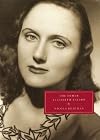
Nicola Beauman, the author of this biography of the British writer, Elizabeth Taylor, believes her subject is one of the great women writers of the mid-twentieth-century. As Beauman sees it, the reason Taylor isn’t better known is due to Taylor’s failure to mingle with members of the literary establishment, her introverted unwillingness to promote herself, and her opting for a comfortable and conventional middle-class, small town existence as wife (to a rather staid sweets manufacturer) show more and devoted mother of two. Taylor’s canvas was small. She focussed on domestic matters, and her work was easily accessible to women. (She was cruelly and hurtfully attacked by group of female writers, most notably Olivia Manning, but praised by Elizabeth Bowen and Kingsley Amis.) Furthermore, Taylor may have harmed her own reputation with her insistence on having lived a very quiet (dull) life in which nothing much happened.
I tend to agree that nothing much of interest did happen in Taylor’s life. She may have posed nude for the painter Eric Gill, whose artist colony she lived near. She joined the Communist Party as a young woman and remained a member for many years. She had a lengthy extramarital affair with Ray Russell, a painter who never came to much, whom she loved deeply for most of her life. (She kept up a lengthy correspondence with him, and it is upon this that Beauman relies heavily for many of the details of Taylor’s life.) Taylor appears to have had a couple of abortions related to this liaison. Her husband was aware of the relationship (though perhaps not the pregnancy terminations) and for a time seemed accepting of it, as he himself was quite the philanderer, and besides Elizabeth kept a nice house, was a good cook, and dressed stylishly to boot.
Having now read 11 of Taylor’s 12 novels, I felt I was in a reasonably good position to read a biography of Taylor. Maybe not. I’d read none of her short stories, which are a major focus of Beauman’s book. In fact, Beauman believes that Taylor’s first five novels (particularly A Game of Hide and Seek) and her short stories are her best work. I can’t comment on Beauman’s assessment of the short stories, every single one of which is discussed, but I don’t agree with the biographer about the first five novels being Taylor’s best, nor am I overly enthusiastic or convinced by her critical commentary on them.
I personally do not know if Elizabeth Taylor is one of the great British women writers of the last century. I don’t feel I’ve read widely enough to offer an opinion on the matter. What I do believe from my reading of Taylor is that there is a lot more going on in her books than first meets the eye, and that second and third readings are fruitful. One does not need a large canvas to expose the inner workings of the human heart, the secrets people would prefer to remain hidden, and Elizabeth Taylor did this well in beautifully controlled prose.
Rating: 3.5 show less
I tend to agree that nothing much of interest did happen in Taylor’s life. She may have posed nude for the painter Eric Gill, whose artist colony she lived near. She joined the Communist Party as a young woman and remained a member for many years. She had a lengthy extramarital affair with Ray Russell, a painter who never came to much, whom she loved deeply for most of her life. (She kept up a lengthy correspondence with him, and it is upon this that Beauman relies heavily for many of the details of Taylor’s life.) Taylor appears to have had a couple of abortions related to this liaison. Her husband was aware of the relationship (though perhaps not the pregnancy terminations) and for a time seemed accepting of it, as he himself was quite the philanderer, and besides Elizabeth kept a nice house, was a good cook, and dressed stylishly to boot.
Having now read 11 of Taylor’s 12 novels, I felt I was in a reasonably good position to read a biography of Taylor. Maybe not. I’d read none of her short stories, which are a major focus of Beauman’s book. In fact, Beauman believes that Taylor’s first five novels (particularly A Game of Hide and Seek) and her short stories are her best work. I can’t comment on Beauman’s assessment of the short stories, every single one of which is discussed, but I don’t agree with the biographer about the first five novels being Taylor’s best, nor am I overly enthusiastic or convinced by her critical commentary on them.
I personally do not know if Elizabeth Taylor is one of the great British women writers of the last century. I don’t feel I’ve read widely enough to offer an opinion on the matter. What I do believe from my reading of Taylor is that there is a lot more going on in her books than first meets the eye, and that second and third readings are fruitful. One does not need a large canvas to expose the inner workings of the human heart, the secrets people would prefer to remain hidden, and Elizabeth Taylor did this well in beautifully controlled prose.
Rating: 3.5 show less
Lists
You May Also Like


Associated Authors
Statistics
- Works
- 15
- Also by
- 6
- Members
- 430
- Popularity
- #56,814
- Rating
- 4.0
- Reviews
- 10
- ISBNs
- 8
- Favorited
- 1