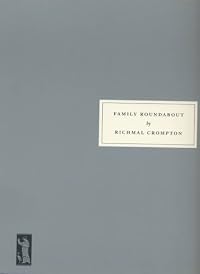
Family Roundabout
by Richmal Crompton
On This Page
Description
"Helen was listening to Mrs. Willoughby's account of a new scheme for taking down the worst of Bellington's slums and building model workmen's flats in their place. It appeared that Mrs. Willoughby was on the committee, and, knowing that, you felt that the scheme would very soon be put into action, that she would give no one any peace till the flats were erected. Helen listened with interest and approval. She liked the atmosphere of driving energy that the Willouglibys carried about with show more them, an atmosphere noticeably absent in her own family. Her own family would have been interested in the scheme in a detached, impersonal kind of way, but they would probably have considered the slum picturesque, found bits of interesting architecture all over it and regretted its disappearance. In any case, it would never have occurred to them to do anything about it themselves."-- show lessTags
Recommendations










Member Recommendations

Member Reviews
The Fowlers and the Willoughbys are two families deeply embedded into the life of the country town of Bellington in England between the wars. Both are headed by widowed matriarchs with five largely grown-up children apiece, but there the resemblance ends:
When Max Willoughby and Helen Fowler marry, and Helen turns out to be more of a Willoughby in nature than she ever was a Fowler, the families are brought closer together. Family Roundabout follows their fortunes between 1920 and 1939, as births, marriages, deaths and divorce follow one another quickly, and Mrs Fowler and Mrs Willoughby come to appreciate each other's strengths.
In my mind Richmal Crompton is forever associated with the Just William books, but this is one that she wrote for adults, now republished by Persephone. This is a pleasant enough book but I think I was expecting something a little more light hearted from the author of the hilarious Just William series, and in the main the lives of the Fowlers and Willoughbys seem to have rather more downs than ups. I came away with the distinct impression (which I've also had from other books from this time period) that I would not like to have been a middle-class woman between the wars one little bit. The narrative jumps from one member of the family to another, and would have been improved on focusing on rather fewer main characters. So a reasonable read overall, but not one that's going to make me search out more of Richmal Crompton's adult fiction. show less
The Fowlers were of the county, while the Willoughbys were of the town. They sat on the same committees, attended the same public functions, but did not visit each other. Mrs Fowler suspected that the Willoughbys felt the same contempt for Henry as Henry, half unconsciously, felt for them. Henry was in their eyes a useless member of the community, while the Willoughbys were the community itself. They were its mayors, its town councillors, its Guardians of the Poor. They organised itsshow more
Christmas treats, its Poor Children's Holidays, its Old People's Parties. And it was Mrs Willoughby, eagle-eyed, eagle-beaked, built on the formidable lines of a dreadnought, who was the ruling spirit of the clan.
When Max Willoughby and Helen Fowler marry, and Helen turns out to be more of a Willoughby in nature than she ever was a Fowler, the families are brought closer together. Family Roundabout follows their fortunes between 1920 and 1939, as births, marriages, deaths and divorce follow one another quickly, and Mrs Fowler and Mrs Willoughby come to appreciate each other's strengths.
In my mind Richmal Crompton is forever associated with the Just William books, but this is one that she wrote for adults, now republished by Persephone. This is a pleasant enough book but I think I was expecting something a little more light hearted from the author of the hilarious Just William series, and in the main the lives of the Fowlers and Willoughbys seem to have rather more downs than ups. I came away with the distinct impression (which I've also had from other books from this time period) that I would not like to have been a middle-class woman between the wars one little bit. The narrative jumps from one member of the family to another, and would have been improved on focusing on rather fewer main characters. So a reasonable read overall, but not one that's going to make me search out more of Richmal Crompton's adult fiction. show less
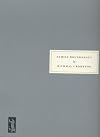
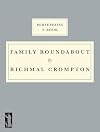
The anticipation of opening a new Persephone is always a big part of the pleasure of reading one of these beautiful books. Luckily though I can generally be very confident of loving what is inside too, and certainly within a few sentences of starting this book I knew I loved it.
The story centres on the fortunes of two families in the years between WW1 and WW2 – the Fowler and the Willoughby families are the two principle families in Bellington. The Fowlers are an old genteel family, while the Willoughby’s owners of a local paper mill are the considerably wealthy new money. Both Mrs Fowler and Mrs Willoughby are widows, the parents of now adult children, they are rather different women. As the story starts the two families become show more united by the marriage of Helen Fowler and Max Willoughby. Mrs Willoughby is a deeply controlling woman, she holds sway over everything, from the mill itself to her grandchildren’s schooling. Her new daughter-in-law fits right in immediately proving to be very like Mrs Willoughby. Helen’s sister Anice marries a bookshop owner – a not very successful one at that – and as the years pass is driven to bitter envies of Helen, which affect her marriage and the relationships between her husband and their children. Peter Fowler is married to the spiteful vengeful Belle, beautiful and downright nasty – Peter is soon looking elsewhere. When the eldest Fowler Matthew returns from abroad he too falls under the spell of Belle. Oliver Willoughby has fallen for the youngest Fowler – Judy, while Cynthia Willoughby, Judy’s close friend since childhood has begun to write letters to an author she admires from afar.
The years pass and these relationships change and develop, children are born and grow up and Mrs Fowler and Mrs Willoughby too begin to age. Yet they are the witnesses to the continuing roundabout of family life, the same problems and mistakes being visited upon each generation. The characters are beautifully drawn and their relationships often painful.
I do love books like this that examine family members in detail, recreating the domestic situations and concerns of people from the inter war years. Persephone publishes a lot of novels like this – and that is why I love Persephone books. Yet when it comes to describing the book to someone else I find it is very difficult to do it justice. Richmal Crompton has created a world that is still very recognisable, the women are very strong and not always likeable, and the men are much weaker. The world is changing and as the young want to move with the times, or even move away from the suffocating little world of Bellington, the older generation like Mrs Willoughby are more resistant. There is a lovely timelessness to this novel – and it is surprising perhaps that it is such a page turner. show less
The story centres on the fortunes of two families in the years between WW1 and WW2 – the Fowler and the Willoughby families are the two principle families in Bellington. The Fowlers are an old genteel family, while the Willoughby’s owners of a local paper mill are the considerably wealthy new money. Both Mrs Fowler and Mrs Willoughby are widows, the parents of now adult children, they are rather different women. As the story starts the two families become show more united by the marriage of Helen Fowler and Max Willoughby. Mrs Willoughby is a deeply controlling woman, she holds sway over everything, from the mill itself to her grandchildren’s schooling. Her new daughter-in-law fits right in immediately proving to be very like Mrs Willoughby. Helen’s sister Anice marries a bookshop owner – a not very successful one at that – and as the years pass is driven to bitter envies of Helen, which affect her marriage and the relationships between her husband and their children. Peter Fowler is married to the spiteful vengeful Belle, beautiful and downright nasty – Peter is soon looking elsewhere. When the eldest Fowler Matthew returns from abroad he too falls under the spell of Belle. Oliver Willoughby has fallen for the youngest Fowler – Judy, while Cynthia Willoughby, Judy’s close friend since childhood has begun to write letters to an author she admires from afar.
The years pass and these relationships change and develop, children are born and grow up and Mrs Fowler and Mrs Willoughby too begin to age. Yet they are the witnesses to the continuing roundabout of family life, the same problems and mistakes being visited upon each generation. The characters are beautifully drawn and their relationships often painful.
I do love books like this that examine family members in detail, recreating the domestic situations and concerns of people from the inter war years. Persephone publishes a lot of novels like this – and that is why I love Persephone books. Yet when it comes to describing the book to someone else I find it is very difficult to do it justice. Richmal Crompton has created a world that is still very recognisable, the women are very strong and not always likeable, and the men are much weaker. The world is changing and as the young want to move with the times, or even move away from the suffocating little world of Bellington, the older generation like Mrs Willoughby are more resistant. There is a lovely timelessness to this novel – and it is surprising perhaps that it is such a page turner. show less
Persephone No. 24 focuses on two families in an English village in the 1920s-40s. The Fowlers are "old money" but a bit down on their luck. The Willoughbys are "new money" and rising. The two matriarchs are the main focus and are polar opposites in how they interact with their children. Both women have large families of adult children and their children's love lives and journey into adulthood is where most of the action happens. Lots of marital difficulties and young adults taking their time finding their path. I liked it, even if it did have a bit of a soap opera feel at times.
I don't think this will be particularly memorable, but it was enjoyable and engaging to read.
I don't think this will be particularly memorable, but it was enjoyable and engaging to read.
[Family Roundabout] – published 1948; republished by Persephone 2001
Time period 1920s and 30s.
This is the first work by [[Richmal Crompton]] that I have read and it is a real treat.
It examines the dynamics of two families – the Fowlers and the Willoughbys. The Fowlers are regarded as middle class impoverished gentry whereas the Willoughbys are wealthy who have acquired their wealth through industry. It is wealth acquired by “Trade”. Mrs Fowler and Mrs Willoughby are both widows and have relatively large families. There are five siblings in each family. Most of the children are adult or teenagers, the youngest is each family being sixteen.
The families are interlinked by the marriage of Max, the elder Willoughby to Helen, second show more youngest daughter of the Fowlers. The novel contrasts the different approaches to motherhood taken by the two matriarchs. Mrs Fowler, when young was known as Millicent, an independent young woman but following her marriage to Henry, she hid her intelligence and set about becoming the wife her husband desired. She became the “self-effacing” little woman who describes herself as “being in the background of her children’s lives”. (P. 3) She is not a demanding mother and accepts her children without criticism as long as they are happy in their life choices.
In contrast, Mrs Willoughby controls every aspect of her children’s lives down to and including the colours of the clothes her married daughters choose to wear and the furnishings within their houses. The elder son, Max, manages the family’s paper-mill business but must consult his mother about every decision. The younger son, Oliver is an artistic type who dreams of becoming a writer. His mother quickly dismisses this idea and he is forced to work in the family business. Mrs Willoughby’s iron rule also extends to her grandchildren but, as with all iron rules there is eventual revolt.
The characters are well developed. and there is a particularly manipulative and nasty daughter-in-law in the Fowler family. There are many crises and dramas each family has to deal with including, adolescent passion, unrequited love, divorce and extramarital affairs. The author deals with these in a very realistic way, sometimes funny and sometimes dramatic. She has written a very realistic insight into the dynamics of large families.
Rating: 4.5 Stars show less
Time period 1920s and 30s.
This is the first work by [[Richmal Crompton]] that I have read and it is a real treat.
It examines the dynamics of two families – the Fowlers and the Willoughbys. The Fowlers are regarded as middle class impoverished gentry whereas the Willoughbys are wealthy who have acquired their wealth through industry. It is wealth acquired by “Trade”. Mrs Fowler and Mrs Willoughby are both widows and have relatively large families. There are five siblings in each family. Most of the children are adult or teenagers, the youngest is each family being sixteen.
The families are interlinked by the marriage of Max, the elder Willoughby to Helen, second show more youngest daughter of the Fowlers. The novel contrasts the different approaches to motherhood taken by the two matriarchs. Mrs Fowler, when young was known as Millicent, an independent young woman but following her marriage to Henry, she hid her intelligence and set about becoming the wife her husband desired. She became the “self-effacing” little woman who describes herself as “being in the background of her children’s lives”. (P. 3) She is not a demanding mother and accepts her children without criticism as long as they are happy in their life choices.
In contrast, Mrs Willoughby controls every aspect of her children’s lives down to and including the colours of the clothes her married daughters choose to wear and the furnishings within their houses. The elder son, Max, manages the family’s paper-mill business but must consult his mother about every decision. The younger son, Oliver is an artistic type who dreams of becoming a writer. His mother quickly dismisses this idea and he is forced to work in the family business. Mrs Willoughby’s iron rule also extends to her grandchildren but, as with all iron rules there is eventual revolt.
The characters are well developed. and there is a particularly manipulative and nasty daughter-in-law in the Fowler family. There are many crises and dramas each family has to deal with including, adolescent passion, unrequited love, divorce and extramarital affairs. The author deals with these in a very realistic way, sometimes funny and sometimes dramatic. She has written a very realistic insight into the dynamics of large families.
Rating: 4.5 Stars show less
This is a story of exactly what it is to be a mother, told by way of the lives of two very different mothers and their adult or near-adult children, first published in 1948 and proof that as much as we have changed, we have also remained exactly the same. It reminded me of Dorothy Whipple, but only because I became familiar with Dorothy Whipple first - had it been the other way around I'm sure I'd have said Dorothy Whipple reminds me of Richmal Crompton.
In any case, I am grateful to have come to read both of them.
In any case, I am grateful to have come to read both of them.
A readable novel on the subject of family relationships, with many resonances for our own times.
Set between 1920 and 1939, this is a family saga of two neighbouring families, the Fowlers and the Willoughbys, both led by widowed matriarchs. The plot follows the intertwined ups and downs of the many children, partners, and grandchildren as the social world evolves around them. The psychological perception is acute and each character is distinctly realised.
This has been on my TBR shelves for 10 years, and I have finally read it. I absolutely lapped it up! I could ask, why did I wait so long? Or I could celebrate the marvel of having so many unread future pleasures on my shelves!
This has been on my TBR shelves for 10 years, and I have finally read it. I absolutely lapped it up! I could ask, why did I wait so long? Or I could celebrate the marvel of having so many unread future pleasures on my shelves!
Apr 2, 2026English (UK)
Members
- Recently Added By
Lists

Persephone
148 works; 3 members
Author Information

200+ Works 6,071 Members
Awards and Honors
Notable Lists
Series
Belongs to Publisher Series
Persephone (24)
Common Knowledge
- Original publication date
- 1948
- Important places*
- Bellington
- First words
- The Sunday afternoon in the July of 1920 Mrs. Fowler was sitting in her wicker chair under the lime tree at the end of the terrace.
- Quotations
- He had been ten years her senior, and she had fallen in love with him at their first meeting, realizing even then how unlike she was to the wife he wanted. He wanted, she knew, a 'little woman', clinging, adoring, self-effaci... (show all)ng, ready to accept and defer to his judgment - a replica, in short, of his mother. And deliberately, determinedly, she had set to work to make herself that woman, becoming, for love of him, stupid and docile, hiding her intelligence as though it were some secret vice. Stupidity is not an easy quality to assume, and there had been times when her real self had broken through the barricade, and she had startled and hurt him by what he called her 'oddness', but on the whole they had been happy. She had known the price she must pay for his love and she had been willing to pay it.
- Last words*
- (Click to show. Warning: May contain spoilers.)Mrs. Fowler took the cards, and began to deal.
*Some information comes from Common Knowledge in other languages. Click "Edit" for more information.
Classifications
Statistics
- Members
- 200
- Popularity
- 163,009
- Reviews
- 7
- Rating
- (4.07)
- Languages
- English
- Media
- Paper, Ebook
- ISBNs
- 3
- ASINs
- 5