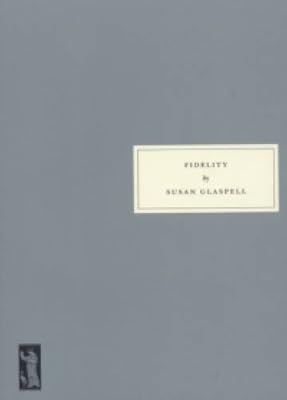
Fidelity
by Susan Glaspell
On This Page
Description
Ruth Holland, bored with her life at home, falls in love with a married man and runs off with him. When she comes back more than a decade later we are shown how her actions have affected those around her.Tags
Recommendations




















Member Reviews
Rating: 4.5* of five
The Publisher Says: A classic feminist novel originally published in 1915, and set in Iowa in the early years of the 20th century, Susan Glaspell's Fidelity is a surprising, suspenseful work about the strictures that confine women, the risks those who want to flee them take, and the opportunities that await them if they do.
Ruth Holland, bored in her conventional small town, falls in love with a married man and runs off with him, shocking the community. A decade later she returns to cold shoulders and the disapproval of the town: she is seen as "a human being who selfishly—basely—took her own happiness, leaving misery for others. She outraged society as completely as a woman could outrage it ... One who defies it show more ... must be shut out from it."
What Ruth decides to do next will upend most readers' expectations, as will the cryptic scenes that take place in the doctor's office after Ruth becomes involved with her married lover. Ruth Holland deserves to be placed alongside other heroines such as Emma Bovary and Lily Bart, women who wanted "an enlarged experience" and were "zestful for new things from life." Fidelity will shock and fascinate readers today as its heroine did in her day.
I RECEIVED A DRC FROM THE PUBLISHER VIA EDELWEISS+. THANK YOU.
My Review: It will most certainly shock readers today, will this read; not for the same reasons and not to the same degree as the readers of 1915 were shocked. Nowadays we're watching, or y'all're watching because I sure as shootin' ain't, The Real Housewives of {Flyover Country} to get the equivalent shock value. (I sometimes long for the Hays Code when I read about the antics of these surgically altered weirdos that keep so many so entertained.) I too was shocked by Fidelity: How has Susan Glaspell disappeared from the awareness of 2026's readers?
Born on a rural Iowa homestead (this means something important, y'all follow the link) in 1876, by 1894 she was a paid journalist; she later became a college graduate (in philosophy!) at a time when the number of *men* who graduated college was a vanishingly small slice of the population; she was a staffer, full time and paid, at the Des Moines newspaper; then gave it all up...to become a bestselling novelist and short-story writer.
AFTER that, she fell in love with a married guy. He divorced whoever he was married to in order to put a ring on Susan's finger (and who can blame him?), and their union produced...more bestselling novels, as well as the Provincetown Players, Eugene O'Neill's career, several still-produced plays of her own...y'know, all the usual things a woman can expect to have happen to her when she's born into a nineteenth-century farming family. Her life as a radical socialist free-love advocate would shock and startle many in the US today, let alone then.
So Fidelity is probably more faction, or even a roman à clef if one knew the good folk of Davenport, Iowa, circa 1910 which I do not and, if this story is any guide, am delighted not to have done. I'm no small-town fancier in general, but the beady-eyed, small-minded and judgmental folk of the place evoked in this story made me panther-screechingly furious on the regular.
Equally irksome to my twenty-first century self is the lackluster critical reception of the time, doubtless symptomatic of the era's cultural unreadiness to examine its prudishness and misogyny. (I'm appalled to not these same objectively wrongheaded notions are being trumpeted as in the ascendant again. Well-timed, Belt Publishing!) I suspect some of the resistance then also stemmed from the multiple narrators whose ideas about "fidelity," that inherently coercive concept applied far more to women than men in marriage as we constitute it in the West, being rather transparently intended to counterpoint each other and reinforce the validity of protagonist Ruth's choice to elope with a married man.
Pace University Professor Sarah Blackwood's introduction alone might repay the cost of procuring the book. So much of Author Glaspell's life is footnoted in relation to the Provincetown Players' enduring legacy, despite her 1932 Pulitzer Prize for Drama meriting more than a simple "oh, by the way" footnote. Professor Blackwood makes a good case for why we should look for, and at, Susan Glaspell as a visionary life-liver and writer.
I don't really think this story of "infidelity" and sexual liberation despite its consequences will ever go out of relevance and ability to illuminate and elucidate how willful and capricious a thing the human heart is. It's more out of fashion in twenty-first century storytelling when its focus is not on the guilt and the transgression angles of attack. It might feel less minatory because there's no emphasis on punishment for the behavior, but to my mind this story is more honest about reality than modern salacious takes on the topic. There are consequences to the choices we make. They aren't always easy to endure. If you knowingly transgress your community's norms be ready to find a new community.
I think a lot of people, married or not, can relate to, resonate with, find fellowship in, that message. show less
The Publisher Says: A classic feminist novel originally published in 1915, and set in Iowa in the early years of the 20th century, Susan Glaspell's Fidelity is a surprising, suspenseful work about the strictures that confine women, the risks those who want to flee them take, and the opportunities that await them if they do.
Ruth Holland, bored in her conventional small town, falls in love with a married man and runs off with him, shocking the community. A decade later she returns to cold shoulders and the disapproval of the town: she is seen as "a human being who selfishly—basely—took her own happiness, leaving misery for others. She outraged society as completely as a woman could outrage it ... One who defies it show more ... must be shut out from it."
What Ruth decides to do next will upend most readers' expectations, as will the cryptic scenes that take place in the doctor's office after Ruth becomes involved with her married lover. Ruth Holland deserves to be placed alongside other heroines such as Emma Bovary and Lily Bart, women who wanted "an enlarged experience" and were "zestful for new things from life." Fidelity will shock and fascinate readers today as its heroine did in her day.
I RECEIVED A DRC FROM THE PUBLISHER VIA EDELWEISS+. THANK YOU.
My Review: It will most certainly shock readers today, will this read; not for the same reasons and not to the same degree as the readers of 1915 were shocked. Nowadays we're watching, or y'all're watching because I sure as shootin' ain't, The Real Housewives of {Flyover Country} to get the equivalent shock value. (I sometimes long for the Hays Code when I read about the antics of these surgically altered weirdos that keep so many so entertained.) I too was shocked by Fidelity: How has Susan Glaspell disappeared from the awareness of 2026's readers?
Born on a rural Iowa homestead (this means something important, y'all follow the link) in 1876, by 1894 she was a paid journalist; she later became a college graduate (in philosophy!) at a time when the number of *men* who graduated college was a vanishingly small slice of the population; she was a staffer, full time and paid, at the Des Moines newspaper; then gave it all up...to become a bestselling novelist and short-story writer.
AFTER that, she fell in love with a married guy. He divorced whoever he was married to in order to put a ring on Susan's finger (and who can blame him?), and their union produced...more bestselling novels, as well as the Provincetown Players, Eugene O'Neill's career, several still-produced plays of her own...y'know, all the usual things a woman can expect to have happen to her when she's born into a nineteenth-century farming family. Her life as a radical socialist free-love advocate would shock and startle many in the US today, let alone then.
So Fidelity is probably more faction, or even a roman à clef if one knew the good folk of Davenport, Iowa, circa 1910 which I do not and, if this story is any guide, am delighted not to have done. I'm no small-town fancier in general, but the beady-eyed, small-minded and judgmental folk of the place evoked in this story made me panther-screechingly furious on the regular.
Equally irksome to my twenty-first century self is the lackluster critical reception of the time, doubtless symptomatic of the era's cultural unreadiness to examine its prudishness and misogyny. (I'm appalled to not these same objectively wrongheaded notions are being trumpeted as in the ascendant again. Well-timed, Belt Publishing!) I suspect some of the resistance then also stemmed from the multiple narrators whose ideas about "fidelity," that inherently coercive concept applied far more to women than men in marriage as we constitute it in the West, being rather transparently intended to counterpoint each other and reinforce the validity of protagonist Ruth's choice to elope with a married man.
Pace University Professor Sarah Blackwood's introduction alone might repay the cost of procuring the book. So much of Author Glaspell's life is footnoted in relation to the Provincetown Players' enduring legacy, despite her 1932 Pulitzer Prize for Drama meriting more than a simple "oh, by the way" footnote. Professor Blackwood makes a good case for why we should look for, and at, Susan Glaspell as a visionary life-liver and writer.
I don't really think this story of "infidelity" and sexual liberation despite its consequences will ever go out of relevance and ability to illuminate and elucidate how willful and capricious a thing the human heart is. It's more out of fashion in twenty-first century storytelling when its focus is not on the guilt and the transgression angles of attack. It might feel less minatory because there's no emphasis on punishment for the behavior, but to my mind this story is more honest about reality than modern salacious takes on the topic. There are consequences to the choices we make. They aren't always easy to endure. If you knowingly transgress your community's norms be ready to find a new community.
I think a lot of people, married or not, can relate to, resonate with, find fellowship in, that message. show less
This novel, written in 1915, must have caused a sensation when it was published. Glaspell tells the story of Ruth Holland, a young woman who,eleven years earlier, eloped with her married lover and now has returned to her hometown to be with her dying father. Told from various points of view, the novel examines how Ruth's action impacted her family, the town society, and herself. Her family, once so content in their social position, has declined; the women of the town who were Ruth's friends now consider her an evil homewrecker; Ruth herself hardly seems to have lead the pleasurable and sinful life of a femme fatale.
Ruth's lover Stuart Williams is so insignificent as a character that he disappears for about 3/4's of the book. In just a show more few pages the reader learns that Stuart was in a loveless, sexless marriage and he fell in love with the much younger vibrant Ruth. They met in secret for a year, stealing their pleasure when they could. Glaspell leaves no doubt that this is a sexual relationshiop, even broadly hinting that Ruth had to get an abortion from her friend who was the town doctor. When Stuart develops tuberculosis and has to go away for his health, Ruth leaves with him and, therefore, commits the unpardonable sin of stealing another woman's husband.
Glaspell peels away the surface story to examine Freeport's reaction to Ruth. Did the town really turn against Ruth because she suddenly changed from an innocent to a whore? Glaspell suggests otherwise. Ruth's major sin, even more than her sexual transgression, was her apparent disregard for social mores of Freeport. The middle-class women of the town had only one position.....that of wife and later mother. Their entire lives revolved around creating the home. That's what they did. They supervised the servants; planned social events; dictated fashion; did good works. Ruth was a threat to their very existence by her behavior. If they acknowledged her, even a nodding acceptance for her grief at her father's death, they would seem to accept her behavior, And that could not be allowed to happen. The sanctity of the home must be protected at all costs. The home was all these women had and if someone broke up the home, she was evil.
Glaspell does not excuse Ruth's actions. Her heroine has a miserable eleven years, even if the first years away from Freeport were filled with romantic love. Ruth is an outcast and cannot escape her reputation even on an isolated farm in Colorado. But she is no worse off than her former friends who adhere to social rules at the expense of character development and individual freedom. In the end, it is Ruth who faces an unknown future with brave anticipation, while her friends stagnant in Freeport.
This is a bold novel for its time and should have a respected place in the genre of regional fiction. show less
Ruth's lover Stuart Williams is so insignificent as a character that he disappears for about 3/4's of the book. In just a show more few pages the reader learns that Stuart was in a loveless, sexless marriage and he fell in love with the much younger vibrant Ruth. They met in secret for a year, stealing their pleasure when they could. Glaspell leaves no doubt that this is a sexual relationshiop, even broadly hinting that Ruth had to get an abortion from her friend who was the town doctor. When Stuart develops tuberculosis and has to go away for his health, Ruth leaves with him and, therefore, commits the unpardonable sin of stealing another woman's husband.
Glaspell peels away the surface story to examine Freeport's reaction to Ruth. Did the town really turn against Ruth because she suddenly changed from an innocent to a whore? Glaspell suggests otherwise. Ruth's major sin, even more than her sexual transgression, was her apparent disregard for social mores of Freeport. The middle-class women of the town had only one position.....that of wife and later mother. Their entire lives revolved around creating the home. That's what they did. They supervised the servants; planned social events; dictated fashion; did good works. Ruth was a threat to their very existence by her behavior. If they acknowledged her, even a nodding acceptance for her grief at her father's death, they would seem to accept her behavior, And that could not be allowed to happen. The sanctity of the home must be protected at all costs. The home was all these women had and if someone broke up the home, she was evil.
Glaspell does not excuse Ruth's actions. Her heroine has a miserable eleven years, even if the first years away from Freeport were filled with romantic love. Ruth is an outcast and cannot escape her reputation even on an isolated farm in Colorado. But she is no worse off than her former friends who adhere to social rules at the expense of character development and individual freedom. In the end, it is Ruth who faces an unknown future with brave anticipation, while her friends stagnant in Freeport.
This is a bold novel for its time and should have a respected place in the genre of regional fiction. show less
When Ruth Holland does the unthinkable and runs away with a married man, her hometown of Freeport buzzes with angry gossip. The fact that she was helped by her dear friend Deane only makes matters worse. Twelve years later Deane, now a physician, returns to Freeport with his new wife Amy. As Amy begins assimilating into Freeport “society,” she pieces together the details of Ruth’s story. She meets Ruth’s best high school friend and the wife of the married man, and aligns herself with “Team Freeport.” When family matters compel Ruth to return home for a visit, Deane suggests Amy visit her, sure that she will see the good in Ruth. Amy wants none of it. And frankly, no one else in town wants to see Ruth, either.
Ruth’s visit show more to Freeport is filled with sadness, but also a degree of healing that strengthens her and changes her world view. Her reappearance also has a ripple effect on Ruth’s siblings, on Deane, and even on some townspeople. Susan Glaspell’s depiction of petty small-town society caught up in the moral constraints of the early 20th century is spot on, and her resolution of Ruth’s central conflict is unconventional and brilliant. Highly recommended. show less
Ruth’s visit show more to Freeport is filled with sadness, but also a degree of healing that strengthens her and changes her world view. Her reappearance also has a ripple effect on Ruth’s siblings, on Deane, and even on some townspeople. Susan Glaspell’s depiction of petty small-town society caught up in the moral constraints of the early 20th century is spot on, and her resolution of Ruth’s central conflict is unconventional and brilliant. Highly recommended. show less
This is an extremely intense read, focussing completely on the emotions and inner life of its characters.
It's 1915 and Ruth Holland is returning to her childhood home. Some eleven years earlier, she ran off with a married man; since then her friends and relatives have cut her off, but now her father is dying...
Among those in town are her former admirer, now the local doctor. Despite being "thrown over" for the married man, he retains a fondness for her and recognises her sufferings- to the disgust of his supercilious young wife.
And then there are friends...some willing to reach out, some still sternly disapproving...and some of the former held in check by fear of the latter group and the demands of "Society". Not to mention the icy show more deserted wife.
The title-as becomes clear- pertains not only to one's marital vows but also - as Ruth discovers- the need to be faithful to what life has to offer.; not staying in a rut that no longer satisfies, but breaking free and living. A lesson she takes on board from poor yet free-thinking local girl, Annie (Chapter 23 is quite an inspiring look at how to live.)
VERY well written. show less
It's 1915 and Ruth Holland is returning to her childhood home. Some eleven years earlier, she ran off with a married man; since then her friends and relatives have cut her off, but now her father is dying...
Among those in town are her former admirer, now the local doctor. Despite being "thrown over" for the married man, he retains a fondness for her and recognises her sufferings- to the disgust of his supercilious young wife.
And then there are friends...some willing to reach out, some still sternly disapproving...and some of the former held in check by fear of the latter group and the demands of "Society". Not to mention the icy show more deserted wife.
The title-as becomes clear- pertains not only to one's marital vows but also - as Ruth discovers- the need to be faithful to what life has to offer.; not staying in a rut that no longer satisfies, but breaking free and living. A lesson she takes on board from poor yet free-thinking local girl, Annie (Chapter 23 is quite an inspiring look at how to live.)
VERY well written. show less
I knew little of Susan Glaspell when I put this book on my Classics Club list; just that two of her books had been republished by Persephone and that she was both a novelist and a dramatist.
That was reason enough.
The opening of this book told me that she was mistress of each art.
In Freeport, a small town in Iowa, an old man was gravely ill. He was asking for his daughter and his numbers wondered if she would dare to come home. She had left town in the wake of a terrible scandal. She hadn’t come home when her mother died, and that hardened the widely held opinion that she wasn’t the nice girl had thought she was; that she was a selfish, manipulative woman who shouldn’t be allowed in decent society. But if she was ever to come back show more surely this was the time.
Amy Frankin, the doctor’s wife, was a newcomer to the town and she had no idea what her new friends were talking about, or what disgraceful thing Ruth Holland had done. She would learn that Ruth had fallen in love with a married man, and that, when his health had broken down and his doctor suggest a change of climate, they had left town and set up home together in Colorado.
Ruth Holland was coming home, and she was well aware that it wouldn’t be easy.
“It was over the pain and the sweetness of life that this woman—Ruth Holland—brooded during the two days that carried her back to the home of her girlhood. She seemed to be going back over a long bridge. That part of her life had been cut away from her. With most lives the past grew into the future; it was as a growth that spread, the present but the extent of the growth at the moment. With her there had been the sharp cut; not a cut, but a tear, a tear that left bleeding ends. Back there lay the past, a separated thing. During the eleven years since her life had been torn from that past she had seen it not only as a separate thing but a thing that had no reach into the future. The very number of miles between, the fact that she made no journeys back home, contributed to that sense of the cleavage, the remoteness, the finality. Those she had left back there remained real and warm in her memory, but her part with them was a thing finished. It was as if only shoots of pain could for the minute unite them.”
She wasn’t aware – but she would learn – was that her behaviour had caused terrible problems for her family. That so many things she had said and done would be re-evaluated and misunderstood after her departure. And that friends and neighbours would still say that what she had done was beyond the pale and turn their backs on her.
Deane Franklin, the town doctor, supported her. They had been close friends and he had helped her to when she needed to keep her relationship secret, he had listened when she needed someone to talk to. Amy couldn’t understand why her husband was still drawn to another woman, why his view of what had happened was so different to her friends’ views, or why he would make himself complicit in such a scandalous situation
“I do know a few things. I know that society cannot countenance a woman who did what that woman did. I know that if a woman is going to selfishly take her own happiness with no thought of others she must expect to find herself outside the lives of decent people. Society must protect itself against such persons as she. I know that much—fortunately.”
Susan Glaspell tells her story beautifully. The pace is stately; the perspectives shift; and she moves between a traditional third-person narrative and more modern visits to her characters’ thoughts. There was complexity, there there was detail, and yet there was always such clarity of thought and purpose.
I found it easy to be drawn into the world she created, and to believe that these people lived and breathed, that the events and incidents I read about really happened.
I could see where the suthor’s sympathies lay, but I appreciated that she had understanding and concern for all of her characters and their different views.
I loved the telling of the story, and I loved its emotional depth.
The title of this book was very well chosen. It is underpinned by the question of who or what we owe fidelity. Our spouses? The standards of society? Our families? To the lover with whom we’ve aligned? Or our selves?
There are no easy answers, but the asking of the question allowed Susan Glaspell to make a wonderful exploration of the possibilities and the problems that it presents.
A conversation with an old school-mate – a girl who had came from a much poorer background that Ruth and her friends and had not had an easy life – gives Ruth food for thought and helps her to face the future.
“It’s what we think that counts, Ruth. It’s what we feel. It’s what we are. Oh, I’d like richer living—more beauty—more joy. Well, I haven’t those things. For various reasons, I won’t have them. That makes it the more important to have all I can take!”—it leaped out from the gentler thinking like a sent arrow. “Nobody holds my thoughts. They travel as far as they themselves have power to travel. They bring me whatever they can bring me—and I shut nothing out. I’m not afraid!”
This is a story set in a particular time and place, the world has changed a great deal in more than a hundred years since it was written, and yet it still has the power to touch hearts and minds.
The questions it asks would need to be asked differently today, but they are as important now as they were then. show less
That was reason enough.
The opening of this book told me that she was mistress of each art.
In Freeport, a small town in Iowa, an old man was gravely ill. He was asking for his daughter and his numbers wondered if she would dare to come home. She had left town in the wake of a terrible scandal. She hadn’t come home when her mother died, and that hardened the widely held opinion that she wasn’t the nice girl had thought she was; that she was a selfish, manipulative woman who shouldn’t be allowed in decent society. But if she was ever to come back show more surely this was the time.
Amy Frankin, the doctor’s wife, was a newcomer to the town and she had no idea what her new friends were talking about, or what disgraceful thing Ruth Holland had done. She would learn that Ruth had fallen in love with a married man, and that, when his health had broken down and his doctor suggest a change of climate, they had left town and set up home together in Colorado.
Ruth Holland was coming home, and she was well aware that it wouldn’t be easy.
“It was over the pain and the sweetness of life that this woman—Ruth Holland—brooded during the two days that carried her back to the home of her girlhood. She seemed to be going back over a long bridge. That part of her life had been cut away from her. With most lives the past grew into the future; it was as a growth that spread, the present but the extent of the growth at the moment. With her there had been the sharp cut; not a cut, but a tear, a tear that left bleeding ends. Back there lay the past, a separated thing. During the eleven years since her life had been torn from that past she had seen it not only as a separate thing but a thing that had no reach into the future. The very number of miles between, the fact that she made no journeys back home, contributed to that sense of the cleavage, the remoteness, the finality. Those she had left back there remained real and warm in her memory, but her part with them was a thing finished. It was as if only shoots of pain could for the minute unite them.”
She wasn’t aware – but she would learn – was that her behaviour had caused terrible problems for her family. That so many things she had said and done would be re-evaluated and misunderstood after her departure. And that friends and neighbours would still say that what she had done was beyond the pale and turn their backs on her.
Deane Franklin, the town doctor, supported her. They had been close friends and he had helped her to when she needed to keep her relationship secret, he had listened when she needed someone to talk to. Amy couldn’t understand why her husband was still drawn to another woman, why his view of what had happened was so different to her friends’ views, or why he would make himself complicit in such a scandalous situation
“I do know a few things. I know that society cannot countenance a woman who did what that woman did. I know that if a woman is going to selfishly take her own happiness with no thought of others she must expect to find herself outside the lives of decent people. Society must protect itself against such persons as she. I know that much—fortunately.”
Susan Glaspell tells her story beautifully. The pace is stately; the perspectives shift; and she moves between a traditional third-person narrative and more modern visits to her characters’ thoughts. There was complexity, there there was detail, and yet there was always such clarity of thought and purpose.
I found it easy to be drawn into the world she created, and to believe that these people lived and breathed, that the events and incidents I read about really happened.
I could see where the suthor’s sympathies lay, but I appreciated that she had understanding and concern for all of her characters and their different views.
I loved the telling of the story, and I loved its emotional depth.
The title of this book was very well chosen. It is underpinned by the question of who or what we owe fidelity. Our spouses? The standards of society? Our families? To the lover with whom we’ve aligned? Or our selves?
There are no easy answers, but the asking of the question allowed Susan Glaspell to make a wonderful exploration of the possibilities and the problems that it presents.
A conversation with an old school-mate – a girl who had came from a much poorer background that Ruth and her friends and had not had an easy life – gives Ruth food for thought and helps her to face the future.
“It’s what we think that counts, Ruth. It’s what we feel. It’s what we are. Oh, I’d like richer living—more beauty—more joy. Well, I haven’t those things. For various reasons, I won’t have them. That makes it the more important to have all I can take!”—it leaped out from the gentler thinking like a sent arrow. “Nobody holds my thoughts. They travel as far as they themselves have power to travel. They bring me whatever they can bring me—and I shut nothing out. I’m not afraid!”
This is a story set in a particular time and place, the world has changed a great deal in more than a hundred years since it was written, and yet it still has the power to touch hearts and minds.
The questions it asks would need to be asked differently today, but they are as important now as they were then. show less
Ruth Holland runs off with another woman's husband and Glaspell asks 'Was it worth it?'. I was prepared to hate Ruth, struggled to hate her, and yet wound up liking her enormously. Other than running off with someone else's husband, which she did while still very young, she was actually awfully nice and, indeed, quite an honorable person.
What interested me most about the book was the author's arguments for and against the adultery and the pain it caused Ruth's extended family. Sure everyone was devastated by it but it was done for LOVE! And yet, what sort of LOVE is claimed at the expense of other people? On the other hand, haven't we all stood up to our families for LOVE and in some cases, rightly so? In the 100 years since the book show more was written we now cross all sorts of barriers to be with our lovers, be it race, gender or religion, and yet most women still have expectations of monogamy within those relationships. Glaspell who was a Greenwich Village, free love, Bohemian might be disappointed to find that not much has changed since 1915.
On a par with the best of Edith Wharton, in my view, and highly recommended. show less
What interested me most about the book was the author's arguments for and against the adultery and the pain it caused Ruth's extended family. Sure everyone was devastated by it but it was done for LOVE! And yet, what sort of LOVE is claimed at the expense of other people? On the other hand, haven't we all stood up to our families for LOVE and in some cases, rightly so? In the 100 years since the book show more was written we now cross all sorts of barriers to be with our lovers, be it race, gender or religion, and yet most women still have expectations of monogamy within those relationships. Glaspell who was a Greenwich Village, free love, Bohemian might be disappointed to find that not much has changed since 1915.
On a par with the best of Edith Wharton, in my view, and highly recommended. show less
Fidelity is set in Freeport, a small Midwestern town that, ironically, is neither a “port” nor “free.” Ruth Holland shocks the town by running away with a married man. Eleven years later, as her father is dying, she comes back to Freeport, and faces the censure of the townspeople.
The novel, published in 1915, is the story of what happens when a young woman chooses her own happiness over that of other people. The novel asks, which is more important, “society?” Or the need for an individual to be “free?” It’s not until after Ruth returns to Freeport that she realizes the effect her actions have had upon the rest of the town—and that she starts to feel remorse for how much she has hurt them. Unusually, this is a novel show more about marital infidelity that is told from the point of view of “the other woman.”
One of the main themes of the novel is love—not necessarily romantic love, but love for family and friends. It’s remarkable how many friends Ruth still has in Freeport, despite all she has done. Most remarkable of all is Deane Franklin, Ruth’s old friend, who seems to be the only one in the town who can view her situation objectively. The title refers not to marital fidelity, or the lack of it, but a fidelity to a certain set of principles. And, ultimately, this book is about Ruth’s search for identity in a society in which her life would have been circumscribed had she not made the decisions she made. show less
The novel, published in 1915, is the story of what happens when a young woman chooses her own happiness over that of other people. The novel asks, which is more important, “society?” Or the need for an individual to be “free?” It’s not until after Ruth returns to Freeport that she realizes the effect her actions have had upon the rest of the town—and that she starts to feel remorse for how much she has hurt them. Unusually, this is a novel show more about marital infidelity that is told from the point of view of “the other woman.”
One of the main themes of the novel is love—not necessarily romantic love, but love for family and friends. It’s remarkable how many friends Ruth still has in Freeport, despite all she has done. Most remarkable of all is Deane Franklin, Ruth’s old friend, who seems to be the only one in the town who can view her situation objectively. The title refers not to marital fidelity, or the lack of it, but a fidelity to a certain set of principles. And, ultimately, this book is about Ruth’s search for identity in a society in which her life would have been circumscribed had she not made the decisions she made. show less
Members
- Recently Added By
Lists

First published in 1915
87 works; 11 members

thinking of reading in 2016
99 works; 1 member

Persephone
148 works; 3 members
Author Information

42+ Works 879 Members
Some Editions
Series
Belongs to Publisher Series
Persephone (4)
Common Knowledge
- Canonical title*
- Fidelidad
- Original title
- Fidelity
- Original publication date
- 1915
- People/Characters
- Ruth Holland; Ted Holland; Deane Franklin; Amy Franklin; Stuart Williams; Edith Lawrence Blair
- Important places
- Iowa, USA
- Dedication
- TO
LUCY HUFFAKER - First words
- It was hard to get back into the easy current of everyday talk.
- Last words
- (Click to show. Warning: May contain spoilers.)Let come what would come, she was moving on.
*Some information comes from Common Knowledge in other languages. Click "Edit" for more information.
Classifications
Statistics
- Members
- 217
- Popularity
- 150,519
- Reviews
- 12
- Rating
- (4.08)
- Languages
- English, Spanish
- Media
- Paper, Audiobook, Ebook
- ISBNs
- 12
- ASINs
- 7