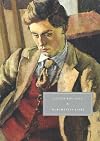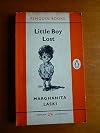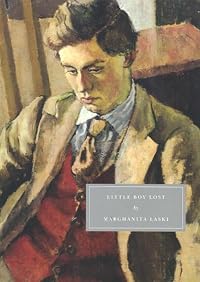
Little Boy Lost
by Marghanita Laski
On This Page
Description
Hilary Wainright, a young English poet, had lost his wife and child in France during the war.Tags
Recommendations


















Member Reviews
Little Boy Lost is the second book I've read by Marghanita Laski - the first was The Victorian Chaise-Longue. However, I found the two books entirely different. This one was far more emotional and a more gripping, compelling read.
It's Christmas Day, 1943, when Hilary Wainwright first learns that his son has been lost. He had seen baby John only once - a brief glimpse of a little red face with dark hair poking out of a bundle of blankets. Then, while Hilary was away, his wife, Lisa, was killed by the Gestapo in Paris and their little boy disappeared almost without trace. When the war is over, Hilary goes back to France and with the help of his friend, Pierre, he begins to follow a trail which he hopes will lead him to his lost son.
Laski show more does an excellent job of portraying the conflicting emotions Hilary experiences, torn between longing to be reunited with his son and worrying that if he does find him he might not want him. All through the book I was guessing what might happen - it wasn't really obvious what the outcome would be and I could think of several different possibilities, some good and some bad.
The descriptions of post-war France are so vivid: the bomb-damaged buildings, the poverty, the food shortages - unless you were rich enough to take advantage of the black market, of course. And I was shocked by the descriptions of the conditions in the orphanages. As well as there not being enough to eat and drink, and a complete lack of any toys or games, it was chilling to think of children with tuberculosis living alongside the healthy ones.
Although I was trying to avoid hearing too much about this book before I read it, I knew it was supposed to become very nerve-wracking and suspenseful towards the end. Well, I can tell you that this is definitely true! There are so many great books that are let down by a weak ending, but this is certainly not one of them. The tension throughout the final few chapters was nearly unbearable, so much so that I was almost afraid to reach the end. And I imagine most readers, like I did, will have tears in their eyes when they reach the very last sentence.
Nicholas Lezard of The Guardian, who is quoted on the back cover, says it best: "If you like a novel that expertly puts you through the wringer, this is the one." show less
It's Christmas Day, 1943, when Hilary Wainwright first learns that his son has been lost. He had seen baby John only once - a brief glimpse of a little red face with dark hair poking out of a bundle of blankets. Then, while Hilary was away, his wife, Lisa, was killed by the Gestapo in Paris and their little boy disappeared almost without trace. When the war is over, Hilary goes back to France and with the help of his friend, Pierre, he begins to follow a trail which he hopes will lead him to his lost son.
Laski show more does an excellent job of portraying the conflicting emotions Hilary experiences, torn between longing to be reunited with his son and worrying that if he does find him he might not want him. All through the book I was guessing what might happen - it wasn't really obvious what the outcome would be and I could think of several different possibilities, some good and some bad.
The descriptions of post-war France are so vivid: the bomb-damaged buildings, the poverty, the food shortages - unless you were rich enough to take advantage of the black market, of course. And I was shocked by the descriptions of the conditions in the orphanages. As well as there not being enough to eat and drink, and a complete lack of any toys or games, it was chilling to think of children with tuberculosis living alongside the healthy ones.
Although I was trying to avoid hearing too much about this book before I read it, I knew it was supposed to become very nerve-wracking and suspenseful towards the end. Well, I can tell you that this is definitely true! There are so many great books that are let down by a weak ending, but this is certainly not one of them. The tension throughout the final few chapters was nearly unbearable, so much so that I was almost afraid to reach the end. And I imagine most readers, like I did, will have tears in their eyes when they reach the very last sentence.
Nicholas Lezard of The Guardian, who is quoted on the back cover, says it best: "If you like a novel that expertly puts you through the wringer, this is the one." show less
Written and set shortly after WW2, it tells the story of Hilary, an English widower and poet, looking for his son in Paris, whom he last saw on the day of his birth nearly five years earlier. It is incredibly poignant, but in a very light, natural way and, very unusually, nearly had me in tears towards the end.
I've only read two Laskis, but this and The Victorian Chaise-Longue are largely about the loss of a child, albeit told in very different genres, and one from a male perspective and the other from a female one.
Hilary has many unresolved emotions about his troubled relationship with his mother (characterised by "hostility and bitterness" from the first page), the certainty of his wife’s death and the uncertainty of his son’s show more existence, and this translates into awkwardness between him and Pierre (friend of his wife’s who tries to find his son) and indeed with everyone else. He subsequent relationships with a couple of women show him in a very bad light.
The boy who may be his son is living in an orphanage and Hilary meets him and takes him out for the afternoon several days running. Jean is bright and endearing, but Hilary is unsure whether he is his son and equally unsure whether he wants him to be. It is a sort of love story, a bit like a blind date: mutual uncertainty, not knowing rules of how to behave, both wary of being hurt and unsure what they want. For Hilary, both as a child and as a possible parent, I suppose the key question is whether any parent better than no parent? Which of them is the boy of the title?
Hilary doesn’t know how to be a father, is unsure whether he wants to be ("I am being destroyed" by upsetting his simple, ordered, private and unemotional life) and struggles to comprehend the degree of deprivation in Jean’s life thus far and to what extent he should enrich it. When he tries, by buying red gloves, they don't fit. He weighs up duty and possible means of escape from fatherhood and as the reader, you inevitably wonder what would you do, given that the child may not be your own.
The descriptions of France very soon after the end of the war have a rawness that a historical novel written nowadays would struggle to achieve: not just the physical scars, but lingering distrust between suspected collaborators and suspected resistance, corruption arising from black marketeering, loosening morals etc.
Real (Cona) coffee is explicitly mentioned in chapter 1 and I think Hilary's reaction to what he is served in the orphanage highlights the contrast with his own entrenched material privilege. He has suffered emotional trauma in many ways, but he has always been cushioned by the comfort of good things. He doesn't even need to work. Consequently, he takes them for granted, sometimes reacts like a truculent child when he is denied them and giving such treats is an automatic and in some senses easy (no emotional cost) response for him. Hilary wants good things and is used to feeling entitled to them. He knows it is morally wrong to buy black market goods, but comfort food/drink trumps it because he is too immature to do otherwise.
There is so much in this story that the reader doesn't know (especially details about Hilary's relationship with his dead father and living mother), but that echoes the unknowns in Hilary's life, the biggest of which is never knowing for sure whether Jean is his son (not an issue with normal adoption). Hilary has some self-awareness ("my writing and my reading and all the other substitutes I have found for emotion" and "I must guard myself against emotion"), but is rarely able to overcome his weakness, snobbery and utilitarian approach to other people.
The ending is superbly apt.
With the right director it would make a great, atmospheric film, but so far it’s only been done as a Bing Crosby musical (ugh!). show less
I've only read two Laskis, but this and The Victorian Chaise-Longue are largely about the loss of a child, albeit told in very different genres, and one from a male perspective and the other from a female one.
Hilary has many unresolved emotions about his troubled relationship with his mother (characterised by "hostility and bitterness" from the first page), the certainty of his wife’s death and the uncertainty of his son’s show more existence, and this translates into awkwardness between him and Pierre (friend of his wife’s who tries to find his son) and indeed with everyone else. He subsequent relationships with a couple of women show him in a very bad light.
The boy who may be his son is living in an orphanage and Hilary meets him and takes him out for the afternoon several days running. Jean is bright and endearing, but Hilary is unsure whether he is his son and equally unsure whether he wants him to be. It is a sort of love story, a bit like a blind date: mutual uncertainty, not knowing rules of how to behave, both wary of being hurt and unsure what they want. For Hilary, both as a child and as a possible parent, I suppose the key question is whether any parent better than no parent? Which of them is the boy of the title?
Hilary doesn’t know how to be a father, is unsure whether he wants to be ("I am being destroyed" by upsetting his simple, ordered, private and unemotional life) and struggles to comprehend the degree of deprivation in Jean’s life thus far and to what extent he should enrich it. When he tries, by buying red gloves, they don't fit. He weighs up duty and possible means of escape from fatherhood and as the reader, you inevitably wonder what would you do, given that the child may not be your own.
The descriptions of France very soon after the end of the war have a rawness that a historical novel written nowadays would struggle to achieve: not just the physical scars, but lingering distrust between suspected collaborators and suspected resistance, corruption arising from black marketeering, loosening morals etc.
Real (Cona) coffee is explicitly mentioned in chapter 1 and I think Hilary's reaction to what he is served in the orphanage highlights the contrast with his own entrenched material privilege. He has suffered emotional trauma in many ways, but he has always been cushioned by the comfort of good things. He doesn't even need to work. Consequently, he takes them for granted, sometimes reacts like a truculent child when he is denied them and giving such treats is an automatic and in some senses easy (no emotional cost) response for him. Hilary wants good things and is used to feeling entitled to them. He knows it is morally wrong to buy black market goods, but comfort food/drink trumps it because he is too immature to do otherwise.
There is so much in this story that the reader doesn't know (especially details about Hilary's relationship with his dead father and living mother), but that echoes the unknowns in Hilary's life, the biggest of which is never knowing for sure whether Jean is his son (not an issue with normal adoption). Hilary has some self-awareness ("my writing and my reading and all the other substitutes I have found for emotion" and "I must guard myself against emotion"), but is rarely able to overcome his weakness, snobbery and utilitarian approach to other people.
The ending is superbly apt.
With the right director it would make a great, atmospheric film, but so far it’s only been done as a Bing Crosby musical (ugh!). show less
Set just after WW2, this is the story of Hilary Wainwright, young, literary...but emotionally damaged from a chilly mother and his wartime experiences in France. With his wife killed by the Gestapo, and his infant son vanished, Hilary is a shell of a man...and then one Christmas, a stranger arrives from Paris with information.
The narrative follows the pair back to grim post-war France; the complicated journey by which the infant reached the orphanage. But is it even his child? No one can say for sure, so Hilary spends a succession of evenings getting to know the child and trying to decide.
Authors often create rather saccharin children, but young Jean is a real character to whom the reader instantly warms. And is soon rooting for our show more contained and doubting lead character to remove from the nuns' charge and take him home. But Hilary is becoming aware of the constraints of parenthood, and querying whether he even should take on a child who may not be his... There are two little boys lost in this narrative, as both father and son need rescuing from their plight.
Quite a white-knuckle read as the end approaches. This really grew on me, from an indifferent first few pages, and I adored Jean. show less
The narrative follows the pair back to grim post-war France; the complicated journey by which the infant reached the orphanage. But is it even his child? No one can say for sure, so Hilary spends a succession of evenings getting to know the child and trying to decide.
Authors often create rather saccharin children, but young Jean is a real character to whom the reader instantly warms. And is soon rooting for our show more contained and doubting lead character to remove from the nuns' charge and take him home. But Hilary is becoming aware of the constraints of parenthood, and querying whether he even should take on a child who may not be his... There are two little boys lost in this narrative, as both father and son need rescuing from their plight.
Quite a white-knuckle read as the end approaches. This really grew on me, from an indifferent first few pages, and I adored Jean. show less
I sometimes have trouble deciding whether to rate a book based on how much I enjoyed it, versus how good I thought it was. In this case I am going with the former - Little Boy Lost was good, but I did not particularly enjoy reading it.
In the Afterword Anne Sebba refers to Hilary, the protagonist, as "a sympathetic character even though not all his qualities are admirable," and I would heartily disagree with her. Hilary is almost entirely unsympathetic, even when you throw a murdered wife and lost baby into his history. He is possibly the most arrogant, egotistical, selfish and childish character I've read in recent memory. His ugly thoughts and attitudes made me feel like the sooner I could be done with him, the better. That he was the show more personification of this sad and adorable little boy's hope - well, Little Boy Lost, indeed.
This is the 28th book published by Persephone and the 13th I've read. show less
In the Afterword Anne Sebba refers to Hilary, the protagonist, as "a sympathetic character even though not all his qualities are admirable," and I would heartily disagree with her. Hilary is almost entirely unsympathetic, even when you throw a murdered wife and lost baby into his history. He is possibly the most arrogant, egotistical, selfish and childish character I've read in recent memory. His ugly thoughts and attitudes made me feel like the sooner I could be done with him, the better. That he was the show more personification of this sad and adorable little boy's hope - well, Little Boy Lost, indeed.
This is the 28th book published by Persephone and the 13th I've read. show less
Little Boy Lost is set during and just after WWII. Hilary Wainwright is an English writer who lost his wife during the Holocaust—and his son, John, is also lost but in a different way. Hilary receives a tip that his son may be living in an orphanage in France, and he goes there to investigate.
It’s a bleak novel—the theme of which is emotional expression. Hilary’s constant struggle is whether to repress emotion, or to let it out. There’s so much emotional fodder here—the death of his wife, the loss of his son—but he doesn’t allow himself to actually express what he’s feeling. This suppression of emotion is what makes this book so powerful, all the more so because this is a novel of self-discovery, too. It’s only when show more Hilary manages to “find” himself that he opens himself up. Then there are the larger questions that Hilary finds himself asking: is the boy in the orphanage his? And if so, should he take on the care of him? What does Hilary really want, anyways? A neat, albeit dirty, twist happens towards the end of the novel that throws a wrench in his plans—unexpectedly, but maybe for the better.
Apparently, the idea for the book comes from something that really happened—during the English Civil War, the young heir to a family that supported the Royalist cause was spirited away and taken to a French monastery to be educated. I always find the inspiration for a book fascinating; it’s interesting to see where a writer’s imagination can go. So I was fascinated by Marghanita Laski’s gritty, bleak modernization of the story. I’m not sure that I liked Hilary all that much or the young women he takes up with, but Laski’s depiction of a postwar France in which society has been shattered is chilling. It’s also a subtle acknowledgement of the corrupt choices that many people were forced to make during the war in order to survive. Very well done. show less
It’s a bleak novel—the theme of which is emotional expression. Hilary’s constant struggle is whether to repress emotion, or to let it out. There’s so much emotional fodder here—the death of his wife, the loss of his son—but he doesn’t allow himself to actually express what he’s feeling. This suppression of emotion is what makes this book so powerful, all the more so because this is a novel of self-discovery, too. It’s only when show more Hilary manages to “find” himself that he opens himself up. Then there are the larger questions that Hilary finds himself asking: is the boy in the orphanage his? And if so, should he take on the care of him? What does Hilary really want, anyways? A neat, albeit dirty, twist happens towards the end of the novel that throws a wrench in his plans—unexpectedly, but maybe for the better.
Apparently, the idea for the book comes from something that really happened—during the English Civil War, the young heir to a family that supported the Royalist cause was spirited away and taken to a French monastery to be educated. I always find the inspiration for a book fascinating; it’s interesting to see where a writer’s imagination can go. So I was fascinated by Marghanita Laski’s gritty, bleak modernization of the story. I’m not sure that I liked Hilary all that much or the young women he takes up with, but Laski’s depiction of a postwar France in which society has been shattered is chilling. It’s also a subtle acknowledgement of the corrupt choices that many people were forced to make during the war in order to survive. Very well done. show less
Imagine you only ever saw your baby boy just the once, then war intervened and your family was split. This happens to Hilary Wainwright, who goes to war leaving his wife and new baby in Paris to follow on, but they never do as the Nazis take Paris. Lisa later dies working for the resistance and the baby disappears. Five years later Hilary returns to find out what happened to his child – a colleague Pierre has found a likely candidate in a Catholic orphanage in a little town some way from Paris – but is this child really little John?
I won’t tell you any more of the plot, suffice to say that it is a tear-jerker, but it also got me doing the bookish equivalent of shouting at the telly - yes! Although you naturally have huge sympathy show more for his situation, Hilary is an intellectual who doesn’t suffer fools gladly, and is always too quick to find everyone’s little failings, while neglecting to see his own. He also dismisses Winnie the Pooh! I quote ...
‘I don’t know any stories about little saints,’ said Hilary, trying hard to remember what he himself had enjoyed when he was five. I have a horrible feeling it was Winnie the Pooh, he thought, but I’m damned if I’m going to introduce any child to that type of whimsicality. He started to wonder how far a parent could be justified in refusing to allow his child pictures or writings that he as an adult must condemn on aesthetic grounds – and was recalled by Jean pulling at his sleeve and urging, ‘Please do begin.’
The depiction of life immediately after the war in France is gripping, indeed the book was originally published in 1949. The little town in which Hilary finds himself is not only grey and decrepit, but also full of resentment between its inhabitants – some were ‘collaborateurs’. The black market is thriving, and at the town’s remaining rather nasty hotel, anything is available – at a price. It’s not a nice place, but makes for a totally gripping read. show less
I won’t tell you any more of the plot, suffice to say that it is a tear-jerker, but it also got me doing the bookish equivalent of shouting at the telly - yes! Although you naturally have huge sympathy show more for his situation, Hilary is an intellectual who doesn’t suffer fools gladly, and is always too quick to find everyone’s little failings, while neglecting to see his own. He also dismisses Winnie the Pooh! I quote ...
‘I don’t know any stories about little saints,’ said Hilary, trying hard to remember what he himself had enjoyed when he was five. I have a horrible feeling it was Winnie the Pooh, he thought, but I’m damned if I’m going to introduce any child to that type of whimsicality. He started to wonder how far a parent could be justified in refusing to allow his child pictures or writings that he as an adult must condemn on aesthetic grounds – and was recalled by Jean pulling at his sleeve and urging, ‘Please do begin.’
The depiction of life immediately after the war in France is gripping, indeed the book was originally published in 1949. The little town in which Hilary finds himself is not only grey and decrepit, but also full of resentment between its inhabitants – some were ‘collaborateurs’. The black market is thriving, and at the town’s remaining rather nasty hotel, anything is available – at a price. It’s not a nice place, but makes for a totally gripping read. show less
"Little Boy Lost" was not at all what I expected, which was something like a hard-working soldier returns from the war to find his young son missing, then goes off to find him, at all costs. Instead, Little Boy Lost is far more interesting and complex. Hilary Wainwright had an English desk job in the war. He learns his wife, who's remained in France, has been killed by German troops, and believes his son dead, too. When he learns his son is lost and perhaps not dead, he can hardly bring himself to hope, as he's so steeled himself against loss and disappointment. When an acquaintance tells him he has a lead, Hilary does not rush off, but instead waits until the war is over, and even then drags his feet, conflicted with guilt and show more duty.
Hilary meets an orphan boy named Jean who is the right age. But Jean remembers none of his past, and bears no resemblance to Hilary or his dead wife. Hilary struggles whether to take the boy even though he's not sure Jean is his son. He longs for a simple, childless life with his present girlfriend in England after the war.
LBL is a book of its time, post WWII. Like noir books and films of the same era, its hero is ambivalent, and complicated. There's even sort of a femme fatale near the end who leads the hero astray. The tension about what will happen is drawn out skillfully to the very end, at which point the author pulls off one of the sharpest endings I've experienced. This book is a gem and a keeper. show less
Hilary meets an orphan boy named Jean who is the right age. But Jean remembers none of his past, and bears no resemblance to Hilary or his dead wife. Hilary struggles whether to take the boy even though he's not sure Jean is his son. He longs for a simple, childless life with his present girlfriend in England after the war.
LBL is a book of its time, post WWII. Like noir books and films of the same era, its hero is ambivalent, and complicated. There's even sort of a femme fatale near the end who leads the hero astray. The tension about what will happen is drawn out skillfully to the very end, at which point the author pulls off one of the sharpest endings I've experienced. This book is a gem and a keeper. show less
Members
- Recently Added By
Lists

Women in War
148 works; 29 members

Books That Made Me Cry
199 works; 105 members

THE WAR ROOM
813 works; 24 members

Books Read in 2025
4,091 works; 97 members

Persephone
148 works; 3 members
Author Information

23+ Works 1,820 Members
Some Editions
Awards and Honors
Distinctions
Series
Belongs to Publisher Series
Work Relationships
Has the adaptation
Common Knowledge
- Canonical title
- Little Boy Lost
- Original publication date
- 1949
- People/Characters
- Hilary Wainwright; Pierre Verdier; Jean
- Important places
- France
- Related movies
- Little Boy Lost (1953 | IMDb)
- Epigraph
- Father, father, where are you going?
Oh, do not walk so fast!
Speak, father, speak to your little boy,
Or else I shall be lost.
From 'The Little Boy Lost' by William Blake - Dedication
- For Jonathan
- First words
- It was on Christmas Day, 1943, that Hilary Wainwright learnt that his little son was lost.
- Last words
- (Click to show. Warning: May contain spoilers.)"It's Binkie! It's Binkie come back!"
Classifications
Statistics
- Members
- 534
- Popularity
- 55,681
- Reviews
- 15
- Rating
- (4.19)
- Languages
- Dutch, English, German, Spanish
- Media
- Paper, Ebook
- ISBNs
- 12
- ASINs
- 8