On This Page
Description
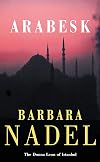
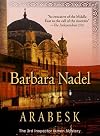
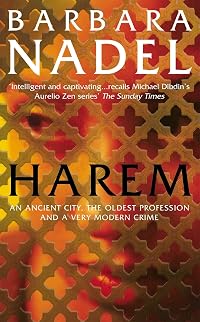
When the wife of one of Istanbul's best known popular singers is found dead and his baby daughter missing, the newly promoted Inspector Suleyman, scion of one of Turkey's most aristocratic families, finds himself plunged into the magnificently vulgar, overblown world of Arabesk music, dominated by an ageing star, the monstrous chanteuse, Tansu.Tags
Recommendations

























Member Reviews
It's been much too long since I immersed myself in one of Barbara Nadel's Çetin Íkmen mysteries. The author always takes me right into the heart of the culture and history, not only of Istanbul but of Turkey itself.
Arabesk is the third book in this series, and the title is layered with meaning. It introduces readers to the world of Arabesk music, a magnificently vulgar, overblown world hugely popular with the masses, and it also refers to the complicated patterns of form or calligraphy known as Arabesque, a nod to the plot of the book.
If you're a reader who's allergic to even fictional cigarette smoke, you might want to give this one a miss because it seems as though everyone is constantly lighting one up. But if you're willing to show more brave the nicotine haze, you'll be greatly rewarded.
First, there's the strong plot that keeps you guessing. It's a mystery steeped in Turkish culture and history, and it's this look into another world that keeps me coming back for more. It's a world in which Kurds, Jews, Christians, and Muslims sometimes live together in harmony or sometimes brutally clash. If you're a police officer in Istanbul, you need to know the ins and outs of all these various factions.
Inspector Çetin Íkmen has an encyclopedic knowledge of the city of Istanbul, but he's been put on the sidelines due to stomach ulcers and other health concerns. He'd much rather be on the job than trying to bribe his sons to bring him forbidden alcohol... or trying to figure out why one of his sons is being so moody. Íkmen's easy-going personality as well as his knowledge serves him well. He's no bigot and can get along with people from all walks of life-- something very helpful for successful investigations.
On the other hand, the newly promoted Inspector Suleyman, who was trained by Íkmen, can antagonize others simply by sounding patrician. It makes his work harder, especially since he's trying not to bother Íkmen too much. He'd much rather solve this case on his own merit.
If you enjoy history, culture, strong mysteries, and nuanced characters, you really need to give this series a try. I suggest beginning at the beginning with Belshazzar's Daughter. Armchair traveling sleuths are in for a treat! show less
Arabesk is the third book in this series, and the title is layered with meaning. It introduces readers to the world of Arabesk music, a magnificently vulgar, overblown world hugely popular with the masses, and it also refers to the complicated patterns of form or calligraphy known as Arabesque, a nod to the plot of the book.
If you're a reader who's allergic to even fictional cigarette smoke, you might want to give this one a miss because it seems as though everyone is constantly lighting one up. But if you're willing to show more brave the nicotine haze, you'll be greatly rewarded.
First, there's the strong plot that keeps you guessing. It's a mystery steeped in Turkish culture and history, and it's this look into another world that keeps me coming back for more. It's a world in which Kurds, Jews, Christians, and Muslims sometimes live together in harmony or sometimes brutally clash. If you're a police officer in Istanbul, you need to know the ins and outs of all these various factions.
Inspector Çetin Íkmen has an encyclopedic knowledge of the city of Istanbul, but he's been put on the sidelines due to stomach ulcers and other health concerns. He'd much rather be on the job than trying to bribe his sons to bring him forbidden alcohol... or trying to figure out why one of his sons is being so moody. Íkmen's easy-going personality as well as his knowledge serves him well. He's no bigot and can get along with people from all walks of life-- something very helpful for successful investigations.
On the other hand, the newly promoted Inspector Suleyman, who was trained by Íkmen, can antagonize others simply by sounding patrician. It makes his work harder, especially since he's trying not to bother Íkmen too much. He'd much rather solve this case on his own merit.
If you enjoy history, culture, strong mysteries, and nuanced characters, you really need to give this series a try. I suggest beginning at the beginning with Belshazzar's Daughter. Armchair traveling sleuths are in for a treat! show less
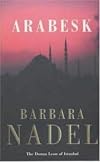
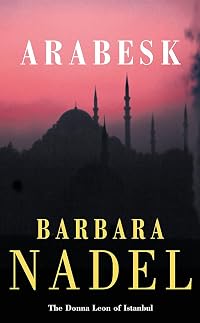
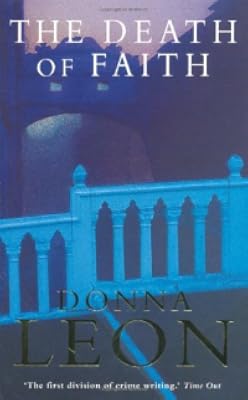
The book cover to the left describes Barbara Nadel as “the Donna Leon of Turkey.” Inspector Cetin Ikmen is Istanbul’s leading homicide detective. He is the father of many children, married for thirty years to Fatma. He is clever, quick-witted, and an expert on his city and the people who live in it. As Brunetti is the product of Venice, Ikman is the product of the city that once was called Constantinople. He is as Turkish as Brunetti is Italian. Two men could not be more different except that each is open to the possibilities for good and evil in the people who surround them in the city that each loves.
Inspector Ikmen is on sick leave and the direction of the homicide squad is in the hands of the newly promoted Mehmet Suleyman show more who, until recently, was a sergeant and Ikmen’s right hand man. Suleyman has more in common with the urbane Brunetti than Ikmen does. Suleyman is an Ottoman Turk, born into a family that had once ruled an empire.
When the body of Ruya Urfa is found on her kitchen floor, the immediate suspect is a neighbor in the building, a 45 year-old man with a mental age of 7. He discovers the body but he tells them that Ruya was already cold. And then he tells them about the demon woman who was standing over Ruya, a woman with silver hair, a furry coat, and a face that looked like a serpent. Is he telling the truth or is he creating a story?
The case becomes complicated when the police learn that the victim is the wife of Erol Urfa, Turkey’s heart-throb, a man adored by millions. Erol Urfa is a superstar, the most popular singer of Arabesk in Turkey. Arabesk is an Arabic-style music created in Turkey. Erol is the not only the voice of Arabesk, today, he is the lover of Tansu Hanim, the most beloved star of movies made in the country and another voice of Arabesk. That she is, at the very least, old enough to be Erol’s mother does not make their relationship any less intense.
ARABESK is a fascinating book. The group of suspects is small enough that it isn’t difficult to determine the identity of the killer. It is the story, the characters, the history, and the culture and society of Turkey that makes the book impossible to put down.
One of the most interesting parts of the story are about a religion that is practiced by the Kurds. Yazidi and its practitioners play a significant part in the story. Followers of the religion are often outcasts because it is thought that they worship Satan. In fact, according to the Yazidi creation story, when God created the world he left it in the care of seven angels, the most important of these being the peacock angel, referred to as Shaytan or Shaitan. This led to the belief that Yazidis worshiped Satan. Followers of the religion do not wear blue so that they do not distract people from seeing the blue in the peacock. They do not eat chicken or corn either and this information creates some confusion for the police.
ARABESK is a story that looks at the complexities of a society that has existed for millennia and which has been molded to reflect the beliefs and cultures of the invaders who came and stayed for awhile until they were replaced by more outsiders. In that sense, arabesque is also apart of the story. Islam forbids the use of the human form in art. As an art form, the arabesque follows patterns for plants and animals. The geometric designs repeat, they appear to be infinite, and mistakes are deliberately made. ARABESK is a story of mistakes, repeated deliberately to control the lives of some of the characters. An arabesque design is like a maze, offering a challenge to those who wish to escape.
The characters are so complex that a review can’t do them justice. It is an engrossing, interesting, and mind-opening story. ARABESK is the third book in the Inspector Ikmen series; I am going to find the first two books. show less
Inspector Ikmen is on sick leave and the direction of the homicide squad is in the hands of the newly promoted Mehmet Suleyman show more who, until recently, was a sergeant and Ikmen’s right hand man. Suleyman has more in common with the urbane Brunetti than Ikmen does. Suleyman is an Ottoman Turk, born into a family that had once ruled an empire.
When the body of Ruya Urfa is found on her kitchen floor, the immediate suspect is a neighbor in the building, a 45 year-old man with a mental age of 7. He discovers the body but he tells them that Ruya was already cold. And then he tells them about the demon woman who was standing over Ruya, a woman with silver hair, a furry coat, and a face that looked like a serpent. Is he telling the truth or is he creating a story?
The case becomes complicated when the police learn that the victim is the wife of Erol Urfa, Turkey’s heart-throb, a man adored by millions. Erol Urfa is a superstar, the most popular singer of Arabesk in Turkey. Arabesk is an Arabic-style music created in Turkey. Erol is the not only the voice of Arabesk, today, he is the lover of Tansu Hanim, the most beloved star of movies made in the country and another voice of Arabesk. That she is, at the very least, old enough to be Erol’s mother does not make their relationship any less intense.
ARABESK is a fascinating book. The group of suspects is small enough that it isn’t difficult to determine the identity of the killer. It is the story, the characters, the history, and the culture and society of Turkey that makes the book impossible to put down.
One of the most interesting parts of the story are about a religion that is practiced by the Kurds. Yazidi and its practitioners play a significant part in the story. Followers of the religion are often outcasts because it is thought that they worship Satan. In fact, according to the Yazidi creation story, when God created the world he left it in the care of seven angels, the most important of these being the peacock angel, referred to as Shaytan or Shaitan. This led to the belief that Yazidis worshiped Satan. Followers of the religion do not wear blue so that they do not distract people from seeing the blue in the peacock. They do not eat chicken or corn either and this information creates some confusion for the police.
ARABESK is a story that looks at the complexities of a society that has existed for millennia and which has been molded to reflect the beliefs and cultures of the invaders who came and stayed for awhile until they were replaced by more outsiders. In that sense, arabesque is also apart of the story. Islam forbids the use of the human form in art. As an art form, the arabesque follows patterns for plants and animals. The geometric designs repeat, they appear to be infinite, and mistakes are deliberately made. ARABESK is a story of mistakes, repeated deliberately to control the lives of some of the characters. An arabesque design is like a maze, offering a challenge to those who wish to escape.
The characters are so complex that a review can’t do them justice. It is an engrossing, interesting, and mind-opening story. ARABESK is the third book in the Inspector Ikmen series; I am going to find the first two books. show less
So this funny little muddle starts out tricking you into thinking it's better than ıt ıs, and then ends up being . . . worse than it is? Nadel gets a certain amount of steam out of her special knowledge of the setting - those little nuggets of facts about Turkey or whatnot that are so easy to throw into a narrative and so diverting to people who don't know the country like she does. Turkey also gives her a certain amount of cover for the clumsy bits, like at the start when İkmen says his stomach feels like it's "being stabbed by an invisible bastard" you're like, Turkish turnsof phrase are so hilariously picturesque! But that has worn thin long before the end and you realize she just doesn't have a flair for dialogue. And like, if show more it's JK Rowling it totally doesn't matter because the magical setting gives her a million pages of credit, but with Nadel the setting, İstanbul, might just about magick you enough to get her through the book if it weren't for some other niggling things, like the fixation with naming every little character - "I wonder what all the commotion is?" Tansu Babacan, a housewife shopping at the market, said to the fruit-seller, Erol Tandoğan, and then you never see either character again kind of thing. Also there's some kind of orientalism or self-hatred or I don't know what in the fact that every female character in this book is either hateful, dumb or foreign. I mean, could happen, but if you're writing about a place where the role of women is as fraught as in Turkey, seems like you have a bit of a responsibility to eıther push back or, if it is actually your contention that this is how all Turkish women are, make it into a case by writing something with some verisimilitude instead of a cack-handed detective story. Otherwise it just seems like you're trying to dısassociate yourself from your sistas. show less
Overall, I really like Barbara Nadel's books, but I don't see why she always has to throw in an oddball bit of Turkish culture instead of just sticking with Turkey itself. Here we deal with the "devil-worshiping" sect of the Yezidis. Still, recommended for anyone with an interest in Turkey and international mystery.
Interesting book, set in Turkey and using the blend of cultures,religions,superstitions et veterans to enrich the mystery at its center. Characters are just complex enough to be interesting and psychology seems believable.
A warning that the depiction of the character with Down syndrome may be upsetting for some people, but does raise awareness of an issue faced by law enforcement that many may not have considered
A warning that the depiction of the character with Down syndrome may be upsetting for some people, but does raise awareness of an issue faced by law enforcement that many may not have considered
The third in the Inspector Ikmen series, in which the inspector gets involved in the murder of the wife of an Arabesk music star. This genre has no real equivalent in the U.S., but was very popular in the latter part of the twentieth century, and has all sorts of political (non-western) and social (non educated) overtones. When Ikmen and his colleague Suleyman are immersed in this overheated atmosphere, they have to struggle with their own assumptions as well as a complex trail of clues. Not perhaps as well plotted as some of the others, but I found the atmosphere fascinating.
A nice book to read. Interesting because in the story the Turkish culture and background plays a role and is interwoven in the motive of the perpetrator and the actions of the police and other characters.
I had trouble with the names for a while, because alternating first, last and full names were used.
All in all a book that invites to read more of them, when I come across books by this writer.
I had trouble with the names for a while, because alternating first, last and full names were used.
All in all a book that invites to read more of them, when I come across books by this writer.
Members
- Recently Added By
Author Information

50+ Works 2,902 Members
Awards and Honors
Notable Lists
Series

Common Knowledge
- Canonical title
- Arabesk
- Original title
- Arabesk
- Original publication date
- 2001
- People/Characters
- Cetin Ikmen
- Important places
- Istanbul, Turkey
- Dedication
- To my parents
- First words
- From the high vantage point of their apartment balcony the two men watched as the routines of the early morning city began to take shape.
- Last words
- (Click to show. Warning: May contain spoilers.)Or indeed want to know.
- Original language
- English
Classifications
Statistics
- Members
- 238
- Popularity
- 137,271
- Reviews
- 11
- Rating
- (3.81)
- Languages
- 5 — Dutch, English, Finnish, German, Swedish
- Media
- Paper, Ebook
- ISBNs
- 12
- ASINs
- 2