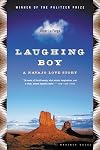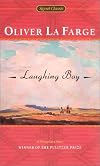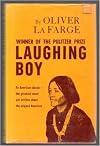
Laughing Boy: A Navajo Love Story
by Oliver La Farge
On This Page
Description
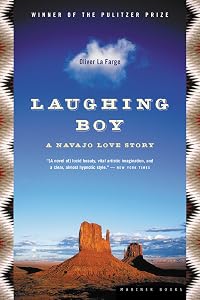
Capturing the essence of the Southwest in 1915, Oliver La Farge's Pulitzer Prize-winning first novel is an enduring American classic. At a ceremonial dance, the young, earnest silversmith Laughing Boy falls in love with Slim Girl, a beautiful but elusive "American"-educated Navajo. As they experience all of the joys and uncertainties of first love, the couple must face a changing way of life and its tragic consequences.Tags
Recommendations


















Member Reviews
First published in 1929, but still eminently readable, this novel tells the story of Laughing Boy and Slim Girl, two young Navajo who earn the disapproval of his peers by marrying without family approval.
Slim Girl is one of the countless young Native Americans who was taken away from her home in early childhood and sent to one of the Indian Boarding Schools designed to "civilize" young Native Americans by denying them their cultural heritage. Now a young woman wanting to return to tribal ways, she finds herself with a foot in each culture.
Introspective and low-key, the novel nevertheless is profoundly moving as these two young people try hard to build a life, but the falseness of their relationship's foundation foreshadows show more heartbreak.
Slim Girl's character is particularly well-written; LaFarge manages to make her understandable, if not particularly pleasant. Taught by harsh reality to survive in any way she can, she manipulates Laughing Boy, yet underneath that manipulation is a genuine love for him. Her struggles to succeed both as a traditional Navajo wife and to accumulate the material wealth of the "American" world by which she has been brutalized make her a flawed but fascinating character. show less
Slim Girl is one of the countless young Native Americans who was taken away from her home in early childhood and sent to one of the Indian Boarding Schools designed to "civilize" young Native Americans by denying them their cultural heritage. Now a young woman wanting to return to tribal ways, she finds herself with a foot in each culture.
Introspective and low-key, the novel nevertheless is profoundly moving as these two young people try hard to build a life, but the falseness of their relationship's foundation foreshadows show more heartbreak.
Slim Girl's character is particularly well-written; LaFarge manages to make her understandable, if not particularly pleasant. Taught by harsh reality to survive in any way she can, she manipulates Laughing Boy, yet underneath that manipulation is a genuine love for him. Her struggles to succeed both as a traditional Navajo wife and to accumulate the material wealth of the "American" world by which she has been brutalized make her a flawed but fascinating character. show less
Really good novel about a Navajo couple. Quite poetic and tries to give the flavor of their religion. I don't know how accurate it is, since the author lived among them but was not Navajo, but still worth reading for the story and appreciation of the culture.
I have a habit of regularly picking up a prize winner as one of my ways of making sure I read a variety of authors. Sometimes I am disappointed or even bored with the result, but more often I am thrilled to make a new discovery. Laughing Boy was one of those discoveries. The story begins in a very simple manner, what even feels initially to be overly simple. Boy meets girl: a love story.
But as you read, the story becomes more complex. Laughing Boy was raised in a traditional Navajo family. He is very astute and capable in that lifestyle; he can make a living. However, when it comes to love, he seems quite naïve. Slim Girl was removed from her family at an early age and given an American education. She feels something has been stolen show more from her, and she is on the outside looking in. The relationship between Laughing Boy and Slim Girl reflects the conflict developing between the traditional Navajo way of life and the American culture that is encroaching all around them.
Their relationship is complicated in other ways as well. Slim Girl is conniving and manipulative. Is she just using Laughing Boy? It is clear she loves him though. What drives her dishonesty? She is very focused on building as much security as possible before giving up the benefits of living among the Americans. Why is she not willing to take risks for the life she wants?
This novel won the Pulitzer Prize in 1930, and in my opinion, was very much deserving. show less
But as you read, the story becomes more complex. Laughing Boy was raised in a traditional Navajo family. He is very astute and capable in that lifestyle; he can make a living. However, when it comes to love, he seems quite naïve. Slim Girl was removed from her family at an early age and given an American education. She feels something has been stolen show more from her, and she is on the outside looking in. The relationship between Laughing Boy and Slim Girl reflects the conflict developing between the traditional Navajo way of life and the American culture that is encroaching all around them.
Their relationship is complicated in other ways as well. Slim Girl is conniving and manipulative. Is she just using Laughing Boy? It is clear she loves him though. What drives her dishonesty? She is very focused on building as much security as possible before giving up the benefits of living among the Americans. Why is she not willing to take risks for the life she wants?
This novel won the Pulitzer Prize in 1930, and in my opinion, was very much deserving. show less
Set in the year 1915, in the Navajo nation. Laughing Boy is a young man attending a large gathering where there are dances, horse races, trading and gambling. He’s excited to compete with his favorite pony and make some good trades, but something momentous happens when Slim Girl catches his eye. He’s fascinated by her bold behavior, when she speaks to him directly (something a proper girl would never do) and on impulse, they decide soon after to run off and get married. Laughing Boy hears rumors from others and faces criticism from his family about Slim Girl- she’s bad they say. She’s not a proper Navajo. He doesn’t understand what they’re talking about. Slim Girl had been taken away by the Americans when she was a little show more girl, sent to a boarding school where her language and culture were forbidden (to put it mildly). She is full of bitterness against the Americans and desperately wants to rejoin The People. She sees her union with Laughing Boy as a way back in, and for a time, this seems to work. They set up a little household together on the outskirts of a small dusty American town, where Slim Girl has a job she doesn’t want to leave, quite yet. She wants security, to earn and save up money so she and Laughing Boy could return with wealth to live among the Navajo among respect and admiration. Unfortunately, her means to that goal were also her undoing.
There were many parts of this story I really enjoyed. Reading of this young couple’s determination to flaunt the norms- Laughing Boy ignoring all the whispers about his wife and refusing to believe any ill of her, certain they were wrong and that he could make a happy home. Slim Girl’s stubborn desire to learn skills that were taken for granted by other Navajo women and she struggled with- mainly weaving, but other things as well. Their joy in each other, and the complications that arose when doubts crept into their relationship, becoming a gap they struggled to repair. The one thing I felt dubious about was the casual mention of Slim Girl’s years in the boarding school. While it was obvious she was somewhat traumatized and turned callous by that experience, I felt like it could have been dealt with in much greater depth. Perhaps it was written this way though, because most of the story is told from Laughing Boy’s perspective, and he never really understood what an impact that experience had on her.
This book won a Pulitzer in 1930. Sadly, it’s one of those that I feel dismayed about, when looking up more info after I’m done reading. The author is not Native American, he wrote from outside the culture, though he spent several years working in Navajo territory, and admired them greatly. But it sounds like he got a lot of it wrong: American Indians in Children’s Literature. Regardless, I still think it’s a good story, I’m just disappointed it’s got false portrayals.
more at the Dogear Diary show less
There were many parts of this story I really enjoyed. Reading of this young couple’s determination to flaunt the norms- Laughing Boy ignoring all the whispers about his wife and refusing to believe any ill of her, certain they were wrong and that he could make a happy home. Slim Girl’s stubborn desire to learn skills that were taken for granted by other Navajo women and she struggled with- mainly weaving, but other things as well. Their joy in each other, and the complications that arose when doubts crept into their relationship, becoming a gap they struggled to repair. The one thing I felt dubious about was the casual mention of Slim Girl’s years in the boarding school. While it was obvious she was somewhat traumatized and turned callous by that experience, I felt like it could have been dealt with in much greater depth. Perhaps it was written this way though, because most of the story is told from Laughing Boy’s perspective, and he never really understood what an impact that experience had on her.
This book won a Pulitzer in 1930. Sadly, it’s one of those that I feel dismayed about, when looking up more info after I’m done reading. The author is not Native American, he wrote from outside the culture, though he spent several years working in Navajo territory, and admired them greatly. But it sounds like he got a lot of it wrong: American Indians in Children’s Literature. Regardless, I still think it’s a good story, I’m just disappointed it’s got false portrayals.
more at the Dogear Diary show less
Laughing Boy was published in 1929, and is billed on the cover as "the first authentic novel of the Navajo Indians." Oliver LaFarge was something of an authority on Native Americans, working as an activist most of his life. So I expected an account of day-to-day Native American life, describing customs and rituals that are more widely understood today. LaFarge does this in a surprisingly eloquent, lyrical way, such as this passage describing the start of a horse race:
Arrows from the bow -- no other simile. At the tearing gallop, flat-stretched, backs are level, the animals race in a straight line; all life is motion; there is no body, only an ecstasy; one current between man and horse, and still embodied, a whip hand to pour in leather show more and a mouth to shout. Speed, speed, but the near goal is miles away, and other speed spirits on either side will not fall back. (p. 56)
But this book is much more than cultural education. It is also a beautiful love story. Laughing Boy, a Navajo brave, meets Slim Girl at a dance and is instantly taken with her. She was raised by whites, so their relationship is controversial within Laughing Boy's family & tribe. She also has a bit of a reputation that he is blissfully unaware of. He helps her reconnect to her roots and learn traditional crafts; she helps him discover the wider world beyond his tribe. Their relationship evolves as they come of age themselves. LaFarge is far less lyrical when writing about relationships, and yet he manages to convey each person's deepest feelings of love, and of fear of failing the other. This book gets a 3-star rating because while it was good, it lacked a certain depth. It almost earned another half or full star because of its very moving ending. Recommended. show less
Arrows from the bow -- no other simile. At the tearing gallop, flat-stretched, backs are level, the animals race in a straight line; all life is motion; there is no body, only an ecstasy; one current between man and horse, and still embodied, a whip hand to pour in leather show more and a mouth to shout. Speed, speed, but the near goal is miles away, and other speed spirits on either side will not fall back. (p. 56)
But this book is much more than cultural education. It is also a beautiful love story. Laughing Boy, a Navajo brave, meets Slim Girl at a dance and is instantly taken with her. She was raised by whites, so their relationship is controversial within Laughing Boy's family & tribe. She also has a bit of a reputation that he is blissfully unaware of. He helps her reconnect to her roots and learn traditional crafts; she helps him discover the wider world beyond his tribe. Their relationship evolves as they come of age themselves. LaFarge is far less lyrical when writing about relationships, and yet he manages to convey each person's deepest feelings of love, and of fear of failing the other. This book gets a 3-star rating because while it was good, it lacked a certain depth. It almost earned another half or full star because of its very moving ending. Recommended. show less
In spite of my reluctance to give 5 star ratings, I find myself unable to consider anything else for this wonderful book. In spite of being a first novel, it won a Pulitzer Prize and certainly deserved it.
I probably should not be surprised that I am giving 5 star ratings lately since I depend so heavily on the ratings and comments of others whenever I choose a book, but since those ratings have been so helpful, I feel a bit duty-bound to pay it forward.
Laughing Boy is an intense love story, not the usual go-to novel for guys, but one that is worth getting out of the male rut. The strengths of this novel are that it develops both the characters and their feelings for one another with such precision, such insightful detail and such show more empathy for the characters, their relationship and the struggle they face. Its other strength is its ability to so beautifully depict the Navajo culture in which the story occurs.
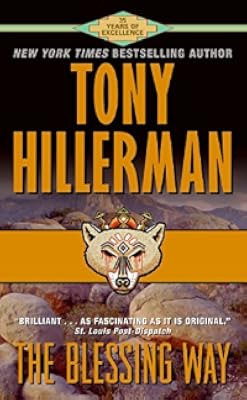
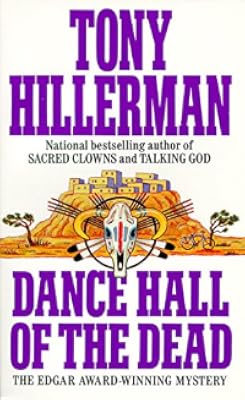
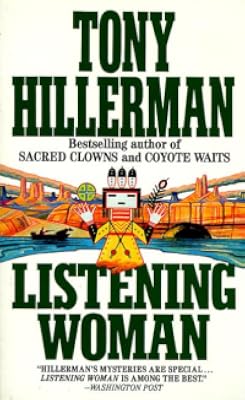
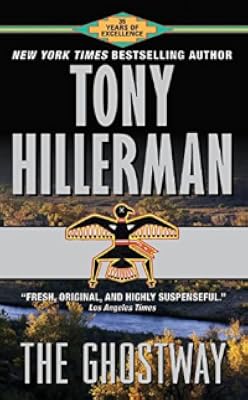
A few years ago, Tony Hillerman created a series of crime/suspense novels set on the Navajo Reservation and detailedly describing the Navajo culture while also telling compelling murder mystery stories. I read every one of his books as did everyone in my office. Reading Laughing Boy takes me back to that experience and give me the same feeling of authenticity that Hillerman's books did.
For anyone who has been in love, totally, unconditionally besotted with another, this book will ring true, reminding them of the early days of their passion and perhaps renewing it through its honest and detailed portrayal.
This book was written over 55 years ago yet continues to receive the type of praise that earns respect, that can make a book stay around for many years until it is finally recognized as a classic.
It is a book that readers will not only read but will also feel and remember. show less
I probably should not be surprised that I am giving 5 star ratings lately since I depend so heavily on the ratings and comments of others whenever I choose a book, but since those ratings have been so helpful, I feel a bit duty-bound to pay it forward.
Laughing Boy is an intense love story, not the usual go-to novel for guys, but one that is worth getting out of the male rut. The strengths of this novel are that it develops both the characters and their feelings for one another with such precision, such insightful detail and such show more empathy for the characters, their relationship and the struggle they face. Its other strength is its ability to so beautifully depict the Navajo culture in which the story occurs.
A few years ago, Tony Hillerman created a series of crime/suspense novels set on the Navajo Reservation and detailedly describing the Navajo culture while also telling compelling murder mystery stories. I read every one of his books as did everyone in my office. Reading Laughing Boy takes me back to that experience and give me the same feeling of authenticity that Hillerman's books did.
For anyone who has been in love, totally, unconditionally besotted with another, this book will ring true, reminding them of the early days of their passion and perhaps renewing it through its honest and detailed portrayal.
This book was written over 55 years ago yet continues to receive the type of praise that earns respect, that can make a book stay around for many years until it is finally recognized as a classic.
It is a book that readers will not only read but will also feel and remember. show less
Gorgeous. Captures the essence of the spirit & language of the people of the time, both Navajo and American", as best as I can tell. My library had it shelved as 'Western' but that's like saying [b:The Old Man and the Sea|2165|The Old Man and the Sea|Ernest Hemingway|https://d202m5krfqbpi5.cloudfront.net/books/1329189714s/2165.jpg|69741] is 'Aquatic.' It reveals universal truths about human nature through a lens that may help today's readers see them more clearly.
And to think it was an impulse grab, based on title, and on the fact that it's a slim book despite being in the large-print section. Um, well, slim it may be, but it was still a long slow meditative read.
A sample:
That evening was blissful, so harmonious that in the middle of it show more Jesting Squaw's Son excused himself, went down to the corral, and cried into the shoulder of the first available horse. A horse, warm and silky, is very nice to cry into when it stands still. The tears came readily. He had not cried before." show less
And to think it was an impulse grab, based on title, and on the fact that it's a slim book despite being in the large-print section. Um, well, slim it may be, but it was still a long slow meditative read.
A sample:
That evening was blissful, so harmonious that in the middle of it show more Jesting Squaw's Son excused himself, went down to the corral, and cried into the shoulder of the first available horse. A horse, warm and silky, is very nice to cry into when it stands still. The tears came readily. He had not cried before." show less
Members
- Recently Added By
Lists

Pulitzer Prize Winners for Fiction
102 works; 54 members

Classics you know you should have read but probably haven't
421 works; 409 members

Best Books of 1926-1935
403 works; 10 members

Must-Read Books About the Southwest
98 works; 2 members
Author Information

36+ Works 1,618 Members
Awards and Honors
Awards
Series
Belongs to Publisher Series
Work Relationships
Common Knowledge
- Canonical title
- Laughing Boy: A Navajo Love Story
- Original title
- Laughing Boy
- Alternate titles*
- Der große Nachtgesang
- Original publication date
- 1929
- People/Characters
- Laughing Boy; Slim Girl; Tall Man; Hill Singer; Red Goat; Left Hand (show all 22); Muds Son; Half Man; Wolf Killer; Red Man; Sings Before Spears; Came With War; Yellow Singer; George Hartshorn; American Chief; Blunt Nose; Hungry Man; the Doer; Bows Son; Yello Foot; Tall Brave; Alkali Water
- Important places
- New Mexico, USA; Tse Lani; Ties Hatsosi Valley; Los Palos
- Dedication
- To
The only beautiful squaw I have ever seen
in all my life, whose name I have forgotten - First words
- He was riding the hundred miles from T'o Tlakai to Tse Lani to attend a dance, or rather, for the horse-racing that would come afterwards.
- Last words
- (Click to show. Warning: May contain spoilers.)"Never alone, never lamenting, never empty, Ahalani, beautiful!"
- Blurbers
- Wister, Owen
- Original language*
- Amerikanisch
*Some information comes from Common Knowledge in other languages. Click "Edit" for more information.
Classifications
- Genres
- Fiction and Literature, General Fiction, Historical Fiction
- DDC/MDS
- 813.52 — Literature & rhetoric American literature in English American fiction in English 1900-1999 1900-1945
- LCC
- PS3523 .A2663 .L38 — Language and Literature American literature American literature Individual authors 1900-1960
- BISAC
Statistics
- Members
- 828
- Popularity
- 33,448
- Reviews
- 25
- Rating
- (3.68)
- Languages
- Dutch, English, German, Romanian
- Media
- Paper, Ebook
- ISBNs
- 33
- UPCs
- 1
- ASINs
- 35