The Jesus Papers
by Michael Baigent
On This Page
Description
Despite--or rather because of--all the veneration that has surrounded the figure of Jesus for centuries, historian Baigent asserts that Jesus and his death have been heavily mythologized. Using his access to hidden archives, secret societies, Masonic records, and the private collections of antiquities traders and their moneyed clients, he explores the religious and political climate in which Jesus was born and raised, examining not only the conflicts between the Romans and the Jews, but the show more strife within the different factions of the Jewish Zealot movement. He chronicles the migrations of Jesus's family, his exposure to other cultures, and the events, teachings, and influences that were most likely to have shaped his early years. Baigent also uncovers the inconsistencies and biases in the accounts of the major historians of Jesus's time, including Josephus, Pliny, and Tacitus. Their enduring influence reveals that spin is not a new phenomenon.--From publisher description. show lessTags
Recommendations





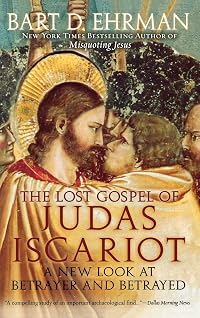
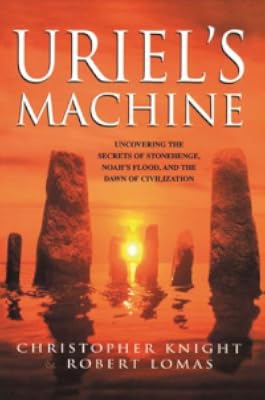
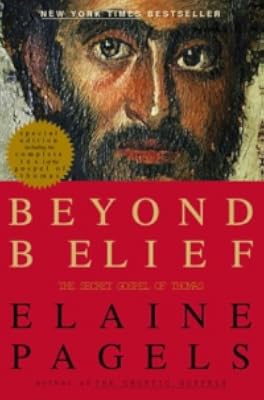

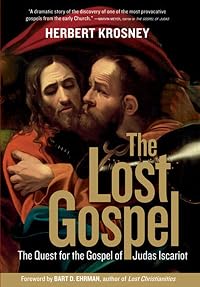



Member Reviews
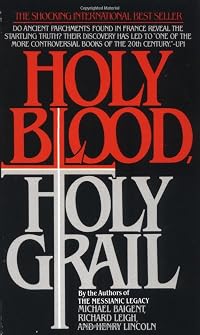
Michael Baigent cashing in on The Da Vinci Code, which, of course, cashed in on the work Baigent cowrote back in the day: Holy Blood, Holy Grail. So, part of this book is a rehash of that book's thesis, with some added conjecture on Jesus and the Zealots, Jesus's lost years, and Jesus's supposed survival of the crucifixion. Baigent maintains that Jesus was promoted by the Zealots, but they became mad at him when he decided it was okay to "render unto Caesar" that which was Caesar's. Baigent claims that Jesus visited, lived near, and studied at one of the two Jewish temples outside the one in Jerusalem: the one on Elephantine Island in Egypt and the one at Leontopolis. Baigent chooses the Jewish temple at Leontopolis, built by Onias III show more as Josephus first said, and it was the temple of the Zealots. This gives Baigent leeway to imply that Jesus's Jewish religion was crossed with various Egyptian ideas, like that of Ma'at (the scales of justice), mysticism (like the Book of the Dead for the living), and, oddly, being entombed or en-caved like Osiris. Finally, building off his Holy Blood, Holy Grail theories, Baigent claims a Church of England vicar contacted them in the 1980s, said that way back in the 1930s, his boss another Church of England man, told him that back in the 1890s he had been called to Saint Sulpice in Paris, France, to translate a set of documents that showed Jesus was alive in A.D. 45, etc. Then, in the early 2000s, Baigent claims he saw this document and/or similar documents (confusion here) that were from A.D. 34 and/or A.D. 45 (confusion here) that showed Jesus was alive, etc. Baigent implies that the document he heard about in this third-hand, one hundred year game of telephone was the source of Bérenger Saunière's mysterious wealth and the foundation of all the Priory of Sion stuff midwifed by Holy Blood, Holy Grail. Of course, all the people in his game of telephone are quite dead. The documents Baigent supposedly sees in the 2000s are all quite nowhere to be seen, studied, verified, etc. There are lots of forgeries in the world of ancient documents. And, by the way, it is very rare that documents of such sort can be dated so precisely as A.D. 34 and/or A.D. 45. So, some scholarly supposition in Baigent's style, some alternative history and theology. Then a bunch of wink wink nudge nudge "trust me, would I lie" supposition and, frankly, malarkey. By the by, the baddies in Baigent's narrative are the same folk in most of these new agey, new Christ-y books: the Roman Catholic Church, conservative Christians, Paul of Tarsus, the Patriarchy, Academe, etc. Trope central. Interesting in spots; derivative, exploitative, and speculative to the point of incredulity in others. show less
Neste livro, o autor faz revelações sobre a História de Jesus - ele não foi crucificado; era um líder político interessado no poder; e, bom de retórica, redigiu do próprio punho sua defesa diante do Tribunal Romano. Baigent se baseia em um documento jurídico romano, de 45 depois de Cristo, em que um certo Jesus ben Josef, imigrante da Galileia e proprietário de terras condenado por Pôncio Pilatos, faz declarações surpreendentes a respeito de sua natureza divina.
O que pensar diante da descoberta de um documento jurídico romano, de 45 depois de Cristo, em que um certo Jesus ben Josef, imigrante da Galiléia e proprietário de terras condenado por Pondo Pilatos, faz declarações surpreendentes a respeito de sua natureza show more divina? Será que tudo o que sabemos sobre Jesus está errado? Será que a biografia do símbolo maior do imaginário ocidental é muito mais ampla do que nos fazem acreditar? Em Os manuscritos De Jesus, Michael Baigent, um dos autores do consagrado O Santo Graal e a linhagem sagrada, faz revelações impressionantes sobre a vida e a crucificação desse homem que marcou a história do Ocidente. Apesar da celebração e veneração seculares ao redor da figura de Jesus, Baigent assegura que a sua trajetória de vida e as circunstâncias que o levar show less
O que pensar diante da descoberta de um documento jurídico romano, de 45 depois de Cristo, em que um certo Jesus ben Josef, imigrante da Galiléia e proprietário de terras condenado por Pondo Pilatos, faz declarações surpreendentes a respeito de sua natureza show more divina? Será que tudo o que sabemos sobre Jesus está errado? Será que a biografia do símbolo maior do imaginário ocidental é muito mais ampla do que nos fazem acreditar? Em Os manuscritos De Jesus, Michael Baigent, um dos autores do consagrado O Santo Graal e a linhagem sagrada, faz revelações impressionantes sobre a vida e a crucificação desse homem que marcou a história do Ocidente. Apesar da celebração e veneração seculares ao redor da figura de Jesus, Baigent assegura que a sua trajetória de vida e as circunstâncias que o levar show less
Baigent is one of the people responsible for the book "The Holy Blood and the Holy Grail" and this is partially a re-iteration of theories put forward then and partially a series of new issues that he's uncovered in the years since then. Interesting, and should be required reading for both historians and archaeologists. Why? Because although the leaps of faith he takes a few times are too far it would encourage looking at the facts and thinking about them without blindly accepting the "truths" presented. I'm sure lurking within the pages of this book there are some hidden things that need further investigation but they're obscured by rambling journeys on Baigent's pet hobby-horse, that Jesus was a member of the Essene community, show more survived past the crucifixion, was married to Mary Magdelene, his descendents live on today, that the Roman Catholic Church knows this and keeps it secret.
It's a fun read, it's full of conspiracy but it is an interesting look at a different reflection on early Christianity. show less
It's a fun read, it's full of conspiracy but it is an interesting look at a different reflection on early Christianity. show less
Interesting hypothesis, which is what got me to pick up this book. Baigent suggests that Jesus survived the crucifixion, that Mary Magdalene was his wife, and that she (a woman) was the one who anointed him as messiah. Unfortunately there isn't a whole lot of evidence to support the claim. Also, some of the book reads like a textbook, which can be a bit tiresome.
Okay, here's the thing. The background information he presents was interesting to me. He made a few great points in the book that really made me think. But, let me go on to say, Biagent is trying to show how the NT is maybe not all we think it is - saying they are simply stories contrived to serve specific purposes and don't have the innocent writing background most assume today. Then he goes on to say they are false because there is fact A. And if we assume fact B caused fact A, and then we assume fact C caused fact B and then we do some more assuming, well, that proves this really incredible thing happened instead of what The Bible says. I find a lot of what may have happened just as woven and created, if not more so, than what he show more says about the Bible. Just my two cents though! show less
I enjoyed the book for its historical perspective. However, there is a lot of hypothetical conjecture on the authors part with regards to linking of some events to prove their theories correct. I could give you a pretty convincing argument for the existence of a Yetti, but it doesn't mean they exisit. The book however does make me want to read the Bible again soon from a historical viewpoint.
This book is great fun. It's one of those "what if? " type of books which, to my mind, should be read with tongue firmly in cheek. the historical accuracy of a lot of the content is probably questionable & I'm not sure that the conclusions would stand critical scrutiny ...but it is entertaining & must be worth a read from that perspective alone.
Members
- Recently Added By
Author Information

15 Works 9,478 Members
Michael Baigent was born in Christchurch, New Zealand in 1948. He studied religion and psychology at the University of Canterbury, where he graduated in 1972. Before becoming an author, he was a commercial photographer. His first book, The Holy Blood and the Holy Grail, which was released in the United States as Holy Blood, Holy Grail, was written show more with Richard Leigh and Henry Lincoln and was published in 1982. The book hypothesized that Jesus had married Mary Magdalene and that their descendants were protected by a secretive group called the Priory of Sion. He and co-author Richard Leigh unsuccessfully sued Random House UK for copyright infringement, over similarities between their work and The Da Vinci Code by Dan Brown. Baigent's other works included The Dead Sea Scrolls Deception, The Jesus Papers, and Racing toward Armageddon. He died of a brain hemorrhage on June 17, 2013 at the age of 65. (Bowker Author Biography) show less
Awards and Honors
Distinctions
Common Knowledge
- Canonical title
- The Jesus Papers
- Original publication date
- 2007-02-27
- First words
- May 28, 1291, the Holy Land: Acre, the Crusader Kingdom's last city port, lay in ruins. Only the great sea tower of the Knights Templar remained standing.
- Last words
- (Click to show. Warning: May contain spoilers.)To drink from the river is our birthright. Let no one deny us that freedom!
- Original language*
- englanti
*Some information comes from Common Knowledge in other languages. Click "Edit" for more information.
Classifications
Statistics
- Members
- 827
- Popularity
- 33,480
- Reviews
- 14
- Rating
- (3.02)
- Languages
- 13 — Danish, Dutch, English, Finnish, French, German, Italian, Norwegian (Bokmål), Polish, Portuguese (Portugal), Russian, Spanish, Swedish
- Media
- Paper, Audiobook, Ebook
- ISBNs
- 36
- ASINs
- 7