On This Page
Description
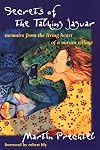
Raised on a Native American reservation in New Mexico, Martin Prechtel wandered as a young man throughout the landscapes of Mexico and Guatemala. Drawn in his dreams to the traditional Mayan community of Santiago Atitlan, he carved a life for himself among the villagers. Though an outsider himself, Prechtel was adopted as an apprentice by a powerful ancient Shaman. He married a Mayan woman and became a village chief and famous Shaman in his own right - entrusted with the rich legacy of show more Atitlan's ancient Mayan heritage and its deepest spiritual traditions. show lessTags
Recommendations











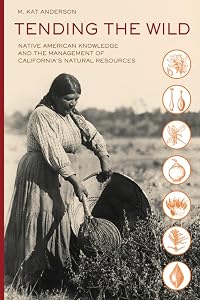
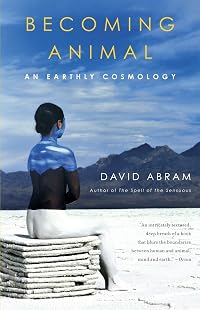
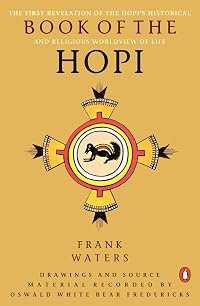
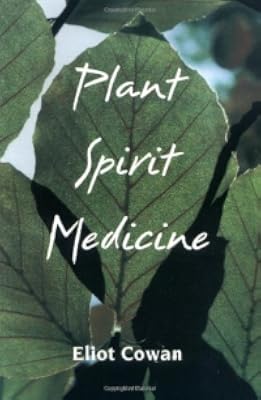


Member Recommendations
Member Reviews
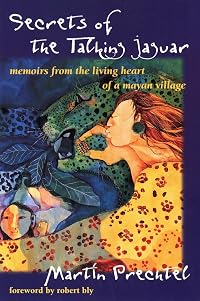
“Secrets of the Talking Jaguar: A Mayan Shaman’s Journey to the Heart of the Indigenous Soul,” is Martin Prechtel's first book, released in 1998. It's a book about his journey from childhood in New Mexico as an outcast part-Native American to his true life and home in the then-Mayan city of Santiago Atitlan in Guatemala. A shaman named Chiv summoned him there, and became his teacher. It's a book about the contrast between the culture of the alien US and the indigenous culture of the Maya.
That’s a good starting point - the question of what it means not to be indigenous. To be indigenous means to truly have a home, to belong. But so then what are we in the US? What is most of the modern world? We’re aliens. We’re homeless, show more lost, and unstable.
Martin paints a beautiful picture of a culture that no longer exists. Military started coming in and breaking up the community in the ’80s. Although a high percentage of the individuals serviced, their village was a culture dependent on many roles. Even with less than half being killed, running a way, or converting, the culture wasn’t able to survive.
Notable Fragments
Political leaders had to be married. This gave leadership a 50:50 male:female split. This wasn’t done in the interest of these individual, but for the sake of the community. When leaders move up a rank, they throw a giant party and give away all of their wealth.
Don’t trust a skinny shaman. Shamans are partially paid in food, and in a culture where food is scarce, fat is idolized.
All Mayan houses are only one room. Their entrance is their mouth. The concept of a door is outside of their paradigm.
We are each the House of the World, just as the outside is also the House of the World. Together these two form a mirror, for everything that can be found in the exterior can also be found in the interior.
The concept of existence isn’t a part of Mayan culture. Everything “is” only in it’s relationship to everything else. The names for relatives in Tz’utujil are subjective. There is no word for aunt - you describe the relationship to the person we call aunt, depending on the specifies of where you are. You can’t as the question, “who am I?” There is no being, or doing - only relationship. show less
That’s a good starting point - the question of what it means not to be indigenous. To be indigenous means to truly have a home, to belong. But so then what are we in the US? What is most of the modern world? We’re aliens. We’re homeless, show more lost, and unstable.
Martin paints a beautiful picture of a culture that no longer exists. Military started coming in and breaking up the community in the ’80s. Although a high percentage of the individuals serviced, their village was a culture dependent on many roles. Even with less than half being killed, running a way, or converting, the culture wasn’t able to survive.
Notable Fragments
Political leaders had to be married. This gave leadership a 50:50 male:female split. This wasn’t done in the interest of these individual, but for the sake of the community. When leaders move up a rank, they throw a giant party and give away all of their wealth.
Don’t trust a skinny shaman. Shamans are partially paid in food, and in a culture where food is scarce, fat is idolized.
All Mayan houses are only one room. Their entrance is their mouth. The concept of a door is outside of their paradigm.
We are each the House of the World, just as the outside is also the House of the World. Together these two form a mirror, for everything that can be found in the exterior can also be found in the interior.
The concept of existence isn’t a part of Mayan culture. Everything “is” only in it’s relationship to everything else. The names for relatives in Tz’utujil are subjective. There is no word for aunt - you describe the relationship to the person we call aunt, depending on the specifies of where you are. You can’t as the question, “who am I?” There is no being, or doing - only relationship. show less
This book is such a pleasure to read and reread.... lots of food for thought about modern culture and alternative ways of living, about aging, about wisdom, about Mayan culture, and about seeing the challenges of life in humorous ways!
Maya/Central America
Ratings
Members
- Recently Added By
Author Information
16 Works 491 Members
Martin Prechtel's life took him from his native New Mexico upbringing as a half-blood Native American from a Peublo Indian reservation to the village of Santiago Atitlan, Guatemala. There, he was trained as a shaman and eventually served the Tzutujil Mayan population as a full village member, becoming a principal in the body of village leaders. show more Martin once again resides in his native New Mexico where he is a writer, teacher, speaker, musician, and healer show less
All Editions
Series

Classifications
- Genres
- Anthropology, Nonfiction, Religion & Spirituality, Biography & Memoir, General Nonfiction, Travel
- DDC/MDS
- 299.784152092 — Religion Other religions Shintoism/Taoism/Other Mythologies Of North American Origin Of Particular Peoples and Cultures Mesoamerican Incan & Mayan
- LCC
- BF1679.8 .P74 .A3 — Philosophy, Psychology and Religion Psychology Occult sciences Astrology
- BISAC
Statistics
- Members
- 191
- Popularity
- 171,540
- Reviews
- 3
- Rating
- (4.58)
- Languages
- English, Italian, Slovenian, Spanish
- Media
- Paper
- ISBNs
- 6
- ASINs
- 1