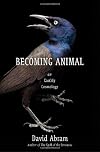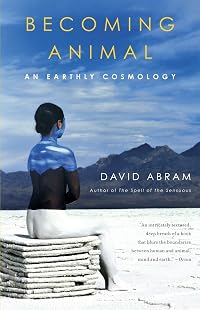
Becoming Animal: An Earthly Cosmology
by David Abram
On This Page
Description
As the climate veers toward catastrophe, the innumerable losses cascading through the biosphere make vividly evident the need for a metamorphosis in our relation to the living land. For too long we've inured ourselves to the wild intelligence of our muscled flesh, taking our primary truths from technologies that hold the living world at a distance. This book subverts that distance, drawing listeners ever deeper into their animal senses in order to explore, from within, the elemental kinship show more between the body and the breathing Earth. The shapeshifting of ravens, the erotic nature of gravity, the eloquence of thunder, the pleasures of being edible: all have their place in Abram's investigation. He shows that from the awakened perspective of the human animal, awareness (or mind) is not an exclusive possession of our species but a lucid quality of the biosphere itself-a quality in which we, along with the oaks and the spiders, steadily participate. With the audacity of its vision and the luminosity of its prose, Becoming Animal sets a new benchmark for the human appraisal of our place in the whole. show lessTags
Recommendations



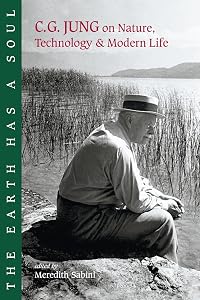
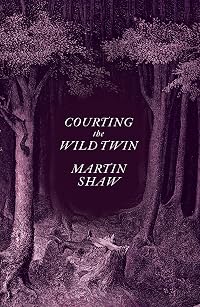
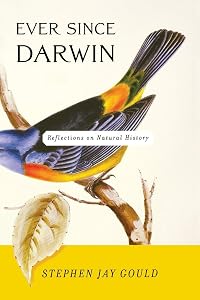
Member Recommendations
Member Reviews
With this book, David Abram seeks to bring us deeply into ourselves and our felt experience. The book is composed of engaging personal stories sprinkled with perspectives from various philosophers.
What if everything is animate? The trees, the wind, the rocks? How do we behave differently when we know that the world around us is perceiving us as we perceive it?
What if mind is not our own, but something we move through, part of the landscape? Have you ever noticed the ways in which different landscapes and environments affect you?
Although Abram doesn't touch on trends such as "fake news" and "flat earthers" (nor are we led to believe he would endorse such movements), these seemingly irrational concepts do tell us something about the show more modern human experience. Maybe our society has moved too far in the direction of trust vested in figures of authority (scientists, news agencies, politicians). Nationalist Luddism may indicate that there is a social undercurrent desirous of ideas that can be verified simply and profoundly with our own senses and capacities.
In a world that is increasingly mediated, there is some sense to coming back to an ethic of mastery of our own perceptive capacities, especially when we approach the exercise of perception as a mutualistic experience with an animate earth.
If you're looking for both a mature and magical way to rekindle your sense of wonder with the world, this book might be just the taste of it takes to enter such a world. show less
What if everything is animate? The trees, the wind, the rocks? How do we behave differently when we know that the world around us is perceiving us as we perceive it?
What if mind is not our own, but something we move through, part of the landscape? Have you ever noticed the ways in which different landscapes and environments affect you?
Although Abram doesn't touch on trends such as "fake news" and "flat earthers" (nor are we led to believe he would endorse such movements), these seemingly irrational concepts do tell us something about the show more modern human experience. Maybe our society has moved too far in the direction of trust vested in figures of authority (scientists, news agencies, politicians). Nationalist Luddism may indicate that there is a social undercurrent desirous of ideas that can be verified simply and profoundly with our own senses and capacities.
In a world that is increasingly mediated, there is some sense to coming back to an ethic of mastery of our own perceptive capacities, especially when we approach the exercise of perception as a mutualistic experience with an animate earth.
If you're looking for both a mature and magical way to rekindle your sense of wonder with the world, this book might be just the taste of it takes to enter such a world. show less
This is a book that should be read in the spring.
Unfortunately, I first picked it up in the fall, and found the first fifty pages a tough slog. Where was the evidence, the statistics, the science? There is none, of course; this is a book of moral and environmental philosophy, and more of the felt-truth flavour than the chain-of-logic variety.
I had much better luck with it when I picked it up after a full day of hiking and gardening, with the dirt still under my fingernails and the songs of birds in my ears. Well, of course--the earth is alive, and we are connected to it, and we should remember that we too are animals and part of the world. And it doesn't need any evidence. It's self-evident.
That hurdle overcome, I polished the book off lickety-split.
Abram's central argument (if you can call it that, when it consists largely of appeals to the reader's empathy and personal experience) is that we, too, are animals; and, being animals, we ought not to think of ourselves as or act as if we are separate from the rest of nature. Go outside; pay attention; listen to things, because everything has a voice, and talk to them too, because they are listening to you. You may not find his argument convincing in a typical linear logic sense, but it is beautifully stated and deeply felt, and it's hard to see how taking ourselves off of the evolutionary pedestal and resituating ourselves with the rest of creation could possibly lead to any harm.
OK, the language may be a little overwrought from time to time. Also, Abrams really likes the word "cascading." But as a book to bring you back into your senses, as a living creature in a living world, it's hard to beat. show less
Unfortunately, I first picked it up in the fall, and found the first fifty pages a tough slog. Where was the evidence, the statistics, the science? There is none, of course; this is a book of moral and environmental philosophy, and more of the felt-truth flavour than the chain-of-logic variety.
I had much better luck with it when I picked it up after a full day of hiking and gardening, with the dirt still under my fingernails and the songs of birds in my ears. Well, of course--the earth is alive, and we are connected to it, and we should remember that we too are animals and part of the world. And it doesn't need any evidence. It's self-evident.
"there's a tacit sense that we'd better notshow more
let our awareness come too close to our creaturely sensations, that we'd best keep our arguments girded with statistics and our thoughts buttressed with abstractions, lest we succumb to an overwhelming grief--a heartache born of our organism's instinctive empathy with the living land and its cascading losses." (p. 7)
That hurdle overcome, I polished the book off lickety-split.
Abram's central argument (if you can call it that, when it consists largely of appeals to the reader's empathy and personal experience) is that we, too, are animals; and, being animals, we ought not to think of ourselves as or act as if we are separate from the rest of nature. Go outside; pay attention; listen to things, because everything has a voice, and talk to them too, because they are listening to you. You may not find his argument convincing in a typical linear logic sense, but it is beautifully stated and deeply felt, and it's hard to see how taking ourselves off of the evolutionary pedestal and resituating ourselves with the rest of creation could possibly lead to any harm.
"Perhaps the broad sphere, itself, needed our forgetfulness. Perhaps some new power was waiting to be born on the planet, and our species was called upon to incubate this power in the dark cocoon of our solitude. Ours enses dulled, our attenntion lost to the world, we created, in our inward turning, a quiet cave wherein a new layer of Earth could first shape itself and come to life. But surely it's time now to hatch this new stratum, to waken our senses from their screen-dazzled swoon, and so to offer this power back to the more-than-human terrain. The cascading extinctions of other species make evident that the time is long past ripe. The abrupt loss of rain forests and coral reefs, the choking of wetlands, the poisons leaching into the soils, and the toxins spreading in our muscles compel us to awaken from our long oblivion, to cough up the difficult magic that's been growing within us, swelling us with pride even as the land disintegrates all around us. Surely we've cut ourselves off for long enough--time, now, to open our minds outward, returning to the biosphere that wide intelligence we'd thought was ours alone. ... Sentience was never our private possession." (p. 129)
OK, the language may be a little overwrought from time to time. Also, Abrams really likes the word "cascading." But as a book to bring you back into your senses, as a living creature in a living world, it's hard to beat. show less
I wanted to love this book, as I'm deeply on board with a mutualistic, interdependent view of our place in this world but couldn't get on board with Abram's voice. He overstated points, justified very little, and mostly presented a lot of overwrought prose instead of anything interesting or persuasive. I'm sure there are readers who will swoon over this book, but it left me cold despite wanting very much to like it. I returned to some Barry Lopez as a balm afterwards, to get the same arguments presented with nuance and without the froth.
Somewhat disappointing after the revelations of The Spell of the Sensuous. There is less rigorous argument, a smaller presence of other thinkers, and more anecdotal evidence for Abram's ideas about perception and the senses. And those ideas, however revolutionary and beautiful, are the same, nothing more is added with this book. It makes me wish the most compelling anecdotes had simply been added to a revised, expanded edition of the previous work.
David Abram's first book, The Spell of the Sensuous--hailed as "revolutionary" by the Los Angeles Times, as "daring and truly original" by Science--has become a classic of environmental literature. Now Abram returns with a startling exploration of our human entanglement with the rest of nature.
As the climate veers toward catastrophe, the innumerable losses cascading through the biosphere make vividly evident the need for a metamorphosis in our relation to the living land. For too long we've inured ourselves to the wild intelligence of our muscled flesh, taking our primary truths from technologies that hold the living world at a distance. This book subverts that distance, drawing readers ever deeper into their animal senses in order to show more explore, from within, the elemental kinship between the body and the breathing Earth.
The shapeshifting of ravens, the erotic nature of gravity, the eloquence of thunder, the pleasures of being edible: all have... show less
As the climate veers toward catastrophe, the innumerable losses cascading through the biosphere make vividly evident the need for a metamorphosis in our relation to the living land. For too long we've inured ourselves to the wild intelligence of our muscled flesh, taking our primary truths from technologies that hold the living world at a distance. This book subverts that distance, drawing readers ever deeper into their animal senses in order to show more explore, from within, the elemental kinship between the body and the breathing Earth.
The shapeshifting of ravens, the erotic nature of gravity, the eloquence of thunder, the pleasures of being edible: all have... show less
Just an incredible book
Ratings
Members
- Recently Added By
Lists

Recommended Nature Writing
346 works; 180 members

Best Environmental Books
32 works; 2 members
Author Information

2+ Works 1,813 Members
Awards and Honors
Awards
Distinctions
Common Knowledge
- Original publication date
- 2010
- Epigraph
- Voice: the breath's tooth.
Thought: the brain's bone.
Birdsong: an extension
of the beak. Speech:
the antler of the mind.
-Robert Bringhurst - Dedication
- For Hannah and Leander, wild and luminous creatures
- First words
- Owning up to being an animal, a creature of earth.
- Last words
- (Click to show. Warning: May contain spoilers.)Meanwhile, the power sleeps, pulsing like a muscle, its vigor radiating outward in waves through the viscosity of molten metal and the slow solidity of rock (firing huge convection currents within these depths that move the continents far above), percolating outward as magma or propagating upward through the density of basalt and granite, rising later through thickets of feldspar and quartzite and the stratified soils near the surface, channeled outward through stems of dandelions and trunks of sequoias, through cattails and sugar maples and the upright backbones of smooth-skinned primates, finally fountaining into the open biosphere through blossoms and budded leaves and through the craft of our fingers, through the gleam in your lover's eye and the fluted music upwelling now from the beak of a blackbird. . .
Classifications
- Genres
- Anthropology, Science & Nature, Nonfiction, Philosophy, General Nonfiction, Religion & Spirituality
- DDC/MDS
- 301.01 — Society, government, & culture Social sciences, sociology & anthropology Sociology and anthropology standard subdivisions of sociology and/or anthropology Philosophy and theory
- LCC
- GN33 .A32 — Geography, Anthropology and Recreation Anthropology Anthropology
- BISAC
Statistics
- Members
- 447
- Popularity
- 68,493
- Reviews
- 6
- Rating
- (4.19)
- Languages
- Czech, English
- Media
- Paper, Audiobook, Ebook
- ISBNs
- 7
- ASINs
- 5