On This Page
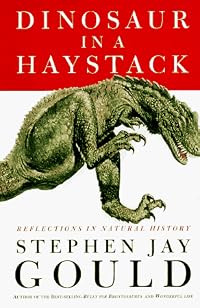
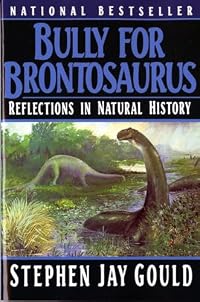
Description
Evolutionary biologist and paleontologist Stephen Jay Gould has perfected the art of the essay in this brilliant new collection. These thirty-four essays, most originally published in Natural History magazine, exemplify the keen insight with which Dr. Gould observes the natural world and convey the infectious enthusiasm for fossils and evolutionary theory that has made his books award-winning, national best-sellers. In his latest musings on evolution and other natural phenomena, Gould show more reveals the uncanny interconnections among distinctly human creations - museums, literature, music, politics, and culture - encompassing a delightfully, wide range of topics, from giant fossils, fads, and fungus to baseball, beeswax, and blaauwbocks, from a humanistic look at Mary Shelley's Frankenstein and Erasmus Darwin's poetry to the fallacies of eugenics and creationism and the moral imperatives of thinking people to meet the ethical challenges that pseudo-science presents. show lessTags
Recommendations












Member Reviews
Elegant and erudite: Gould's 1996 collection of essays for "Natural History" magazine ranges over the broad and varied terrain of his intellect and curiosity, educating and satisfying the reader with elegance, wit and powerful reasoning.Gould delights in juxtaposing literature and science, the familiar and the unexpected. He chooses "Cordelia's dilemma" - her refusal to compete with her sisters in making loud protestations of love for their father, King Lear - as an analogy for "publication bias" - the reluctance of journals to publish boring negative results in favor of more interesting successful experiments. A positive result in a study of AIDS or cancer treatments wins headlines while later failures to duplicate those results are show more read by few. And most negative results never see publication at all. "Lear cannot conceptualize the proposition that Cordelia's silence might signify her greater love - that nothing can be the biggest something."
In this collection, Gould divides his essays into eight sections. "Heaven and Earth" includes his marvelous experience of the effect of a solar eclipse on the citizens of New York City, and in "Literature and Science," he ruminates on the moral lesson of Frankenstein and Hollywood's subversion of it.
"Origin, Stability, and Extinction" argues that the Cambrian explosion is even more the "key event" in the history of multicellular animals than previously believed, "Stability" includes "Cordelia's Dilemma," "Extinction" includes the title essay on Darwin's view that "all observation must be for or against some view."
"Writing About Snails" delves into women's Victorian writings (I'm reminded of the value of negative results), "The Glory of Museums" explores "Dinomania" and "The Disparate Faces of Eugenics" revisits the hilarious arguments of an eminent scientist who argued that cancer causes smoking.
"Evolutionary Theory, Evolutionary Stories," explores the arguments of Creationism and the origin of evolutionary science's best one liner (in answer to a question on the nature of the Creator) "an inordinate fondness for beetles," and "Linnaeus and Darwin's Grandfather" uses the whimsical observation of the "curious conjunction" of Linnaeus and Gustav III on a Swedish banknote to explore the scientist's classification theories (still used today) and his adherence to a religious Creationism.
Certain themes recur in these essays. Gould is a staunch evolutionist and defends Darwin's theories vigorously, even when pointing out mistakes and misconceptions. He takes Creationism seriously - as a threat to scientific reasoning. His interest in natural history extends to the history of human thinking about nature and science.
His essays are beautifully crafted, full of literary allusions, anecdotes and turns of wit but always to the point. He loves tracking down the precise source and context of oft-used quotes as much as he enjoys tracing the origin of flatworms, and manages to arouse his reader's interest in both. He is not a writer of wasted words. Best of all, Gould's essays are always as thought provoking as they are entertaining. show less
Although some of Gould's books were pleasurable reads for me, this collection of his essays was a little bit tedious for some reason. He is an engaging essayist, but I suspect that so many years after his untimely death, his style and the subjects he treats are a bit...well, dated. It doesn't seem possible, but there times I had to put this book down and leave it for a day or two before reading the next essay.
A Darwinian's delight. Although much of the reading was dry, there were certain compelling essays. I particularly enjoyed (if that's the right word) the sequence on eugenics and the essay on Poe's scientific writing (maybe, maybe not).
Dinosaur in a Haystack is a collection of 34 essays by Harvard paleontologist Stephen Jay Gould. Each essay involves some aspect of natural history as it intersects with contemporary life. The essays were originally published in the journal Nature, and this volume joins several other previous collections of Gould's work, including Hen's Teeth and Horse's Toes and The Flamingo's Smile.
I read those two particular books about 30 years ago and remembered them fondly. I had anticipated the same previous delight in Gould's prose and the way in which he could make the sometimes esoteric aspects of natural history alive and relevant to today. I was disappointed. As I read through this volume it became apparent that what had changed was not show more Gould, but I.
Gould is a scientist, first-and foremost. Holding a chair at Harvard places him among the most distinguished of his profession, and as such, I would say that he faithfully holds to the party line. And that respect I mean that he is as Darwinian as they come. He has intimate acquaintance with the content of Darwin's The Origin of the Species and in my reading of Gould I find that Darwin is his touchstone. It is Darwin's work that forms the organizing place for everything else that takes place within natural history.
With Darwin as his foundation, and an unshakable one at that, for Gould, there exists, in Gould's view, no place at all for any other possible way of organizing creation. Which is to say that Gould makes no allowance for even the most remote possibility that there was a divine creator of the universe. This perspective comes through his persistently, and I thought quite curiously, as well.
The curious part is that Gould, as a product of a public school education in the 1950's, combined with his own former religious practice as a Jew, is much more fluent in the words of the Bible than the average person and he consistently incorporates scriptural references into his writing. Unfortunately, he uses them in an entirely secular fashion, missing entirely the Creator that they point to.
So Gould, and I approach the natural world from vantage points that have irreconcilable suppositions. His, per Darwin, as that the world that we know came about entirely through natural processes, without any involvement on the part of the divine. And for myself, I have come to understand that the complexity of the world is too vast for there to be anything but the involvement of a Creator. Both Gould's point and mine require accepting some things that cannot be fully explained. The difference is that I find plausible the words of the Bible for creation, while he finds the same words as window dressing for natural history. show less
I read those two particular books about 30 years ago and remembered them fondly. I had anticipated the same previous delight in Gould's prose and the way in which he could make the sometimes esoteric aspects of natural history alive and relevant to today. I was disappointed. As I read through this volume it became apparent that what had changed was not show more Gould, but I.
Gould is a scientist, first-and foremost. Holding a chair at Harvard places him among the most distinguished of his profession, and as such, I would say that he faithfully holds to the party line. And that respect I mean that he is as Darwinian as they come. He has intimate acquaintance with the content of Darwin's The Origin of the Species and in my reading of Gould I find that Darwin is his touchstone. It is Darwin's work that forms the organizing place for everything else that takes place within natural history.
With Darwin as his foundation, and an unshakable one at that, for Gould, there exists, in Gould's view, no place at all for any other possible way of organizing creation. Which is to say that Gould makes no allowance for even the most remote possibility that there was a divine creator of the universe. This perspective comes through his persistently, and I thought quite curiously, as well.
The curious part is that Gould, as a product of a public school education in the 1950's, combined with his own former religious practice as a Jew, is much more fluent in the words of the Bible than the average person and he consistently incorporates scriptural references into his writing. Unfortunately, he uses them in an entirely secular fashion, missing entirely the Creator that they point to.
So Gould, and I approach the natural world from vantage points that have irreconcilable suppositions. His, per Darwin, as that the world that we know came about entirely through natural processes, without any involvement on the part of the divine. And for myself, I have come to understand that the complexity of the world is too vast for there to be anything but the involvement of a Creator. Both Gould's point and mine require accepting some things that cannot be fully explained. The difference is that I find plausible the words of the Bible for creation, while he finds the same words as window dressing for natural history. show less
Excellent and thought-provoking. It's an older collection but as we're discussing culture, history and science, that doesn't affect the discourse. Provided, of course, you're engaging with it.
Full of interest, though a bit scattered and with a touch of the manic. Amazed to discover on page 374 that I'd read it before - perhaps 10 years ago. The item that rang a bell was the 3 meanings of "Bug" ( beastie, computer glitch, listening device). Of the rest, not a phrase was familiar, though some things seemed part of my general knowledge. What do we take in when we read? what remains?
The usual mix of essays from Gould, though I enjoyed a higher proportion of these than I sometimes do in his volumes.
Members
- Recently Added By
Lists

Best Science Books for Non-Scientists
113 works; 56 members

In Our Time books
4,934 works; 2 members
Author Information

116+ Works 30,410 Members
Born in New York City in 1941, Stephen Jay Gould received his B.A. from Antioch College in New York in 1963 and a Ph.D. in paleontology from Columbia University in 1967. Gould spent most of his career as a professor at Harvard University and curator of invertebrate paleontology at Harvard's Museum of Comparative Zoology. His research was mainly in show more the evolution and speciation of land snails. Gould was a leading proponent of the theory of punctuated equilibrium. This theory holds that few evolutionary changes occur among organisms over long periods of time, and then a brief period of rapid changes occurs before another long, stable period of equilibrium sets in. Gould also made significant contributions to the field of evolutionary developmental biology, most notably in his work, Ontogeny and Phylogeny. An outspoken advocate of the scientific outlook, Gould had been a vigorous defender of evolution against its creation-science opponents in popular magazines focusing on science. He wrote a column for Natural History and has produced a remarkable series of books that display the excitement of science for the layperson. Among his many awards and honors, Gould won the National Book Award and the National Book Critics Circle Award. His titles include; Ever Since Darwin, The Panda's Thumb, Hen's Teeth and Horse's Toes, Time's Arrow, Time's Cycle, Wonderful Life: The Burgess Shale and the Nature of History, The Structure of Evolutionary Theory and Full House: The Spread of Excellence from Plato to Darwin. Stephen Jay Gould died on May 20, 2002, following his second bout with cancer. (Bowker Author Biography) show less
Series

Belongs to Publisher Series
Common Knowledge
- Canonical title
- Dinosaur in a Haystack
- Original title
- Dinosaur in a Haystack. Reflections in Natural History
- Original publication date
- 1996
- Dedication
- For my only brother, Peter (1944-1994)
My dearest and constant companion
May we someday, somewhere and somehow live together in that two-family house of our lifelong dreams. - First words
- Michel de Montagne, traditional founder of the essay as a literary genre, wrote a short letter as a preface for his Essays (1580).
Galileo described the universe in his most famous line: "This grand book is written in the language of mathematics, and its characters are triangles, circles, and other geometric figures." - Quotations*
- Was, o Tabak, täte ich - außer Sterben nicht für dich ? (Charles Lamb)
- Last words
- (Click to show. Warning: May contain spoilers.)Mr. Blazis wrote:
A man of words and not of deeds
Is like a garden full of weeds. - Original language*
- Englisch
*Some information comes from Common Knowledge in other languages. Click "Edit" for more information.
Classifications
Statistics
- Members
- 1,658
- Popularity
- 13,407
- Reviews
- 10
- Rating
- (3.87)
- Languages
- 8 — Chinese, Czech, English, Finnish, French, German, Portuguese, Spanish
- Media
- Paper, Audiobook, Ebook
- ISBNs
- 22
- UPCs
- 1
- ASINs
- 7