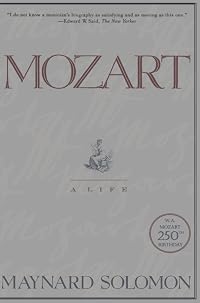
Mozart: A Life
by Maynard Solomon
On This Page
Description
On the occasion of Mozart's two hundred and fiftieth birthday, read Maynard Solomon's Mozart: A Life, universally hailed as the Mozart biography of our time.Tags
Recommendations





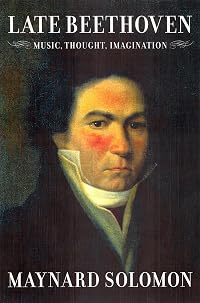
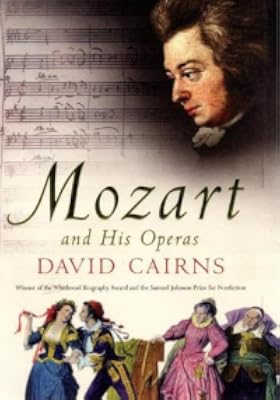







Member Reviews
Superb biography and surprisingly gripping read. Both the era and the personalities of the principles--Wolfgang and his father Leopold, as well as the mother to a lesser extent--are vivid. I read and listen to pieces of the music as I go. Solomon is so insightful about the psychological cross-currents in the family (Leopold must rank right up there with Kafka's father in the bad dad sweepstakes). I am a novice listener (don't know much about music, but I know what I like...) with no special knowledge of classical music. I was having to look up things like how a Divermento is different from a Sonata or a Concerto. But Solomon's reflections on and interpretations of Mozart's music have enhanced and deepened my own listening--and I'm only show more about 200 pages into this big biography. Here is a beautiful sentence: "Although some of us may want simply to give ourselves to this music rather than to tax it with bootless questions, others may want to speculate about the sources and meanings of this strange mixture of beatitude and terror." Page 194. This lovely sentence is nestled in several pages of reflection about Mozart's Adagio movements, the strange mixture of beatitude and terror, with connections to a wide variety of thinkers on art and meaning, why we listen (or view) art, why it is essential to our being. I love this book and recommend highly.
I can hardly recall when I have enjoyed reading a book more. Both the author and Wolfgang are good company. I learned about so many things I'd never thought about before: Unlike us, Mozart and his contemporaries didn't grow up listening to a "classical" music. All music then was contemporary music. Mozart, more or less, invented the Concerto form and innovated radically--in ways that are hard to hear (counterpoint, key changes, tempo variations) because I just hear it whole. For us, it's not a challenge to like Mozart, most people do like Mozart, but now I appreciate more what I am actually listening to. The books states that Mozart overflowed with melodic ideas. That I can hear!
As for the author, yes, he does outline a psychoanalytic take on Mozart and the music. But I really appreciate how he presents it as an account, not necessarily the only account nor a definitive account, but coherent and thoughtful nonetheless.
In 35 years of life Mozart composed over 600 works, and some major ones in his last months. He had a wife, children, many friends, he was a Mason, he traveled widely. His relationships were complicated and some were broken (sister), his finances were a mess, he wrote letters all the time. It staggers the mind. He is always present in the music of course, but the book made him live for me as I followed his life. show less
I can hardly recall when I have enjoyed reading a book more. Both the author and Wolfgang are good company. I learned about so many things I'd never thought about before: Unlike us, Mozart and his contemporaries didn't grow up listening to a "classical" music. All music then was contemporary music. Mozart, more or less, invented the Concerto form and innovated radically--in ways that are hard to hear (counterpoint, key changes, tempo variations) because I just hear it whole. For us, it's not a challenge to like Mozart, most people do like Mozart, but now I appreciate more what I am actually listening to. The books states that Mozart overflowed with melodic ideas. That I can hear!
As for the author, yes, he does outline a psychoanalytic take on Mozart and the music. But I really appreciate how he presents it as an account, not necessarily the only account nor a definitive account, but coherent and thoughtful nonetheless.
In 35 years of life Mozart composed over 600 works, and some major ones in his last months. He had a wife, children, many friends, he was a Mason, he traveled widely. His relationships were complicated and some were broken (sister), his finances were a mess, he wrote letters all the time. It staggers the mind. He is always present in the music of course, but the book made him live for me as I followed his life. show less
Prima traduzione in italiano del capolavoro biografico di Solomon sul genio di Salzburgo
Jul 27, 2022Spanish
Ratings
Members
- Recently Added By
Lists

Best Biographies
216 works; 26 members
Author Information

8+ Works 1,569 Members
Maynard Elliott Solomon was a musicologist and record producer. He was born on January 5, 1930 in Manhattan. His family later moved to Brooklyn. When he was young, he worked in his father's art supply store. He played the piano and studied the cello. In 1950, he earned a BA from Brooklyn College, CUNY. He pursued his graduate studies at Columbia show more University, 1950-1952. Also, in 1950, he co-founded Vanguard Records with his brother, Seymour Solomon. It was an influential label for not only classical music but folk and blues music as well. He is best known for his biographies of the classical composers, Beethoven, Mozart, and an article on Schubert. His works include, Beethoven (1973); Marxism and Art (1973); Beethoven Essays (1988); Franz Schubert and the Peacocks of Benvenuto Cellini (1989) (a research article in the book, 19th-Century Music); Mozart: A Life (1993); and Late Beethoven: Music, Thought, Imagination (2004). Maynard Solomon died on September 28. 2020 in Manhattan at the age of 90. (Bowker Author Biography) show less
Awards and Honors
Common Knowledge
- People/Characters
- Wolfgang Amadeus Mozart
- Epigraph*
- "È un principe!" /
"Molto di più: è un uomo!" (Il flauto magico) - Dedication*
- A Eva, Nathaniel e Alexander con affetto, a Joseph Kerman con amicizia, e a Marianne Goldberger con profonda stima
- First words*
- Fu davvero fitto lo stuolo di eminenti studiosi che esaminarono Mozart bambino, ne attestarono le doti e stilarono brillanti rapporti scientifici in cui descrissero il suo prodigioso talento.
- Last words*
- (Click to show. Warning: May contain spoilers.)Non rimane che lasciar continuare il tema, come fece Mozart (Esempio 24.13).
*Some information comes from Common Knowledge in other languages. Click "Edit" for more information.
Classifications
Statistics
- Members
- 690
- Popularity
- 41,636
- Reviews
- 3
- Rating
- (4.24)
- Languages
- 5 — English, German, Italian, Swedish, Turkish
- Media
- Paper, Ebook
- ISBNs
- 18
- ASINs
- 4