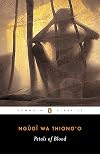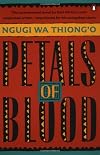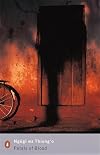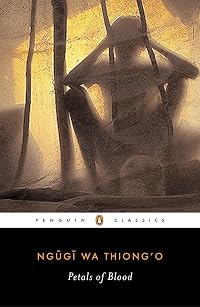
Petals of Blood
by Ngũgĩ wa Thiong'o
On This Page
Description
"The puzzling murder of three African directors of a foreign-owned brewery sets the scene for this novel about disillusionment in independent Kenya. It is--on the surface--a suspenseful investigation of a triple murder. But as the intertwined stories of the four suspects unfold, a devastating picture emerges of a modern third-world nation whose frustrated people feel their leaders have failed them time after time"--P. [4] of cover.Tags
Recommendations
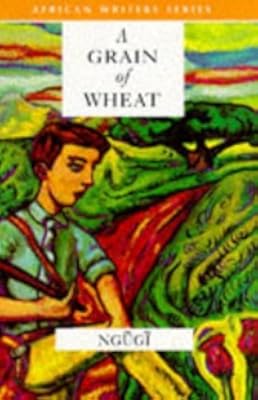
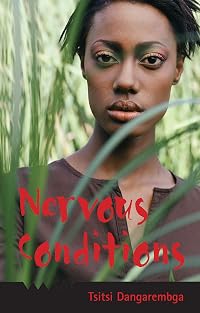
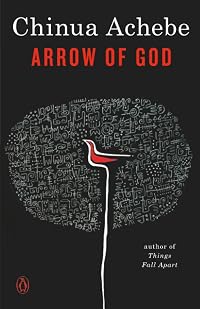



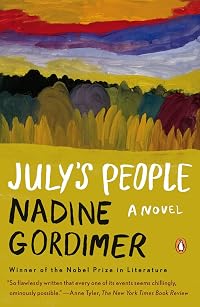

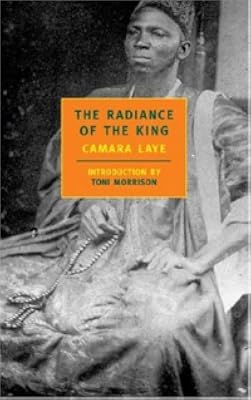


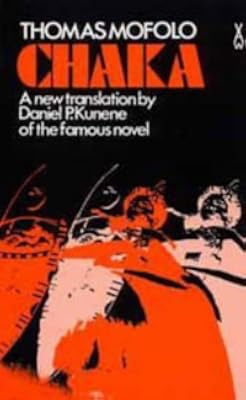
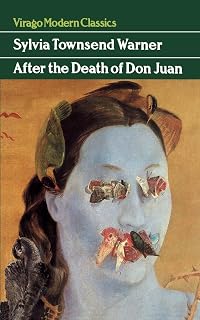
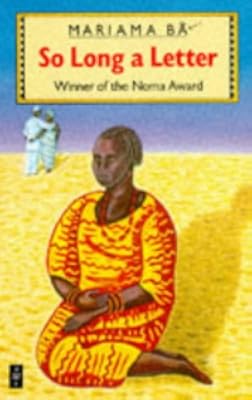
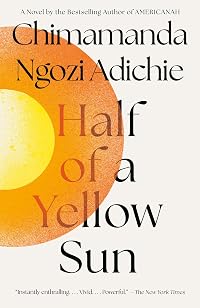
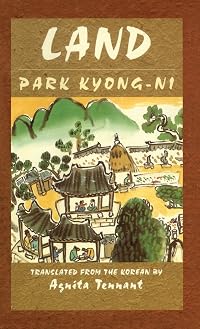
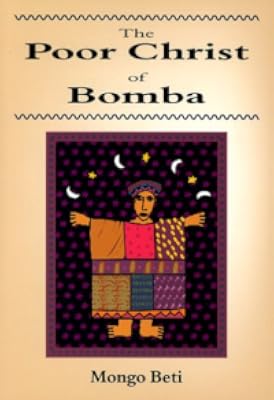

Member Recommendations

Member Reviews
“Ng’enda thi ndiagaga mutegi: that which is created by men can also be changed by men.” This sentence is one of many that stuck out for me in this amazing book by Ngugi wa Thiong’o. For me the sentence offers hope in the endless struggle of the poor majority against the rich minority, a theme with permeates Petals of Blood. It’s a theme that resonates with some of the things going on in the United States of America right now.
In the Kenya depicted here, the polarization and economic disparity are a direct result of European colonization. Even when Kenya became independent, for the poor and landless it seemed the same old story. As Thiong’o writes:
“This was the society they were building: this was the society they had been show more building since Independence, a society in which a black few, allied to other interests from Europe, would continue the colonial game of robbing others of their sweat, denying them the right to grow to full flowers in air and sunlight.”
And again:
“…all ways for the poor go one way. One-way traffic: to more poverty and misery. Poverty is sin. But imagine. It is the poor who are held responsible for the sin that is poverty and so they are punished for it by being sent to hell.”
I guess it was the expression of sentiments like this, however true, that led to the “liberal” government of Kenya taking the author into custody and holding him without charges or trial. He definitely paints a bleak picture of the effect of colonization and missionaries on the African people, as well as the repeated failures of their post-independence leaders to improve their lives.
The story follows four characters whose lives are intertwined in multiple ways that unfold layer after layer as the dialogue goes on. All four have been taken into custody for a triple murder, and it is the recollections and statements of the four that form the basis of the story.
We first meet the school teacher Munira, who comes to the sleepy rural town of Ilmorog to hide from life. Although he does seem to genuinely believe in educations at times, he also seems to just want to fly under the radar and not think to much. At one point he ponders his teaching:
“He now put the question to himself: what did the children really think of him? Then he dismissed it with another: what did it matter one way or the other? He had taught for so many years now—teaching ready-made stuff must be in his blood—and one did all right as long as one was careful not to be dragged into…into…an area of darkness…Yes…darkness unknown, unknowable…like the flowers with petals of blood and questions about God, law…things like that. He could not teach now: he dismissed the class a few minutes before time and went back to the house.”
Then we have the shopkeeper and (we later find out) Mau mau guerilla Abdulla who has also limped into Ilmorog with his one good leg, his donkey, and his son to try and forget his disillusionment with the bitter fruits harvested after their sacrifice in the fight.
Karega is the youngest and is still full of the fire of activism and outrage that Abdulla still possesses under the surface and even Munira possessed a small amount of at one time in his life. At first he is fired up and lectures the older men, telling them that
“The trouble with slogans or any saying without a real foundation is that it can be used for anything. Phrases like Democracy, the Free World, for instance, are used to mean their opposite. It depends, of course, on who is saying where, when and to whom.”
He hits one of the many lows in his rollercoaster of activism while sitting in the cell between his sometimes rough interrogations. Having plenty of time to think, he asks himself:
“What had he really expected from the struggle? His expectation had always taken the form of a beautiful dream, a hazy softness of promises, a kind of call to something higher, nobler, holier, something for which he could have given his life over and over again. It had fizzled out now and toward the end, in Ilmorog, the bright flames of his dreams had died and only ashes had remained.”
And finally, we have the beautiful and seductively magnetic Wanja, who has her own shameful secrets buried in her past. She brings the plight of African women fully into the frame of the story as she tries to find a create a new life for herself in Ilmorog. She is irresistible to the men of the story and is fully aware of her power over them but goes back and forth on whether she should use that power or not. She sums up the bleak options of women in this telling statement:
“Eat or you are eaten. If you have a cunt—excuse my language, but it seems the curse of Adam’s Eve on those who are born with it—if you are born with this hole, instead of it being a source of pride, you are doomed to either marrying someone or being a whore. You eat or you are eaten.”
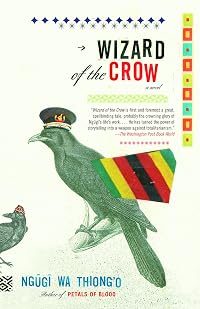
All in all, Thiong’o does a great job of slowly but surely developing these four tormented characters as the story draws to it’s dramatic close. I found myself really wanting them to find a way to make life better for them and for Kenyans in general. Reading this and Thiong’o’s other book, Wizard of the Crow, has definitely added to my understanding of Africa and the African peoples. It’s very interesting to compare it to literature written from the white colonial perspective, like much of what you see in history books or in authors Elspeth Joscelin Huxley. But much of this story applies to other countries and other struggles. I saw many parallels with the situation here in the United States as well. I highly recommend you get to know this amazing author. show less
In the Kenya depicted here, the polarization and economic disparity are a direct result of European colonization. Even when Kenya became independent, for the poor and landless it seemed the same old story. As Thiong’o writes:
“This was the society they were building: this was the society they had been show more building since Independence, a society in which a black few, allied to other interests from Europe, would continue the colonial game of robbing others of their sweat, denying them the right to grow to full flowers in air and sunlight.”
And again:
“…all ways for the poor go one way. One-way traffic: to more poverty and misery. Poverty is sin. But imagine. It is the poor who are held responsible for the sin that is poverty and so they are punished for it by being sent to hell.”
I guess it was the expression of sentiments like this, however true, that led to the “liberal” government of Kenya taking the author into custody and holding him without charges or trial. He definitely paints a bleak picture of the effect of colonization and missionaries on the African people, as well as the repeated failures of their post-independence leaders to improve their lives.
The story follows four characters whose lives are intertwined in multiple ways that unfold layer after layer as the dialogue goes on. All four have been taken into custody for a triple murder, and it is the recollections and statements of the four that form the basis of the story.
We first meet the school teacher Munira, who comes to the sleepy rural town of Ilmorog to hide from life. Although he does seem to genuinely believe in educations at times, he also seems to just want to fly under the radar and not think to much. At one point he ponders his teaching:
“He now put the question to himself: what did the children really think of him? Then he dismissed it with another: what did it matter one way or the other? He had taught for so many years now—teaching ready-made stuff must be in his blood—and one did all right as long as one was careful not to be dragged into…into…an area of darkness…Yes…darkness unknown, unknowable…like the flowers with petals of blood and questions about God, law…things like that. He could not teach now: he dismissed the class a few minutes before time and went back to the house.”
Then we have the shopkeeper and (we later find out) Mau mau guerilla Abdulla who has also limped into Ilmorog with his one good leg, his donkey, and his son to try and forget his disillusionment with the bitter fruits harvested after their sacrifice in the fight.
Karega is the youngest and is still full of the fire of activism and outrage that Abdulla still possesses under the surface and even Munira possessed a small amount of at one time in his life. At first he is fired up and lectures the older men, telling them that
“The trouble with slogans or any saying without a real foundation is that it can be used for anything. Phrases like Democracy, the Free World, for instance, are used to mean their opposite. It depends, of course, on who is saying where, when and to whom.”
He hits one of the many lows in his rollercoaster of activism while sitting in the cell between his sometimes rough interrogations. Having plenty of time to think, he asks himself:
“What had he really expected from the struggle? His expectation had always taken the form of a beautiful dream, a hazy softness of promises, a kind of call to something higher, nobler, holier, something for which he could have given his life over and over again. It had fizzled out now and toward the end, in Ilmorog, the bright flames of his dreams had died and only ashes had remained.”
And finally, we have the beautiful and seductively magnetic Wanja, who has her own shameful secrets buried in her past. She brings the plight of African women fully into the frame of the story as she tries to find a create a new life for herself in Ilmorog. She is irresistible to the men of the story and is fully aware of her power over them but goes back and forth on whether she should use that power or not. She sums up the bleak options of women in this telling statement:
“Eat or you are eaten. If you have a cunt—excuse my language, but it seems the curse of Adam’s Eve on those who are born with it—if you are born with this hole, instead of it being a source of pride, you are doomed to either marrying someone or being a whore. You eat or you are eaten.”
All in all, Thiong’o does a great job of slowly but surely developing these four tormented characters as the story draws to it’s dramatic close. I found myself really wanting them to find a way to make life better for them and for Kenyans in general. Reading this and Thiong’o’s other book, Wizard of the Crow, has definitely added to my understanding of Africa and the African peoples. It’s very interesting to compare it to literature written from the white colonial perspective, like much of what you see in history books or in authors Elspeth Joscelin Huxley. But much of this story applies to other countries and other struggles. I saw many parallels with the situation here in the United States as well. I highly recommend you get to know this amazing author. show less
This Kenyan book is dense, one of those books where my usually method of sort-of-skim-reading lands me in trouble. But when I slowed down to truly sample what was going on, I was entranced. Ngũgĩ's characters are well-rendered and complex, both in their relationships with each other and with their own pasts. The struggle of the town of Ilmorog, as it transitions from rural backwater to urban center, provides a focal point for so many issues about Kenya and its development after the end of colonialism, especially the functioning of education, democracy, and capitalism. Surprisingly, there's also some good jokes (for some reason, jokes in postcolonial lit always surprise me even though I think they're there more often than not), show more especially about Abdullah's donkey and the villagers' noble quest to save its life. show less
Not often do I have to read a book twice in order to attempt to formulate an idea of what I want to talk about. Usually, as I read I think of the topics or themes in the novel that most interest me, and by the time I get around to writing this blog, I have a fairly coherent outline of what I want to explore. But I found a new kind of obstacle in Africa, specifically Kenya, and its literature. It’s nothing more than the fact that Kenya baffled me, both in Ngugi wa Thiong’o's Petals of Blood and in my actual brief and highly touristic sojourn there in July.
Now, for a woman my age, I’m fairly well-traveled. I’ve lived in Mexico and Paris, spent some time in places like Guatemala, Costa Rica, and Ireland, and made a considerable show more dent in exploring my own country. But everywhere I’ve traveled has been indoctrinated in Western culture for decades if not centuries, so although there are differences in language and cuisine and landscape, etc., I’ve never found myself confronted with the stark contrasts of a non-Westernized culture. Things that I’d always heard of and considered myself familiar with, at least theoretically, like post-colonialism, the unequal distribution of wealth, the blatant corruption of political officials, the continuing Western exploitation of African resources, or the inequality of gender roles in society, hit me with all the force of a paradigm shift because here was a place where these things were glaringly apparent. Slums with millions of people living in tin and cardboard houses backed up against mansions with tennis courts and pools. Men bought wives with goats and those wives spent the rest of their lives raising as many children as they could produce. In the less urbanized, smaller villages, female circumcision is still practiced. Well-fed watalii, or tourists, traversed the country, keeping to the game reserves unless absolutely necessary, letting their eyes slide over the squalor and poverty that surrounded them, instead gushing over the lions and elephants and zebras, which are, to give credit where credit is due, truly breathtaking. I was one of those watalii, but I’m infinitely glad that I decided to read Petals of Blood before I went (and then again after), because it gave me an insight into a place that I was not previously prepared to understand, and of which I have only barely scratched the surface.
Don’t worry. I’m not going to write a 10-page entry going into detail on each of the problems I encountered in Kenya, so please, keep reading. I’m just going to talk some about a couple of the themes that most interested me and that are essential components to understanding the conflict in Petals of Blood. It’s also one that is always closest to my heart: the state of women in Kenya. I don’t consider myself a feminist generally. Of course I believe that women should be treated the same as men, that preconceived notions of gender roles hurt rather than help society, and that women’s issues are something that somehow are still under attack after however many centuries humans have walked this earth, contrary to what I see as all common sense and all our faculties for reason. I consider myself a humanist. We are all equal. There should be no sides. Oops, I ranted.
Wanja, who is, in my opinion, the heart of the story, struggles with her womanhood throughout, fighting against the juxtaposition between what she wants to do with her life and what reality more or less forces her to do. A bar wench turned shop assistant turned madame, Wanja often remarks on the perceived inescapability of her domination by men in connection with the transient power of her body over them. When speaking of her relationship with Karega, the young revolutionary, as compared to her past relations with other men she says: “With him it has been different…. For the first time, I feel wanted…a human being…no longer humiliated… degraded… foot-trodden” (251). For this reason, Wanja clings to her relationship with Karega, and when it fails, she makes her final descent into whoredom. “Eat or you are eaten. If you have a cunt…if you are born with this hole, instead of it being a source of pride, you are doomed to either marrying someone or else being a whore. You eat or you are eaten…. what’s the difference whether you are sweating it out on a plantation, in a factory or lying on your back, anyway?” (293). As you can probably see, Wanja is one of the more intriguing characters in the novel for her ability to see the world as it is, in all its hard truths and cruelty. She is even able to use her knowledge to her advantage, though at the cost of her body.
The idea of prostitution, however, extends far beyond Wanja and the feminine condition. It is, in fact, a key component to contemporary Kenya and indeed, modern civilization, as described here:
“We are all prostitutes, for in a world of grab and take, in a world built on a structure of inequality and injustice, in a world where some can eat while others can only toil, some can send their children to schools and others cannot, in a world where a prince, a monarch, a businessman can sit on billions while people starve or hit their heads against church walls for divine deliverance from hunger, yes, in a world where a man who has never set foot on this land can sit in a New York or London office and determine what I shall eat, read, think, do, only because he sits on a heap of billions taken from the world’s poor, in such a world, we are all prostituted” (240).
It is in part this idea that is symbolized by the images of a flower with petals of blood, of flowering, and of blooming , that are used consistently throughout the book, and give the book its title. Our first encounter with it is innocent enough. Munira, the teacher, takes his pupils into the fields around Ilmorog, a forgotten rural village which contains most of the action in this novel, and one of his students discovers a flower with petals of blood. “No, you are wrong,” said Munira, “this color is not even red…. This is a worm-eaten flower…It cannot bear fruit…A flower can also become this color if it’s prevented from reaching the light” (22). This description in many ways describes Wanja and her fruitless desire to have a child, but as wa Thiong’o further develops his story and strives to encapsulate contemporary Kenya, the reader also sees the similarities between the struggling post-Independence nation and the infertile worm-eaten flower.
On a smaller scale, the “civilization” and “modernization” of Ilmorog can also be seen as a parallel to larger Kenya. “But how can I, a mortal, help my heart’s fluttering, I who was a privileged witness of the growth of Ilmorog from its beginnings in rain and drought to the present flowering in petals of blood?” (45). Contrary to what one might assume, Ilmorog, the drought- and famine-plagued dusty village from whence all the young people flee to the city, is vastly superior to New Ilmorog, in which there is plumbing, industrialization, an economy, and roads. As with Wanja, development and growth in this story is akin to moral decay, as is, once again, personified by the petals of blood. What had the potential for beauty is rotten at the core. But this is the point that wa Thiong’o is making, in my opinion. There is no model, at least as of today, of civil/modernization that does not include its accessories: corruption among officials and positions of authority, exploitation of the poor and working classes, and an ever-widening poverty gap.
Yeah, yeah, yeah, you might say. Tell me something new. Well, think of it like this (and it’s this connection that really drove this book into my consciousness): what is so different between Kenya and the U.S.? Kenya is in the process of modernization and we in many ways are modernization, but is not the majority of our wealth held by a few? Do not some of the people who supposedly have the responsibility for and the authority over us blatantly flout said responsibility? Do we not, as a people, continually attempt to bury our heads in the sand, to say “I am not responsible for other people’s actions and lives”, to blindly follow where we, as part of a democracy, should be leading? So here I am, back from Kenya to the present, and in the days before the election, this book has unexpectedly reminded me to keep my eyes open and forget about the differences between me and everyone else. The differences matter little, if at all. It’s in thinking of the similarities between us that we remember what is really important, and are thus able to envision, and work towards, a better future.
For more book reviews (err... book musings?), including a trip to Kenya itself, visit my blog For Love and Allegory at http://www.forloveandallegory.wordpress.com/ show less
Now, for a woman my age, I’m fairly well-traveled. I’ve lived in Mexico and Paris, spent some time in places like Guatemala, Costa Rica, and Ireland, and made a considerable show more dent in exploring my own country. But everywhere I’ve traveled has been indoctrinated in Western culture for decades if not centuries, so although there are differences in language and cuisine and landscape, etc., I’ve never found myself confronted with the stark contrasts of a non-Westernized culture. Things that I’d always heard of and considered myself familiar with, at least theoretically, like post-colonialism, the unequal distribution of wealth, the blatant corruption of political officials, the continuing Western exploitation of African resources, or the inequality of gender roles in society, hit me with all the force of a paradigm shift because here was a place where these things were glaringly apparent. Slums with millions of people living in tin and cardboard houses backed up against mansions with tennis courts and pools. Men bought wives with goats and those wives spent the rest of their lives raising as many children as they could produce. In the less urbanized, smaller villages, female circumcision is still practiced. Well-fed watalii, or tourists, traversed the country, keeping to the game reserves unless absolutely necessary, letting their eyes slide over the squalor and poverty that surrounded them, instead gushing over the lions and elephants and zebras, which are, to give credit where credit is due, truly breathtaking. I was one of those watalii, but I’m infinitely glad that I decided to read Petals of Blood before I went (and then again after), because it gave me an insight into a place that I was not previously prepared to understand, and of which I have only barely scratched the surface.
Don’t worry. I’m not going to write a 10-page entry going into detail on each of the problems I encountered in Kenya, so please, keep reading. I’m just going to talk some about a couple of the themes that most interested me and that are essential components to understanding the conflict in Petals of Blood. It’s also one that is always closest to my heart: the state of women in Kenya. I don’t consider myself a feminist generally. Of course I believe that women should be treated the same as men, that preconceived notions of gender roles hurt rather than help society, and that women’s issues are something that somehow are still under attack after however many centuries humans have walked this earth, contrary to what I see as all common sense and all our faculties for reason. I consider myself a humanist. We are all equal. There should be no sides. Oops, I ranted.
Wanja, who is, in my opinion, the heart of the story, struggles with her womanhood throughout, fighting against the juxtaposition between what she wants to do with her life and what reality more or less forces her to do. A bar wench turned shop assistant turned madame, Wanja often remarks on the perceived inescapability of her domination by men in connection with the transient power of her body over them. When speaking of her relationship with Karega, the young revolutionary, as compared to her past relations with other men she says: “With him it has been different…. For the first time, I feel wanted…a human being…no longer humiliated… degraded… foot-trodden” (251). For this reason, Wanja clings to her relationship with Karega, and when it fails, she makes her final descent into whoredom. “Eat or you are eaten. If you have a cunt…if you are born with this hole, instead of it being a source of pride, you are doomed to either marrying someone or else being a whore. You eat or you are eaten…. what’s the difference whether you are sweating it out on a plantation, in a factory or lying on your back, anyway?” (293). As you can probably see, Wanja is one of the more intriguing characters in the novel for her ability to see the world as it is, in all its hard truths and cruelty. She is even able to use her knowledge to her advantage, though at the cost of her body.
The idea of prostitution, however, extends far beyond Wanja and the feminine condition. It is, in fact, a key component to contemporary Kenya and indeed, modern civilization, as described here:
“We are all prostitutes, for in a world of grab and take, in a world built on a structure of inequality and injustice, in a world where some can eat while others can only toil, some can send their children to schools and others cannot, in a world where a prince, a monarch, a businessman can sit on billions while people starve or hit their heads against church walls for divine deliverance from hunger, yes, in a world where a man who has never set foot on this land can sit in a New York or London office and determine what I shall eat, read, think, do, only because he sits on a heap of billions taken from the world’s poor, in such a world, we are all prostituted” (240).
It is in part this idea that is symbolized by the images of a flower with petals of blood, of flowering, and of blooming , that are used consistently throughout the book, and give the book its title. Our first encounter with it is innocent enough. Munira, the teacher, takes his pupils into the fields around Ilmorog, a forgotten rural village which contains most of the action in this novel, and one of his students discovers a flower with petals of blood. “No, you are wrong,” said Munira, “this color is not even red…. This is a worm-eaten flower…It cannot bear fruit…A flower can also become this color if it’s prevented from reaching the light” (22). This description in many ways describes Wanja and her fruitless desire to have a child, but as wa Thiong’o further develops his story and strives to encapsulate contemporary Kenya, the reader also sees the similarities between the struggling post-Independence nation and the infertile worm-eaten flower.
On a smaller scale, the “civilization” and “modernization” of Ilmorog can also be seen as a parallel to larger Kenya. “But how can I, a mortal, help my heart’s fluttering, I who was a privileged witness of the growth of Ilmorog from its beginnings in rain and drought to the present flowering in petals of blood?” (45). Contrary to what one might assume, Ilmorog, the drought- and famine-plagued dusty village from whence all the young people flee to the city, is vastly superior to New Ilmorog, in which there is plumbing, industrialization, an economy, and roads. As with Wanja, development and growth in this story is akin to moral decay, as is, once again, personified by the petals of blood. What had the potential for beauty is rotten at the core. But this is the point that wa Thiong’o is making, in my opinion. There is no model, at least as of today, of civil/modernization that does not include its accessories: corruption among officials and positions of authority, exploitation of the poor and working classes, and an ever-widening poverty gap.
Yeah, yeah, yeah, you might say. Tell me something new. Well, think of it like this (and it’s this connection that really drove this book into my consciousness): what is so different between Kenya and the U.S.? Kenya is in the process of modernization and we in many ways are modernization, but is not the majority of our wealth held by a few? Do not some of the people who supposedly have the responsibility for and the authority over us blatantly flout said responsibility? Do we not, as a people, continually attempt to bury our heads in the sand, to say “I am not responsible for other people’s actions and lives”, to blindly follow where we, as part of a democracy, should be leading? So here I am, back from Kenya to the present, and in the days before the election, this book has unexpectedly reminded me to keep my eyes open and forget about the differences between me and everyone else. The differences matter little, if at all. It’s in thinking of the similarities between us that we remember what is really important, and are thus able to envision, and work towards, a better future.
For more book reviews (err... book musings?), including a trip to Kenya itself, visit my blog For Love and Allegory at http://www.forloveandallegory.wordpress.com/ show less
Set in Kenya immediately following independence from the British empire, Petals of Blood takes place primarily in the village of Ilmarog. It's the story of four people, each suspected of some involvement in the dramatic murder of three owners of a local Brewery. As the narrative moves among these four, we learn the story of the village and, indeed, of Kenya, over the course of a dozen years. Munira is a teacher, motivated by a desire to avoid conflict and also for his desire for the beautiful and haunting Wanja. Of course, the other two main male characters, Karega and Abdulla, also desire Wanja each in his own way. Karega is an idealist with big dreams of changing his beloved Kenya. Abdulla is a shopkeeper and owner of a donkey which show more plays an important role in village life and in the series of events that lead to the ultimate murder and then the imprisonment of our protagonists (actually, Wanja ends up in hospital, but it serves the same end). Wanja, herself, is a beautiful metaphor for the country: she longs to feel a sense of belonging and wants desperately to be loved, but not ever at the cost of her whole self. Her sense of integrity is entirely wrapped up in her refusal to be overpowered by another - she may suffer but *she* will choose the path of her suffering - and we can't help but admire this strength.
It took me a while to "get into" this novel but as I got to know the four main characters and, to a lesser degree, the villagers around them, I began to care deeply about their stories. Different parts of the story are told from a different character's perspective -- and a few important parts are told from more than one perspective. This fluid unfolding of twelve years of human striving against oppression and poverty is powerful. Ngũgĩ occasionally lapses into a little sermon, unnecessary given the power of the story he is telling, but these sermons are only a bit distracting. In turn, he addresses the three-pronged monster that continues to own and oppress Kenya and her people, even after "independence" from the British colonial power: the Gun, the Bible, and the Coin. The themes of eternal struggle and the determination to define one's own identity emerge again and again, differently for Munira, Wanja, Karega, and Abdulla. Ngũgĩ tells us that, once a path is chosen, nothing will ever be the same. Karega explores it thus: "Karega glanced at her figure, bent so, and repeated to himself: no longer the same. He turned the phrase over and over again in his mind as if this alone explained all the agony, all the hidden meanings in her unfinished - well, in their unfinished - story." {and at the end of that paragraph, several sentences later}: "...Africa, after all, did not have one but several pasts which were in perpetual struggle." The thing is, we *know* he's not just talking about Wanja in the first part of the paragraph. We *know* he means Kenya, and Africa. He could leave out the clarification.
Despite my quibbles with Ngũgĩ's reluctance to allow his metaphors to work their capable magic, I think this is an important and worthwhile novel. As I look back at sections I marked, I can't weave them into this review because the novel is so dense that I can't "briefly" summarize Ngũgĩ's many lessons. The characters are richly and compassionately developed and this period in Kenya's history is portrayed unflinchingly. This is no romanticized version of postcolonial Africa. Yet, the backdrop of drought (and its clear connection to the brutal land-use practices of the capitalists), violence, and political chaos never really overrides the personal individual stories about which I came to care. And while the deprivation and grief is pervasive, so is the incredible striving for self-definition, for true freedom, for connection without betrayal.
Oh, and the murder? We do, indeed, find out who did it. But that culpability is pretty irrelevant to the real story. show less
It took me a while to "get into" this novel but as I got to know the four main characters and, to a lesser degree, the villagers around them, I began to care deeply about their stories. Different parts of the story are told from a different character's perspective -- and a few important parts are told from more than one perspective. This fluid unfolding of twelve years of human striving against oppression and poverty is powerful. Ngũgĩ occasionally lapses into a little sermon, unnecessary given the power of the story he is telling, but these sermons are only a bit distracting. In turn, he addresses the three-pronged monster that continues to own and oppress Kenya and her people, even after "independence" from the British colonial power: the Gun, the Bible, and the Coin. The themes of eternal struggle and the determination to define one's own identity emerge again and again, differently for Munira, Wanja, Karega, and Abdulla. Ngũgĩ tells us that, once a path is chosen, nothing will ever be the same. Karega explores it thus: "Karega glanced at her figure, bent so, and repeated to himself: no longer the same. He turned the phrase over and over again in his mind as if this alone explained all the agony, all the hidden meanings in her unfinished - well, in their unfinished - story." {and at the end of that paragraph, several sentences later}: "...Africa, after all, did not have one but several pasts which were in perpetual struggle." The thing is, we *know* he's not just talking about Wanja in the first part of the paragraph. We *know* he means Kenya, and Africa. He could leave out the clarification.
Despite my quibbles with Ngũgĩ's reluctance to allow his metaphors to work their capable magic, I think this is an important and worthwhile novel. As I look back at sections I marked, I can't weave them into this review because the novel is so dense that I can't "briefly" summarize Ngũgĩ's many lessons. The characters are richly and compassionately developed and this period in Kenya's history is portrayed unflinchingly. This is no romanticized version of postcolonial Africa. Yet, the backdrop of drought (and its clear connection to the brutal land-use practices of the capitalists), violence, and political chaos never really overrides the personal individual stories about which I came to care. And while the deprivation and grief is pervasive, so is the incredible striving for self-definition, for true freedom, for connection without betrayal.
Oh, and the murder? We do, indeed, find out who did it. But that culpability is pretty irrelevant to the real story. show less
This is a classic of African post-colonial literature. Written as a sort of parable, but with realistic characters, the book traces some of the disappointments and failures of independance in Kenya, seen largely through the characters in a small central Kenyan town who long to participate in the "new" Kenya but find the way to prosperity blocked by greed and corruption. One complaint I have is Wa Thiongo's mythmaking concerning the role of MauMau in Kenyan independance. He portrays a cause and effect heroism that is oversimplified. The myth of Mau Mau "freeing Kenya" and the supposed resulting debt of all Kenyans to the Kikuyu as a result has cast its own ugly shadow over independent Kenya up to the present time.
Some novels can make you laugh; some can make you cry. Just occasionally they can make you angry.
There was little to laugh at in Petals of Blood by Ngũgĩ wa Thiong’o. This is a book designed to evoke quite a different set of reactions, a book it would be difficult to read and not feel frustrated, exasperated and even outraged.
This is a novel about disillusionment; about the loss of the ideal of independence and the destruction of hope; about betrayal and hypocrisy and about the triumph of corruption over humanity. So incendiary was this novel at the time of its publication in 1977 that its author was imprisoned without charges by a Kenyan government sensitive to criticism of its manner of ruling their newly-independent nation. His show more arrest provoked a worldwide protest and led to his adoption by Amnesty International as a Prisoner of Conscience.
Petals of Blood opens with the arrest and detention of four people from the village of Ilmorog. It's a village geographically remote from the centre of government and remote from the minds of those who form that government. Ilmorog
One night three African directors of a foreign-owned brewery in the village are murdered in an arson attack. Four suspects are quickly arrested and detained for questioning: Munira, the headmaster of the village's small school; Karega his assistant teacher, Abdullah, the crippled owner of the local store and Wanja the beautiful, spirited barmaid/shop assistant. The four are linked to each other through friendship, to the fortunes of Ilmorog and the fortunes of Kenya itself.
Ngugi uses these four characters to unfold a human drama, telling the story in flashback to twelve years before the fire when Munira had arrived in Ilmorog to set up the school. Through the individual stories of the quartet we discover their past disappointments and frustrations with post independent Kenya motivate them to push for change. When the rains fail, the crops wither and the villagers begin to die, they hatch a plan to lead the villagers on a long walk to Nairobi, to lobby their elected officials for help.
"...it was they outside there who ought to dance to the needs of the people. Now it seemed that authority, power, everything, was outside Ilmorog... out there....in the big city. They must go and confront that which had been the cause of their empty granaries, that which had sapped their energies, and caused their weakness. Long ago when their cattle and goats were taken by hostile nations, the warriors went out, followed them and would not return until they had recovered their stolen wealth. Now Ilmorog's own heart ad been stole. They would follow to recover it. It was a new kind of war... but war all the same."
The walk confronts them with an even harsher reality. Modern Kenya is dominated by corrupt businessmen and politicians who have quickly and conveniently forgotten the high ideals of the revolt they waged to expel the British. No-one in this new order, neither church or state, cares about the plight of the people of a remote village. Despised and patronised but with all appeals for help rejected, they return home dejected.
The exodus is an emotive set piece which symbolises the moral decline that Ngugi sees permeate the country. But in case we didn't quite understand his point, he uses the second half of the novel to reinforce the message. The efforts of the villagers to draw attention to their community have unfortunate consequences which render them vulnerable to commercial opportunism, political expediency and religious hypocrisy.
By the end, the four friends feel a sense of betrayal by those in power. Yet despite the personal losses they suffer, they never lose their faith that one day, Kenya will fulfil its true destiny. This time it will be a country run by the people themselves.
"Tomorrow it would be the workers and the peasants leading the struggle and seizing power to overturn the system of all its preying bloodthirsty gods and gnomic angels, bringing to an end the reign of the few over the many and the era of drinking blood and feasting on human flesh. Then, only then,would the kingdom of man and woman really begin, joying and loving in creative labour."
Political corruption, social injustice, the struggle for freedom are not not uncommon themes in African literature. But Petals of Blood is one of the most strongly narrated indictments of a regime that assumed power with a promise of ending the inequality of its colonial masters only to perpetuate the same oppressions and divisions. Little wonder those in power were too afraid to let this author continue unfettered in his critique.
The Verdict
A truly remarkable novel. Difficult at times to read unless you are familiar with the country's history. But it's passionate depiction of the corrupting influence of power blended with some wonderfully portrayed characters, make this a compelling book. show less
There was little to laugh at in Petals of Blood by Ngũgĩ wa Thiong’o. This is a book designed to evoke quite a different set of reactions, a book it would be difficult to read and not feel frustrated, exasperated and even outraged.
This is a novel about disillusionment; about the loss of the ideal of independence and the destruction of hope; about betrayal and hypocrisy and about the triumph of corruption over humanity. So incendiary was this novel at the time of its publication in 1977 that its author was imprisoned without charges by a Kenyan government sensitive to criticism of its manner of ruling their newly-independent nation. His show more arrest provoked a worldwide protest and led to his adoption by Amnesty International as a Prisoner of Conscience.
Petals of Blood opens with the arrest and detention of four people from the village of Ilmorog. It's a village geographically remote from the centre of government and remote from the minds of those who form that government. Ilmorog
One night three African directors of a foreign-owned brewery in the village are murdered in an arson attack. Four suspects are quickly arrested and detained for questioning: Munira, the headmaster of the village's small school; Karega his assistant teacher, Abdullah, the crippled owner of the local store and Wanja the beautiful, spirited barmaid/shop assistant. The four are linked to each other through friendship, to the fortunes of Ilmorog and the fortunes of Kenya itself.
Ngugi uses these four characters to unfold a human drama, telling the story in flashback to twelve years before the fire when Munira had arrived in Ilmorog to set up the school. Through the individual stories of the quartet we discover their past disappointments and frustrations with post independent Kenya motivate them to push for change. When the rains fail, the crops wither and the villagers begin to die, they hatch a plan to lead the villagers on a long walk to Nairobi, to lobby their elected officials for help.
"...it was they outside there who ought to dance to the needs of the people. Now it seemed that authority, power, everything, was outside Ilmorog... out there....in the big city. They must go and confront that which had been the cause of their empty granaries, that which had sapped their energies, and caused their weakness. Long ago when their cattle and goats were taken by hostile nations, the warriors went out, followed them and would not return until they had recovered their stolen wealth. Now Ilmorog's own heart ad been stole. They would follow to recover it. It was a new kind of war... but war all the same."
The walk confronts them with an even harsher reality. Modern Kenya is dominated by corrupt businessmen and politicians who have quickly and conveniently forgotten the high ideals of the revolt they waged to expel the British. No-one in this new order, neither church or state, cares about the plight of the people of a remote village. Despised and patronised but with all appeals for help rejected, they return home dejected.
The exodus is an emotive set piece which symbolises the moral decline that Ngugi sees permeate the country. But in case we didn't quite understand his point, he uses the second half of the novel to reinforce the message. The efforts of the villagers to draw attention to their community have unfortunate consequences which render them vulnerable to commercial opportunism, political expediency and religious hypocrisy.
By the end, the four friends feel a sense of betrayal by those in power. Yet despite the personal losses they suffer, they never lose their faith that one day, Kenya will fulfil its true destiny. This time it will be a country run by the people themselves.
"Tomorrow it would be the workers and the peasants leading the struggle and seizing power to overturn the system of all its preying bloodthirsty gods and gnomic angels, bringing to an end the reign of the few over the many and the era of drinking blood and feasting on human flesh. Then, only then,would the kingdom of man and woman really begin, joying and loving in creative labour."
Political corruption, social injustice, the struggle for freedom are not not uncommon themes in African literature. But Petals of Blood is one of the most strongly narrated indictments of a regime that assumed power with a promise of ending the inequality of its colonial masters only to perpetuate the same oppressions and divisions. Little wonder those in power were too afraid to let this author continue unfettered in his critique.
The Verdict
A truly remarkable novel. Difficult at times to read unless you are familiar with the country's history. But it's passionate depiction of the corrupting influence of power blended with some wonderfully portrayed characters, make this a compelling book. show less
This is the first book I have read by Ngũgĩ wa Thiong'o, and I was swept away by it. Written in 1977, Petals of Blood recreates many of the tensions in Kenya at the time. Although the book is anchored by investigation into the murder of three highly placed Kenyan officials, it is at heart a sweeping exploration of the tensions tearing apart Kenyan society: misplaced quest for wealth, modernity, and power; the continued stranglehold of Western imperialism on Kenyan society; the questions of the responsibility of the state for the community and the individual within the community; and the tensions between modern tensions and an aching for traditions, myths, history.
I found Ngũgĩ wa Thiong'o's central characters to be well-developed, show more layered, and moving. The novel can be read on many levels: an indictment of Western imperialism, including through Christianity; an anxious statement of concern over the political and economic path taken by Kenya at the time; an exploration of the wide gap between the faux authenticity of Kenya's past as depicted in tourism and the richness of Kenya's true history, as shown in oral history and myth. Throughout, though, Ngũgĩ wa Thiong'o's focus remains on individuals - the decisions they make; their dreams and aspirations set against their realities; the different paths taken by Kenyans as they negotiate the treacherous landscape of modern West Africa. It's a wonderfully written novel, highly recommended. show less
I found Ngũgĩ wa Thiong'o's central characters to be well-developed, show more layered, and moving. The novel can be read on many levels: an indictment of Western imperialism, including through Christianity; an anxious statement of concern over the political and economic path taken by Kenya at the time; an exploration of the wide gap between the faux authenticity of Kenya's past as depicted in tourism and the richness of Kenya's true history, as shown in oral history and myth. Throughout, though, Ngũgĩ wa Thiong'o's focus remains on individuals - the decisions they make; their dreams and aspirations set against their realities; the different paths taken by Kenyans as they negotiate the treacherous landscape of modern West Africa. It's a wonderfully written novel, highly recommended. show less
Members
- Recently Added By
Lists

1001 Books You Must Read Before You Die
1,448 works; 1,136 members

Best African Books
126 works; 46 members

1970s
657 works; 23 members

Literature by People of Color
81 works; 9 members

Africa
109 works; 8 members

I Can't Finish This Book
189 works; 22 members

Books You Couldn't Finish
202 works; 32 members
Talk Discussions
Past Discussions
Petals of Blood by Ngũgĩ wa Thiong'o in Author Theme Reads (January 2012)
Author Information

71+ Works 7,498 Members
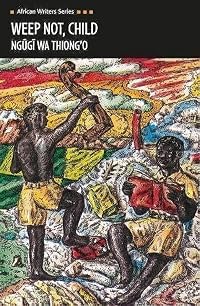
Novelist, playwright, and essayist, Ngugi wa Thiong'o was born in Kenya on January 5, 1938. He received a B.A. in English from Makerere University College in Kampala, Uganda in 1963. He is Kenya's best-known writer and one of East Africa's most outspoken social critics. His first novel, Weep Not, Child (1964), was a penetrating account of the Mau show more Mau uprising (a tribal revolt that occurred in colonial Kenya) and was the first English-language novel by an East African. Two subsequent works, The River Between (1965) and A Grain of Wheat (1967), are sensitive novels about the Kikuyu people caught between the old and the new Africa. One of his major concerns has been the lack of reading materials in native African languages. In an attempt to bring literature to African peasants and workers, he wrote and produced the play I Will Marry When I Want (1977) in his native Kikuyu language. The play, which shows the exploitation of Kikuyu workers and peasants, attracted a large audience of poor Kenyans. It also led to Ngugi's arrest and imprisonment. After his release from prison, he went into exile and is currently living in the United States. His other works include Detained (1981); Decolonising the Mind: The Politics of Language in African Literature (1986); and Matigari (1987). He received the 2001 Nonino International Prize for Literature. In 2006, Random House published his first new novel in nearly two decades, Wizard of the Crow. (Bowker Author Biography) show less
Some Editions
Awards and Honors
Notable Lists
Series
Belongs to Publisher Series
Work Relationships
Has as a student's study guide
Common Knowledge
- Canonical title*
- En blomma av blod
- Original publication date
- 1977 (original English) (original English)
- People/Characters
- Godfrey Munira; Abdulla; Nyakinyua; Wanja; Karega; Joseph (show all 9); Mzigo; Kimeria; Chui
- Important places
- Africa; East Africa; Kenya
- First words
- They came for him that Sunday.
- Quotations
- Ng’enda thi ndiagaga mutegi: that which is created by men can also be changed by men
"The trouble with slogans or any saying without a real foundation is that it can be used for anything. Phrases like Democracy, the Free World, for instance, are used to mean their opposite. It depends, of course, on who is sa... (show all)ying where, when and to whom." -Karega
He now put the question to himself: what did the children really think of him? Then he dismissed it with another: what did it matter one way or the other? He had taught for so many years now—teaching ready-made stuff must b... (show all)e in his blood—and one did all right as long as one was careful not to be dragged into…into…an area of darkness…Yes…darkness unknown, unknowable…like the flowers with petals of blood and questions about God, law…things like that. He could not teach now: he dismissed the class a few minutes before time and went back to the house.
--Munira
“…all ways for the poor go one way. One-way traffic: to more poverty and misery. Poverty is sin. But imagine. It is the poor who are held responsible for the sin that is poverty and so they are punished for it by being se... (show all)nt to hell.” –Abdulla
*Some information comes from Common Knowledge in other languages. Click "Edit" for more information.
Classifications
Statistics
- Members
- 882
- Popularity
- 30,850
- Reviews
- 15
- Rating
- (3.94)
- Languages
- 7 — Dutch, English, French, German, Greek, Spanish, Swedish
- Media
- Paper, Ebook
- ISBNs
- 29
- ASINs
- 3