On This Page
Description
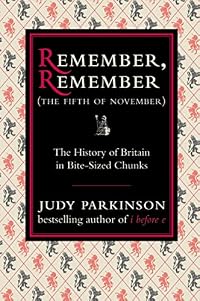
NEW YORK TIMES BESTSELLERFrom civil wars to world wars . . . from the Black Death to the Bard to the Blitz, here is the sweeping saga of the storied history of Britain in bite-sized chunks.
Was Bloody Mary the same as Mary, Queen of Scots? How many King Henrys were there--and which was which? Who won the Wars of the Roses--and why does it matter anyway? From the darkest days of the Hundred Years War to the brutal religious battles of the sixteenth century to the eponymous age of Queen show more Victoria--on whose empire the sun never set--Remember, Remember captures the scope of British history from the Roman invasion to the end of World War II: a drama of blood, death, love, sex, and betrayal. And it does so in 150 concise, accessible and highly entertaining entries. It's the perfect quick refresher for all the things we learned in school but may have forgotten since.
For lovers of all things British and for anyone who wants to know more about the country that once ruled America, here is an exciting, galloping tour of the rich, extraordinary story of Britain.
* November 5, 1605, is the notorious date when Catholic conspirators, including Guy Fawkes, allegedly attempted to blow-up the Houses of Parliament.
From the Hardcover edition.. show less
Tags
Recommendations










Member Recommendations
Member Reviews
This is a cracking little book: it may be read cover to cover in little more than an hour - even by a reading sloth such as my good self.
Sometimes, I find that I get lost in an area of history and struggle to connect it to the big picture. This is where this tome is invaluable. Just one word of warning, it is just a tad, "Britain the great Empire builder can do no wrong" in its approach but, a healthy dose of cynicism can deal with that.
Definitely worth a place on the bookshelf - and it will soon become a well thumbed friend.
Sometimes, I find that I get lost in an area of history and struggle to connect it to the big picture. This is where this tome is invaluable. Just one word of warning, it is just a tad, "Britain the great Empire builder can do no wrong" in its approach but, a healthy dose of cynicism can deal with that.
Definitely worth a place on the bookshelf - and it will soon become a well thumbed friend.
I really enjoyed this book. The author summarizes British history from the Roman Invasion to the end of World War II and the founding of the United Nations. There are 150 entries, and each is no more than 250 words, so it is succinct and surprisingly complete.
I'm a Yankee, of course, so I was intrigued by the different viewpoint of many historic events I knew, and lots of events I had never heard of. I even finally understand Guy Fawke's Day.
I'm a Yankee, of course, so I was intrigued by the different viewpoint of many historic events I knew, and lots of events I had never heard of. I even finally understand Guy Fawke's Day.
This is a great little book for an overview of British history from Roman times through World War II. Though each section is, as advertised, brief, there are some interesting personal tidbits about monarchs and statesmen.
“The history of Britain in bite-sized chunks,” it says here, and that’s pretty much exactly what it is. According to the introduction, “… many of us reach adulthood with embarrassing gaps in our knowledge, conscious of a vague feeling that we should know more about the subject,” and this is certainly true in my case. Or it was. Now that I’ve read this book, my problem has been solved!
Okay, not really. But at least I have something quick and easy to refer to.
Okay, not really. But at least I have something quick and easy to refer to.
A most excellent read.
A most excellent read.
A most excellent read.
Members
- Recently Added By
Author Information

7 Works 1,491 Members
Judy Parkinson is a British author, journalist and television producer. Her works include the bestselling 'I before E (Except after C)' , 'Remember, Remember the Fifth of November: The History of Britain in Bite-sized Chunks' and 'Spilling the Beans on the Cat's Pyjamas: Popular Expressions - What They Mean and Where We Got Them'. (Bowker Author show more Biography) show less
Series

Common Knowledge
- Canonical title
- Remember, Remember (the Fifth of November) (the Fifth of November)
- Alternate titles
- Remember, Remember (the Fifth of November): Everything You’ve Ever Wanted to Know about British History with All the Boring Bits Taken Out (the Fifth of November)
- Original publication date
- 2009
- Important places
- United Kingdom
- Dedication
- For Grandpa,
December 7, 1889 - December 18, 1977
Driver RJ Barrett, Royal Field Artillery
Regimental number 9863
Served in France and Italy
Military Medal awarded October 28, 1918 - First words
- This book was born out of a desire to encapsulate the whole sweep of British history -- from the Roman invasion to the end of the Second World War -- in no more than 150 entries, each no longer than 250 words. (Introduction)
The Romans were empire builders on a mission to spread their civilization to barbarian lands. - Quotations
- Anglo-Saxons worshipped multiple pagan gods such as Tuw, Wodin, Thunor (later Thor) and Friya, who gave their names to four days of the week. (Sunday and Monday are paganistically named after the sun and moon, but Satur... (show all)day, after Saturn, retains Roman influence.)
The Anglo-Saxon language formed the basis of modern-day English, giving us the word "England" ("Angle-land") among others.
Magna Carta (The Great Charter) is the most famous and most significant legal document in the history of democracy.
Motivated partly by a need for money and partly by the anti-Semitism of the time (which already required Jews to wear yellow badges), Edward expelled England's Jews in 1290, seizing their property. They were allowed to... (show all) return only in 1656.
The Bruce family, one of the three most powerful noble families in Scotland alongside the Balliols and the Comyns, gave strategic support to King Edward I's invasion of Scotland in 1296, hoping to take Balliol's place on the ... (show all)throne, but their ambitions were thwarted when Edward decided to rule Scotland as an English province. Robert Bruce therefore chose to support the rebel William Wallace, leading revolts at Irvine and Ayr.
Edward III celebrated the victory [the Battle of Crécy] by creating the Order of the Garter, one of Britain's highest honors that can be bestowed on only twenty-four members at one time, in addition to the reigning mona... (show all)rch and the Royal Knights.
Lord Rivers' Dictes and Sayinges of the Philosophers was the first book printed in English.
Elizabeth rejected Protestant and Catholic extremes in favor of a moderate Protestant Church that retained some Catholic traditions.
Elizabeth promoted exploration and conquest by adventurers like Drake, Hawkins and Raleigh, and her reign also brought a literary resurgence that include the work of Shakespeare, Spenser and Marlowe.
George Louis, Elector of Hanover, became kind after the death of Queen Anne, who, despite having borne nineteen children, had no surviving heirs. - Last words
- (Click to show. Warning: May contain spoilers.)There are currently 192 member states.
Classifications
Statistics
- Members
- 245
- Popularity
- 131,902
- Reviews
- 7
- Rating
- (3.82)
- Languages
- English
- Media
- Paper, Audiobook, Ebook
- ISBNs
- 6
- ASINs
- 5