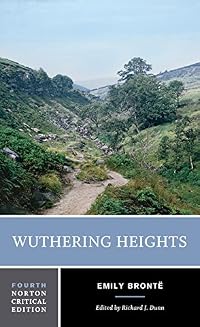
Wuthering Heights, A Norton Critical Edition
by Jr. William M Sale (Editor), Emily Brontë (Author), Richard J. Dunn (Editor)
On This Page
Description
"Wuthering Heights, the only novel by Emily Bronte, traces the passionate relationship of Catherine and Heathcliff. Their affair ripples across the moors as it determines the fate of two generations of lovers. The "Background and Contexts" section includes selections of Bronte's diary entries, devoirs, and poetry. Readers will also find a selection of letters from Charlotte Bronte, as well as reviews of the 1847 and 1850 editions of Wuthering Heights. Bringing together a wide range of show more topics, the 'Criticism' section highlights the complexities of the text and analyzes the role of memory and trauma, animals, and Victorian domesticity. A Chronology of Bronte's life and a Selected Bibliography are also included"-- show lessTags
Recommendations
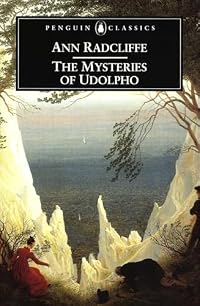
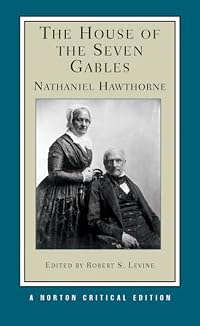
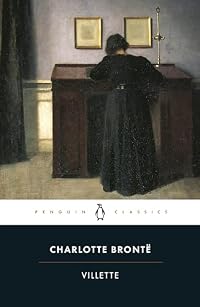
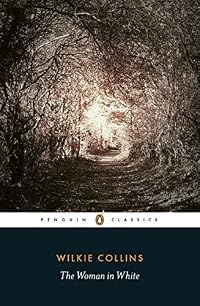





Member Recommendations
Member Reviews
How can I find and put together the suitable words and write a review about one of the most iconic creations in World Literature? One of those books that provoke such intense feelings that either you worship them or you utterly hate them. There is no middle ground. Every year, I revisit Wuthering Heights for two reasons. First, it is one of my personal Christmas traditions and secondly, I prepare extracts to use in class for my intermediate level students. This year, I finally felt confident enough to write a text. I will not call it a review, but a summary of what this masterpiece means for me, what I feel each time I gaze upon its title.
I was 12 when my mother made me a special gift. (I have a mother that gave me a book about show more self-destructive love and a father that gave me Crime and Punishment a year later. I know, they rock!) It was a thick volume with a dark cover. A cover as black as the night scene it depicted. A young couple running in the moors against the wind, and a black, foreboding mansion looming in the background. To this day, that cherished Greek edition of Emily's only novel is the most beautiful I've ever seen. I read it in a single day. I remember it was a windy day, a summer torrent rain that lasted all afternoon. It left me speechless. It shaped me. It shaped my reading preferences, it shaped my love for eerie, dark, doomed, haunting stories with twisted anti-heroes. It even shaped the choice of my profession.
When I was 15, one of the best teachers I've ever had gave us a project. She divided us into groups and asked us to make a presentation of our favourite book. She put me in a group with two classmates. Such kind and charming souls they were but would never open a book if their lives depended on it. I didn't care, I was happy because I'd get to choose the book. We left our teacher crying buckets in the classroom, marking a heroic A on our papers. During the 3rd year in university, we had to complete individual assignments. I'll let you guess the theme and the book I chose. My professor had to interrupt me at some point, kindly but firmly. ''Yes, thank you, Amalia, this is great, but there are others waiting, you know.'' Were they? Anyway, you get the point. My level of obsession with this novel equal Heathcliff's obsession with Cathy.
Emily Brontë's novel may not be for everyone. It doesn't matter. Nothing is for everyone. But, she has created an eternal tale -or nightmare- of a love that is destructive, dark, twisted and stranger than all the other sweet, lovey-dovey stories that have been written. She has created one of the most iconic couples in Literature, she has provided the first and finest example of the Anti-hero in the face of Heathcliff. She has ruined many girls' expectations, because who wouldn't want to be loved as fiercely as Cathy was? (For years, my notion of the ideal man was Ralph Fiennes as Heathcliff in the 1992 film. The best adaptation of the novel, with Juliette Binoche as Cathy) How many writers who have written only one novel can claim to have accomplished all these?
One of the reasons I became a teacher was to have the opportunity to teach this book. It is my greatest satisfaction when I see its impact on my teenage students. They are familiar with the bleak and twisted tales of our times, nothing shocks them anymore. They love it unanimously, it is a rare case where boys and girls love the same book equally. So, mission accomplished.
''I cannot live without my life! I cannot live without my soul!'' For me, this book is my soul. It lies there, making the question ''What is your favourite book?'' the easiest ever.
P.S. Please, God, when I die, put me in a sector where I can meet Emily. You can keep Shakespeare, Austin, Tolstoy and Dostoevsky. I prefer long talks with a disturbed, fragile, wild girl... show less
I was 12 when my mother made me a special gift. (I have a mother that gave me a book about show more self-destructive love and a father that gave me Crime and Punishment a year later. I know, they rock!) It was a thick volume with a dark cover. A cover as black as the night scene it depicted. A young couple running in the moors against the wind, and a black, foreboding mansion looming in the background. To this day, that cherished Greek edition of Emily's only novel is the most beautiful I've ever seen. I read it in a single day. I remember it was a windy day, a summer torrent rain that lasted all afternoon. It left me speechless. It shaped me. It shaped my reading preferences, it shaped my love for eerie, dark, doomed, haunting stories with twisted anti-heroes. It even shaped the choice of my profession.
When I was 15, one of the best teachers I've ever had gave us a project. She divided us into groups and asked us to make a presentation of our favourite book. She put me in a group with two classmates. Such kind and charming souls they were but would never open a book if their lives depended on it. I didn't care, I was happy because I'd get to choose the book. We left our teacher crying buckets in the classroom, marking a heroic A on our papers. During the 3rd year in university, we had to complete individual assignments. I'll let you guess the theme and the book I chose. My professor had to interrupt me at some point, kindly but firmly. ''Yes, thank you, Amalia, this is great, but there are others waiting, you know.'' Were they? Anyway, you get the point. My level of obsession with this novel equal Heathcliff's obsession with Cathy.
Emily Brontë's novel may not be for everyone. It doesn't matter. Nothing is for everyone. But, she has created an eternal tale -or nightmare- of a love that is destructive, dark, twisted and stranger than all the other sweet, lovey-dovey stories that have been written. She has created one of the most iconic couples in Literature, she has provided the first and finest example of the Anti-hero in the face of Heathcliff. She has ruined many girls' expectations, because who wouldn't want to be loved as fiercely as Cathy was? (For years, my notion of the ideal man was Ralph Fiennes as Heathcliff in the 1992 film. The best adaptation of the novel, with Juliette Binoche as Cathy) How many writers who have written only one novel can claim to have accomplished all these?
One of the reasons I became a teacher was to have the opportunity to teach this book. It is my greatest satisfaction when I see its impact on my teenage students. They are familiar with the bleak and twisted tales of our times, nothing shocks them anymore. They love it unanimously, it is a rare case where boys and girls love the same book equally. So, mission accomplished.
''I cannot live without my life! I cannot live without my soul!'' For me, this book is my soul. It lies there, making the question ''What is your favourite book?'' the easiest ever.
P.S. Please, God, when I die, put me in a sector where I can meet Emily. You can keep Shakespeare, Austin, Tolstoy and Dostoevsky. I prefer long talks with a disturbed, fragile, wild girl... show less
Wuthering Heights is often derided as “Chick Lit,” a work that mostly appeals to women and barely a step above dime store romance novels. Nothing could be further from the truth.
I was stunned actually at how deep and dark this book was. Emily Bronte challenges virtually every norm of Victorian England, including gender roles, class, wealth, and decorum. I can really see why it caused such an uproar when it was published.
No character in the book was painted in black or white..they all had flaws, they all acted despicably, and they all had redeeming qualities. Within ten pages of the end of the book I was ready to classify the main character, Heathcliff, as an irredeemably evil personage. The last ten pages changed all that.
What a show more great book….all the more so because I had low expectations of it when I started. I love being surprised! show less
I was stunned actually at how deep and dark this book was. Emily Bronte challenges virtually every norm of Victorian England, including gender roles, class, wealth, and decorum. I can really see why it caused such an uproar when it was published.
No character in the book was painted in black or white..they all had flaws, they all acted despicably, and they all had redeeming qualities. Within ten pages of the end of the book I was ready to classify the main character, Heathcliff, as an irredeemably evil personage. The last ten pages changed all that.
What a show more great book….all the more so because I had low expectations of it when I started. I love being surprised! show less
Good grief. I've read this book several times before, at various stage of my life. The first was when i was a young Catholic high school girl. What, in the name of all that is good and holy, were the nuns thinking of in having us read this? It's well-written, I'll give Emily Brontë that, but it is a long, painful saga about humans being cruel to each other. The little boy, Heathcliff, is "rescued" by a foster father who dies and leaves him to be neglected, abused, and shamed by his heir. Heathcliff lives up to the expectations we'd have for a child so abused, and grows up to be an abusive, despicable man who carefully plans the destruction of the man who made him miserable and all of that man's decendants. All of this, the novel show more suggests, is because Heathcliff loved Catherine so deeply and passionately that her loss to him warped his nature. Please. All of these characters are nutty. The men are selfish, manipulative narcissists and the women are, somehow, seduced into falling "in love" with the weakest and most igorant of the lot.
I'm glad I reread it. Won't do so again, because it just makes me upset to think of what life must have been like for the Brontë sisters. show less
I'm glad I reread it. Won't do so again, because it just makes me upset to think of what life must have been like for the Brontë sisters. show less
So I reread this for the first time since high school. Completely overwrought and melodramatic, of course, but in a good way. I don't think I really appreciated Nelly when I first read it; she is a gem of a character but when you're young and reading for plot you don't notice that as much. (At least I did not.)
I am baffled that anyone thinks any of this mess is romantic, though.
I am baffled that anyone thinks any of this mess is romantic, though.
The marketing team for Wuthering Heights really needs to make it clear that this is NOT a romance. It is not romantic, either. Readers going into it expecting something akin to Elizabeth and Darcy in Jane Austen's Pride and Prejudice will be very surprised to discover how dark and disturbing this book is. Also? If Austen is Days of our Lives, Emily Bronte is Jerry Springer.
We have an unreliable narrator, and sometimes layers of second-hand narration. It can get confusing and especially at the beginning, the book demanded my full focus. I was glad my edition had a family tree to reference.
It's heavy, it explores neglect and abuse and the cycle that can persist. There's a lot to it, and I will benefit from a second reading at some point. show more I'm glad I read this in a group! show less
We have an unreliable narrator, and sometimes layers of second-hand narration. It can get confusing and especially at the beginning, the book demanded my full focus. I was glad my edition had a family tree to reference.
It's heavy, it explores neglect and abuse and the cycle that can persist. There's a lot to it, and I will benefit from a second reading at some point. show more I'm glad I read this in a group! show less
WARNING: This review contains spoilers.
****
This is one of those books that can seem intimidating at first, mainly because it has attained "classic" status and it was written a long time ago. However, the timid reader need not fear -- Wuthering Heights is very accessible and an excellent read.
The story has a frame narration. Lockwood is the first narrator of the novel, and he becomes a tenant of Thrushcross Grange, a house about four miles away from the titular Heights. Heathcliff is its landlord, and he is a most surly and disagreeable man. He lives in the house with his daughter-in-law, Catherine, and her cousin, Hareton Earnshaw. The younger folk seem to live under a cloud of gloom and misery, and Lockwood is curious as to how they show more came to be stuck in that situation.
Fortunately, he is able to find out quickly enough. After catching cold, he is confined to bed and asks the Grange's housekeeper, Nelly Dean, to tell him the story of Heathcliff and his love, Catherine (NOT the daughter-in-law...I thought that at first and was rather perturbed. No, Heathcliff's lover Catherine was the mother of the Catherine whom Lockwood knows). She proceeds to tell him the circumstances leading up to the present day, and while she is telling it she becomes the primary narrator. Lockwood then finishes the story when he returns to Thrushcross Grange a year later.
This book is an excellent character study, in particular Heathcliff, who is consumed with a desire for revenge for most of the book. At times it seems difficult to accept his reasoning for wreaking the torment that he does -- running off with Catherine's sister-in-law, condemning Hareton to neglect, abusing his own son, harassing Cathy (the younger Catherine) despite the fact that she is rather a lot like her mother. I personally thought it was all a rather complicated way of going about revenge. As I thought to myself, if he really hates Edgar Linton so much for marrying Catherine, why not just beat the guy up or something? Perhaps steal her away instead? But I am sure that if he had done that, there would not be much of a story. The change in Heathcliff toward the end was also well done, although perhaps the gears switched a bit suddenly in him. Perhaps I missed the cues, but it did seem like a rather abrupt 180 in his attitude -- going from raging about and verbally assaulting people to walking around haunted, sleepless and starving.
All this aside, Brontë writes an excellent story. Nelly Dean's narration is well paced and is easy to follow. Lockwood himself remarks on how she "tells a fair story" or something like that. Nelly is also an observant narrator, capturing enough detail to paint a reasonable picture without going overboard. My only quibble is that I cannot imagine how she would be able to replicate Joseph's almost incomprehensible dialect so accurately, when the story took place starting around 20 years (give or take) before 1801. Of course, that's a bit of creative licence there, so perhaps I am just being picky where I do not need to be.
So to sum up, this book was excellent, although I think I'll read it again -- this time on a rainy afternoon with a cup of tea instead of in 20-minute bursts on the bus. This book deserves leisurely contemplation and reflection, and the time you invest in reading it will be well spent. show less
****
This is one of those books that can seem intimidating at first, mainly because it has attained "classic" status and it was written a long time ago. However, the timid reader need not fear -- Wuthering Heights is very accessible and an excellent read.
The story has a frame narration. Lockwood is the first narrator of the novel, and he becomes a tenant of Thrushcross Grange, a house about four miles away from the titular Heights. Heathcliff is its landlord, and he is a most surly and disagreeable man. He lives in the house with his daughter-in-law, Catherine, and her cousin, Hareton Earnshaw. The younger folk seem to live under a cloud of gloom and misery, and Lockwood is curious as to how they show more came to be stuck in that situation.
Fortunately, he is able to find out quickly enough. After catching cold, he is confined to bed and asks the Grange's housekeeper, Nelly Dean, to tell him the story of Heathcliff and his love, Catherine (NOT the daughter-in-law...I thought that at first and was rather perturbed. No, Heathcliff's lover Catherine was the mother of the Catherine whom Lockwood knows). She proceeds to tell him the circumstances leading up to the present day, and while she is telling it she becomes the primary narrator. Lockwood then finishes the story when he returns to Thrushcross Grange a year later.
This book is an excellent character study, in particular Heathcliff, who is consumed with a desire for revenge for most of the book. At times it seems difficult to accept his reasoning for wreaking the torment that he does -- running off with Catherine's sister-in-law, condemning Hareton to neglect, abusing his own son, harassing Cathy (the younger Catherine) despite the fact that she is rather a lot like her mother. I personally thought it was all a rather complicated way of going about revenge. As I thought to myself, if he really hates Edgar Linton so much for marrying Catherine, why not just beat the guy up or something? Perhaps steal her away instead? But I am sure that if he had done that, there would not be much of a story. The change in Heathcliff toward the end was also well done, although perhaps the gears switched a bit suddenly in him. Perhaps I missed the cues, but it did seem like a rather abrupt 180 in his attitude -- going from raging about and verbally assaulting people to walking around haunted, sleepless and starving.
All this aside, Brontë writes an excellent story. Nelly Dean's narration is well paced and is easy to follow. Lockwood himself remarks on how she "tells a fair story" or something like that. Nelly is also an observant narrator, capturing enough detail to paint a reasonable picture without going overboard. My only quibble is that I cannot imagine how she would be able to replicate Joseph's almost incomprehensible dialect so accurately, when the story took place starting around 20 years (give or take) before 1801. Of course, that's a bit of creative licence there, so perhaps I am just being picky where I do not need to be.
So to sum up, this book was excellent, although I think I'll read it again -- this time on a rainy afternoon with a cup of tea instead of in 20-minute bursts on the bus. This book deserves leisurely contemplation and reflection, and the time you invest in reading it will be well spent. show less
It’s been incredible rereading Wuthering Heights, where if the book had stopped with Catherine and Heathcliff than this would have been less than half the experience; for me this story’s heart is the younger Catherine for what she has to go through to survive. Younger Catherine is the daughter of Catherine, the one who is interlinked with Heathcliff.
I found this easier to read than the last time but this time I had all my 6 editions out of which 4 have notes and essays. The last time I read the edition that had no extras, where in the end I got the sense of the story but it’s with this read I realized how many characters were telling their story; I only clocked this this time when I went back to read paragraphs and chapter again show more to make sense of what was going on as I was getting lost, it was then I realized that it was someone else talking to the narrator who was reporting the story.
The opening and the first three chapters with its comedy gave me the confidence that I could keep going. It’s a funny start with Lockwood as an unwelcomed guest at Wuthering Heights, and when the mood changed in chapter 4 onwards it mattered less and I kept going.
This time it also helped that one of my eds (Oxford World Classics) annotated Jospeh’s speech but as I kept reading, I was surprised I was less reliant on this (and also noticed that I could kind of work out what he was saying by the responses of the other characters). The Penguin edition had annotated notes that explained words like: discussed meaning ate, lugs meaning ears, and wick meaning lively. The Norton edition and the Wordsworth edition highlighted readers and critics response, Norton one also included readers letters from when it was first published, criticisms and some of Emily Brontë’s diary papers and poems (where as I read back and forth and between editions, I started to realize the relevance of the poems). Now having read the novel I want to revisit all these extras again to see more of this novel.
This is definitely a challenging read, not because of its clever structure but in places it’s a darker read with its bullying and terrorising of others, but what amazed me the most about reading this is how I went from not being able to empathise with any characters to rooting for them, even Catherine and Heathcliff.
This is another book that goes back on my reread pile. show less
I found this easier to read than the last time but this time I had all my 6 editions out of which 4 have notes and essays. The last time I read the edition that had no extras, where in the end I got the sense of the story but it’s with this read I realized how many characters were telling their story; I only clocked this this time when I went back to read paragraphs and chapter again show more to make sense of what was going on as I was getting lost, it was then I realized that it was someone else talking to the narrator who was reporting the story.
The opening and the first three chapters with its comedy gave me the confidence that I could keep going. It’s a funny start with Lockwood as an unwelcomed guest at Wuthering Heights, and when the mood changed in chapter 4 onwards it mattered less and I kept going.
This time it also helped that one of my eds (Oxford World Classics) annotated Jospeh’s speech but as I kept reading, I was surprised I was less reliant on this (and also noticed that I could kind of work out what he was saying by the responses of the other characters). The Penguin edition had annotated notes that explained words like: discussed meaning ate, lugs meaning ears, and wick meaning lively. The Norton edition and the Wordsworth edition highlighted readers and critics response, Norton one also included readers letters from when it was first published, criticisms and some of Emily Brontë’s diary papers and poems (where as I read back and forth and between editions, I started to realize the relevance of the poems). Now having read the novel I want to revisit all these extras again to see more of this novel.
This is definitely a challenging read, not because of its clever structure but in places it’s a darker read with its bullying and terrorising of others, but what amazed me the most about reading this is how I went from not being able to empathise with any characters to rooting for them, even Catherine and Heathcliff.
This is another book that goes back on my reread pile. show less
Members
- Recently Added By
Lists

1898 C.K. Shorter List of Best 100 Novels
100 works; 34 members

Books featuring alcoholics
103 works; 18 members

Unreliable Narrators
170 works; 43 members
Books tagged favorites
390 works; 30 members

CCE 1000 Good Books List
1,033 works; 12 members

The College Board: 101 Great Books Recommended for College-Bound Readers
111 works; 7 members
Love Triangles in Literature
108 works; 14 members

Books Read in 2024
4,623 works; 126 members
Author Information
All Editions
Some Editions
Series
Belongs to Publisher Series
Work Relationships
Reference guide/companion to
Common Knowledge
- Canonical title
- Wuthering Heights, A Norton Critical Edition
- Original publication date
- 1963
- Related movies
- Wuthering Heights (1939 | IMDb | William Wyler); Wuthering Heights (1992 | IMDb | Peter Kosminsky); Wuthering Heights (1970 | IMDb | Robert Fuest); Wuthering Heights (2011 | IMDb | Andrea Arnold); Wuthering Heights (1954 | IMDb | Luis Bunuel)
- Disambiguation notice
- Do Not Combine: This is a "Norton Critical Edition", it is a unique work with significant added material, including essays and background materials. Do not combine with other editions of the work. Please maintain the p... (show all)hrase "Norton Critical Edition" in the Canonical Title and Publisher Series fields.
Classifications
Statistics
- Members
- 5,099
- Popularity
- 2,689
- Reviews
- 110
- Rating
- (3.68)
- Languages
- English, German
- Media
- Paper, Audiobook, Ebook
- ISBNs
- 10
- ASINs
- 14
