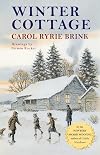
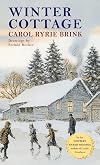
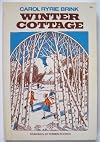
Winter Cottage
by Carol Ryrie Brink
On This Page
Description
Immerse Yourself in This Story of Love and Companionship Amidst DeprivationIt is the fall of 1930, and America has plunged into the Great Depression. On a remote dirt road deep in the snowy woods of northern Wisconsin, misfortune forces the impoverished Sparkes family to take desperate measures. A wayfaring quartet consisting of thirteen-year-old Araminta (nicknamed Minty), her recently unemployed father-a poetry-quoting widower called Pops-and her younger sister, Eglantine (known as Eggs-a show more dreamer like Pops), and their dog, Buster, are on their way to Minneapolis to live with the curmudgeonly Aunt Amy. When their car breaks down and they are unable to fix it, the homeless four stumble upon a vacant summer cottage by a lake. In desperate straits, they decide to settle in and stay for the winter, optimistically rationalizing that they'll pay "rent" to the unknown owners when they leave in the spring. The cabin soon becomes a symbol of hope as the Sparkes family works together, making do with little; their makeshift home is spare yet wholesome, filled with little more than the comfort of love. During their stay, the family generously opens the cottage's doors to others, including a young runaway boy and two mysterious strangers who show up in a snowstorm. Through it all, Minty remains the practical and responsible one, who keenly feels the tug of a strong moral conscience.With Winter Cottage Carol Ryrie Brink (Newbery Award-winning author of Caddie Woodlawn) offers a heartwarming and humorous adventure story filled with inspiring examples of trust, honor, integrity, friendship, resourcefulness, and forgiveness. Illustrated with drawings by celebrated artist Fermin Rocker, it is the captivating story of a family finding true love and companionship together, even in the darkest cold of a challenging winter. show lessTags
Recommendations










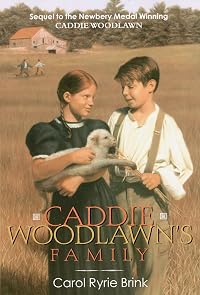
















Member Reviews
I read this one aloud to my kids. We all really enjoyed it (and I enjoyed doing voices for each character, especially Eggs), but I had trouble getting past just how nice everyone is and how well everything works out. Things work out a little too perfectly and the characters forgive just a little too easily to be realistic, I think. Or maybe I'm just in a crappy mood. Luckily, based on the lessons from this book, I know it's nothing a batch of pancakes won't fix.
I read this one aloud to my kids. We all really enjoyed it (and I enjoyed doing voices for each character, especially Eggs), but I had trouble getting past just how nice everyone is and how well everything works out. Things work out a little too perfectly and the characters forgive just a little too easily to be realistic, I think. Or maybe I'm just in a crappy mood. Luckily, based on the lessons from this book, I know it's nothing a batch of pancakes won't fix.
Both charming and exciting. No cliches - for example the father is a dreamy poet and unsuccessful at regular work, but he does have his dignities and he is not lazy nor a drunk. I liked the historical setting - for example I learned that the reason sweepstakes now all say 'no purchase necessary' is because so many of the contests back then were exploitative.
And the writing is just perfect. Most of it is dialog, but little sprinkles of descriptive passages sometimes reveal gems like, [T]his car sounded like a hardware shop on holiday."
One warning to the culturally sensitive. There's a chapter where the children visit an Indian Reservation. We don't learn which nation is living there. There's a convent (?) or at least a school taught by show more nuns, and the sisters express sadness that there classes are getting smaller each year because "every year the number of Indians on the reservation grows smaller." Are they moving to the city? Or back to the wilderness to live among the 'heathen Indians?' Or are they dying off? Are the children boarding at the school willing to be there? Brink seemed sensitive and respectful, but she was writing about a troubled time and gave us only a provocative glimpse of reservation life." show less
And the writing is just perfect. Most of it is dialog, but little sprinkles of descriptive passages sometimes reveal gems like, [T]his car sounded like a hardware shop on holiday."
One warning to the culturally sensitive. There's a chapter where the children visit an Indian Reservation. We don't learn which nation is living there. There's a convent (?) or at least a school taught by show more nuns, and the sisters express sadness that there classes are getting smaller each year because "every year the number of Indians on the reservation grows smaller." Are they moving to the city? Or back to the wilderness to live among the 'heathen Indians?' Or are they dying off? Are the children boarding at the school willing to be there? Brink seemed sensitive and respectful, but she was writing about a troubled time and gave us only a provocative glimpse of reservation life." show less
A family that is down on its luck during the Depression appropriates a summer cottage in the Wisconsin woods, where they spend the winter and welcome all visitors, including a runaway youth and two strangers. How Pops and his two daughters cope with their misfortunes without losing heart is a very entertaining story.
A lovely story. Very sweet. A great family story. I found it predictable, but I think that children may have been surprised. Lovely to see the family working together.
Ratings
Members
- Recently Added By
Lists

Runaways -- children's/young adult fiction
98 works; 4 members
Author Information

39+ Works 12,797 Members
Carol Ryrie Brink is the author of many books for young readers, including Magical Melons, the companion volume to Caddie Woodlawn.
All Editions
Awards and Honors
Common Knowledge
- Canonical title
- Winter Cottage
- Important events
- Great Depression
Classifications
Statistics
- Members
- 144
- Popularity
- 227,181
- Reviews
- 5
- Rating
- (3.97)
- Languages
- English
- Media
- Paper
- ISBNs
- 4
- ASINs
- 2