
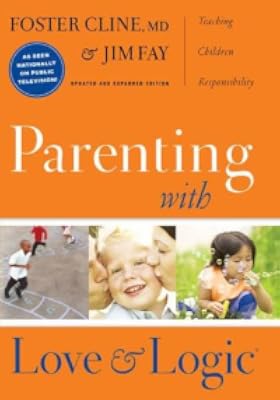
Parenting With Love And Logic
by Foster Cline, Jim Fay (Author)
On This Page
Description
This parenting book shows you how to raise self-confident, motivated children who are ready for the real world. Learn how to parent effectively while teaching your children responsibility and growing their character.Establish healthy control through easy-to-implement steps without anger, threats, nagging, or power struggles.
Indexed for easy reference.
.
Tags
Recommendations
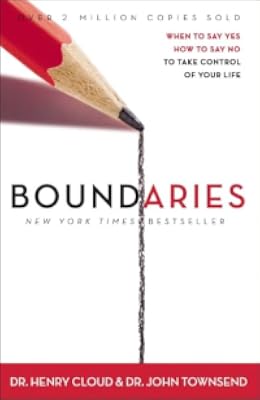
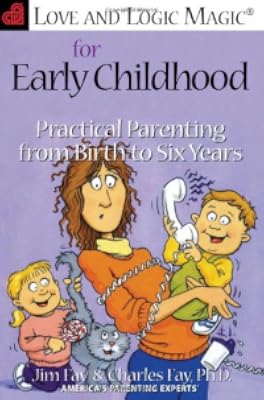
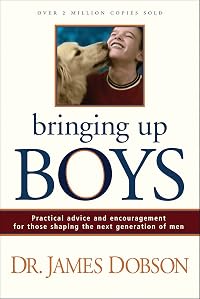
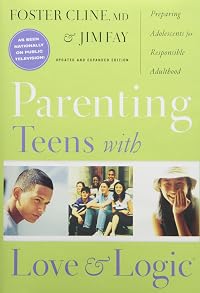

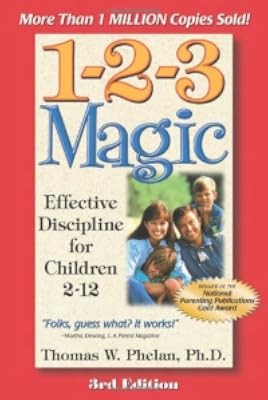
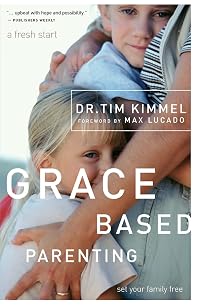
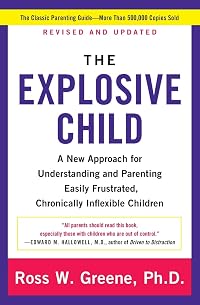
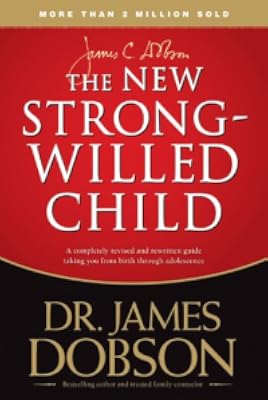


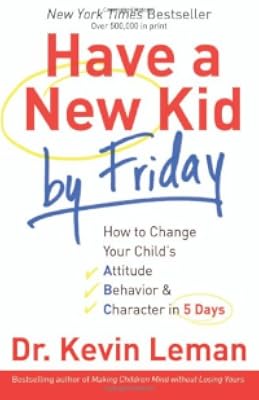
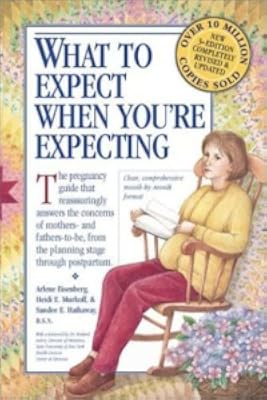
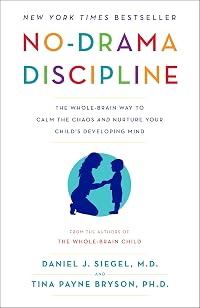

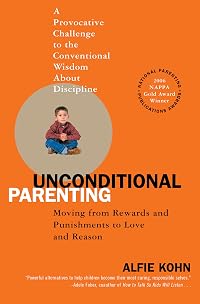
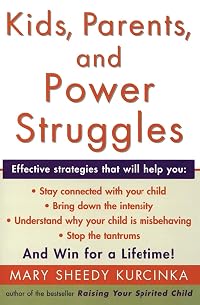
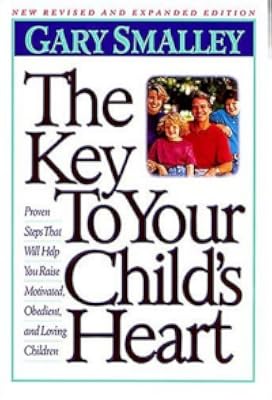
Member Recommendations

paulkid Written in 1964, Dreikurs' book it is somewhat dated (lots of "Mothers" and "homemakers", among others), but it does not take the concept of logical consequences to the extreme as can happen in other books. In addition, it gives you other tools that, in some situations, are superior alternatives to the love and logic method.
Member Reviews
As many other reviewers have said, you should take from this book what's useful to you and leave the rest. A few useful things for me:
1. Parenting should not be a power struggle. My job as a parent is not to control my child. (This is not in the book, but I really like partnering/collaborating with my 5yo to find solutions to conflicts. As the book says, kids should have opportunities to exercise power over their lives.)
2. Keep in mind your ultimate goal as a parent. For most of us, it's for our kids to become independent and trustworthy. This can't happen if we never trust them. We have to give them opportunities to make choices and suffer consequences within reason.
3. Be consistent with boundaries. This is especially important for show more very young children who don't understand how context guides behavior. For example, if you let your child make a big mess and laugh about it one day (because, say, it's a lazy Sunday) but then the next day you get super upset when they make a big mess (because, say, it's Monday morning and you have to get to work) it's confusing for little kids. Consistency (to the point of even saying "uh-oh" in the same sing-song way every time you want to discourage a behavior) will really help guide behavior.
A few things the book advocates that don't work for me:
1. Don't lecture. --okay, this sounds good. But the authors recommend parents keep mum and let experience be their child's teacher. This doesn't always work for me because I'm a verbal person raising a verbal kid. Some things are better learned first by talking together. For example, if we're having a conflict over toothbrushing, I'm not going to quietly let my kids get cavities so they can learn from experience why toothbrushing matters. I'm going to describe in detail how much it sucks to get a cavity and explain that a trip to the dentist is expensive. (This has worked pretty well for us, btw.)
2. Never lose your cool. --again this sounds good. But it basically encourages parents to trick kids into thinking the kids have no power to upset their parents. I think this will inevitably come across as hollow as your kids get older. I'd rather be authentic with my kid about my feelings. Honestly, I don't think I could pull off unflappable anyway.
3. Lock your kid in their room when they misbehave because you can't control their behavior but you can control their location. --yeah, this is bad advice. Please don't routinely lock your child in their room, even if you're standing just outside the door. Google "love withdrawal" as a parenting/discipline technique and you'll find research that shows this doesn't work well. show less
1. Parenting should not be a power struggle. My job as a parent is not to control my child. (This is not in the book, but I really like partnering/collaborating with my 5yo to find solutions to conflicts. As the book says, kids should have opportunities to exercise power over their lives.)
2. Keep in mind your ultimate goal as a parent. For most of us, it's for our kids to become independent and trustworthy. This can't happen if we never trust them. We have to give them opportunities to make choices and suffer consequences within reason.
3. Be consistent with boundaries. This is especially important for show more very young children who don't understand how context guides behavior. For example, if you let your child make a big mess and laugh about it one day (because, say, it's a lazy Sunday) but then the next day you get super upset when they make a big mess (because, say, it's Monday morning and you have to get to work) it's confusing for little kids. Consistency (to the point of even saying "uh-oh" in the same sing-song way every time you want to discourage a behavior) will really help guide behavior.
A few things the book advocates that don't work for me:
1. Don't lecture. --okay, this sounds good. But the authors recommend parents keep mum and let experience be their child's teacher. This doesn't always work for me because I'm a verbal person raising a verbal kid. Some things are better learned first by talking together. For example, if we're having a conflict over toothbrushing, I'm not going to quietly let my kids get cavities so they can learn from experience why toothbrushing matters. I'm going to describe in detail how much it sucks to get a cavity and explain that a trip to the dentist is expensive. (This has worked pretty well for us, btw.)
2. Never lose your cool. --again this sounds good. But it basically encourages parents to trick kids into thinking the kids have no power to upset their parents. I think this will inevitably come across as hollow as your kids get older. I'd rather be authentic with my kid about my feelings. Honestly, I don't think I could pull off unflappable anyway.
3. Lock your kid in their room when they misbehave because you can't control their behavior but you can control their location. --yeah, this is bad advice. Please don't routinely lock your child in their room, even if you're standing just outside the door. Google "love withdrawal" as a parenting/discipline technique and you'll find research that shows this doesn't work well. show less
this is astoundingly bad parenting advice. dangerously bad, actually. i was looking forward to reading this and was immediately put off by the super christian bent to it (i just looked and realized it was published by a christian press) but thought i'd just ignore that part. ("Responsible parents want to bring their children up with established spiritual values. They want their kids to have faith, understand the Christian message, and know God intimately.") even as i was reading and disagreeing with much of the message, and a lot of the way it was being told, i figured there was some good foundational stuff that i could take from this book for my own parenting. and there is. but i can't get past all of the really terrible things they show more tell you to do, and how they tell you that if you don't you will be doing "irreparable harm" to your children "by the time they reach high school." example, i agree - you have to take care of yourself if you intend to take care of other people. you have to do some things for yourself, etc. but: "For many unhappy parents and their entitled, demanding children, life becomes a one-way street....Wise parents who find themselves in such a predicament set the model by taking good care of themselves. A Love and Logic parent might say, 'Honey, I know you want me to (help you with your homework; take you to your practice; drive you to the movie). However, I'm sorry to say that taking you places (doing things for you) has put a darkening cloud over my haze of happiness lately. That's sad but true. So I think I'll pass on doing it this time.' This parent will raise respectful, thoughtful children who grow to take good care of themselves, too." really? you want me to help me with your homework but i don't want to, so screw you, kid. i could pull something like this from almost every page that i got through, contradicting something they wrote before. this isn't about "natural consequences" and "raising responsible kids." it's about giving a pass to lazy parents, and generally telling you ways to royally fuck up your kids. show less
This parenting book resonated with me more than any other I’ve read. Its main goal is to help you raise kids who are able to make decisions for themselves in a safe environment at home that will translate well when they’re out of your house. They talk about how helicopter or drill sergeant parents limit kids’ maturity, while consultant parents help their kids learn through natural consequences. The key is empathy while still allowing them to fail.
Raising kids is difficult, and every child is different. Therefore, no one book can tell you how you should teach your own unique human being. Having said that, as one who survived parenting six very different children, I wholeheartedly endorse this book. It does not absolve you of the responsibility of understanding each child individually and catering your approach to his/her specific needs, but it does provide powerful tools and insights that will make you much more effective as a parent. Just be careful not to cross the line that separates mature detachment (good) and indifference (bad). In other words, remember the "Love" part, and not just the "Logic."
I have an 8 and 11 year old and I found this book full of interesting tips and concepts for me to implement. It does have a Christian/Religious background to it, which I chose to skim over, not being a follower of any religion, but felt it still had some valid ideas and suggestions to take on. It coaches parents not to come from a place of anger, punishment, or 'fighting talk', and suggested alternatives.
I wouldn't consider this book helpful for anyone with a toddler or child under 5. All the suggestions for how to deal with that age group I felt were extreme and not realistic or constructive.
Some of the examples are also a bit extreme. I would never starve an animal, especially a family pet, and give it away to 'teach my child a show more lesson about responsibility'. I found that cruel and heartless and not what I would consider 'Christian' in any form. A pet is part of the family and EVERYONE's responsibility. If a parent chooses to let their child have a pet, they should teach them good care by including them in that care, and showing by example. I was angered and sickened by the idea.
And I also wouldn't leave a foster child, who had only been living with me for a week, out on the streets overnight in mountain country, to 'teach them a lesson about being on time'.
Although the authors preach empathy, these examples didn't really provide it. For me, it was clear the authors were men, who weren't the primary carers of their children, especially in their formative years.
Despite this I still felt there was a lot to learn from this book, and found it helpful in the issues I have with discipline and consistency. I would reference it again. show less
I wouldn't consider this book helpful for anyone with a toddler or child under 5. All the suggestions for how to deal with that age group I felt were extreme and not realistic or constructive.
Some of the examples are also a bit extreme. I would never starve an animal, especially a family pet, and give it away to 'teach my child a show more lesson about responsibility'. I found that cruel and heartless and not what I would consider 'Christian' in any form. A pet is part of the family and EVERYONE's responsibility. If a parent chooses to let their child have a pet, they should teach them good care by including them in that care, and showing by example. I was angered and sickened by the idea.
And I also wouldn't leave a foster child, who had only been living with me for a week, out on the streets overnight in mountain country, to 'teach them a lesson about being on time'.
Although the authors preach empathy, these examples didn't really provide it. For me, it was clear the authors were men, who weren't the primary carers of their children, especially in their formative years.
Despite this I still felt there was a lot to learn from this book, and found it helpful in the issues I have with discipline and consistency. I would reference it again. show less
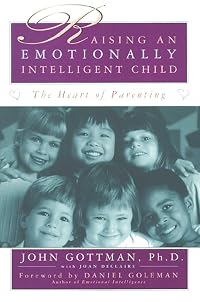
This book is great in many ways. It offers practical, easy to implement strategies for encouraging positive behavior in your children through the use of logical consequences. It is very behavioral in its emphasis meaning it shouldn't be the only book on your shelf. Supplement with books to address other issues such as the meaning behind your child's behavior. Gottman's "Raising an Emotionally Intelligent Child" is a good one. The second half of the book is not nearly as helpful as the first. It offers topical "pearls" that felt too surfacy in their treatment to be of much use. You are in good shape if you simply read the first 100 pages or so.
I had to read this book for an education class which really didn't fit. Honestly, I didn't really agree with a lot of the book. Most of my class thought it was stupid and so did I. Some of the examples are borderline mean. I think it is the strangest parenting book I've ever read. I don't know how many, if any, of these principles I would actually use in my classroom or with my children.
Members
- Recently Added By
Lists

ebooks_TBR_Kindle
600 works; 1 member
Author Information

26 Works 2,155 Members

Common Knowledge
- Canonical title
- Parenting With Love And Logic
- Original publication date
- 1990
- Dedication
- To all the parents and children (including our own!) who were my teachers, and to my wife, Hermie, who gave support.
--Foster
To my wife, Shirley, whose love, support, and wisdom have always been a source ... (show all)of motivation and strength.
--Jim - First words
- For hundreds of years, rookie parents have learned the finer points of child rearing by example: They took the techniques their parents had used on them and applied them to their own children.
- Last words
- (Click to show. Warning: May contain spoilers.)Eventually, kids will realize that we'll only listen when they're speaking civilly.
Classifications
- Genres
- Nonfiction, General Nonfiction
- DDC/MDS
- 649.64 — Applied science & technology Home economics & family management Child rearing; home care of people with illnesses and disabilities by family and friends Discipline, Homeschool, and Toilet Training Discipline
- LCC
- HQ755.85 .C58 — Social sciences The family. Marriage, Women and Sexuality The Family. Marriage. Women The family. Marriage. Home Parents. Parenthood
- BISAC
Statistics
- Members
- 1,526
- Popularity
- 15,039
- Reviews
- 14
- Rating
- (3.79)
- Languages
- Dutch, English, Spanish
- Media
- Paper, Audiobook, Ebook
- ISBNs
- 14
- ASINs
- 8