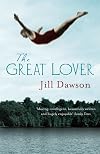
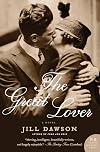
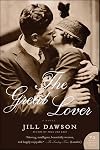
The Great Lover
by Jill Dawson
On This Page
Description
"In 1909, sixteen-year-old Nell Golightly is a housemaid at a popular tea garden near Cambridge University, and Rupert Brooke, a new tenant, is already causing a stir with his boyish good looks and habit of swimming naked in nearby Byron's Pool. Despite her good sense, Nell seems to be falling under the radical young poet's spell, even though Brooke apparently adores no one but himself. Could he ever love a housemaid? Is he, in fact, capable of love at all?" --Cover, p. 4.Tags
Recommendations







Member Reviews
The Great Lover is a fictional novel based upon the life and loves of the WWI poet Rupert Brooke.
Brooke was part of the influential artistic circles of the day, mixing with the likes of Virginia Stephen (Woolf) and Lytton Strachey, and ringleader of his own influential group of socialites at Cambridge - many of them members of the Fabian Society - who became known as the Neo-Pagans. Renowned for his good looks and boyish charm (W. B. Yeats famously referred to him as "the handsomest young man in England") Jill Dawson has weaved a fabulous fictional novel around his love interests and search for self.
Whilst the Cambridge friends and lovers are all based on factual research, in this novel Dawson creates a fictional love interest with a show more maid Nell who works at the Orchard Tea Rooms in Grantchester where Brooke stayed and spent a lot of his time over a number of years. She uses Nell and Brooke's voices to narrate the story, and whilst their part of the story is purely fictional, they are an instrument to tell an imagined account of many of the real aspects of Brooke's friendships and love interests, some of which is taken from actual letters Brooke sent around this time.
I've mostly found Jill Dawson to be a strong writer who excels in weaving great fictional stories out of nuggets of factual stories from the past, and The Great Lover was another very enjoyable read. Rupert Brooke is the out and out star of the show in this novel; Dawson conveys a very vivid picture of his magnetic attractiveness mixed with geniality and boyish good humour, of his pull and popularity amongst the Cambridge set, and his dark doubts and insecurities around his literary talent, sexuality and understanding of love.
Having finished the novel I almost feel like I'm going to miss being in his company - for me that's great writing.
It's not a perfect novel - despite only being 300 pages long I found it slow to engage me for a while, but once I became immersed in Brooke's world and social circles I wanted to stay there longer as a fly on the wall.
4 stars - closer to 3.5 for the first part of the novel, and much nearer to 4.5 by the end. Jill Dawson remains on my list of unsung modern favourites. show less
Brooke was part of the influential artistic circles of the day, mixing with the likes of Virginia Stephen (Woolf) and Lytton Strachey, and ringleader of his own influential group of socialites at Cambridge - many of them members of the Fabian Society - who became known as the Neo-Pagans. Renowned for his good looks and boyish charm (W. B. Yeats famously referred to him as "the handsomest young man in England") Jill Dawson has weaved a fabulous fictional novel around his love interests and search for self.
Whilst the Cambridge friends and lovers are all based on factual research, in this novel Dawson creates a fictional love interest with a show more maid Nell who works at the Orchard Tea Rooms in Grantchester where Brooke stayed and spent a lot of his time over a number of years. She uses Nell and Brooke's voices to narrate the story, and whilst their part of the story is purely fictional, they are an instrument to tell an imagined account of many of the real aspects of Brooke's friendships and love interests, some of which is taken from actual letters Brooke sent around this time.
I've mostly found Jill Dawson to be a strong writer who excels in weaving great fictional stories out of nuggets of factual stories from the past, and The Great Lover was another very enjoyable read. Rupert Brooke is the out and out star of the show in this novel; Dawson conveys a very vivid picture of his magnetic attractiveness mixed with geniality and boyish good humour, of his pull and popularity amongst the Cambridge set, and his dark doubts and insecurities around his literary talent, sexuality and understanding of love.
Having finished the novel I almost feel like I'm going to miss being in his company - for me that's great writing.
It's not a perfect novel - despite only being 300 pages long I found it slow to engage me for a while, but once I became immersed in Brooke's world and social circles I wanted to stay there longer as a fly on the wall.
4 stars - closer to 3.5 for the first part of the novel, and much nearer to 4.5 by the end. Jill Dawson remains on my list of unsung modern favourites. show less
In this imaginative story the author uses the voices of her fictional character Nell Golightly, a housemaid at the Orchard Tea Rooms (where the poet lodges) and Rupert Brooke to create a very effectively executed dual narrative. Brooke, an extremely complex, not very likeable person, who often treated women badly, was confused about his sexuality and worried about his sanity, was portrayed with great sensitivity and insight. Nell's more grounded, passionate, yet innocent personality, afforded a powerful and engaging balance to the story. I found that the two voices remained distinct and convincing throughout, but that each added depth to the character development of the other. Consequently, as a literary device it worked well for show more me.
Jill Dawson's writing vividly conjured up a compelling sense of time and place, and her descriptions of Fenland pursuits , such as eel-catching, bee-keeping and fen-skating, were powerfully evocative. She captured well the contrasting lives of the privileged and the working classes, as well as the sense of a society on the verge of massive social change.
I enjoyed the construction of the novel: it begins with a letter from Brooke's illegitimate, now adult, daughter in Tahiti, who is requesting information about her father. Eventually this letter reaches Nell, now an elderly widow, still living in the area; it reminds her of her relationship with the poet and, observing that most biographers set too much store by facts, and not enough by feelings, she responds. The heart of the novel is then an account of her and Brooke's life during the period 1909-1915. The final section includes a letter from Brooke, laying out his last wishes in the event of his death, as well as his poem "The Great Lover", which he wrote whilst living in the South Seas.
The fact that the author had researched her subject so comprehensively enabled her to blend extracts of contemporary correspondence (from, to and about the poet) with her imaginative portrayal of him, in a consistent and generally convincing way.
For anyone who delights in the poetic use of language, who enjoys a well-crafted story - and who is prepared to envisage a "warts and all" Brooke- this is a book to savour. show less
Jill Dawson's writing vividly conjured up a compelling sense of time and place, and her descriptions of Fenland pursuits , such as eel-catching, bee-keeping and fen-skating, were powerfully evocative. She captured well the contrasting lives of the privileged and the working classes, as well as the sense of a society on the verge of massive social change.
I enjoyed the construction of the novel: it begins with a letter from Brooke's illegitimate, now adult, daughter in Tahiti, who is requesting information about her father. Eventually this letter reaches Nell, now an elderly widow, still living in the area; it reminds her of her relationship with the poet and, observing that most biographers set too much store by facts, and not enough by feelings, she responds. The heart of the novel is then an account of her and Brooke's life during the period 1909-1915. The final section includes a letter from Brooke, laying out his last wishes in the event of his death, as well as his poem "The Great Lover", which he wrote whilst living in the South Seas.
The fact that the author had researched her subject so comprehensively enabled her to blend extracts of contemporary correspondence (from, to and about the poet) with her imaginative portrayal of him, in a consistent and generally convincing way.
For anyone who delights in the poetic use of language, who enjoys a well-crafted story - and who is prepared to envisage a "warts and all" Brooke- this is a book to savour. show less
April, 1982. Ninety year old Nell Golightly receives a surprising letter from Tahiti. A 67 year old woman would like to know something of her father, whom she never met. Somehow her letter finds its way to Nell, who worked as a maid, many years ago, at the Orchard House in Grantchester where the lady's father lived for a time. The man she is inquiring about is the English poet, Rupert Brooke.
This letter forms the basis for Nell's story. Beginning in 1909, she relates her life as a young woman working to support her brothers & sisters after their parents have died, and her meeting and infatuation with the young Cambridge student who comes to live at the Orchard. Rupert Brooke (his picture is above, beautiful isn't he?) is charismatic, show more charming, talented, even slightly wicked. Nell watches his interactions with women (and men) and despite both she finds herself romantically captivated and intellectually challenged by this fascinating man:
"Here we stop...and I acknowledge to myself the one hard fact that, despite my nature, it has taken me so long to face. There is no request Rupert could make of me that I would refuse. Whatever the pledge between me and God, this is the truth."
As a counterpoint to Nell's story, we get Rupert's own, told from his perspective in alternating sequences. Here it is revealed how much of his outer persona is a sham. He is terribly unsure of himself, sexually inexperienced, not confident of himself as a lover or a writer. He longs for peace, time to think and be alone with his thoughts, though he is constantly and almost randomly infatuated with different people.
"...There are only two ways of approaching relationships. One is only to allow love on the supposition that it may lead to marriage-the other is- the wandering way. And there are people made for the first way and perhaps people made for the second. But to introduce those made for the first to people made for the second is to invite pain and endless trouble....I'm a wanderer."
~Rupert Brooke, in a letter to Phyllis Gardner, 1913
The impetus to escape leads him to the Orchard House and eventually to Tahiti, where some of his best poems were written.
"I think I've always been a sucker for a sexy, brilliant, impossible man."~Jill Dawson
I love the above quote from the author's essay at the back of the book about how she came to write The Great Lover, "The First Tiny Throb: How a Novel Begins." I found her portrayal of Rupert Brooke fascinating, as the man himself must have been. I loved Nell, her intelligence and courage, her ability to look past her social class, her gentle confidence. Rupert was interesting but Nell was the star of this beautifully written novel. show less
This letter forms the basis for Nell's story. Beginning in 1909, she relates her life as a young woman working to support her brothers & sisters after their parents have died, and her meeting and infatuation with the young Cambridge student who comes to live at the Orchard. Rupert Brooke (his picture is above, beautiful isn't he?) is charismatic, show more charming, talented, even slightly wicked. Nell watches his interactions with women (and men) and despite both she finds herself romantically captivated and intellectually challenged by this fascinating man:
"Here we stop...and I acknowledge to myself the one hard fact that, despite my nature, it has taken me so long to face. There is no request Rupert could make of me that I would refuse. Whatever the pledge between me and God, this is the truth."
As a counterpoint to Nell's story, we get Rupert's own, told from his perspective in alternating sequences. Here it is revealed how much of his outer persona is a sham. He is terribly unsure of himself, sexually inexperienced, not confident of himself as a lover or a writer. He longs for peace, time to think and be alone with his thoughts, though he is constantly and almost randomly infatuated with different people.
"...There are only two ways of approaching relationships. One is only to allow love on the supposition that it may lead to marriage-the other is- the wandering way. And there are people made for the first way and perhaps people made for the second. But to introduce those made for the first to people made for the second is to invite pain and endless trouble....I'm a wanderer."
~Rupert Brooke, in a letter to Phyllis Gardner, 1913
The impetus to escape leads him to the Orchard House and eventually to Tahiti, where some of his best poems were written.
"I think I've always been a sucker for a sexy, brilliant, impossible man."~Jill Dawson
I love the above quote from the author's essay at the back of the book about how she came to write The Great Lover, "The First Tiny Throb: How a Novel Begins." I found her portrayal of Rupert Brooke fascinating, as the man himself must have been. I loved Nell, her intelligence and courage, her ability to look past her social class, her gentle confidence. Rupert was interesting but Nell was the star of this beautifully written novel. show less
I greatly enjoyed listening to the audio version of this book, which tells the story of the poet Rupert Brooke, from his point of view and from that of a housemaid who works in the place where he stays while in Cambridge. The story is told in alternating voices, Nelly and then Rupert. I think the author used a great deal of information from Brooke's life and letters; with the exception of the invented character of Nelly, much of it seemed quite accurate. The reading of it is lovely and the whole story very touching (despite Brooke's classism and self-absorbtion and agonizing over things:). By the time I got to the end and the narrator read Brooke's poem, "The Great Lover," as a kind of epilogue, I was by the side of the road, weeping. I show more recommend it. show less
Before reading this novel, I'd never heard of Rupert Brooke before. I was drawn in to his life immediately as the novel began with letters from Brooke's unknown Tahitian daughter to whomever might be living at the Orchard Tea Gardens where the child, now an elderly woman, was told her father had once lived. Her letter is answered by Nell Sanderson, formerly Nell Golightly. She does her best to answer Arlice's questions without passing judgement. Instead, she sends her some of her father's writing as well as her own diary-like entries from the time period in which she knew Rupert. From there, the novel flows between Nell and Rupert's voices to tell the story of his life, beginning in 1909.
Dawson has written a very interesting novel that show more captures both the essence of two young British people from different social classes as well as the early 20th century in which they lived. Rupert is from a more privileged background. Although he's had little contact with the poor with the exception of domestic workers, he falls in with a set of friends interested in advancing Fabian socialism. While he has grand ideas for how the social order should look, his opinion of his fellow man is actually quite humorous. He is a brilliant illustration of how human beings pigeonhole each other, regardless of our politics.
Nell made this novel for me. Rupert, while interesting and eccentric, was in many ways the stereotypical privileged young man in search of pleasure with whomever is available at the time and living a life of ideas. He does encounter adversity, but he's not a hardy person. Nell, on the other hand, has had to work hard for everything in life. Even her father's love wasn't something that came easily. Her voice was authentic and true. Her focus was on the here and now. She was a practical and that showed in how she did her best to care for her siblings and in her politics. She may have felt betrayed by her heart, but she didn't suffer fools readily. She may not have been as educated as she would have liked, but there is one scene that shows that she's a good judge of literature. I wanted her to be free to find what would make her happy in life.
My Final Thoughts
The more I read about Great Britain in the late 19th to early 20th centuries, the more drawn I am. Because of the morality of the times, much of what is really happening is subtle. It's like an underground current that is revolutionary by conservative at the same time. Jill Dawson captured this very well in The Great Lover. I was especially impressed with the way she mastered by Rupert and Nell's voices. I would recommend this novel too those interested in poets, pre-WWI Great Britain, and 20th Century socialist movements. show less
Dawson has written a very interesting novel that show more captures both the essence of two young British people from different social classes as well as the early 20th century in which they lived. Rupert is from a more privileged background. Although he's had little contact with the poor with the exception of domestic workers, he falls in with a set of friends interested in advancing Fabian socialism. While he has grand ideas for how the social order should look, his opinion of his fellow man is actually quite humorous. He is a brilliant illustration of how human beings pigeonhole each other, regardless of our politics.
Nell made this novel for me. Rupert, while interesting and eccentric, was in many ways the stereotypical privileged young man in search of pleasure with whomever is available at the time and living a life of ideas. He does encounter adversity, but he's not a hardy person. Nell, on the other hand, has had to work hard for everything in life. Even her father's love wasn't something that came easily. Her voice was authentic and true. Her focus was on the here and now. She was a practical and that showed in how she did her best to care for her siblings and in her politics. She may have felt betrayed by her heart, but she didn't suffer fools readily. She may not have been as educated as she would have liked, but there is one scene that shows that she's a good judge of literature. I wanted her to be free to find what would make her happy in life.
My Final Thoughts
The more I read about Great Britain in the late 19th to early 20th centuries, the more drawn I am. Because of the morality of the times, much of what is really happening is subtle. It's like an underground current that is revolutionary by conservative at the same time. Jill Dawson captured this very well in The Great Lover. I was especially impressed with the way she mastered by Rupert and Nell's voices. I would recommend this novel too those interested in poets, pre-WWI Great Britain, and 20th Century socialist movements. show less
The Great Lover is a fictionalized account of the poet Rupert Brooke’s life from 1909-1914. Using his letters and poetry as a base, it interweaves narration by Brooke with that of Nell, a maid at the Orchard in Grantchester, where Brooke and some other well-known people of that era (including Virginia Woolf) went to stay. The Great Lover describes Brooke’s personal and artistic doubts and uses Nell as a character to react to those as well as some of the issues of the period, including women’s and workers’ rights. Brooke was interesting, if not necessarily likeable, and I loved Nell as a character. The best part of the book was its immersive quality; it gave you a real sense of both the physical and social atmospheres of the show more time. I wanted to love it, but I only liked it a lot, but it was still very good. show less
Plot Synopsis
Nell Golightly, a maid, meets Rupert Brooke when he takes a room at the tea garden where she works. Brooke is beautiful, narcissistic, and unconventional, and Nell, a practical girl, finds herself falling for this enigmatic man.
Part history, part fiction, The Great Lover uses Brooke's own letters, his own words, to create a new vision of a poet deemed "the handsomest young man in England" by W.B. Yeats.
My Thoughts
Rupert Brooke seems a fascinating man and a ripe topic for a book. His fluid sexuality and controversial beliefs beg to be explored. The Great Lover doesn't shy away from Brooke's non-traditional life, and through the combination of Brooke's own words and Dawson's imagination, a portrait of a rather eccentric man show more is formed.
The book is told through two characters, Rupert and Nell, with alternating passages. The use of dual perspective to tell a story can be elegant and revealing or it can be artificial and frustrating. In this case, I felt a mixture of the two. The voices were distinct, and allowing each to narrate part of the story offered telling glimpses into the characters. I did have some difficulty, however, with the separate perspectives as the two characters spend so much time apart. Using both voices, telling both lives, I felt added extraneous detail to the story. So much of what each has to say has so little to do with the other that I could see the two voices being different books.
This would be my main difficulty with the book. I felt that the story could have been told in half the time. Perhaps I just wasn't in the mood for minutiae. The book seemed to be about creating a world instead of telling a story. And while I'm typically a character-driven reader, I could not relate to either Rupert or Nell, and hence needed something of a plot to maintain my interest. After about page 100, I started skipping, sometimes entire sections. So much time was spent on sitting around, on passive voice reflections, on telling instead of showing, that I couldn't focus. And honestly, even skimming large portions of the book, I don't feel like I missed much.
That is not to say that this is not a good book. Reviews of this novel seem to be rather mixed, so I urge you to read the links I've provided below. I've always wondered if mixed reviews aren't a positive because while I was not in love with this novel, I would still encourage reading it for yourself because of the differing opinions. Afterall, I'm giving only one opinion - and it's a personal, not a professional one. show less
Nell Golightly, a maid, meets Rupert Brooke when he takes a room at the tea garden where she works. Brooke is beautiful, narcissistic, and unconventional, and Nell, a practical girl, finds herself falling for this enigmatic man.
Part history, part fiction, The Great Lover uses Brooke's own letters, his own words, to create a new vision of a poet deemed "the handsomest young man in England" by W.B. Yeats.
My Thoughts
Rupert Brooke seems a fascinating man and a ripe topic for a book. His fluid sexuality and controversial beliefs beg to be explored. The Great Lover doesn't shy away from Brooke's non-traditional life, and through the combination of Brooke's own words and Dawson's imagination, a portrait of a rather eccentric man show more is formed.
The book is told through two characters, Rupert and Nell, with alternating passages. The use of dual perspective to tell a story can be elegant and revealing or it can be artificial and frustrating. In this case, I felt a mixture of the two. The voices were distinct, and allowing each to narrate part of the story offered telling glimpses into the characters. I did have some difficulty, however, with the separate perspectives as the two characters spend so much time apart. Using both voices, telling both lives, I felt added extraneous detail to the story. So much of what each has to say has so little to do with the other that I could see the two voices being different books.
This would be my main difficulty with the book. I felt that the story could have been told in half the time. Perhaps I just wasn't in the mood for minutiae. The book seemed to be about creating a world instead of telling a story. And while I'm typically a character-driven reader, I could not relate to either Rupert or Nell, and hence needed something of a plot to maintain my interest. After about page 100, I started skipping, sometimes entire sections. So much time was spent on sitting around, on passive voice reflections, on telling instead of showing, that I couldn't focus. And honestly, even skimming large portions of the book, I don't feel like I missed much.
That is not to say that this is not a good book. Reviews of this novel seem to be rather mixed, so I urge you to read the links I've provided below. I've always wondered if mixed reviews aren't a positive because while I was not in love with this novel, I would still encourage reading it for yourself because of the differing opinions. Afterall, I'm giving only one opinion - and it's a personal, not a professional one. show less
Members
- Recently Added By
Lists

Fiction Featuring Real People
81 works; 17 members
Author Information

21+ Works 1,159 Members
Jill Dawson has taught at Amherst College, Massachusetts and is currently the Creative Writing Fellow at the University of East Anglia in Norwich.
Awards and Honors
Common Knowledge
- People/Characters
- Rupert Brooke; Nell Golightly
- Important places
- Cambridgeshire, England, UK; Orchard Tea Gardens; Tahiti
- Important events
- World War I
Classifications
Statistics
- Members
- 265
- Popularity
- 122,664
- Reviews
- 13
- Rating
- (3.27)
- Languages
- English
- Media
- Paper, Audiobook, Ebook
- ISBNs
- 14
- ASINs
- 4