
John Vorhaus
Author of The Comic Toolbox: How to Be Funny Even If You're Not
About the Author
John Vorhaus is a reader at UCL Institute of Education, University of London, UK.
Series
Works by John Vorhaus
Associated Works
Author in Progress: A No-Holds-Barred Guide to What It Really Takes to Get Published (2016) — Contributor — 72 copies, 1 review
Tagged
Common Knowledge
- Gender
- male
Members
Reviews
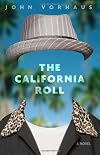
Radar Hoverlander -- he repeatedly insists it's his real name -- is an expert con artist. When he's approached by a woman who asks him to teach her grandfather the tricks of his trade, he immediately knows something's up; the woman in question is clearly just as well- versed in those tricks as he is. But he's intrigued enough to stick around and see where things are going, even as he grows increasingly unsure whether he's playing along or just being played. But the more he peels back the show more layers, the more difficult it becomes to know exactly what the game is, or whose side anybody is on.
It's a fun romp of a book. The plot is over-complicated, and arguably it cheats a bit towards the end, but it's entertaining. As are the characters (who are also complicated and prone to cheating). Plus, there's something about cons and con artists that's just inherently fascinating.
In other contexts, I think I might find the writing style a little annoying. It's full of show off-y vocabulary and highbrow wordplay and semi-obscure references in a way that that kind of screams, "Ooh, look how clever I am!" But as first-person narration, coming from a guy whose self-identity and livelihood both depend on his conviction that he's smarter than you, it works. It's amusing, rather than annoying. In fact, it's surprisingly hard not to like Radar. I'm left with the slightly uncomfortable feeling that he could scam me out of a couple hundred bucks, and I might not actually mind all that much. show less
It's a fun romp of a book. The plot is over-complicated, and arguably it cheats a bit towards the end, but it's entertaining. As are the characters (who are also complicated and prone to cheating). Plus, there's something about cons and con artists that's just inherently fascinating.
In other contexts, I think I might find the writing style a little annoying. It's full of show off-y vocabulary and highbrow wordplay and semi-obscure references in a way that that kind of screams, "Ooh, look how clever I am!" But as first-person narration, coming from a guy whose self-identity and livelihood both depend on his conviction that he's smarter than you, it works. It's amusing, rather than annoying. In fact, it's surprisingly hard not to like Radar. I'm left with the slightly uncomfortable feeling that he could scam me out of a couple hundred bucks, and I might not actually mind all that much. show less

This is a sequel to The California Roll, and although I think it's entirely readable on its own, I definitely recommend reading that one first if you're interested at all, because the whole setup for this one is a spoiler for that one in a fairly big way. I'll just say that it focuses on the same character from the first book, a con man with the unlikely name of Radar Hoverlander. In this one, Radar has retired to Santa Fe in an attempt to finally go straight, but that proves increasingly show more difficult when his long-lost (or, more accurately, long-absconded) father, the man from whom he inherited his criminal ways, shows up on his doorstep supposedly in need of help.
Like the first one, it's a lot of fun. Radar is an entertaining character, and the slightly over-the-top first-person narrative voice he presents us with works better than it almost seems like it ought to. The plot, again like the first one, is convoluted and ridiculous, and sometimes a little hard to keep up with, but never feeling remotely sure of exactly what's going on and who is playing whom is part of the charm.
I did have one small disappointment in it, which is that, since I live in New Mexico, I was looking forward to seeing Radar Radaring it up around my state. But most of the real action in the book takes place in Las Vegas (not the one in New Mexico), and it's fairly clear that, while Vorhaus may have some tourist experience of Santa Fe, he doesn't really know the area well. I mean, it's cute that he thinks we have an Ikea in New Mexico. I know someone here who once drove to the nearest Ikea to buy a bed. It was about a twelve-hour round trip. But, oh well. I enjoyed the story enough that I'm willing to forgive him for that! show less
Like the first one, it's a lot of fun. Radar is an entertaining character, and the slightly over-the-top first-person narrative voice he presents us with works better than it almost seems like it ought to. The plot, again like the first one, is convoluted and ridiculous, and sometimes a little hard to keep up with, but never feeling remotely sure of exactly what's going on and who is playing whom is part of the charm.
I did have one small disappointment in it, which is that, since I live in New Mexico, I was looking forward to seeing Radar Radaring it up around my state. But most of the real action in the book takes place in Las Vegas (not the one in New Mexico), and it's fairly clear that, while Vorhaus may have some tourist experience of Santa Fe, he doesn't really know the area well. I mean, it's cute that he thinks we have an Ikea in New Mexico. I know someone here who once drove to the nearest Ikea to buy a bed. It was about a twelve-hour round trip. But, oh well. I enjoyed the story enough that I'm willing to forgive him for that! show less
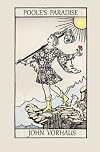
Poole's Paradise is set in 1974 in the "wilds of Western Connecticut", among the Berkshires to be more specific. It's the story of Alexander Poole, a Cort College sophomore in the fictional town of Greenville. As the blurb implies, Poole is trying to assemble a personal code of ethics, or philosophy for life, from the interactions he has with several people in his life. There's a certain level of naïveté to his demeanor. He's too trusting and deals with the world in an open and honest way show more that, while admirable, is dangerous—the cover features the tarot card of "The Fool" for a reason. As Poole is willing to apply this approach to everyone, he inevitably winds up in a serious predicament involving a sizable stash of drugs and cash. Ultimately, he has to choose between abandoning this philosophy or figuring out how to make it work in order to save himself and his friends.
In the first third of the book, Poole's Paradise seems like it's going to be Zen and the pursuit of the perfect stereo. Poole engages in several discussions about stereo equipment, and it serves as a great introduction to those characters. My father is something of an audiophile, and I grew up listening to him expound upon the merits of music media (vinyl vs tape) and the constant refinement of his stereo gear: turntables, amplifiers, speakers, and more. Reading the exchange between the characters on this subject had me fondly recalling those days.
There are also other conversations that ring true in the story, particularly between Poole and his roommate, Dawkins. Whether they're talking about music, weed, or women, the dialogue is dead on for the 70's. The college kid vs. townie dynamic is accurate, having witnessed it myself in the small towns of Western Connecticut. Vorhaus knows people and how they interact. Each character, major and minor, is finely crafted. He has a mastery of dialogue and characterization that strikes me as effortless.
The one problem I had was with the ending. At first, I was shocked and confused. It took a couple read throughs and some thought before it clicked. It wasn't the ending I was expecting, but as I reflected on the course Poole took, it made sense.
Poole's Paradise is a solid coming of age story set in the 70's. With a well-rounded cast of characters and accurate dialogue, Vorhaus places the reader smack dab in the middle of the most important days of Alexander Poole's life. Whether you fondly recall vinyl, want to know what college life was like for your parents, or just enjoy stories with realistic characters, Poole's Paradise is for you.
This review initially appeared at the New Podler Review of Books. show less
In the first third of the book, Poole's Paradise seems like it's going to be Zen and the pursuit of the perfect stereo. Poole engages in several discussions about stereo equipment, and it serves as a great introduction to those characters. My father is something of an audiophile, and I grew up listening to him expound upon the merits of music media (vinyl vs tape) and the constant refinement of his stereo gear: turntables, amplifiers, speakers, and more. Reading the exchange between the characters on this subject had me fondly recalling those days.
There are also other conversations that ring true in the story, particularly between Poole and his roommate, Dawkins. Whether they're talking about music, weed, or women, the dialogue is dead on for the 70's. The college kid vs. townie dynamic is accurate, having witnessed it myself in the small towns of Western Connecticut. Vorhaus knows people and how they interact. Each character, major and minor, is finely crafted. He has a mastery of dialogue and characterization that strikes me as effortless.
The one problem I had was with the ending. At first, I was shocked and confused. It took a couple read throughs and some thought before it clicked. It wasn't the ending I was expecting, but as I reflected on the course Poole took, it made sense.
Poole's Paradise is a solid coming of age story set in the 70's. With a well-rounded cast of characters and accurate dialogue, Vorhaus places the reader smack dab in the middle of the most important days of Alexander Poole's life. Whether you fondly recall vinyl, want to know what college life was like for your parents, or just enjoy stories with realistic characters, Poole's Paradise is for you.
This review initially appeared at the New Podler Review of Books. show less
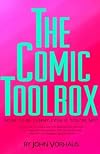
This little book is jam-packed with tools that will help any and every writer, regardless of genre. With down-to-earth language, and brief explanations, Vorhaus walks you through a series of processes, tools and rules that simplify rather than complicate writing tasks.
From the rule of nine (out of every ten ideas you write, 9 will be useless, so take risks, keep going and don't judge yourself) to the hill climbing problem (when revising your work, merely good is the enemy of great, so get show more that editing pen dirty).
As he puts it, "That's the trouble with re-writing. You have to commit to sacrifice with no certain expectation of reward. Yet even absent that guarantee, there's one thing we know for sure: If we don't come down off the hill, we'll never reach the mountain."
His explanation of plot structure is a 9-point list:
* Who is the hero?
* What does the hero want?
* The door opens
* Hero takes control
* A monkey wrench is thrown
* Things fall apart
* Hero hits bottoms
* Hero risks all
* What does the hero get?
If you include all of these points in your story (as he explains one by one), then it will work as any kind of story. This list parallels and expands slightly on the 3-act structure of commercial feature films (inciting incident, Climax 1, 2, 3). The only thing I'd add to his list is that when the door opens, the character walks through it. Because until the character acts in a way that reveals character, the story engine doesn't get in gear.
What's really useful about a tool like this is you can fit the answers to the questions on a single page, so it serves as your pencil sketch, thinking tool, your briefest of outlines, to help you manage the narrative arc of your story. Great stuff.
Since it's a comic toolbox, it covers the comic premise, comic story types, joke types, situation comedy, sketch comedy and more using oodles of easy to understand examples. After introducing each simple tool he encourages you to try them out.
The only thing I don't like about this book is its title and sub-title, The Comic Toolbox: How to be funny even if you're not.
Although the emphasis in this book is comedic, the application of his lessons go so much wider. From his advice on why you need to re-write, how to re-write, how to kill your inner editor and resuscitate them when you need them, this book isn't just about how to be funny, it's about how to write.
Given this, I'd re-title the book, The Writer's Toolbox: From a funny perspective. show less
From the rule of nine (out of every ten ideas you write, 9 will be useless, so take risks, keep going and don't judge yourself) to the hill climbing problem (when revising your work, merely good is the enemy of great, so get show more that editing pen dirty).
As he puts it, "That's the trouble with re-writing. You have to commit to sacrifice with no certain expectation of reward. Yet even absent that guarantee, there's one thing we know for sure: If we don't come down off the hill, we'll never reach the mountain."
His explanation of plot structure is a 9-point list:
If you include all of these points in your story (as he explains one by one), then it will work as any kind of story. This list parallels and expands slightly on the 3-act structure of commercial feature films (inciting incident, Climax 1, 2, 3). The only thing I'd add to his list is that when the door opens, the character walks through it. Because until the character acts in a way that reveals character, the story engine doesn't get in gear.
What's really useful about a tool like this is you can fit the answers to the questions on a single page, so it serves as your pencil sketch, thinking tool, your briefest of outlines, to help you manage the narrative arc of your story. Great stuff.
Since it's a comic toolbox, it covers the comic premise, comic story types, joke types, situation comedy, sketch comedy and more using oodles of easy to understand examples. After introducing each simple tool he encourages you to try them out.
The only thing I don't like about this book is its title and sub-title, The Comic Toolbox: How to be funny even if you're not.
Although the emphasis in this book is comedic, the application of his lessons go so much wider. From his advice on why you need to re-write, how to re-write, how to kill your inner editor and resuscitate them when you need them, this book isn't just about how to be funny, it's about how to write.
Given this, I'd re-title the book, The Writer's Toolbox: From a funny perspective. show less
Awards

You May Also Like


Associated Authors
Statistics
- Works
- 31
- Also by
- 3
- Members
- 609
- Popularity
- #41,275
- Rating
- 3.6
- Reviews
- 18
- ISBNs
- 52
- Languages
- 4