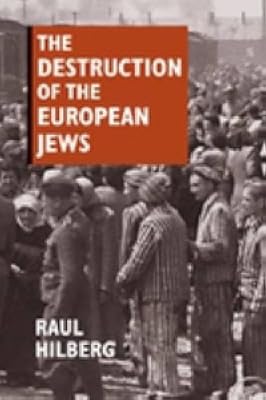
The Destruction of the European Jews
by Raul Hilberg
On This Page
Description
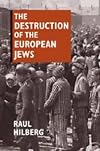
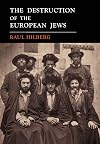
The Destruction of the European Jews is widely considered the landmark study of the Holocaust. First published in 1961, Raul Hilberg's comprehensive account of how Germany annihilated the Jewish community of Europe spurred discussion, galvanized further research, and shaped the entire field of Holocaust studies. This revised and expanded edition of Hilberg's classic work extends the scope of his study and includes 80,000 words of new material, particularly from recently opened archives in show more eastern Europe, added over a lifetime of research. It is the work of a scholar who has devoted more than fifty years to exploring and analyzing the realities of the Holocaust. Spanning the twelve-year period of anti-Jewish actions from 1933 to 1945, Hilberg's study encompasses Germany and all the territories under German rule or influence. Its principal focus is on the large number of perpetrators - civil servants, military personnel, Nazi party functionaries, SS men, and representatives of private enterprises - in the machinery of death.-- show lessTags
Recommendations




























Member Recommendations

Member Reviews
Reviewed by Tom Lawson
Hilberg’s essential thesis is that the ‘Final Solution’ was a bureaucratic process – and that it was the bureaucracy of the Nazi state that drove forward, with ever more lethal radicalism, the policies inflicted on Europe’s Jews. The Holocaust was therefore, according to Hilberg, a systematically implemented programme that proceeded ‘step-by-step … to the annihilation of 5 million victims’.(p. 46)
Raul Hilberg’s Destruction of the European Jews certainly remains a vital source of information on this tragic subject. While the simplicities of his condemnation of the Jewish Councils are unfortunate, his insight does aid our understanding of the Judenräte as an element of the German bureaucracy. Most show more of all Hilberg continues to give us a sense of the overall framework within which this bureaucracy functioned, and as such a sense of the wider significance of what may well have been localised genocides. If nothing else, Hilberg reminds us why that bureaucracy produced the Holocaust, in a manner that avoids the simplicities of explanations indicting either antisemitism or simply the depersonalised structures of government and occupation:
the Germans killed 5 million Jews. The onslaught did not come from the void; it was brought into being because it had meaning for the perpetrators. It was not a narrow strategy for the attainment of some ulterior goal, but an undertaking for its own sake, an event experienced as Erlebnis, lived and lived through by its participants.’ (p. 1059)
April 2004
Source: https://reviews.history.ac.uk/review/394 show less
Hilberg’s essential thesis is that the ‘Final Solution’ was a bureaucratic process – and that it was the bureaucracy of the Nazi state that drove forward, with ever more lethal radicalism, the policies inflicted on Europe’s Jews. The Holocaust was therefore, according to Hilberg, a systematically implemented programme that proceeded ‘step-by-step … to the annihilation of 5 million victims’.(p. 46)
Raul Hilberg’s Destruction of the European Jews certainly remains a vital source of information on this tragic subject. While the simplicities of his condemnation of the Jewish Councils are unfortunate, his insight does aid our understanding of the Judenräte as an element of the German bureaucracy. Most show more of all Hilberg continues to give us a sense of the overall framework within which this bureaucracy functioned, and as such a sense of the wider significance of what may well have been localised genocides. If nothing else, Hilberg reminds us why that bureaucracy produced the Holocaust, in a manner that avoids the simplicities of explanations indicting either antisemitism or simply the depersonalised structures of government and occupation:
the Germans killed 5 million Jews. The onslaught did not come from the void; it was brought into being because it had meaning for the perpetrators. It was not a narrow strategy for the attainment of some ulterior goal, but an undertaking for its own sake, an event experienced as Erlebnis, lived and lived through by its participants.’ (p. 1059)
April 2004
Source: https://reviews.history.ac.uk/review/394 show less
Very sad. It's a hard read when seeing the way the Jews were treated throughout the centuries. A must read, though.
Raul Hilberg is professor emeritus of political science at the University of Vermont.
The Destruction of the European Jews is widely considered the landmark study of the Holocaust. First published in 1961, Raul Hilberg's comprehensive account of how Germany annihilated the Jewish community of Europe spurred discussion, galvanized further research, and shaped the entire field of Holocaust studies. This revised and expanded edition of Hilberg's classic work extends the scope of his study and includes 80,000 words of new material, particularly from recently opened archives in eastern Europe, added over a lifetime of research. It is the definitive work of a scholar who has devoted more than fifty years to exploring and analyzing the show more realities of the Holocaust.
Spanning the twelve-year period of anti-Jewish actions from 1933 to 1945, Hilberg's study encompasses Germany and all the territories under German rule or influence. Its principal focus is on the large number of perpetrators -- civil servants, military personnel, Nazi party functionaries, SS men, and representatives of private enterprises -- in the machinery of death. show less
The Destruction of the European Jews is widely considered the landmark study of the Holocaust. First published in 1961, Raul Hilberg's comprehensive account of how Germany annihilated the Jewish community of Europe spurred discussion, galvanized further research, and shaped the entire field of Holocaust studies. This revised and expanded edition of Hilberg's classic work extends the scope of his study and includes 80,000 words of new material, particularly from recently opened archives in eastern Europe, added over a lifetime of research. It is the definitive work of a scholar who has devoted more than fifty years to exploring and analyzing the show more realities of the Holocaust.
Spanning the twelve-year period of anti-Jewish actions from 1933 to 1945, Hilberg's study encompasses Germany and all the territories under German rule or influence. Its principal focus is on the large number of perpetrators -- civil servants, military personnel, Nazi party functionaries, SS men, and representatives of private enterprises -- in the machinery of death. show less
"Since 1948, Hilberg's life work has been a sustained effort to discover, analyze, and comprehend the sheer mechanism of the Nazi assault on the Jews of Europe. His goal has been to describe not so much what the Jews suffered as how the Germans planned, executed, rationalized and concealed their destruction; not so much how the victims perished as how the perpetrators accomplished their annihilation and how the bystanders of the world turned aside and let it happen." From the booklet included with the books.
Steven Katz, Director of the Elie Wiesel Center for Judaic Studies at Boston University, has chosen to discuss Raul Hilberg’s The Destruction of the European Jews , on FiveBooks (http://five-books.com) on his list of essential reading on The Holocaust, saying that:
“…Hilberg had great difficulty getting this book published. At that time people did not feel that the Holocaust was a subject that there was a lot of interest in. But, once it did get published, people saw that it was a subject of enormous historic importance. Hilberg concentrated on the way the mass murder was organised by the German state, and he had an eye especially for the issues of bureaucracy and technology, which he thought were the decisive factors that made show more this a new kind of major crime..…”.
The full interview is available here: http://thebrowser.com/books/interviews/steven-katz show less
“…Hilberg had great difficulty getting this book published. At that time people did not feel that the Holocaust was a subject that there was a lot of interest in. But, once it did get published, people saw that it was a subject of enormous historic importance. Hilberg concentrated on the way the mass murder was organised by the German state, and he had an eye especially for the issues of bureaucracy and technology, which he thought were the decisive factors that made show more this a new kind of major crime..…”.
The full interview is available here: http://thebrowser.com/books/interviews/steven-katz show less
est value $300
La destrucción de los judíos europeos se incrusta en el mismísimo centro del proyecto de la modernidad europea y del modelo civilizador occidental, y desestabiliza de forma muy profunda los fundamentos mismos del proyecto social, político y cultural de nuestras sociedades. En este sentido, las aproximaciones habituales en torno al capitalismo como sistema económico insuperable, al liberalismo como ideología de consenso de las sociedades occidentales, al nacionalismo como forma de identidad social, a la democracia formal como modo de gobierno predominante y al cristianismo como legado religioso irrecusable de Occidente deben efectuarse bajo unas condiciones de validación crítica mucho más estrictas y exigentes para explicar la show more razón de ser de la Shoah. La destrucción de los judíos europeos sigue siendo todavía una pregunta histórica capital en la coyuntura política actual, y su genealogía, una tarea intelectual primordial para comprender la política de nuestros días. En este libro, Raul Hilberg efectúa una reconstrucción formidable y asombrosa del abigarrado conjunto de políticas, iniciativas y comportamientos que hicieron posible la destrucción de una parte considerable de la población europea apelando a su carácter étnico o cultural inasimilable, o a su imposible integración social en la comunidad racial nacional. Hilberg explica, con una minuciosidad y una exhaustividad fascinantes, cómo en el proceso de destrucción de los judíos europeos concurrieron las prácticas y los saberes más depurados de las sociedades europeas, de qué forma participaron innumerables estratos de la población y de los grupos profesionales presentes en las mismas, y mediante qué mecanismos su coordinación fue articulada por un Estado abocado a la guerra global cuyo funcionamiento se hizo incontrolable para la propia sociedad que lo había instituido. show less
Oct 18, 2022Spanish
Members
- Recently Added By
Lists

Books recommended in the history category on FiveBooks.com
329 works; 4 members
Author Information

25+ Works 1,542 Members
Raul Hilberg is professor emeritus of political science at the University of Vermont.
Some Editions
Awards and Honors
Series
Belongs to Publisher Series
Common Knowledge
- Canonical title*
- La distruzione degli ebrei d'Europa (3 voll.) (3 voll.)
- Original title
- The destruction of the European Jews
- Original publication date
- 1961; 1985 (2nd ed) (2nd ed); 2003 (3rd ed) (3rd ed)
- Important places
- Auschwitz concentration camp, Oświęcim, Lesser Poland, Poland; Bełżec extermination camp, Bełżec, Lublin, Poland; Lublin, Lublin, Poland; Lesser Poland, Poland; Poland
- Important events
- Holocaust
- Original language*
- Anglais (Etats-Unis) (Etats-Unis)
- Disambiguation notice
- vols. 1-3
*Some information comes from Common Knowledge in other languages. Click "Edit" for more information.
Classifications
Statistics
- Members
- 591
- Popularity
- 49,577
- Reviews
- 8
- Rating
- (4.57)
- Languages
- 8 — Dutch, English, French, German, Italian, Polish, Portuguese, Spanish
- Media
- Paper, Ebook
- ISBNs
- 26
- ASINs
- 12